Salvara turns public records, the open web, and live systems into clear findings. Every finding includes its source and date, so you can check it and act on it.
Salvara builds intelligence you can check.
We read public records, the open web, and live systems. We show what we found, where it came from, when we found it, and why it matters.
We share what we are learning about evidence, better decisions, and AI people can check.
@mcagroupca The handoff is the expensive part. A recurring stain should stay linked to the original leak report, who owns the repair, and evidence that it was resolved. Otherwise each cleaning visit starts from zero.
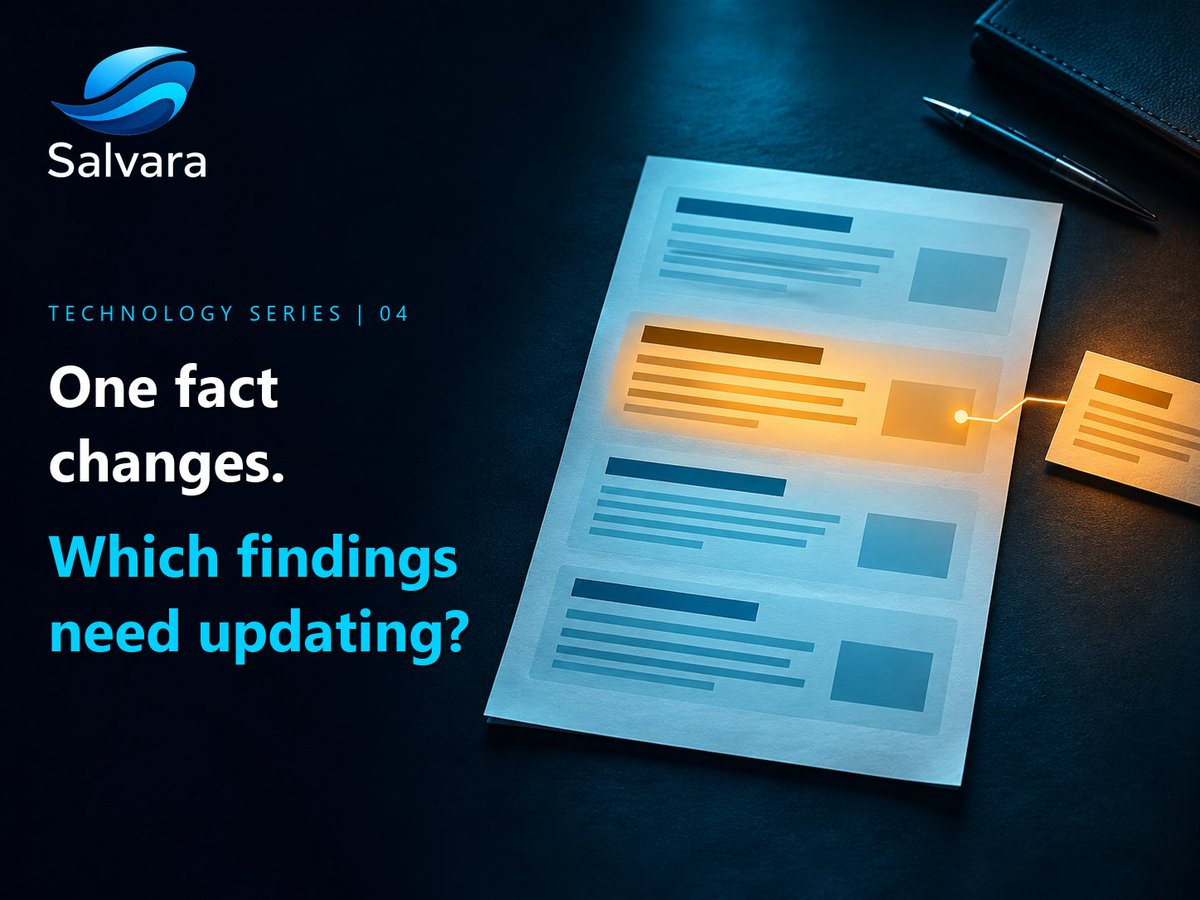
Reports shouldn't go stale silently. A new record may change one finding while the rest still stand. Salvara's patent-pending LIL technology is designed to identify affected findings and update them without rewriting the whole report. https://t.co/ksSjzp5pV5
@CashionEast@KestrelRMS The preview-before-save step is key. For property decisions, I’d also want each proposed change to show its source and who approved it. That makes a fast workflow easier to trust when someone revisits the decision later.
@Topkey_io Exactly. For maintenance, the process needs to say what was reported, what evidence was checked, who owns the next step, and what counts as resolved. AI can speed that up once those decisions are clear.
An active contractor record can be a useful lead. It does not establish roof repair experience, service area or availability. Keep those questions open until checked, so a valid record does not send the repair to the wrong specialist.
@noahiglerSEO What happens when the displayed slot fills before the page updates? Making clear when a time is confirmed, and when it is only a request, can prevent avoidable callbacks and disappointed customers.
@NISTcyber@NIST A concrete test case can make a standards comment easier to act on: the draft section, the workflow it affects, where the wording is ambiguous, and a proposed change. That gives reviewers something specific to evaluate and reproduce.
“No result” should never hide the search boundary.
A defensible system should show what it checked: sources, identity, dates, locations, failures and gaps.
Salvara's patent-pending CCA technology is designed to bind negative claims to that record.
https://t.co/ksSjzp5pV5
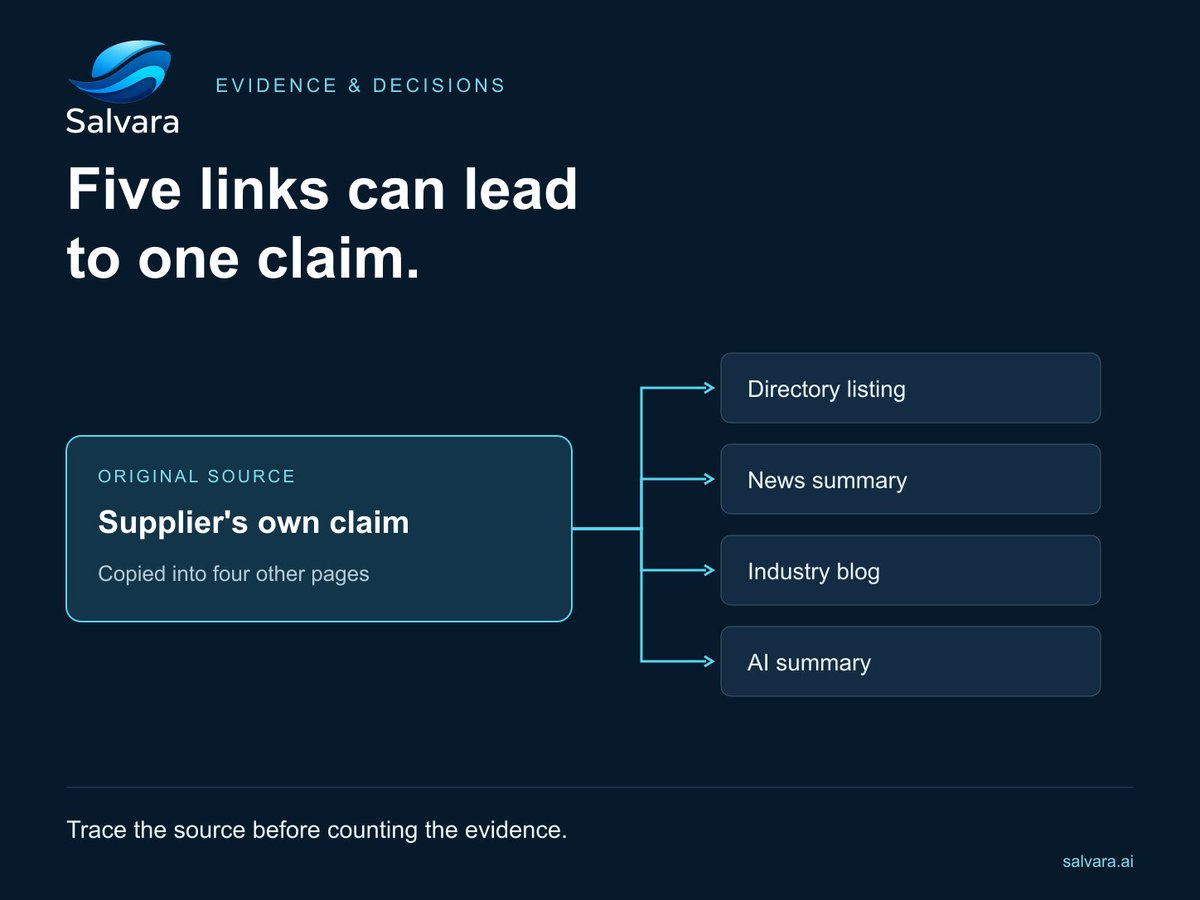
Five links can still trace back to one claim.
If a supplier's statement is repeated by a directory, news summary, industry blog and AI answer, that is not five independent checks.
Trace claims to their origin before committing resources.
https://t.co/WluF3m5mtD
@noahiglerSEO If a platform selects and summarizes customer reviews inside a paid ad, the advertiser should be able to see which reviews were used, when they were captured, and how the summary was produced. Otherwise the advertiser pays for a claim it cannot fully inspect or correct.
@ApolloResearch Safety cases are easier to evaluate when each claim stays linked to the evidence, evaluator, and time of review. Otherwise a system may pass once, then change, while the record cannot show whether the original evidence still applies.
@NISTcyber@NIST A useful exercise for this month: pick one business account and test the recovery path. Who can restore access, where is the recovery information kept, and does that person still own the task? A written procedure is only useful if someone can carry it out.
Contractor records work better when the source, checked date, and next step stay together.
Muster puts them in one roster with review workflows, comparisons, and document-request drafts.
Early access for property and trades teams in OR and WA:
https://t.co/ZhUf7UjPxs
@NISTcyber@NIST Enrichment is a strong agent use case because the model need not become the source of truth. Preserve which source supports each added field, when it was captured, what changed, and what remains uncertain. Then speed does not come at the cost of reviewability.
@WhiteHouse A single front door can reduce search time. Trust will depend on whether every answer shows the agency source, publication date, and scope, then makes the original record easy to open. Aggregation improves access; traceability makes the result safe to use.
@AleksandrM37858 Agreed. Delegation does not transfer responsibility. The record should show who granted authority, what the agent could do, what triggered the action, and how it could be revoked. Shutting the agent down stops future action; it does not erase obligations already created.
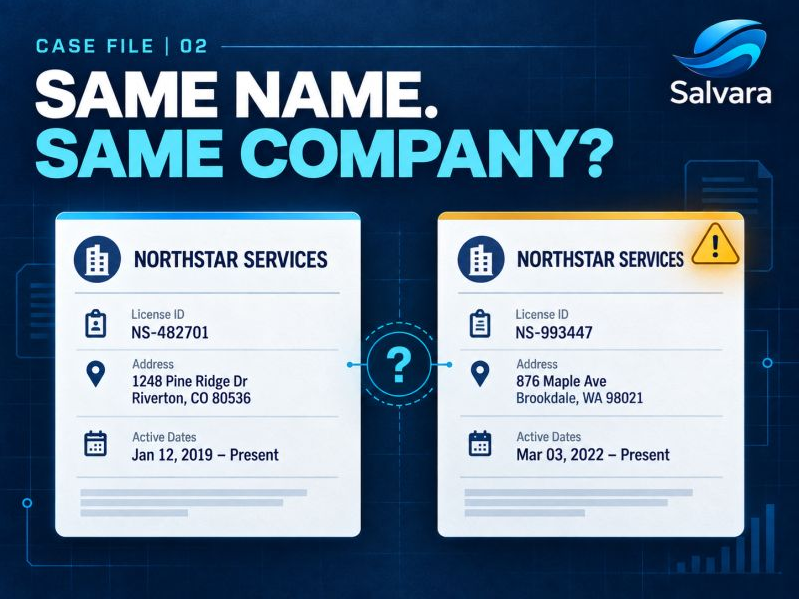
Two records share a business name. One is clean; one shows a disciplinary action. A name match is not proof they belong to the same company. Check IDs, addresses, owners, jurisdiction, and dates before a false match becomes a costly decision.
@themacrosift That architecture shift matters. A model should not be responsible for deciding and enforcing its own limits. External controls can define what it may access, disclose, or change, then preserve a record for review when the outcome is disputed.
@turkishwarsh More actions do not just create more attack surfaces. They create more opportunities for an agent to act beyond its authority. Security needs both: limit where the agent can reach, and check what it may disclose, commit to, or change before the action occurs.