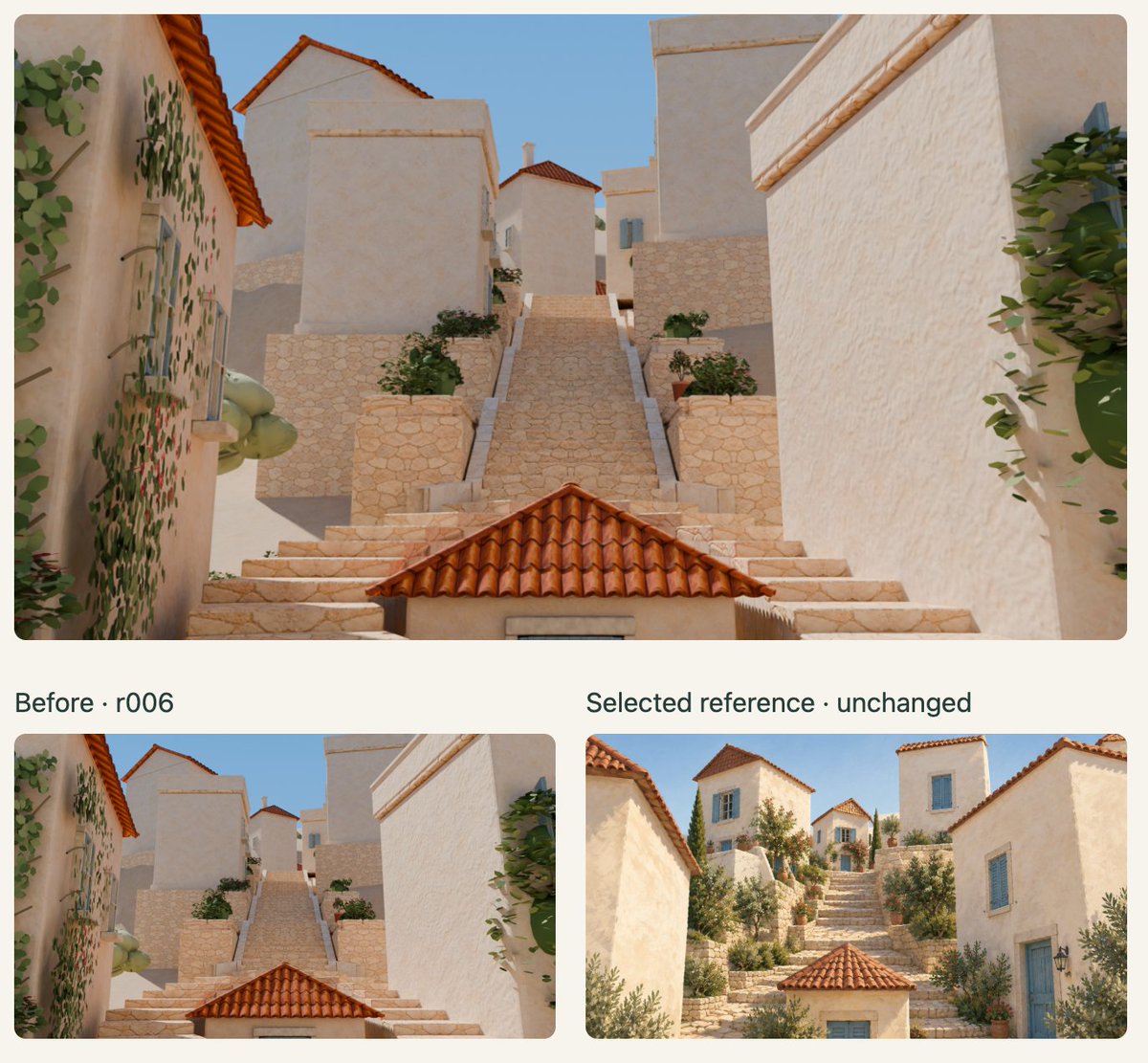
To obey or not to obey, that is the question 😅 At some stages, my agent decided to go beyond the #ComfyUI workflow I gave it. I hadn't provided a workflow for those stages yet because I hadn't planned that far, but the AI planned it on its own, and honestly its approach is better and smarter. It went on to refine the road junctions, and the detail the AI generated is so lovely.
Fair point. I'm still early in shaping the workflow. Right now I'm enjoying the trial and error, and I want to see where the LLM's native limits are, so I'm deliberately not adding constraints or skills up front. As I mentioned in another comment, the high-impact issues like road layout and reachability have already moved into the blockout stage, so that kind of problem is now solved by adding constraints.
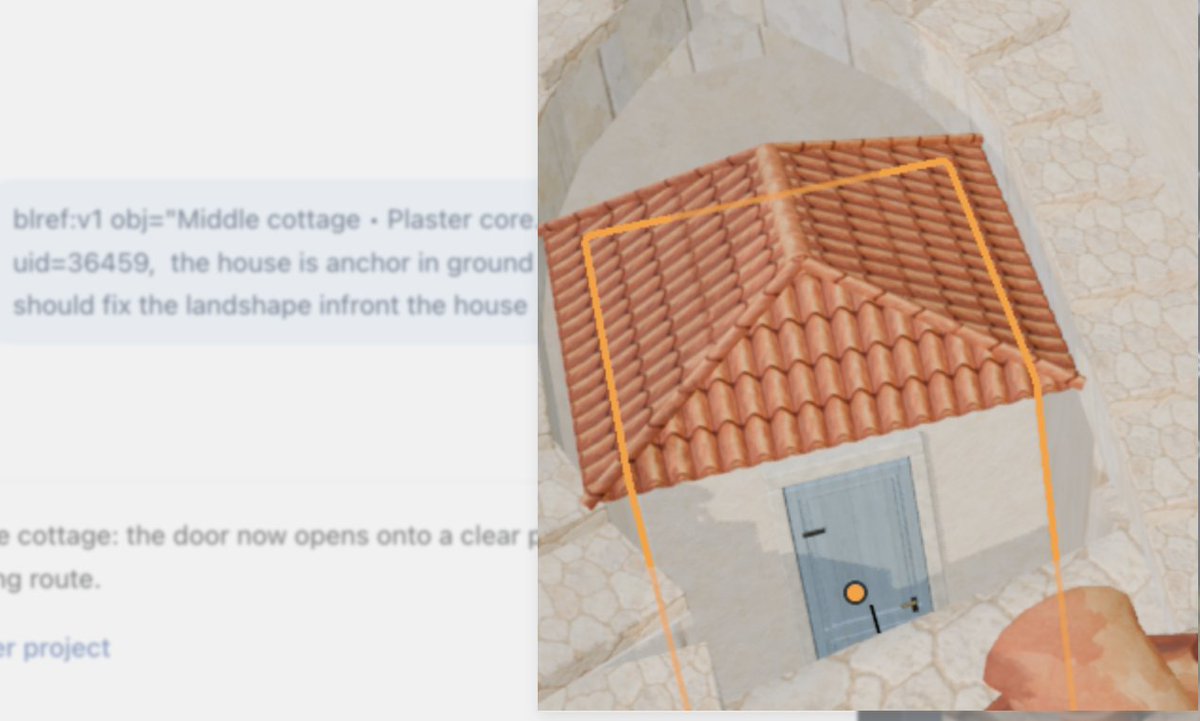
On AI modeling, I feel the same moment I felt with programming a few months ago: it can finish 80% of the work, but you still need a human standing next to it, supervising, along with unexpected mistakes and unexpected successes. The AI will sink a house into the ground — but it also knows that once you open a door, it should automatically connect a staircase to it. A lot of problems can still be solved by adding some forced thinking and evaluation at each stage. But like coding, in a few months this will become an AI-native skill.
My Mediterranean Village progress, mainly improve the overall layout and add more sample views:
1. added smaller stair links along the main road
2. brought houses closer together while keeping entrances clear
3. shaped the gaps into gardens and a planted limestone slope.
4. New close-up views of the district’s backyards and shared courtyards. #Blender
@VibeCoderOfek Yes, 80% is what compared to the reference target . 3D environment is still a complicated problem. I think the issue you mentioned on myside is about budget and efficiency. Unlimited budget will allow unlimited captures to let llm self iterated.
@KpBuildsTech Not really. But after this issue I add rules to check road and door access in blockout stage to the workflow. Before that, this small corner is not included in my capture view which maybe evaluate by agent to be a unimportant thing (which the middle house only show a roof)
The small decos including potted plants, doors and windows. The placement rules are extract from the references. Agent is not asked to place exactly align the reference. The rules can also applied to other places which are not reference guided. Much borrowed from WFC.
Experiments on the simple workflow to generate a 3D scene with one reference. Pick several cameras to sample blockout. Then #astra to :
1. use ComfyUI to generate reference guide
2. organize assets category and placement
3. use ComfyUI do asset modeling and refinement
Foliages are all unrefined. Pixal3D or current ai based generation cannot handle it very well. I might still go to use speedTree or grove to do basic generation as the base
Compare the Pixal3D_multi_views generation model with my previous tripo generated case. The general shape is pretty acceptable. Tripo gets much better texturing and details. (Haven't care too much about uv and rigging in this case) #comfyUI
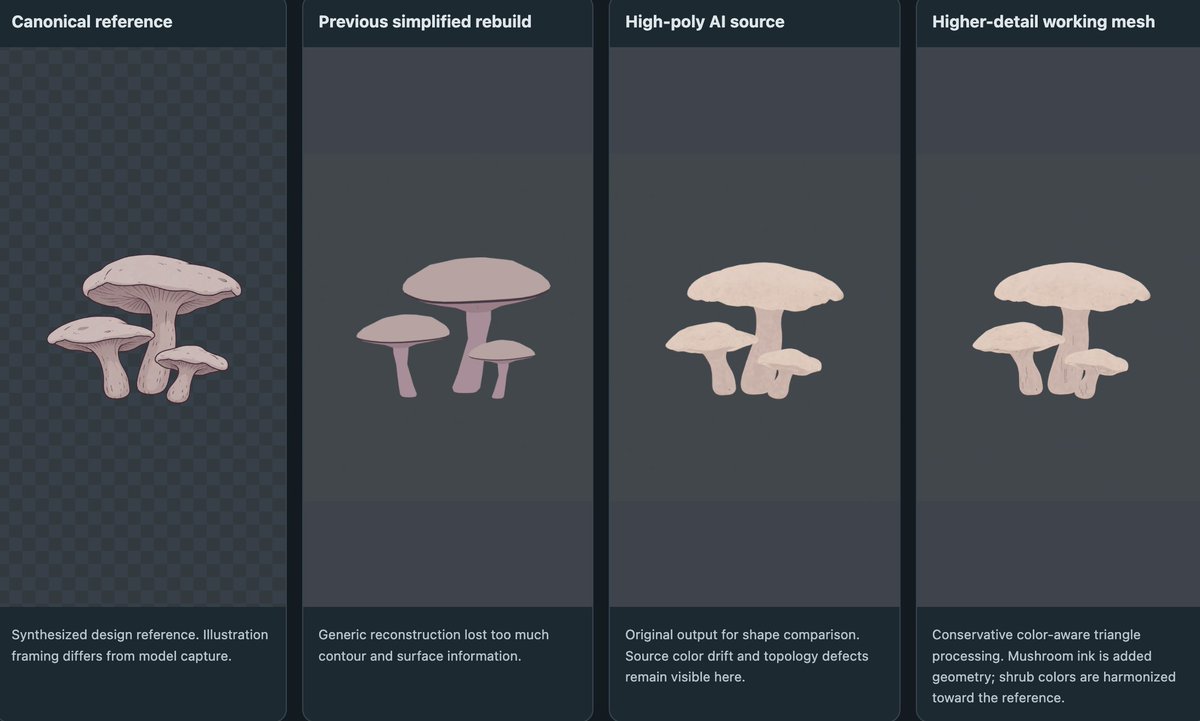
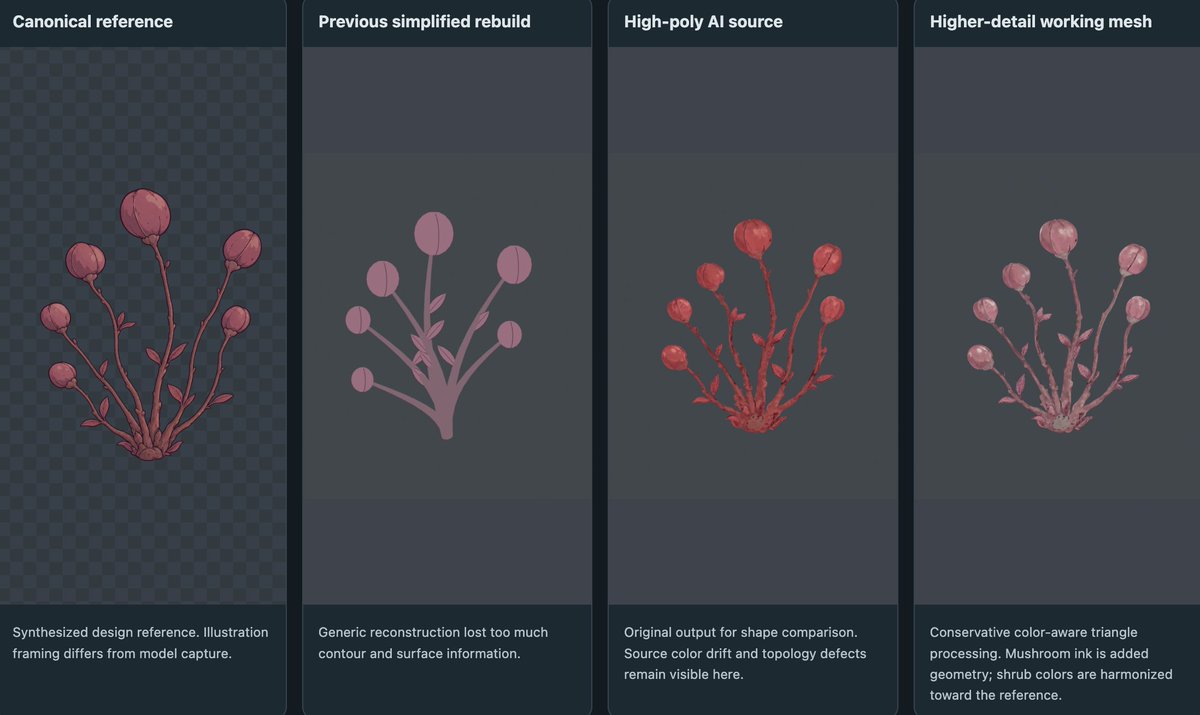
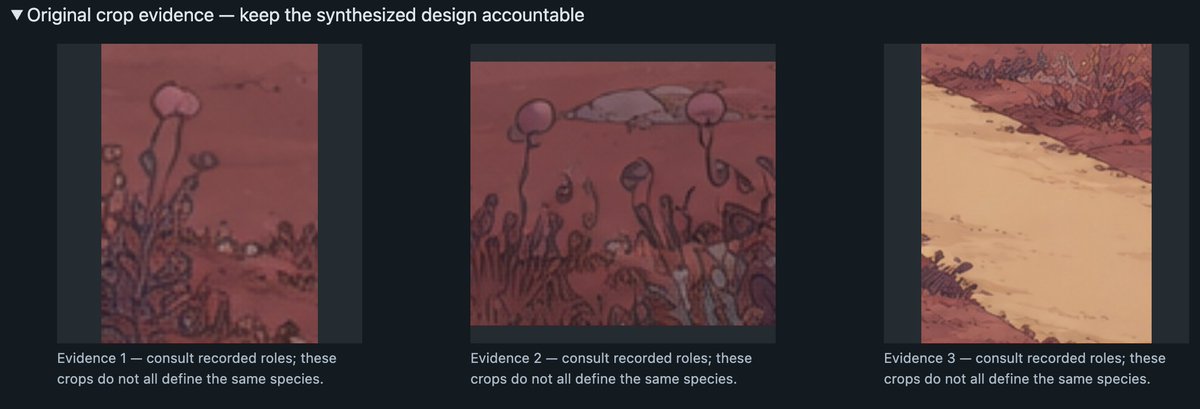
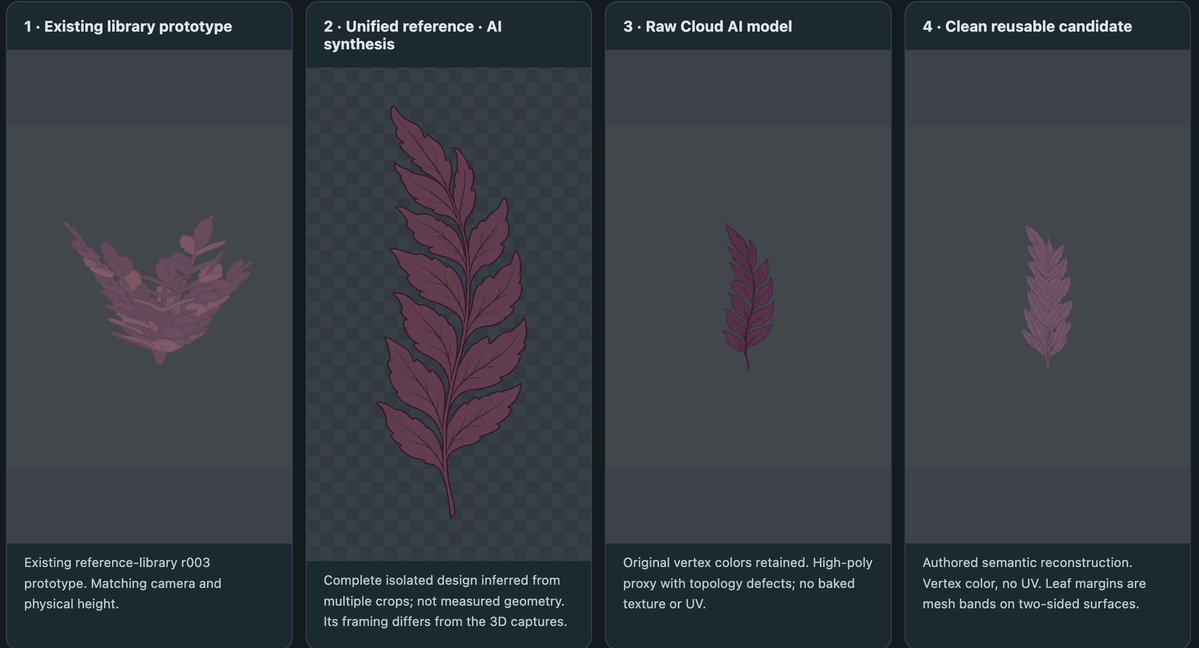
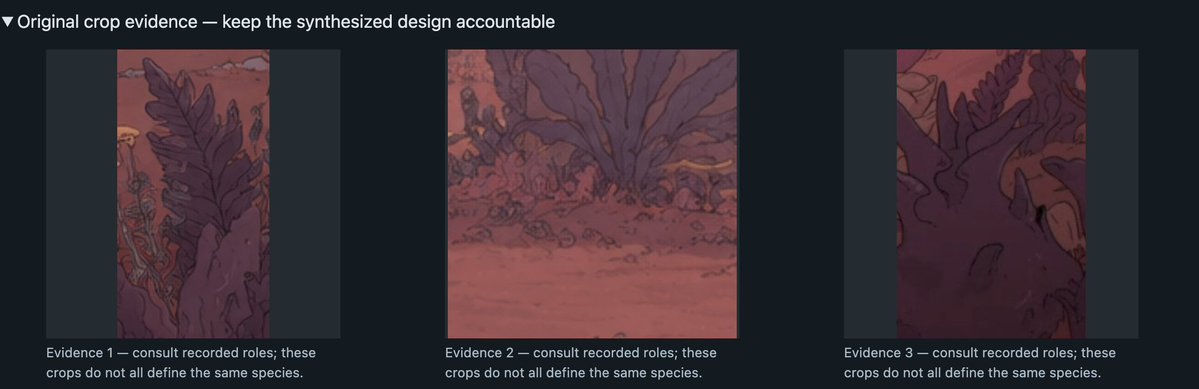
#ComfyUI's #trellis2 template looks promissing . Ask #Astra to extract general design from concept arts and post process the return model (retopo and optimize) . Red Fronds, bulb-bud stalk plant and mushroom for exmaple