Mike Schmoker, influential school improvement author of *Focus* and *Results Now 2.0*, argues schools don't need more initiatives—they need fewer priorities executed with clarity and consistency. He advocates for three fundamentals: coherent curriculum, strong lesson design, and authentic literacy across subjects. His work critiques "initiative clutter" that dilutes instructional quality, urging schools to simplify and focus on high-payoff practices.
https://t.co/Sq9TJmJuZx
This is a must-read piece by @greg_ashman on "conceptual understanding"—the goal everyone claims but can't really define or measure. My definition: it's the thing students supposedly gain when taught using certain methods (e.g., inquiry, multiple strategies, productive struggle) that are otherwise ineffective. That's why arguments about it go nowhere.
The term is defined to be the outcome of a preferred teaching method so you're not debating evidence, you're debating something that's essentially defined to be the thing that everyone should want.
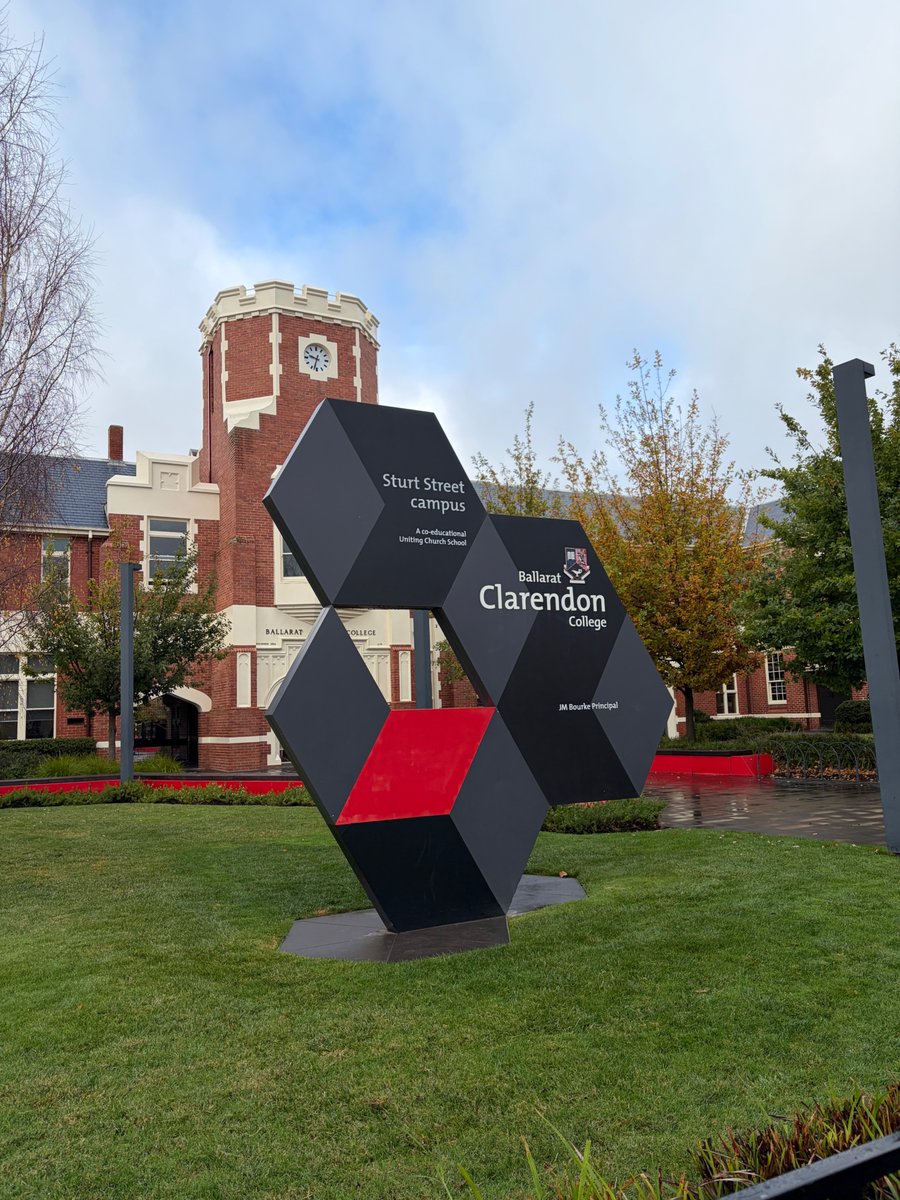
What a pleasure to finally meet Greg Ashman in person! I’ve been a longtime admirer of his work. It was an incredible experience to visit his amazing school in Ballarat to learn about the outstanding work they're doing. Thank you @greg_ashman!
@C_Hendrick Absolutely. It's about inclusion. It's saying to every student, you belong. You are a full member of this learning community. And I need to hear from you so that my decisions reflect the needs of everyone in the group.
Ideology aside, mixed-ability classrooms don't work because they place an undue burden on teachers to "differentiate instruction." A lovely idea but almost impossible to do effectively. Someone's time gets wasted, goes unchallenged, or left further behind.
I was supposed to be working on a presentation for explicit science instruction but got distracted and started working on about three posts about NGSS. Here is one of them! 🥼🔬👩🔬
Link below ⬇️
I was curious to see what this paper by Kyun, Kalyuga, and Sweller said about using worked examples to teach literary essay writing, and the biggest takeaway is simple: show complete model essays way more often during whole-class instruction. The research found that studying full examples actually reduces mental overload for struggling students—it's not "giving away the answer," it's teaching them what good writing looks like.
Display 2-3 complete model responses to the same prompt on the board and have the whole class annotate them together. Show multiple strong responses that take different positions on the same text, then discuss what makes each one work—specific evidence, clear reasoning, good organization—even though they reach different conclusions. This teaches students what quality looks like across different interpretations, not just one "right" answer.
Right after studying examples together, assign a really similar practice task with the same text. The research showed students did best when the practice closely matched what they just studied. So if you analyze symbolism examples in Chapter 3 as a class, have everyone immediately practice symbolism in Chapter 5—not characterization, not a different book. Transfer takes forever, so you need way more repetition with similar tasks before expecting kids to apply these skills elsewhere. https://t.co/c1tPtKEHVW
When things go a little sideways during my lessons, it’s usually not my students’ working memory getting overloaded. It’s mine.
Too many decisions. Too much to manage in the moment. It’s like a tidal wave you can feel building in your brain. But…
Offloading in advance, “proceduralizing” as much of a lesson as possible, and maintaining consistent routines has made a huge difference for my cognitive load—and by proxy has improved student outcomes.
Here’s how I optimize my own cognitive load. 📖🧠👇
@Jordan_C_Adams Just wrong. Working out who the more effective teachers are is not just hard. It is in principle impossible, since every teacher builds on the foundations laid by her predecessors.
This study seems to point towards something which has bothered me for a long time: the idea that metacognition may be more of a byproduct of learning rather than a driver of it. https://t.co/ZSvp2QJpK5
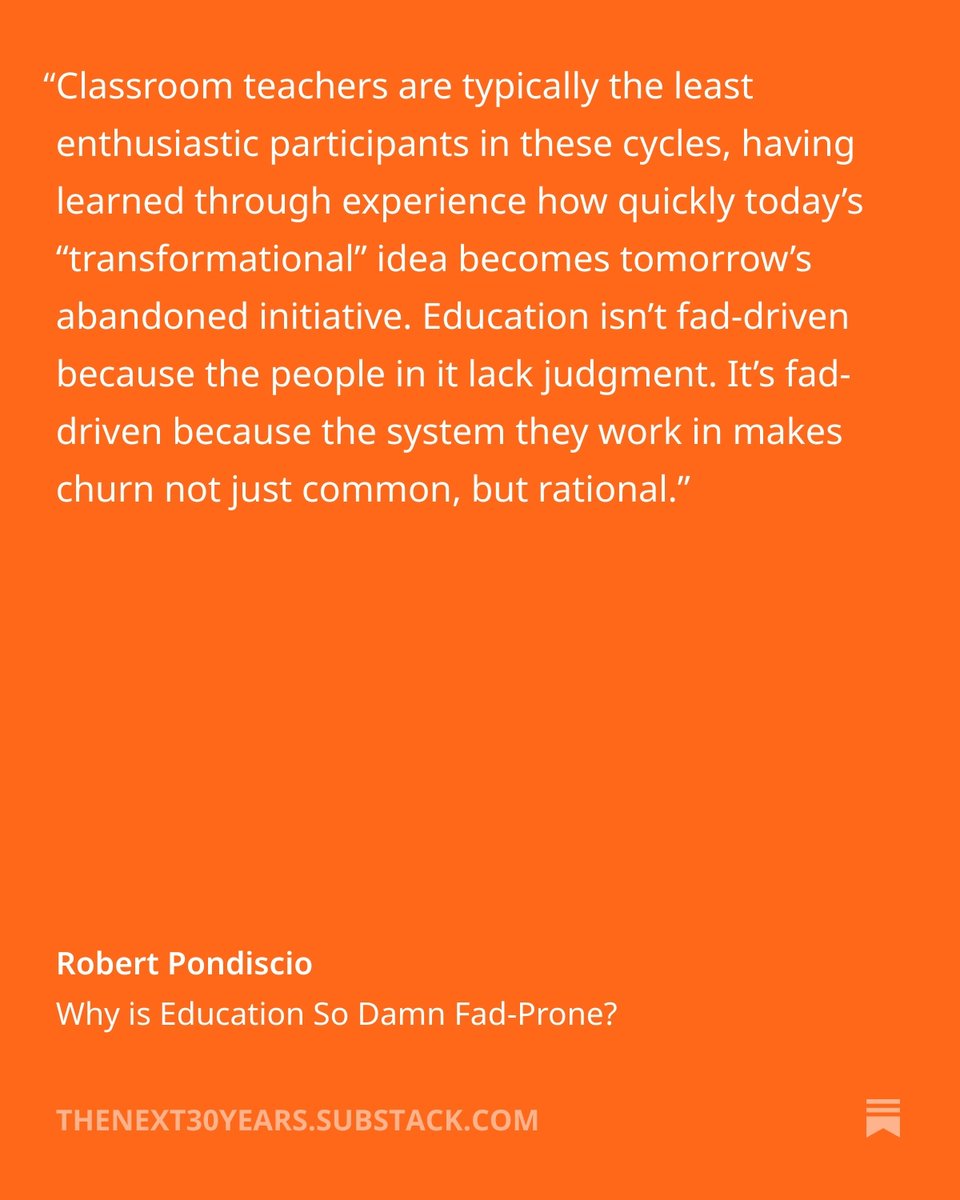
Why is education so damn fad-prone? My latest looks at our field's worst habit: its endless enthusiasm for shiny new things instead of sticking with what works.
https://t.co/MUuNSz8SaN
If you teach anyone at all, and you don't know about @helenrey's CogSci book summaries, you are missing out. It's a wonderful resource summarizing the most important books on cognitive science: https://t.co/TB0bPExfck