There’s something in the cybersecurity training and cyber range space that needs to change.
We’ve gotten really good at building environments that look impressive—but are too complex for clients to actually use once we walk away.
And we’ve gotten even better at selling expensive solutions… without fully accounting for what it takes to sustain them.
This hits hardest in places that actually need this capability the most:
- small and mid-sized government organizations
- universities operating on grants
- teams already stretched thin supporting day-to-day operations
They invest heavily upfront in a cyber range, expecting it to build long-term capability.
But what often gets missed is this:
Who is maintaining it?
Who is building new scenarios?
Who is keeping it aligned with current threats?
In large federal environments, there are often dedicated teams to absorb that workload.
In smaller environments, there aren’t.
So the range sits underutilized—not because it lacks value, but because sustainment was never realistically built into the model.
Cyber ranges shouldn’t be one-time purchases or oversized technical demos. They should be living systems—something teams can actually use, adapt, and grow with over time.
If it doesn’t:
- translate into real-world decision-making
- evolve with current threats
- and remain usable by the people it’s meant to support
…then it’s not building capability. It’s just checking a box.
The future of this space isn’t bigger environments—it’s better outcomes.
More sustainment.
More realism.
More alignment with how organizations actually operate.
We should be building something that’s still delivering value 6 months later—not something that fades the moment we step back.
Curious how others are seeing this—especially those working in ICS/OT, government, and academic environments.
"The enemy smelled our blood and thought we were prey. They forgot that a wounded animal is the most lethal. We tore that jungle apart to stay alive."
Major James Capers Jr stands as one of the greatest Recon Marines to ever do it. He enlisted in the Corps and fought his way into Force Recon where he became the leader of Team Broadminded. He completed more than 60 long range patrols and five major campaigns in Vietnam.
In 1967 near Phu Loc he was wounded 19 times while fighting a numerically superior enemy force. With broken legs, shrapnel across his body he refused evacuation until every Marine on his 9 man team was lifted out. His Silver Star citation states he continued to coordinate fire and movement under direct and indirect fire while suffering extreme blood loss.
That Silver Star, originally downgraded after his commander was kill*d and the Medal of Honor paperwork lost, is now being formally upgraded to the Medal of Honor. Capers was not only a mustang, he earned a battlefield commission in combat, a rare honor that speaks to the trust his Marines placed in him.
At eighty eight he remains a giant, a warrior who carried his team through hell and set the standard every Recon Marine still measures himself against.
Dr. Joseph Warren died on this day in 1775, and he might be the most important Founding Father you were never taught about.
He was born in Roxbury, went to Harvard, and by his early thirties he was the most sought after doctor in Boston. He inoculated the Adams family against smallpox. He took on apprentices. He treated patients on both sides of the growing fight, redcoats included, because he was a doctor first. He was 34 and a widower raising four small children alone after his wife died in 1773.
He was also the quiet engine of the entire revolution in Massachusetts. He wrote the Suffolk Resolves. He ran the Committee of Safety. He stood up twice to give the Boston Massacre orations, and the second time, with British officers packing the room to intimidate him, the story goes that he climbed in through a window rather than be turned away, then delivered the speech to their faces.
On the night of April 18, 1775, it was Warren who learned the British army was about to march. He sent Paul Revere out one way and William Dawes the other to raise the alarm toward Lexington and Concord. There is no midnight ride without Joseph Warren. People have argued for two centuries about where he got his intelligence, and one long running rumor is that his secret source was close to General Gage himself.
The next morning he didn't sit safe behind a desk. He rode out to the fighting at Lexington and Concord and got into the thick of it. A British musket ball came so close it knocked a pin out of the hair beside his ear.
Three days before Bunker Hill, the Provincial Congress made him a major general. When he walked onto the hill on June 17, the officers there offered to hand him command of the whole field. He refused. He said he had come to fight as a volunteer, not to give orders, and he took a musket and went into the redoubt with the ordinary men, in the most dangerous spot on the line.
The Americans held off two British charges. On the third, low on powder, they were overrun. Warren stayed to cover the retreat and was shot in the head. The British knew exactly who they had killed. They stripped him, ran him through with bayonets, and threw him into a shallow pit with another body. A British officer later bragged that he had stuffed the scoundrel into the ground. General Gage is said to have remarked that Warren's death was worth that of 500 ordinary men.
Ten months later, after the British finally gave up Boston and sailed away, his friends went looking for him. The body was beyond recognition. The only reason they ever found him is that Paul Revere, a silversmith by trade, had once wired a false tooth into Warren's jaw with silver wire. Revere dug through the grave, saw his own work in the teeth, and knew. It is remembered as one of the first forensic dental identifications in American history.
His orphaned children were nearly forgotten too, until people like Benedict Arnold, years before he became a traitor, chipped in money to make sure they were raised and educated.
The most famous painting of the battle, by John Trumbull, isn't really about the battle at all. It's about the death of one man in the smoke.
The doctor who could have commanded an army chose to die in the dirt as a private soldier. He was 34 years old. 251 years ago today. Remember him 🇺🇸
𝐖𝐡𝐲 𝐝𝐨 𝐈 𝐤𝐞𝐞𝐩 𝐭𝐚𝐤𝐢𝐧𝐠 𝐭𝐡𝐞 𝐫𝐢𝐬𝐤—𝐩𝐞𝐫𝐬𝐨𝐧𝐚𝐥 𝐚𝐧𝐝 𝐩𝐫𝐨𝐟𝐞𝐬𝐬𝐢𝐨𝐧𝐚𝐥—𝐭𝐨 𝐬𝐩𝐞𝐚𝐤 𝐭𝐫𝐮𝐭𝐡 𝐨𝐧 𝐡𝐞𝐫𝐞?
As one of the few senior officers still active on X, I’ve been attacked, downgraded, and hit with whisper campaigns meant to soften what I’ve seen and said from the front seat of command.
I do it because I care. Deeply. Because I’m committed to authenticity and relentless about truth. Not for clicks or applause, but for one purpose: to build the lethality and warfighting edge our Army will need if the balloon goes up. And more importantly, to strengthen deterrence—so we never have to fight.
Peace comes through real, credible strength. Not dog-and-pony shows.
I’ve been “informed” my authenticity upsets people. Damn right it does. That’s the job. Our profession demands abrasiveness when softness gets Soldiers killed.
I’ve written the professional articles, recorded the podcasts, spoken at the symposiums. Observations from 55 NTC rotations, Blackhorse command, and hard lessons from the modern battlefield. They get filed away like every other rotational AAR—only for us to repeat the same mistakes and ignore the same gaps.
𝐗 𝐢𝐬 𝐝𝐢𝐟𝐟𝐞𝐫𝐞𝐧𝐭. 𝐈𝐭 𝐜𝐫𝐞𝐚𝐭𝐞𝐬 𝐭𝐡𝐞 𝐭𝐫𝐚𝐟𝐟𝐢𝐜, 𝐭𝐡𝐞 𝐟𝐫𝐢𝐜𝐭𝐢𝐨𝐧, 𝐭𝐡𝐞 𝐜𝐨𝐧𝐯𝐞𝐫𝐬𝐚𝐭𝐢𝐨𝐧𝐬 𝐭𝐡𝐚𝐭 𝐚𝐜𝐭𝐮𝐚𝐥𝐥𝐲 𝐦𝐨𝐯𝐞 𝐭𝐡𝐞 𝐧𝐞𝐞𝐝𝐥𝐞.
That’s why I stay in the fight here.
Our Army deserves leaders who prioritize winning over comfort. I’m all in on that mission.
#Blackhorse #Lethality #MissionCommand
For the record.
SpaceX, Hayek, and the Progressive War on Wealth Creation
The progressive left clings to the fantasy that wealth is manufactured by the state and its pet technocrats rather than by entrepreneurs who risk their own capital to create real value.
In their mythology, government planners are the heroic “designers” of prosperity, while the private sector is a problem to be taxed, regulated, and morally lectured. As Hayek warned, “the more the state ‘plans’ the more difficult planning becomes for the individual,” and progressives are determined to make individual planning all but impossible.
Their entire project rests on a basic fraud, confusing redistribution with creation. Social-democratic and socialist progressives boast about “fairness” and “equity,” but their toolkit is nothing more than confiscation and reallocation, slicing the same pie thinner while pretending they’ve baked a new one.
Hayek’s point that “there is all the difference in the world between treating people equally and attempting to make them equal” goes straight over their heads, they weaponize the latter to justify endless expropriation from those who actually produce.
The manufactured outrage on the progressive left over the SpaceX IPO is not about fraud, abuse, or failure, it is about their ongoing indoctrination campaign to portray success, risk-taking, and genuine wealth creation as moral crimes. A private company goes from “10 percent chance of success” to one of the most valuable enterprises on earth, and their instinctive response is not admiration or curiosity, but rage that such achievement is even allowed to exist. They see Elon Musk’s trillionaire status not as the byproduct of extraordinary innovation and execution, but as a kind of cosmic theft that must be punished by the tax state.
This is entirely consistent with the broader progressive project, socialize resentment, demonize entrepreneurial gains, and condition the public to believe that any concentration of wealth outside the state is inherently illegitimate. Hayek saw this coming decades ago when he warned that central planning steadily erodes the scope for individual initiative, because the logical end of their ideology is a public that no longer dares to think in terms of independent ambition or long-term wealth building. Progressive leaders feed this mindset daily, insisting that “rigged” markets and “oligarchs” are the problem, while cleverly leaving the state, and its favored constituencies, as the only acceptable repositories of power and resources.
Their reaction to SpaceX is a case study in this pathology. A company that has slashed launch costs, expanded human access to space, and built critical strategic infrastructure is reduced in their rhetoric to a symbol of “inequality” and “greed,” precisely because it exposes how much more effective decentralized, risk-taking capital can be than bureaucratic planning. The message encoded in their fury is clear, do not build, do not risk, do not aspire, unless it is under the watchful, confiscatory eye of the state.
$SPCX
Je vais partir du principe que tu es de bonne foi, parce que ton raisonnement est intuitif et que 90% des gens le partagent. Mais il repose sur trois erreurs factuelles, et ça vaut le coup de les regarder calmement.
Erreur 1 : la fortune d'Elon n'est pas un tas d'argent. C'est de la propriété d'usines, de fusées et de satellites. "Prendre la moitié de sa tune", concrètement, ça veut dire forcer la vente de la moitié de SpaceX et Tesla. L'argent ne sort pas d'un coffre, il sort des entreprises elles-mêmes, qui passent sous contrôle de fonds étrangers ou d'États. Tu ne redistribues pas du cash, tu démantèles un outil de production. C'est la différence entre récolter des pommes et découper le pommier.
Erreur 2 : "ça résout énormément de problèmes dans le monde". Cette expérience a déjà été tentée, en vrai. En 2021, le directeur du Programme Alimentaire Mondial de l'ONU a affirmé que 6 milliards de Musk pouvaient "résoudre la faim dans le monde". Réponse d'Elon : décrivez-moi exactement comment, comptabilité publique à l'appui, et je vends mes actions Tesla immédiatement. Le PAM a publié son plan. Verdict : ce n'était pas "résoudre la faim", c'était nourrir 42 millions de personnes pendant un an. Un an. Puis il faut re-payer, pour toujours. Le PAM avait d'ailleurs levé 8,4 milliards l'année précédente, et la faim était toujours là. Les ONG traitent les symptômes en boucle, jamais les causes, parce que leur financement dépend de l'existence du problème.
Erreur 3, la plus importante : tu cherches ce qui sort vraiment les gens de la pauvreté. Bonne nouvelle, on a la réponse, et elle est massive. En 1990, 36% de l'humanité vivait dans l'extrême pauvreté. Aujourd'hui, moins de 9%. Plus d'un milliard de personnes sorties de la misère en 30 ans. Par quoi ? Pas par la charité ni par l'aide internationale (plus de 1 000 milliards versés à l'Afrique en 60 ans pour un résultat à peu près nul). Par l'ouverture des marchés, l'industrialisation, le commerce. La Chine seule a sorti 800 millions de personnes de la pauvreté en abandonnant le collectivisme, pas en taxant ses entrepreneurs.
Donc fais le calcul complet. Option A : tu confisques 500 milliards, tu finances quelques années de programmes, l'argent est consommé, et tu as détruit la machine qui produisait les fusées, les voitures électriques et l'internet des zones rurales. Option B : tu laisses le meilleur allocateur de capital de sa génération réinvestir 100% de sa fortune dans des industries qui baissent les coûts pour tout le monde et emploient des centaines de milliers de personnes. L'option A soulage ta morale pendant 18 mois. L'option B sort des populations entières de la pauvreté pour toujours.
La pauvreté ne se redistribue pas. Elle se résout par la création. C'est contre-intuitif, c'est frustrant, mais c'est ce que disent 200 ans de données.
🚨 I-75 in Chattanooga just turned into an unscheduled fireworks show! 🔥
A truck full of fireworks caught fire on the freeway near Ooltewah and started launching them everywhere like nature decided to celebrate early. No injuries reported, but traffic was wild.
Who else is glad they weren’t stuck in that lane? 🥴 🇺🇸
Private Carlton Barrett was possibly the smallest man in his regiment.
5 feet 4 inches tall. 125 pounds.
On the morning of June 6, 1944, he landed at Omaha Beach in neck-deep water, machine gun fire cutting the surface all around him. He made it to shore.
Then he turned around and went back in.
A soldier was drowning. Barrett pulled him out. Then another. Then another. For hours, under constant fire, this 125-pound man waded back into the surf again and again, pulling drowning men to safety and physically carrying the wounded to evacuation boats offshore.
But he didn't stop there.
He ran dispatches the full length of the fire-swept beach. He found soldiers paralyzed by shock and calmed them back into action. He appeared wherever the crisis was worst, doing whatever needed doing, treating rank and personal safety as irrelevant details.
He did this for hours without stopping.
His Medal of Honor citation says his courage had "an inestimable effect on his comrades." That is military understatement for: this small, anonymous man held that section of beach together through sheer force of will.
He survived the war.
His comrades later said his life darkened after he came home. He lived quietly and died in 1986 in California, largely unknown outside of military history circles.
5 feet 4 inches. 125 pounds. He went back in.
Remember him.
🚨🇺🇸🇮🇷 Washington found its counter to Iran's $24 billion demand: spend the frozen money on the countries Iran keeps hitting
Treasury Secretary Scott Bessent has ordered officials to tally the damage Gulf partners have suffered from Iranian attacks and price out repair and recovery costs, as the administration weighs using frozen Iranian assets to compensate for past and future damage linked to Tehran.
Think through what that does.
Iran says the entire deal hinges on getting its $24 billion back.
Treasury's answer is to start metering that pot out to Kuwait and Bahrain, so every missile Tehran fires at its neighbors now drains its own recoverable fortune.
The airport terminal, the casualties, the repairs, it all gets billed to Iran's account.
Source: Reuters
On June 6, 1944, Virginia National Guard Soldiers with Company A, 116th Infantry Regiment from Bedford stormed Omaha Beach. In minutes, this small town lost 19 of its finest sons—the highest per capita loss of any American community on that fateful day.
Their courage, and that of their fellow American & Allied service members, helped turn the tide of history. We will never forget their sacrifice. 🇺🇸
Ray’s Rock - Omaha Beach
On the morning of June 6, 1944, 23 year old Staff Sergeant Arnold “Ray” Lambert came ashore with the first wave of the 1st Infantry Division on the eastern side of Omaha Beach. At this small patch of concrete he saved nearly 20 lives:
The division came under intense fire from several German bunkers surrounding the entrance to the Colville Draw (one of two exits off Omaha Beach). Ray, a medic, immediately went to work.
He was shot in the arm. Moments later he was hit by shrapnel in the leg, but Ray kept pulling men to safety. He pulled nearly 20 wounded soldiers to cover behind this 8ft wide obstacle, treating each soldier before going out in search of others.
After several hours under fire, while pulling a wounded soldier from the ocean, he was struck by a landing craft. It dropped its ramp on top of him, breaking his back. He fell face down in the water, drowning. The craft backed up and nearby soldiers pulled an unconscious Ray to safety, eventually evacuating him off the beach.
Remarkably, Ray had already earned two Silver Stars and three Purple Hearts in Sicily and North Africa, prior to landing in France. But here in Normandy his war would end.
He awoke in a hospital back in England a day later. In the next bed over was his brother, who had also been wounded at Omaha.
When asked about his work on D-Day, Ray simply said, “I did what I was called to do.”
Ray Lambert passed in 2021 at 100 years old. He exemplified the best of American grit and why remembering this day is so important.
A 24-year-old Polish tennis player arrived in Paris last week ranked 114th in the world, with no sponsors, no guaranteed income, and no certainty she could even pay for her hotel room.
She had to win three qualifying matches just to enter the French Open main draw. Prize money is only paid at the end of the tournament, so a Polish sports drink brand quietly stepped in and covered her hotel bill.
Her name is Maja Chwalinska. And today, she plays in the French Open final.
Before this tournament, she had won exactly one Grand Slam main draw match in her entire career. She had battled depression so severe that in 2021 she couldn't get out of bed. She underwent knee surgery in 2022. She spent years grinding through small tournaments across Europe just to stay afloat.
Then she arrived in Paris, won three qualifiers, and kept winning. Zheng Qinwen. Elise Mertens. Maria Sakkari. Diana Shnaider. Nine straight matches. One set dropped.
She is now the first qualifier in French Open history to reach the final. The last time a qualifier reached a Grand Slam final, it was Emma Raducanu at the 2021 US Open. Raducanu won.
By simply making the final, Chwalinska has earned more prize money than her entire career combined. The runner-up cheque alone is $1.6 million. If she wins today, she takes home $3.25 million.
One week ago she couldn't pay for her hotel room.
Dear @WhiteHouse, my name is Rodney Smith Jr., founder of Raising Men & Women Lawn Care Service in Huntsville, Alabama. Through our 50 Yard Challenge, over 6,000 kids across the country have signed up to mow free lawns for the elderly, disabled, veterans, active-duty military, first responders, and single parents. With America celebrating its 250th birthday this year and me also being born on July 4th, I wanted to humbly ask if a few kids from our program and myself could travel to Washington, D.C. to help mow the White House lawn for this historic celebration.
More than anything, I want these kids to see how a simple act of service something as ordinary as mowing a lawn for someone in need can lead to extraordinary places. What better lesson in community service than showing them that helping others can take them all the way to our nation’s capital? I’d also love to bring my American flag-themed mower in hopes that the President might sign it, so I can later auction it off and donate 100% of the proceeds to a nonprofit supporting veterans. It would be a once-in-a-lifetime opportunity to highlight the importance of service, patriotism, and the impact young people can have when they choose to make a difference. 🇺🇸
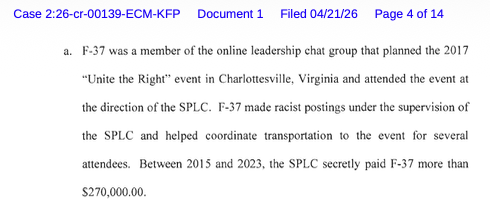
🧵🚨 THREAD: How the Charlottesville rally and SPLC birthed an entire billion-dollar-plus "democracy" ecosystem 🚨
11 federal counts. Wire fraud. Money laundering conspiracy. But here's what the SPLC headlines are missing:
• The indictment describes a paid informant in the leadership chat that PLANNED Unite the Right
• That informant "helped coordinate transportation" to the rally... at SPLC's direction
• There is ONE publicly identified organizer whose documented role was transportation coordinator
• His Discord posts about running over protesters were made 26 DAYS before Heather Heyer was killed by a car
• The indictment says postings were made "under the supervision of the SPLC"
• Charlottesville then became the founding event for a billion-dollar political machine
• SPLC installed itself as that machine's definitional gatekeeper
I report. You draw your own conclusions.
As always, patience as I pull together the thread. 👇
Dans le manifeste "techno-optimiste" de Marc Andreessen, il y a une phrase qui m'a marqué :
"Our enemies are not bad people – but rather bad ideas."
Nos ennemis ne sont pas des mauvaises personnes. Ce sont des mauvaises idées.
Prenons Jancovici. L'homme est brillant, sincère, travailleur. Il ne se lève pas le matin en se disant qu'il va nuire à l'humanité. Mais l'idée qu'il porte la décroissance, le rationnement, la frugalité érigée en horizon civilisationnel est une idée profondément destructrice. Elle prend des esprits brillants et les transforme en commissaires politiques d'un futur appauvri.
Et le plus fascinant, c'est ce que cette idée fait aux gens qui l'adoptent.
Dans mon entourage, une grosse partie de mes amis est sur cette ligne décroissantiste, avec tout le package qui va avec. L'argent c'est mal mais ils en veulent. Il faut moins prendre l'avion mais ils rêvent de voyager partout. Il faut consommer moins mais ils ne renoncent à rien de ce qu'ils aiment vraiment.
Et tous ont un point commun : ils sont déprimés. L'un d'eux m'a même confié qu'il était sous antidépresseurs.
Ce n'est pas un hasard. C'est mécanique.
Quand tu crois que ton désir de vivre, de créer, de t'élever est moralement suspect tu te détruis de l'intérieur. Tu passes ta vie à t'excuser d'exister. Tu vis dans la dissonance permanente entre ce que ton corps veut (plus, mieux, plus loin) et ce que ton idéologie t'ordonne (moins, sobre, immobile).
D'où ma théorie :
Quand on pense quelque chose de fondamentalement faux décroissance, communisme, extrémisme religieux (de tout ordre) ce n'est qu'une question de temps avant que ça devienne vraiment destructeur.
D'abord pour soi. Puis pour les autres.
Les mauvaises idées tuent. Lentement chez ceux qui y croient, brutalement chez ceux qui les subissent.
C'est pour ça que la bataille des idées n'est pas un luxe d'intellectuel. C'est la bataille la plus importante de notre époque.
🚨 AMERICANS NEED TO UNDERSTAND WHAT IS HAPPENING RIGHT NOW.
Most people are still viewing President Trump’s foreign policy through the old post-WW2 lens. That lens is obsolete. What P Trump is attempting is not a minor policy adjustment. It is a complete restructuring of the global economic and geopolitical order.
Read that again.
For 80 years, America operated under a “globalist” framework:
• America paid the bills
• America defended everyone
• America opened its markets
• America carried NATO
• America protected shipping lanes
• America subsidized allies
• America tolerated trade imbalances
• America exported democracy while factories disappeared and debt exploded at home
That system enriched multinational corporations, global institutions, foreign economies, and permanent bureaucracies.
But millions of Americans watched:
- manufacturing collapse
- wages stagnate
- communities hollow out
- endless wars drain trillions
- China rise into a superpower using America's own economic system against itself
President Trump is trying to replace that model with something entirely different:
👉 A transactional, America First economic coalition built around ENERGY, TRADE, SECURITY, MANUFACTURING, and STRATEGIC DEALS.
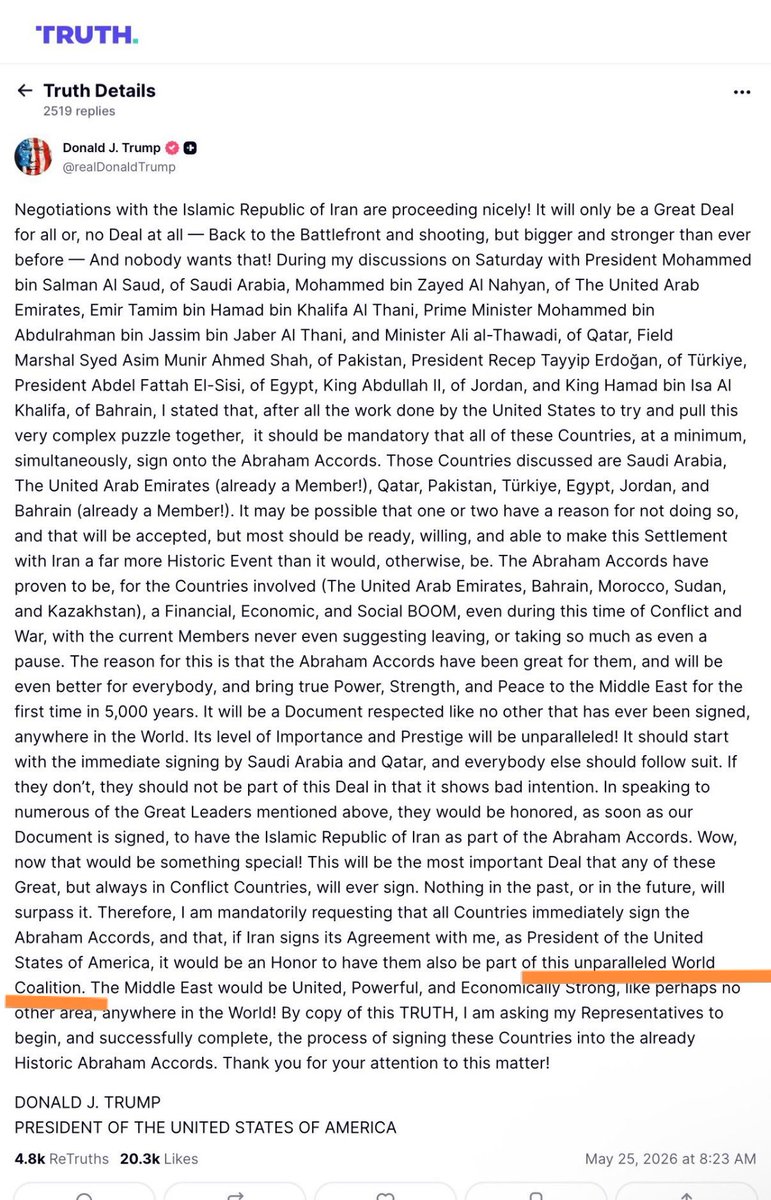
That Truth Social post about the Abraham Accords wasn’t just another statement. It was a blueprint.
If this succeeds, you are looking at the construction of a massive economic/security network that could include:
- The United States
- Saudi Arabia
- UAE
- Qatar
- Egypt
- Jordan
- Israel
- Pakistan
- Türkiye
- India
- parts of Latin America
- strategic Indo-Pacific partners
- and critically, a normalization framework with BOTH China and Russia where competition still exists, but catastrophic conflict is avoided through economic leverage, negotiated spheres of influence, energy coordination, and transactional diplomacy
This is one of the most misunderstood parts of President Trump’s geopolitical strategy.
Many Americans still think in Cold War terms:
America vs Russia.
America vs China.
Permanent hostility.
Permanent escalation.
But President Trump’s approach is far more transactional and realist.
Instead of trying to ideologically remake the world, the strategy appears focused on:
- preventing direct great-power war
- reducing the chance of nuclear escalation
- using trade leverage instead of permanent military occupation
- creating economic interdependence where possible
- forcing burden-sharing among allies
- and positioning America as the central negotiating power between rival blocs
That does NOT mean “surrendering” to China or Russia.
It means recognizing a reality many in Washington refused to accept for decades:
China is already an economic superpower.
Russia remains a military and energy superpower.
The question is no longer whether they exist as major powers.
The question is whether America can position itself at the center of a new balance of power that benefits Americans instead of endlessly draining American wealth trying to maintain a fading unipolar system.
This is why you are seeing:
• negotiations instead of immediate escalation
• energy diplomacy
• tariff wars instead of troop surges
• pressure campaigns tied to trade access
• selective partnerships instead of blind alliances
• attempts to split rival coalitions apart through deals
President Trump is essentially trying to create overlapping economic zones where America is no longer carrying the world for free - but instead sits at the center of the world’s most powerful deal-making network.
Combined economic power? Potentially $65-75+ TRILLION in GDP. Over HALF the global economy.
Think about what that means.
This is about:
✅ energy dominance
✅ shipping lanes
✅ critical minerals
✅ AI infrastructure
✅ manufacturing chains
✅ food security
✅ military positioning
✅ trade corridors
✅ investment flows
✅ currency leverage
✅ stabilizing relations between major powers where possible
✅ isolating hostile behavior through leverage instead of endless occupation wars
And younger Americans especially need to understand this part:
THIS DIRECTLY IMPACTS YOUR FUTURE.
If America remains trapped in the old system:
- debt keeps exploding
- jobs continue leaving
- housing becomes less affordable
- wages get crushed by global competition
- endless foreign entanglements continue
- America slowly declines like other aging empires
But if America successfully repositions itself at the center of a new energy/manufacturing/trade coalition:
- industrial jobs return
- energy prices stabilize
- strategic industries reshoring accelerates
- infrastructure investment increases
- supply chains become more secure
- America regains leverage instead of bleeding leverage
This is why you see such aggressive pushes around:
• tariffs
• domestic manufacturing
• energy independence
• critical minerals
• Middle East normalization
• India relations
• securing trade routes
• reducing dependency on hostile supply chains
• stabilizing great-power relations through leverage and economic pressure instead of permanent military escalation
This is not random.
This is an attempt to build a new geopolitical architecture for the next 50 years.
And whether people like President Trump or hate him personally is becoming irrelevant to the scale of what is unfolding.
The Abraham Accords themselves are historic because they shift the Middle East from perpetual religious/geopolitical conflict toward economic interdependence.
Peace through prosperity.
Trade instead of proxy wars.
Economic incentives instead of permanent instability.
That changes everything:
- investment floods in
- shipping stabilizes
- energy markets calm
- regional growth accelerates
- tourism expands
- infrastructure projects explode
- security cooperation increases
And if normalization frameworks eventually extend outward toward Russia and even portions of China’s economic system, you could be looking at the emergence of the largest interconnected economic balancing structure in modern history.
Not a utopia.
Not permanent peace.
Not the end of competition.
But a system where economic incentives and strategic leverage become more powerful than endless military occupations and ideological crusades.
The old order was based on permanent management of conflict.
This new model attempts to monetize stability.
Will it fully work? Nobody knows yet. There are enormous risks, contradictions, and power struggles involved. Traditional allies are nervous. Global institutions hate it. Rival powers are cautious. Some countries will resist. Others will attempt to manipulate it.
But Americans should at least understand the scale of the play being attempted here.
This is not “normal politics.”
This is a potential civilizational realignment.
And if younger Americans do not start paying attention to economics, geopolitics, energy, trade, manufacturing, and global power shifts now - they are going to inherit a world they do not understand.
Read. Research. Think critically.
And SHARE this so more Americans understand what may be unfolding in real time.
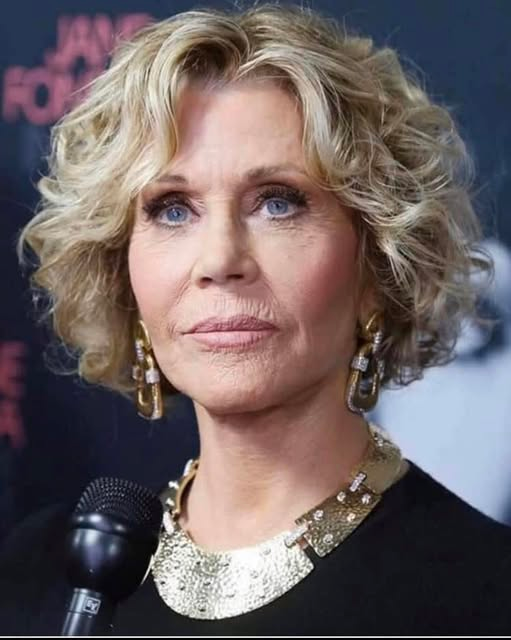
Barbara Walters writes:
Unfortunately, many have forgotten and still countless others have never known how Ms. Fonda betrayed not only the idea of our country, but specific men who served and sacrificed during the Vietnam War.
The first part of this is from an F-4E pilot. The pilot's name is Jerry Driscoll, a River Rat. In 1968, the former Commandant of the USAF Survival School was a POW in Ho LoPrison, the "Hanoi Hilton."
Dragged from a stinking cesspit of a cell, cleaned, fed, and dressed in clean PJ's, he was ordered to describe for a visiting American "peace activist" the "lenient and humane treatment" he'd received.
He spat at Ms. Fonda, was clubbed, and was dragged away. During the subsequent beating, he fell forward onto the camp commandant 's feet, which sent that officer berserk.
In 1978, the Air Force Colonel still suffered from double vision (which permanently ended his flying career) from the Commandant's frenzied application of a wooden baton.
From 1963-65, Col. Larry Carrigan was in the 47FW/DO (F-4E's). He spent 6 years in the "Hanoi Hilton". . . The first three of which his family only knew he was "missing in action." His wife lived on faith that he was still alive. His group, too, got the cleaned-up, fed and clothed routine in preparation for a "peace delegation" visit.
They, however, had time and devised a plan to get word to the world that they were alive and still survived. Each man secreted a tiny piece of paper, with his Social Security Number on it, in the palm of his hand. When paraded before Ms. Fonda and a cameraman, she walked the line, shaking each man's hand and asking little encouraging snippets like: "Aren't you sorry you bombed babies?" and "Are you grateful for the humane treatment from your benevolent captors?" Believing this HAD to be an act, they each palmed her their sliver of paper.
She took them all without missing a beat. . . At the end of the line and once the camera stopped rolling, to the shocked disbelief of the POWs, she turned to the officer in charge and handed him all the little pieces of paper...
Three men died from the subsequent beatings. Colonel Carrigan was almost number four but he survived, which is the only reason we know of her actions that day.
I was a civilian economic development adviser in Vietnam, and was captured by the North Vietnamese communists in South Vietnam in 1968, and held prisoner for over 5 years.
I spent 27 months in solitary confinement; one year in a cage in Cambodia; and one year in a 'black box' in Hanoi. My North Vietnamese captors deliberately poisoned and murdered a female missionary, a nurse in a leprosarium in Banme Thuot, South Vietnam, whom I buried in the jungle near the Cambodian border. At one time, I weighed only about 90 lbs. (My normal weight is 170 lbs.)
We were Jane Fonda's "war criminals."
When Jane Fonda was in Hanoi, I was asked by the camp communist political officer if I would be willing to meet with her. I said yes, for I wanted to tell her about the real treatment we POWs received. . . and how different it was from the treatment purported by the North Vietnamese, and parroted by her as "humane and lenient."
Because of this, I spent three days on a rocky floor on my knees, with my arms outstretched with a large steel weight placed on my hands, and beaten with a bamboo cane.
I had the opportunity to meet with Jane Fonda soon after I was released. I asked her if she would be willing to debate me on TV. She never did answer me.
These first-hand experiences do not exemplify someone who should be honored as part of "100 Years of Great Women." Lest we forget. . . "100 Years of Great Women" should never include a traitor whose hands are covered with the blood of so many patriots.
There are few things I have strong visceral reactions to, but Hanoi Jane's participation in blatant treason, is one of them. Please take the time to forward to as many people as you possibly can. It will eventually end up on her computer, and she needs to know that we will never forget. See less
Every year, I share this video of French caretakers who take sand from Omaha Beach in Normandy, and scrub them into the letters to give them the gold coloring.
They do this for all 9,386 US soldiers who died.
France also gave us this land as American soil. #MemorialDayWeekend