Just published skillgrade v0.1.5! 🚀
• Added support for the OpenCode
• Configurable grader provider support
• Improved overall error handling & stability
• Fixes for the local provider
npm i -g skillgrade
https://t.co/NPVCKSG7CI
Angular is taking the stage at Google I/O 🎙️ We are so excited to have Mark "Techson" Thompson representing the team this year.
Don’t miss his session on "What's New in Angular" ✨
Evaluating your skills to see if they are useful and ensuring they don't regress as you change them is getting increasingly important
Here's the tool for the job! https://t.co/NPVCKSG7CI
I want to show you a demo of what I believe the future of user interaction to look like. This is ChatGPT controlling a live energy simulator (MCP App). I'll explain why today's architecture is clunky, and how WebMCP makes agent-driven UX much simpler. Read the article/watch 👇
Physician use of AI nearly doubled in a year.
Today we launched OpenAI for Healthcare, a HIPAA-ready way for healthcare organizations to deliver more consistent, high-quality care to patients.
Now live at AdventHealth, Baylor Scott & White, UCSF, Cedars-Sinai, HCA, Memorial Sloan Kettering, and many more. https://t.co/V7jZEtNBcV
⚡️OSS Project Spotlight⚡️
Below is a powerful resource monitoring tool for Linux that provides deep insights into system performance, including CPU, memory, I/O, and more — all from an intuitive terminal interface.
Learn more: https://t.co/YVG0NPlzNS
What will the future of web apps look like? We've been exploring the possibilities.
Join Devin from the Angular team on Nov 7th for a livestream during which he'll teach you how to build dynamically generated apps like this one 🤩
➡️ https://t.co/tFbShYmh7j
9 real-world MCP projects for AI engineers covering:
- RAG
- Memory
- MCP client
- Voice Agent
- Agentic RAG
- and much more!
Find them in the GitHub repo below.
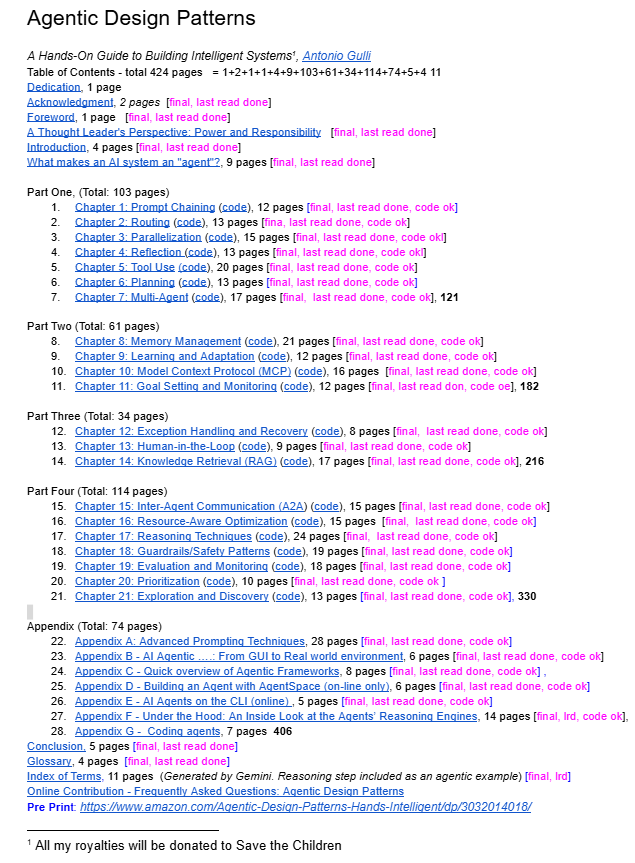
The guy who shipped 3 AI agents at Google I/O 2025 just open-sourced his 424-page design playbook.
Production-ready code for 21 patterns across the entire stack
Free via Google Drive
Want to know what's next for Angular + AI? Then join us this September for updates, demos, special guests and more ✨
Tune in Sep 16, 2025 at 9AM Pacific on YouTube
https://t.co/byc7P1hbCH
🛠️🧭 How to Build MCP AI Agents from Scratch – Even If You’ve Never Used MCP Before
𝗧𝗵𝗶𝘀 𝗶𝘀 𝗮 𝟵-𝗦𝘁𝗲𝗽 𝗿𝗼𝗮𝗱𝗺𝗮𝗽 𝗳𝗿𝗼𝗺 𝗹𝗼𝗰𝗮𝗹 𝗔𝗜 𝗔𝗴𝗲𝗻𝘁𝘀 𝘁𝗼 𝗿𝗲𝘂𝘀𝗮𝗯𝗹𝗲 𝗔𝗜 𝗔𝗽𝗽𝘀.
》Step 1: Define the Tool’s Goal and Context
✸ What does the tool solve?
✸ What input/output format will it follow?
✸ Where will it be used — inside which AI Agent App (e.g., VS Code, Claude)?
→ Example: A document retriever tool for hospital knowledge base
》Step 2: Build Your AI Agents Locally
✸ Load documentation (e.g., using URLLoader)
✸ Chunk and embed content
✸ Use OpenAI embeddings or similar
✸ Store in a local vector DB (Chroma, FAISS)
→ Output: A working semantic retriever
》Step 3: Wrap It and Test It Locally
✸ Use @tool from langchain_core
✸ Connect it to your vector store
✸ Return a clean string or list of results
→ Test locally before MCP integration
》Step 4: Build the MCP Server with fastmcp
✸ Use the model-context-protocol SDK
✸ Register your tool using add_tool()
✸ Optionally add resources like .txt docs
→ This exposes your tool to AI Agent Apps
》Step 5: Run & Inspect the MCP Server
✸ Use MCP Inspector to simulate tool usage
✸ Verify tool inputs/outputs
✸ Check resource access
→ Check the server logic in isolation
》Step 6: Configure the AI Agent Project
✸ Create a script like my_mcp_tool.py
✸ Use fastmcp to launch the server
✸ Add config for each AI Agent App (VS Code, Claude, Windsurf):
• Python path
• Server script
• API key (if needed)
→ Your MCP client now talks directly to the apps
》Step 7: Run the Tool Inside the Project
✸ Open VS Code or Claude
✸ Ask a question — the app will call your tool
✸ Retrieved docs will appear in the answer
→ Now your local AI logic is a working server
》Step 8: Use MCP Resources (Optional)
✸ Add resource files like .pdf or .txt
✸ Claude Desktop can inject them into prompts
✸ Useful for long context or doc Q&A
→ Resources = persistent memory for agents
》Step 9: Scale Across AI Projects
✸ Reuse your server in other MCP-aware environments
✸ One config, many tools
✸ Share tools across teams and products
→ Write once, deploy everywhere
https://t.co/QyhwJZDddl
≣≣≣≣≣≣≣≣≣≣≣≣≣≣≣≣≣≣≣≣≣≣≣≣≣≣
⫸ꆛ Want to build Real-World AI Agents?
Join My 𝗛𝗮𝗻𝗱𝘀-𝗼𝗻 𝗔𝗜 𝗔𝗴𝗲𝗻𝘁 𝟱-𝗶𝗻-𝟭 𝗧𝗿𝗮𝗶𝗻𝗶𝗻𝗴!
➠ Build Agents for Healthcare, Finance, Smart Cities & More
➠ Master 5 Modules: 𝗠𝗖𝗣 · LangGraph · PydanticAI · CrewAI · Swarm
➠ Work with Text, Audio, Video, Tabular, and Vision Data
👉 𝗘𝗻𝗿𝗼𝗹𝗹 𝗡𝗢𝗪 (𝟱𝟲% 𝗢𝗙𝗙):
https://t.co/5i2v1fIrhJ
The AI Engineering book from @chipro is GOAT.
But I didn't realize its repo has a goldmine .md of the resources she used to write the book. These are papers and blogs you can use to learn about making LLM apps, prompt engineering, fine-tuning, RAG, and much more.
everyone says they want to understand LLMs.
this repo makes you prove it.
you write the attention.
you train from scratch.
you break it. then fix it.
no huggingface. no walkthroughs.
#llm
𝗔𝗜 𝗘𝗻𝗴𝗶𝗻𝗲𝗲𝗿𝗶𝗻𝗴 𝗟𝗲𝗮𝗿𝗻𝗶𝗻𝗴 𝗥𝗼𝗮𝗱𝗺𝗮𝗽. 👇
It is created with beginners in mind but can be easily adapted if you are proficient in some of the areas already.
𝘖𝘯 𝘢 𝘩𝘪𝘨𝘩 𝘭𝘦𝘷𝘦𝘭:
𝗙𝗼𝗰𝘂𝘀 𝗼𝗻 𝗙𝘂𝗻𝗱𝗮𝗺𝗲𝗻𝘁𝗮𝗹𝘀 throughout the journey, but don't focus on mastering them early - start building first.
- Software Engineering Fundamentals: REST APIs, Testing, Async Programming.
- ML Fundamentals: Statistics (extremely useful for evals as well), Types of ML Models.
- Observability and Evaluation: Instrumentation, Observability Platforms, Evaluation Techniques, AI Agent Evaluation.
✅ Different Agentic Systems require different fundamental knowledge to implement.
Learn in order.
𝗟𝗟𝗠 𝗔𝗣𝗜𝘀:
- Types of LLMs.
- Structured Outputs.
- Prompt Caching.
- Multi-modal models.
𝗠𝗼𝗱𝗲𝗹 𝗔𝗱𝗮𝗽𝘁𝗮𝘁𝗶𝗼𝗻:
- Prompt Engineering.
- Tool Use.
- Finetuning.
𝗦𝘁𝗼𝗿𝗮𝗴𝗲 𝗳𝗼𝗿 𝗥𝗲𝘁𝗿𝗶𝗲𝘃𝗮𝗹:
- Vector Databases.
- Graph Databases.
- Hybrid retrieval.
𝗥𝗔𝗚 𝗮𝗻𝗱 𝗔𝗴𝗲𝗻𝘁𝗶𝗰 𝗥𝗔𝗚:
- Data preparation.
- Data retrieval and generation.
- Reranking.
- MCP.
- LLM Orchestration Frameworks.
𝗔𝗜 𝗔𝗴𝗲𝗻𝘁𝘀:
- AI Agent Design Patterns.
- Multi-Agent systems.
- Memory.
- Human in or on the loop.
- A2A, ACP etc.
- Agent Orchestration Frameworks.
𝗜𝗻𝗳𝗿𝗮𝘀𝘁𝗿𝘂𝗰𝘁𝘂𝗿𝗲:
- Kubernetes.
- Cloud Services.
- CI/CD.
- Model Routing.
- LLM deployment.
𝗦𝗲𝗰𝘂𝗿𝗶𝘁𝘆:
- Guardrails.
- Testing LLM based applications.
- Ethical considerations.
𝗙𝗼𝗿𝘄𝗮𝗿𝗱 𝗹𝗼𝗼𝗸𝗶𝗻𝗴 𝗲𝗹𝗲𝗺𝗲𝗻𝘁𝘀:
- Voice and Vision Agents.
- Robotics Agents.
- Computer use.
- CLI Agents.
- Automated Prompt Engineering.
I teach all of these, hands-on in my bootcamp: https://t.co/gWBu8OLTzn
Did I miss anything? Let me know in the comments!
#LLM #AI #MachineLearning
If you’re serious about learning agentic AI,
here’s a pathway I’ve found highly effective:
I’ve been diving deeper into how to build multi-agent systems.
A lot of courses out there are shallow in coverage.
To build real AI agents, you need more than just tool usage or prompt chaining.
You need a strong grasp of concepts like agent reasoning, orchestration, state management, and more.
Building multi-agent systems adds a whole additional layer of complexity on top.
I was looking for something that was comprehensive and covered the underlying concepts. While being equally hands-on with building multi-agent systems.
Something that would give me a strong understanding of how to build multi-agent systems, not just how to use the latest trending tool.
Udacity's Agentic AI Nanodegree program checked those boxes.
• It’s framework-agnostic. You’re not just learning one tool. You’re learning how agentic systems work under the hood.
• The projects aren’t basic. You’re challenged to build complex multi-agent systems.
• And there’s actual human feedback on your work from subject matter experts.
Check it out: https://t.co/6yi6Eaw2Eg
It's not for the faint-hearted. The course has a strong level of complexity, which is exactly what's needed.
Udacity gave me early access and offered to sponsor a post if I liked it. Here we are. It’s solid, and a great option if you’re serious about building agentic systems.
💬 Are you actively upskilling in agentic AI? ↓