A lot of you have pinged me to ask - why are you doing Temple? Why did you leave a ~$35b company you founded 18 years ago to chase a niche health wearable? This doesn’t sound rational.
Why did I leave Eternal? What are we building at Temple? What’s our vision statement? What do we have in store for humanity?
I am going to tell you in 4 hours from now (drafting the note as we speak). Stay tuned.
PS – holier-than-thou Indian doctors can skip this lol.
I started Zomato with a spirit of service. Blinkit Ambulance is what that spirit of service looks like today.
In the last 2 years, we have served ~20,000 emergency cases (~42,000 cases in total). We haven't charged a single rupee for any of them. And we want to keep it that way.
With everything free, a growing share of bookings are for routine checkups, hospital visits and hospital-to-home transfers, trips that an Uber or private transport could have handled just as easily. Every such booking keeps a fully equipped emergency ambulance with paramedics off the road when someone's life may depend on it.
So we are making a change from now onwards: Emergency transfers – free, as always. Non-emergency transfers – ₹2,500, charged after the trip. Broadly in line with what private ambulances charge. This money goes to Eternal Foundation, which runs these ambulances and will help us scale them even further.
We hope that this charge will dramatically drop the usage of our Ambulances for non-emergency cases. 10-minute ambulances have saved and can save thousands of lives, and we need to keep them available for emergencies that need them the most.
One more thing. Scaling high quality ambulances is hard. The biggest bottleneck is trained, empathic paramedics. Our training academy is scaling as fast as we can without compromising on quality, and @albinder and team are committed to bringing Blinkit Ambulance to all major cities in India in the next 2-4 years.
Stay well, and I pray you don't need us. @sparsh_sehgal – I wish your grandma a speedy recovery, and I am so glad we were able to be there on time.
In FY2026, 31 lakh Indians chose to earn through Zomato and Blinkit as delivery partners. That’s 57% more than the previous year.
Behind every one of these numbers is a person with interests and ambitions. A student balancing classes, an entrepreneur building something of their own, a dancer pursuing their passion, and a parent juggling work and family.
We co-created this song with @ItsAmitTrivedi to celebrate our delivery partners, their many pursuits, and the journeys they’re on.
We’re proud to be a part of each and every one of them.
Last one on this topic, and I have been holding this in myself for a while.
For centuries, class divides kept the labor of the poor invisible to the rich. Factory workers toiled behind walls, farmers in distant fields, domestic help in backrooms. The wealthy consumed the fruits of that labor without ever seeing the faces or the fatigue behind it. No direct encounter, no personal guilt.
The gig economy shattered that invisibility, at unprecedented scale.
Suddenly, the poor aren't hidden away. They're at your doorstep: the delivery partner handing over your ₹1000+ biryani, late-night groceries, or quick-commerce essentials. You see them in the rain, heat, traffic, often on borrowed bikes, working 8–10 hours for earnings that give them sustenance. You see their exhaustion, their polite smile masking frustration with life in general.
This is the first time in history at this scale that the working class and consuming class interact face-to-face, transaction after transaction. And that discomfort with our own selves is why we are uncomfortable about the gig economy. We want these people to look our part, so that the guilt we feel while taking orders from them feels less.
We aren't just debating economics. We are confronting guilt. That ₹800 order might equal their entire day's earnings after fuel, bike rent, and app cuts. We tip awkwardly, or avoid eye contact, because the inequality is no longer abstract. It's personal.
Pre-gig era, the rich could enjoy luxury without moral discomfort. Labor was out of sight. Now, every doorbell ring is a reminder of systemic inequality. That's why debates explode. It's not just policy. It's emotional reckoning. Some defend the system (“they choose it”), others demand change (“this isn't progress, its exploitation”).
And here’s the uncomfortable twist: the unsaid ask of clumsy ‘solutions’ isn’t dignity. It is about returning to invisibility.
Ban gig work and you don’t solve inequality. You remove livelihoods. These jobs don’t magically reappear as formal, protected employment the next day. They disappear, or they get pushed back into the informal economy where there are even fewer protections and even less accountability. Over-regulate it until the model breaks, and you achieve the same outcome through paperwork instead of slogans: the work evaporates, prices rise, demand collapses, and the people we claim to protect are the first to lose income.
And then what happens?
The rich get their old comfort back. Convenience returns without faces. Guilt dissolves. We go back to clean abstractions and moral posturing from a distance. The poor don’t become safer, they become invisible again: back in cash economies, back in backrooms, back in shadows where regulation rarely reaches and dignity isn’t even debated.
The gig economy just exposed the reality of inequality to the people who previously had the luxury of not seeing it. The doorbell is not the problem. The question is what we do after opening the door.
Visibility is the price of progress. We can either use this discomfort to build something better (which we keep doing continuously as delivery partners are our backbone), or we can ban and over-regulate our way back into ignorance. One of those choices improves lives. The other simply helps the consuming class feel virtuous in the dark.
I am all for peaceful protests against anything and everything. But violent protests and stopping others who want to work from working is not okay (proof attached).
Here’s what we know – a number of these protestors were not even our delivery partners. They were agents of political interests, piggybacking on the narrative to gain political mileage.
Once upon a time, people believed the Earth was flat. And then they didn’t. Then they believed the sun revolved around the Earth. Until they didn’t.
Humanity has built rockets, sequenced genomes, and cloned cells. Yet, in all our brilliance, we may have missed something glaringly simple.
At Continue, we’ve been chasing a crazy insight into why we age; a pattern that’s been hiding in plain sight for eternity. We’ve tried desperately to disprove it. We couldn’t.
Two years later, clues from biology, physics, evolution, and medicine are all pointing in the same direction.
In 48 hours, I’ll share what we’ve found and how one element of our environment may hold the key to slowing human aging.
Stay tuned.
This isn't an ad. It’s a belief in effort over everything else.
Every day, millions of Indians tap ‘Place Order’ on @zomato in between their routines, responsibilities and dreams. Some are building startups. Some are raising kids. Some are taking a break.
Different stories, one thing in common: Consistent effort.
We’re not here to celebrate the stars, but the fire that built them. The fire each one of us carries inside — while food is just the fuel.
To everyone chasing something they care deeply about and showing up for it — we're glad to be a small part of your journey ❤️
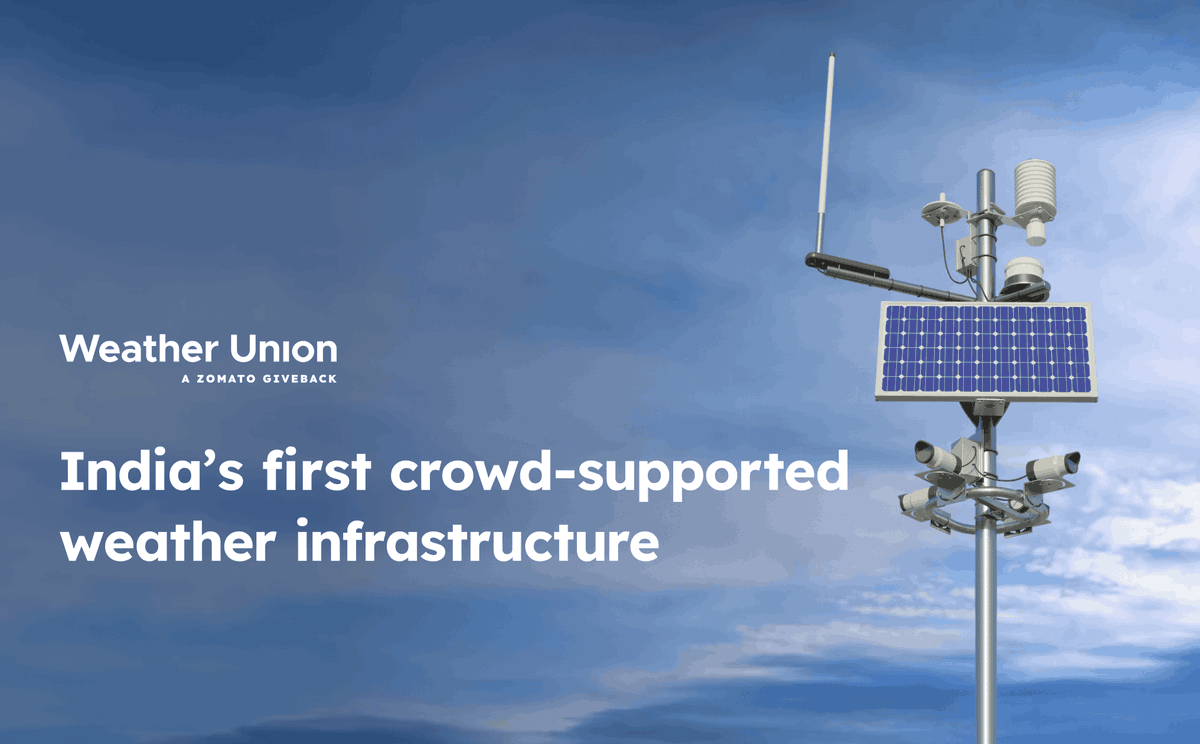
Excited to unveil India's first crowd-supported weather infrastructure, https://t.co/qE9kkfoisG. A proprietary network of 650+ on-ground weather stations, it is the largest private infrastructure of its kind in our country.
These weather stations, developed by Zomato, provide localised, real-time information on key weather parameters such as temperature, humidity, wind speed, rainfall etc. Currently available across 45 large cities, we are expanding this in other Indian cities very soon.
This rich data holds significant potential in unlocking weather use cases for enterprises and research institutes. Having already collaborated with CAS - IIT Delhi, we expect more institutions and companies to benefit from this and contribute towards the greater good of our economy.
At Zomato, it was crucial for us to have access to precise and real-time weather information to make the right business decisions to serve our customers better. Hence, we took it upon ourselves to develop a solution capable of empowering us on this front.
We are now opening up free access to this (through an API) to all institutions and companies in the country. Wait. What? Free? Really? Yes, we believe that this data is too valuable to keep to ourselves or to monetise; therefore, as a Zomato Giveback, we are opening up access to this data to everyone for public good. Multiple companies and public institutions should use real-time weather data, to boost the productivity of our economy.
Also, a lot of Zomato employees have hosted weather stations at their homes. As we look forward to further expanding this infrastructure, we welcome volunteers who want to provide us space on their premises to install these weather stations and contribute to nation building.
Breakeven Points: Beyond Idioms
Idioms are very good simplified mental models, they guide us on how we choose which technology to use. But idioms are seldom universally applicable, in extreme cases, they often always fail.
Breakeven points help in building a better mental model, that can help in easily comparing different offerings and figure out what would be best for your workload.
India has the largest percentage of vegetarians in the world, and one of the most important feedback we’ve gotten from them is that they are very particular about how their food is cooked, and how their food is handled.
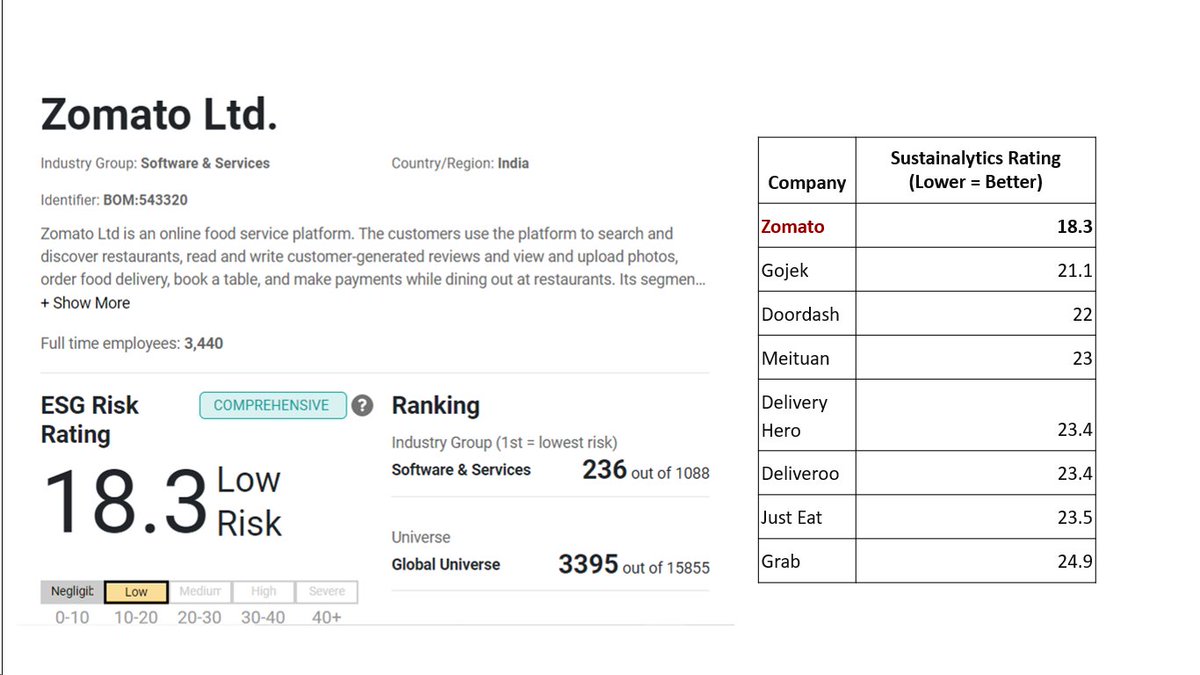
Our focus on building a sustainable business now reflects in our ESG ratings. We are the only food delivery company in the world which has achieved a low risk ESG score on Sustainalytics.
Having said that, this is only a start, and we are just 1% done.
Introducing Opti Owl Cloud 🚀
Big news! We're launching our Cost Debugging Platform in private beta!
https://t.co/SfrpwjjMi6
Ironically building a frugal culture is too costly, it often comes in the way of shipping products faster.
❓ Why building a frugal culture is too costly?
* Analysing and finding the in-efficiencies is a time taking and highly error prone exercise. Even then one might end up solving a problem with very low leverage
* Breaking down costs is really hard, can't break down costs by resources, database query patterns, caching patterns, APIs etc.
read more here - https://t.co/zzsByJVNXr
To join our private beta, please sign up at https://t.co/AKSkSDkqsf
(feel free to DM)
It is said that OPTION SELLING requires very huge capital to generate returns and manage risk.
But it is not TRUE!
A complete guide on how you can start Option Selling to generate active returns with less capital (Rs 1 Lakh) 🧵:
Thank you so so much sir. Means a lot coming from you.
We are proud to continue building Zomato in the service of our nation.
We aim to make profit to build better services, not build services to make profit.
#MadeInIndia
Congratulations!
This is a bright beacon to all investors n startups that a path to profitability can & must be the outcome that all Indian Tech startups work to achieving 👍🏻
Out now - Our Q1FY24 Report: https://t.co/C7AScxXN3A
If you have any further questions or feedback, please email us at [email protected]. Always listening!
Quick snapshots of how we’re powering India’s changing lifestyles 🧵
1/ @zomato, one of India's best tech companies, recently switched from Elasticsearch to ClickHouse
Their new ClickHouse-based logging platform saved them over $1M/year and drastically improved performance 🤯
Read this thread to learn about what they achieved 👇
Love for our moms outshines everything else.🥰
Here’s proof – @zomato recorded the highest ever number of orders yesterday, and ~150 cakes were ordered every minute. Grateful to be a part of your day.