Your 10 years of PM experience might be your biggest liability for the 2026 PMP® Exam.
The PMBOK® Guide – 8th Edition just flipped the script. It's no longer about checklists; it's about a System for Value Delivery.
Are you a Firefighter or a Strategist?
https://t.co/Rk25UtuDpY
I recommend reading The Effective Executive by Peter Drucker.
Its core idea still matters in project management:
Effectiveness is not being busy.
A meeting is not governance.
A report is not control.
A decision is not real until someone owns the action.
Finished Emotional Intelligence by Daniel Goleman.
3/5 ⭐️
Best takeaway: under stress, the emotional brain can hijack the thinking brain, so self-awareness + regulation are leadership skills.
Valuable, but dense/academic and heavy on studies; I lost momentum.
I just finished The Next Renaissance by Zack Kass and I rate it (5/5).
Every Renaissance wasn’t just technological, it was about judgment.
AI will give leaders more options, faster.
But it won’t choose for you.
Tools will be abundant.
Sound leadership judgment won’t.
#AI
PMBOK 8 gives us the right principles.
Flyvbjerg reminds us that principles fail without discipline at commitment time.
Better projects don’t start with dashboards.
They start with better questions—before we say yes.
Highly recommended reading.
Flyvbjerg’s practical lesson:
Think slow. Act fast.
Slow, rigorous planning is cheap and safe.
Fast delivery shortens exposure to Black Swans.
Heroic megaprojects lose.
Modular, repeatable systems win.
Uncomfortable fact:
California High-Speed Rail didn’t fail at the train level.
It never even reached a stage where a rolling-stock supplier like Alstom could be chosen.
Most damage happened before execution.
Rail projects make this painfully visible.
Same pattern, again and again:
• underestimated costs
• overstated benefits
• early political commitment
California High-Speed Rail is a textbook case.
Another nuance I appreciated: uniqueness.
Projects can be organizationally unique
AND still belong to a clear reference class.
Flyvbjerg attacks uniqueness bias—
“this is so special that past data doesn’t apply.”
His counterpoint is decisive:
Value does NOT erase opportunity cost.
Every overrun locks capital, time, and attention.
That means other projects never happen.
A project can create value
and still be the wrong decision.
Interesting tension with PMBOK 8
PMBOK 8 emphasizes value delivery.
Flyvbjerg doesn’t deny value—but challenges this defense:
“Who cares if it was late and over budget? It created value.”
One key idea: project risk is fat-tailed, not normal.
A few extreme failures dominate outcomes.
This aligns closely with Nassim Nicholas Taleb’s Black Swan logic.
Planning for averages is the wrong game.
Strong recommendation: if you work in projects, infrastructure, or governance, this book is a must-read.
Flyvbjerg’s core claim is blunt:
Projects don’t go wrong. They start wrong.
Most mega-projects don’t fail in execution.
They fail the moment we say “approved.”
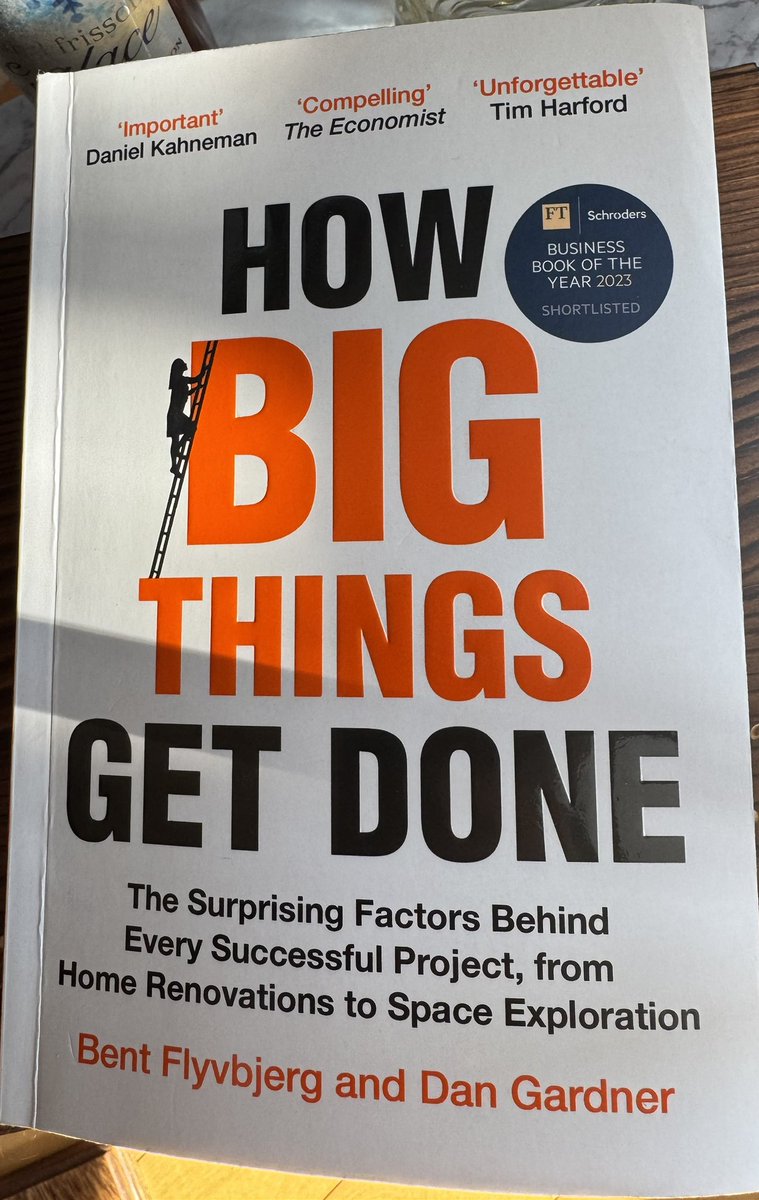
That’s my biggest takeaway after reading How Big Things Get Done by Bent Flyvbjerg.
⭐⭐⭐/5
How to Build Passive Income with AI —Chuck Little
Simple. Practical. No fluff.
Stop trading hours → start building systems
AI ≠ magic.
A multiplier for:
• solving real problems
• validating fast
• automating repeat work
Great starter book. Solid ideas. Easy read
⭐️⭐️⭐️ AI for Everyone – SK Singh
Good intro to AI for beginners. Clear explanations, practical tools, strong mindset: AI as a copilot, not a replacement.
Downside: lots of repetition, slide-like structure.
Solid start, light on depth.
“I will persist until I succeed.”
Not as motivation. As a command.
Failure is not shameful. Quitting is.
Obstacles are not enemies. They are training grounds.
This book reminded me to act now, master habits, and grow into who I was meant to be.