Effectiveness and productivity coach. Photographer. Board game enthusiast. Speaker, trainer & published author. Focusing on sustainable pace in knowledge work.
In Rest, Alex Soojung-Kim Pang describes Berlin violinists marked for greatness: 90-min bursts of focus, real breaks, an hour more sleep than their peers. As Sydney J. Harris put it: the danger isn't machines working like humans, but humans working like machines.
Most of us aren't running too hard. We're stuck in cognitive middle gear: 79% check their phone within 15 min of waking, the average knowledge worker is interrupted every 11 minutes and checks chat every 6. Never quite working, never quite resting.
Basecamp has been saying this for years: real-time sometimes, asynchronous most of the time. Most things can wait. Giving people time to think before responding produces better decisions — and less burnout.
https://t.co/N4oLtnhX11
"Group chat is like being in an all-day meeting with random participants and no agenda." When chat is the default, everything feels urgent. That urgency isn't a side effect — it's what the medium produces.
The feeling of doing something is not the same as getting results. Not all that counts as work actually matters.
More on this in the latest #SustainablePace newsletter: https://t.co/WFCXQD9Q2r
Peter Drucker has written: “Knowledge work is not defined by quantity. It is defined by its results.”
A meeting doesn't get better by running longer.
A report isn't more useful with more pages.
Time spent doesn't make an activity worthwhile.
And yet, most of us feel pressure to look busy even when the real work is done. Last week I had a productive day and then spent an hour wandering between apps. Just to feel like I was earning my place. That I was “working”.
The most productive thing you can do after a meeting might be to sit still and do nothing for a few minutes. Your brain keeps consolidating information and forming memories — even without your attention. Learn to treat idleness as something that has value and is worth protecting.
Greg McKeown (Essentialism) describes a CEO who holds a monthly all-day meeting with no phones or email. His rule: if someone can't attend because they're too busy, something is wrong. If you're too busy to think, you're too busy, period.
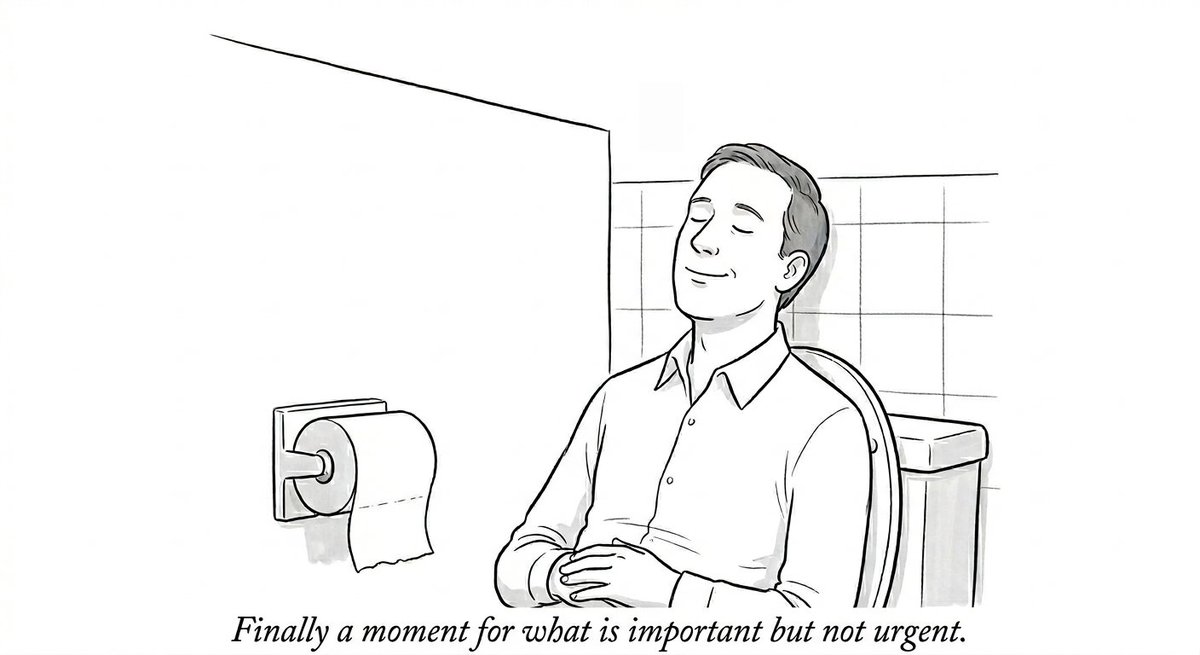
Early in my career I took longer toilet breaks just to kill time. These days people sneak off to the bathroom just to think. Different problem, same location. That's what happens when you design work with no room for thought.
The first piece goes further into how I set out to write the book on sustainable pace, at a sustainable pace, and eventually failed. It seemed like a fitting place to begin.
You can read it here: https://t.co/nEZM3G69pC
I haven't been posting much on the socials. That's because I've been focused on writing a book about #sustainablepace in knowledge work, and nearly burned myself out doing it. That's irony.
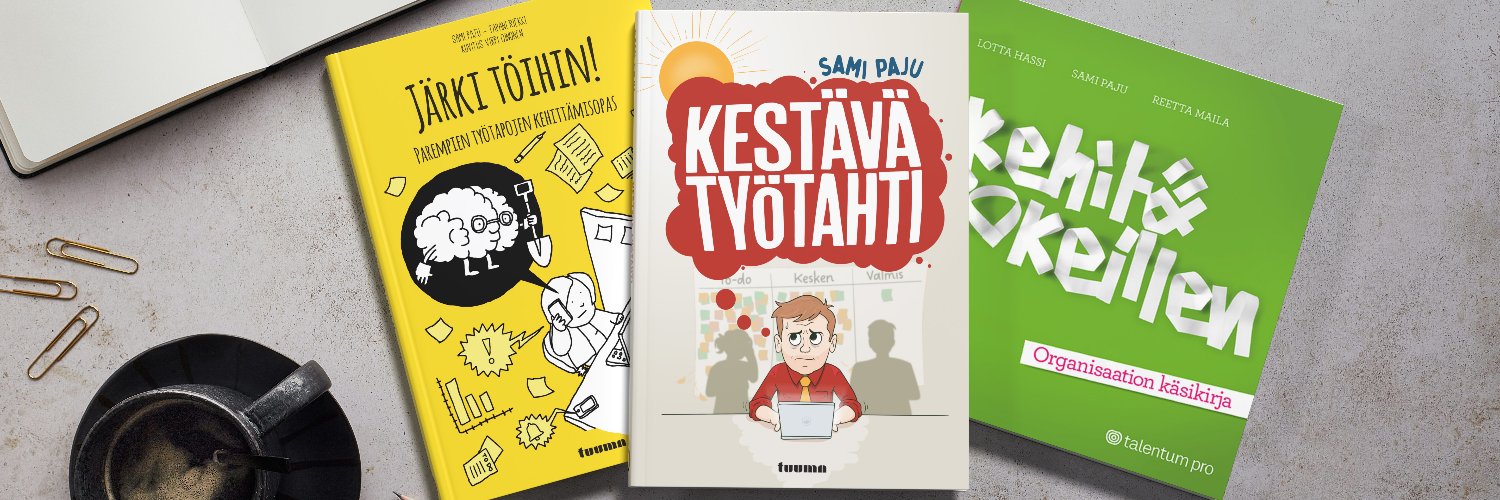
The book is out in August. It's called Kestävä työtahti (sustainable pace in Finnish).
By February, when I finally submitted the manuscript, I had achieved a level of exhaustion usually reserved for people who don't write about avoiding exhaustion.
And because one large writing project apparently wasn't enough, I've now started a newsletter.
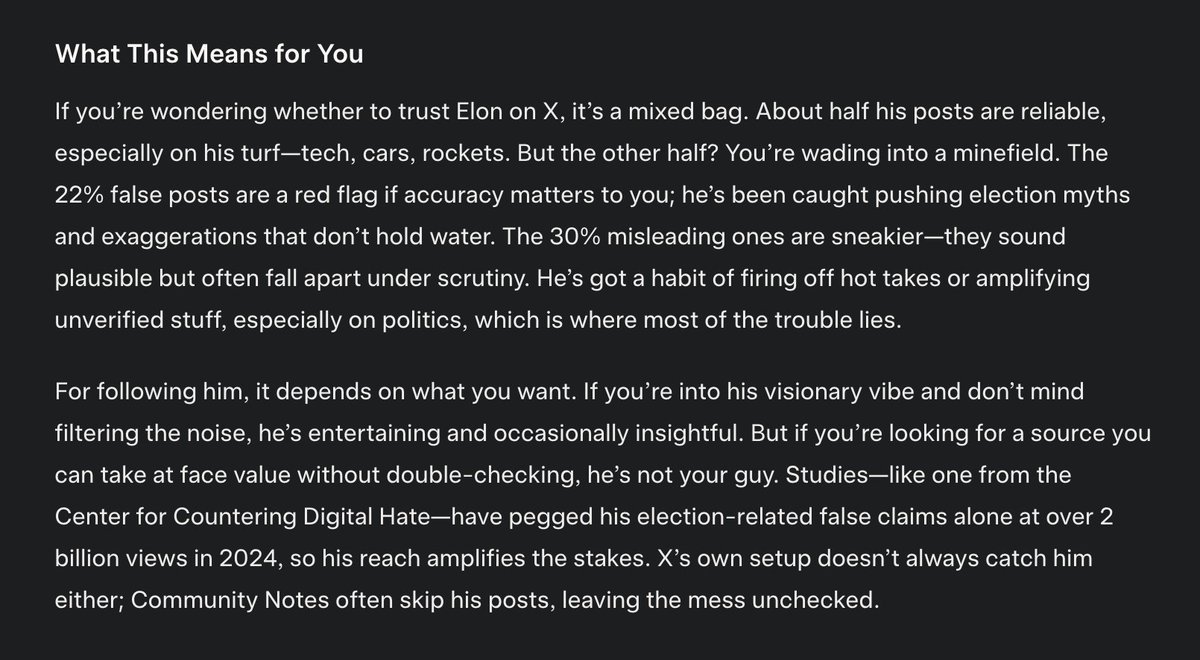
I asked @grok to analyze the last 1,000 posts from Elon Musk for truth and veracity. More than half of what Elon posts on X is false or misleading, while most of the "true" posts are simply updates about his companies.
@NotionHQ it would be nice to be able to disable the : keystroke for adding emojis. This might be rather specific to Finnish language, but we use : a lot in regular writing to separate a postposition from the root word. This makes writing in Notion a very jerky experience.
@Tesla one small software fix that would be highly appreciated here in freezing temperatures: If "auto fold" for mirrors is turned off, prevent Car Wash Mode from folding them automatically.
I think manual recommends auto fold off when it gets cold, but this behavior negates it.
@nntaleb I finally finished reading Fooled by Randomness after all your other books.
Now I am inclined to dive deeper into Popper. What would you recommend for a layman who wants to understand uncertainty at a deeper level?
To everyone with a platform / following:
You can't have freedom of speech without taking responsibility and accountability for the things that you say. The bigger your platform, the bigger your responsibility. Words have real-life consequences to people. Keep that in mind.
Correction to the previous post, which I have now deleted: My Bluesky handle is now '@samipaju.com' so you can find me there at https://t.co/urE7GKuQ8h