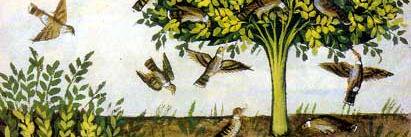
Crucifixion Triptych – Audience of Birds. Artist: Western German School. Date: c. 1374 AD. Medium: tempera on panel; H 41.5 × W 24.6 cm. Collection: The Courtauld, London, Samuel Courtauld Trust.
"It is a tremendous honour to have won this prestigious award and hugely gratifying for the Ashmolean team and our many supporters who helped bring this remarkable painting into a public collection." - Xa Sturgis, Director of the Ashmolean Museum
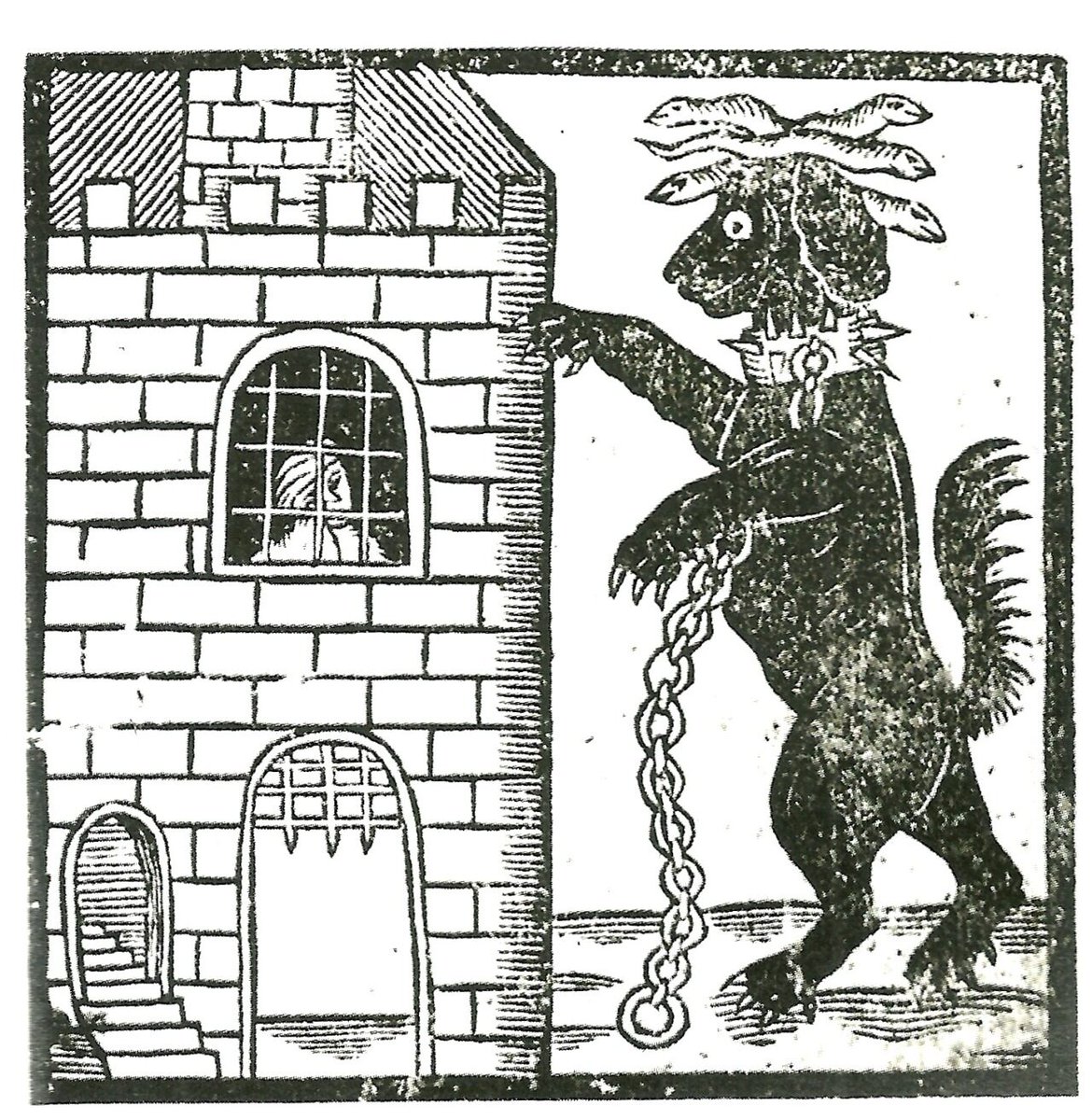
The Black Dog of Newgate, frontispiece woodcut from Luke Huttons pamphlet The Discovery of a London Monster called the Blacke Dogg of Newgate. Printed in London, England. Date: late 16th to early 17th century AD, with a known edition of 1638. Medium: woodcut print on paper. Collection: Guildhall Library, London.
Wonderfully-detailed reconstructed depiction of a pied kingfisher, found in the ruins of a royal palace in ancient Egypt, painted over 3,300 years ago
https://t.co/4mHrdTC0Uk
Woman’s chopping knife (Ulu). Culture: Nuniwarmiut (Cup’ig), Nunivak Island, Alaska, c. 1920–1930 AD. Medium: walrus ivory and iron. Size: 5 × 7½ in. Collection: Minneapolis Institute of Art, Minneapolis.
Are red pigments really made out of bugs? 🐞
In episode 3 of our podcast, Stories in Colour, join historian and writer Amy Butler Greenfield and National Gallery host Beks Leary as they search for the 'perfect red', a pigment that was so prized t inspired international espionage and carried the death penalty if exported without a license!
🎧 Listen wherever you get your podcasts: https://t.co/ypmnJrnoHF
Egyptian “Dummy” Canopy Jars. The jars’ heads represent the Four Sons of Horus. Third Intermediate Period |1076-723 BCE. These jars were used for storing internal organs of the deceased during the mummification process.
Carlos Museum | Atlanta, GA