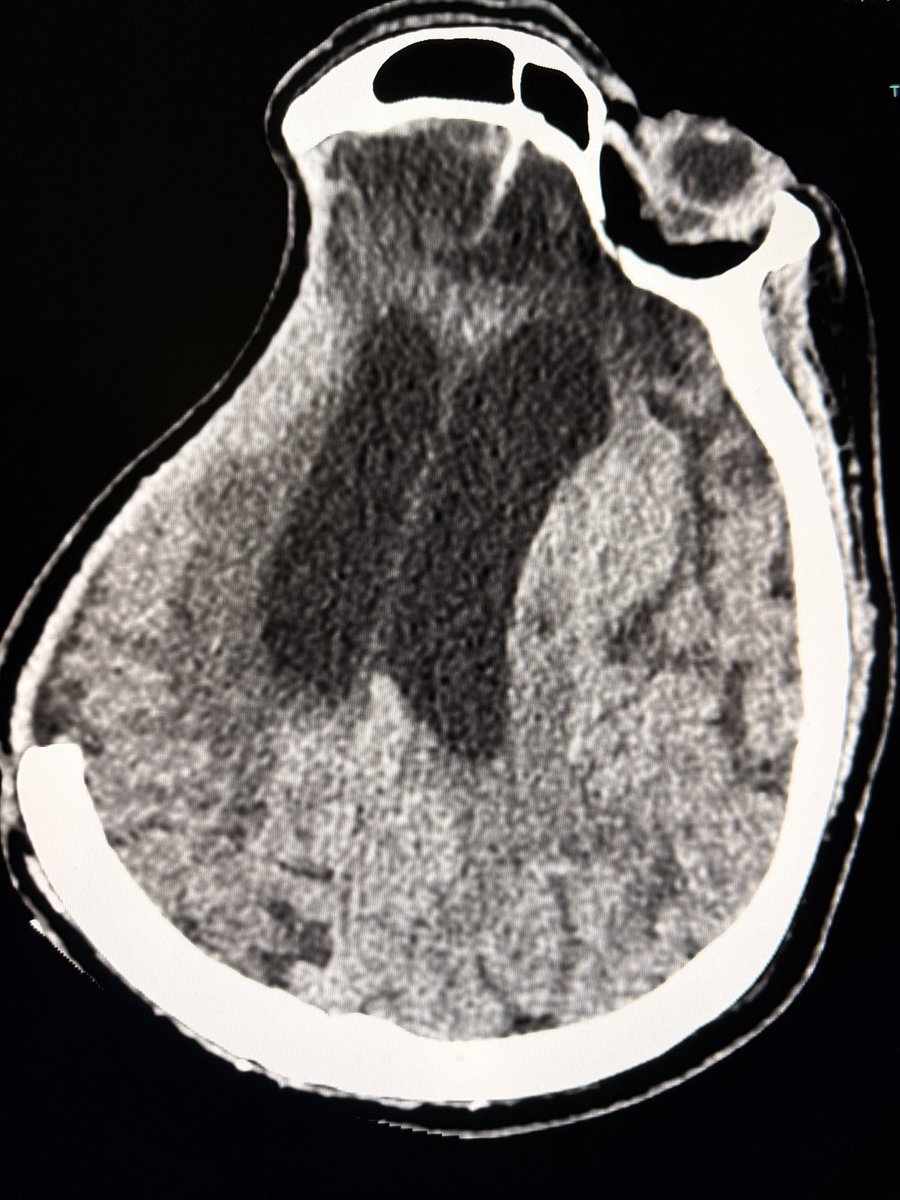
Previous decompressive craniectomy, now with a markedly sunken scalp flap and inward deformation of the underlying brain.
One useful reporting point:
A sunken flap is an imaging finding. Sinking skin flap syndrome, or syndrome of the trephined, is a clinical-radiological diagnosis.
So if the clinical deterioration is not known, avoid diagnosing the syndrome from CT alone.
Describe what you actually see:
• sunken scalp flap
• inward deformation of the underlying brain
• midline shift
• ventricular changes
• paradoxical herniation, if present
The syndrome is considered when these findings are associated with neurological symptoms such as headache, weakness, cognitive slowing, gait disturbance, reduced consciousness, or failure to progress neurologically.
Cranioplasty may improve symptoms by restoring more normal pressure relationships, CSF dynamics and cerebral perfusion.
A useful distinction for trainees:
Report the morphology on imaging. Call it a syndrome only when the clinical picture supports it.
—Pearls, pitfalls and tips from my reporting list
MSS COTW #3
-Dr. Shayeri Roy Choudhury
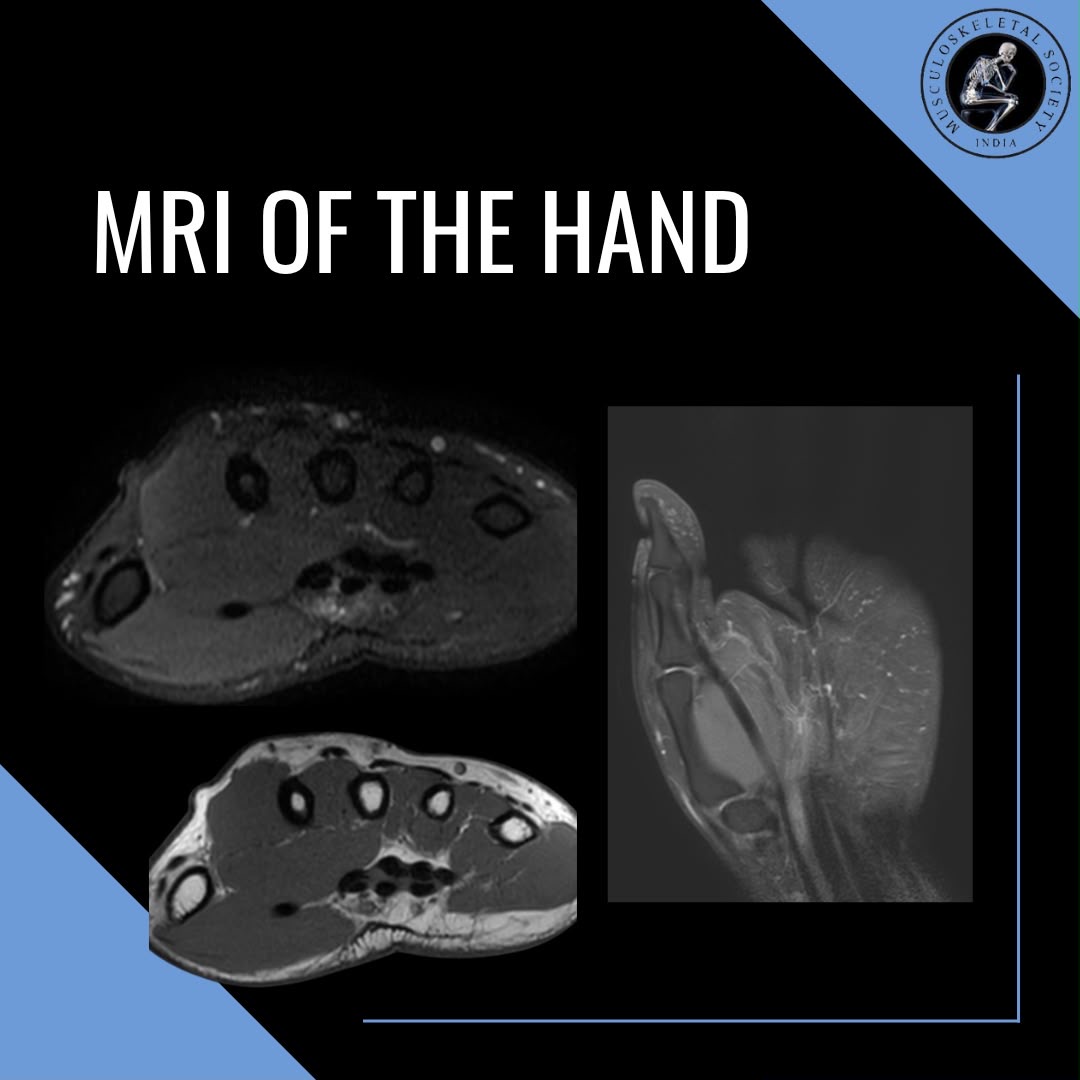
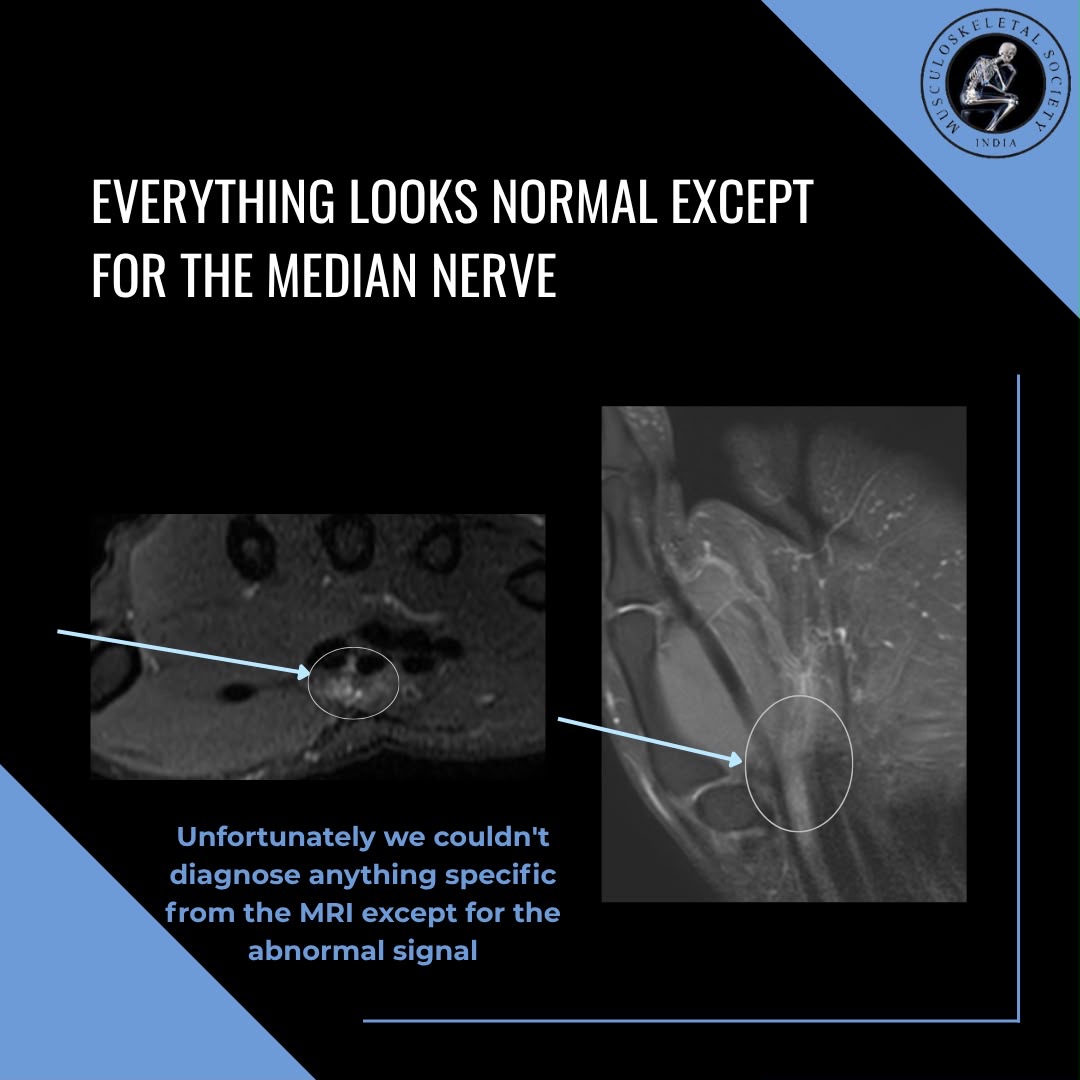
29 yr old weight-lifter and smoker with pain in mid palmar region, focal tenderness in proximal palm.
MRI showed mild localized non-specific PDFS hyperintensity in the median nerve in carpal tunnel.
Contd in 🧵…
#mss#msk#mskrad#ortho
MSS CASE OF THE WEEK #2
12 yr old boy with both knee pain.
Clue- long term anemia. Takes oral medicines regularly. Mainly on injections since infancy.
What do you think?
Contd in 🧵…
#mss#msk#mskrad#ortho#AMS#RadRes#FOAMRad
Classic Signs in Radiology | Bone-within-Bone appearance
This radiograph from a patient with sickle cell disease shows the characteristic bone-within-bone appearance.
A smaller, denser outline appears within the normal contour of the bone: the bone-within-bone sign.
But what actually produces the “bone within the bone”?
In sickle cell disease: Chronic medullary infarcts develop linear or serpiginous sclerosis, which may run parallel to the cortex and outline the medullary cavity.
—Classic signs from my reporting list
Introducing the IJMSR Travel Grant - Recognizing and Rewarding Research excellence!
Do not miss this annual opportunity that will be awarded to the 3 best Research Papers published in the Indian Journal of Musculoskeletal Radiology!
#msk#MskRad#RadRes
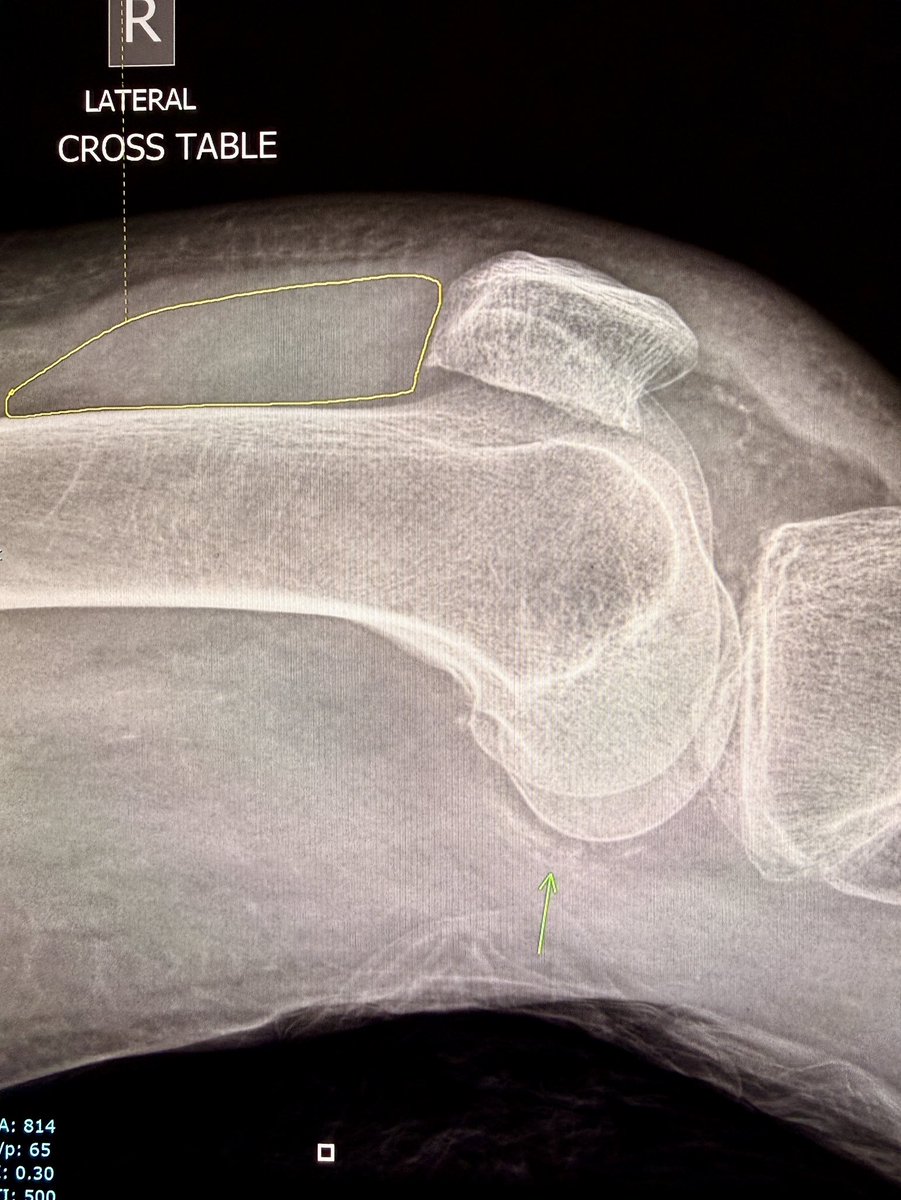
Chondrocalcinosis. Where to look?
Look at the menisci. Look at the articular cartilage, particularly along the femoral condyles. Here, it is nicely seen posteriorly.
Then look for effusion and soft tissue edema. Both are striking here, while degenerative change is minimal.
Large effusion + little OA + chondrocalcinosis = think acute CPPD.
But don’t forget infection.
Aspirate the joint. Exclude infection. Look for CPP crystals.
—pearls, pitfalls and wisdom from my reporting list
Most people (including plenty of radiologists) misunderstand "resolution" in medical imaging, and the recent @midjourney debate hasn't helped. What resolution actually is, why your scanner's limit is set on day one, and the limit set by a Swedish-American named Nyquist 🧵1/10.
Excited to be speaking at the Radiopaedia 2026 Annual Meeting.
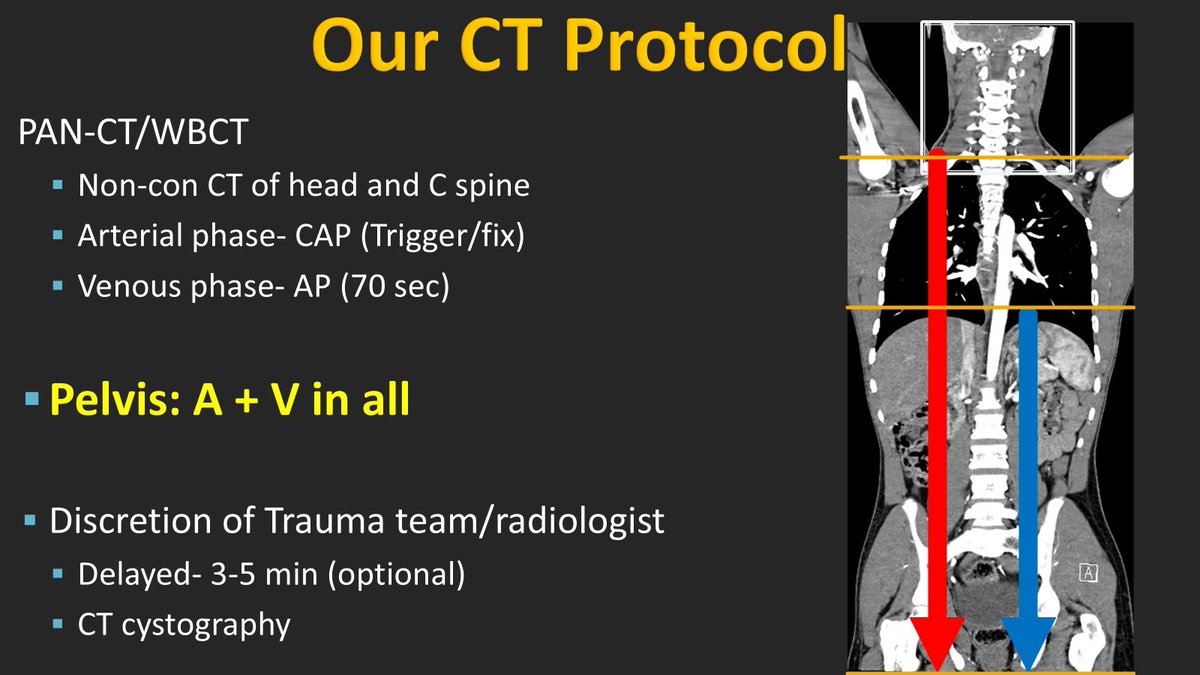
My session is on “Pelvic Vascular Trauma imaging”, where I'll share a practical CT approach to answering the questions that matter most in the trauma bay:
• Where is the bleeding?
• Which vessel is most likely injured?
• What should happen next?
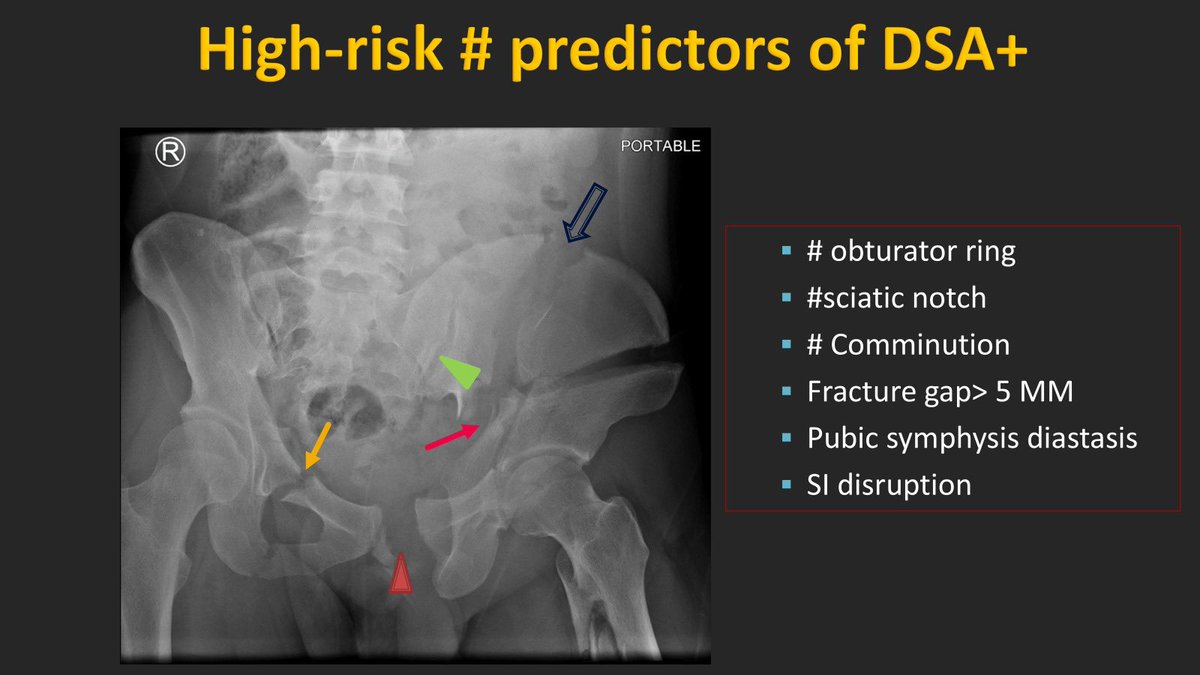
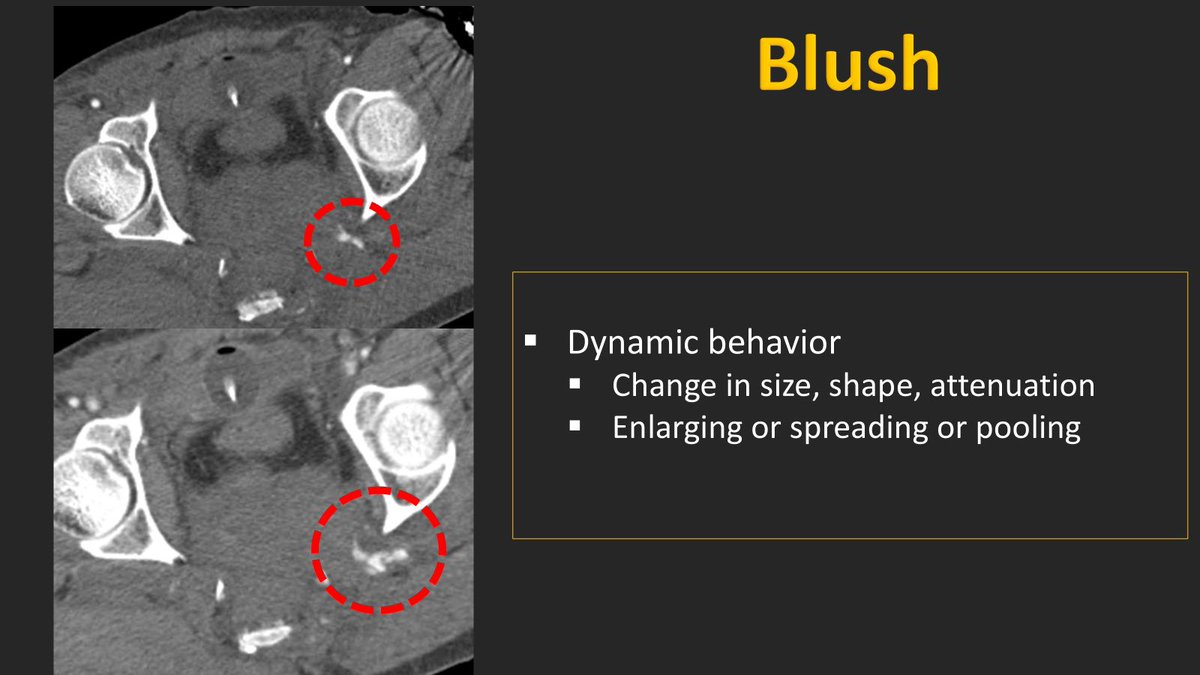
The session introduces a simple 3B approach that integrates Blood, Bones, and Blush to localize hemorrhage, predict the injured vascular territory, and guide management.
This year's meeting brings together 56 international speakers, multiple parallel sessions, hands-on workshops, anatomy reviews, panel discussions, rPosters, and more than 14,000 delegates from around the world.
Looking forward to learning alongside colleagues from around the world.
Dates: 16 to 21 July 2026
Online and worldwide with free access in 125 countries.
Register here: https://t.co/sVna8j9IeA
Here's a sneak peek at a few slides from my talk.
@Radiopaedia@thexraydoctor@DrAndrewDixon@teachplaygrub@daniel_gewolb
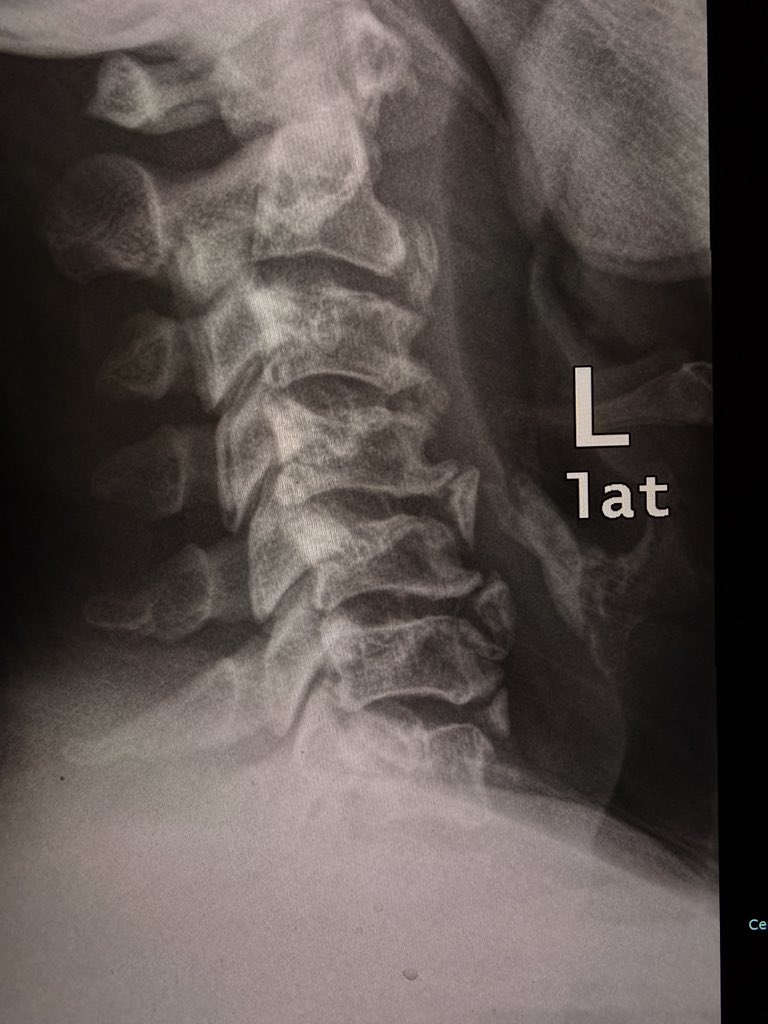
Don’t overcall anterior cervical fragment an "osteophyte fracture."
This lateral cervical radiograph illustrates a common reporting pitfall.
At first glance, the anterior triangular ossicles could be mistaken for fractured osteophytes.
However,
• They are well corticated.
• They have a typical location within the anterior annulus/anterior longitudinal ligament.
• There are no accompanying signs of acute injury.
These are degenerative intercalary (intercalated) ossicles, often related to annular calcification or chronic ossification, not acute fractures.
The diagnosis of an acute fracture should be supported by evidence of acute injury, such as cortical disruption (donor site from vertebra), prevertebral soft tissue swelling, associated vertebral or disc injury, or marrow edema on MRI.
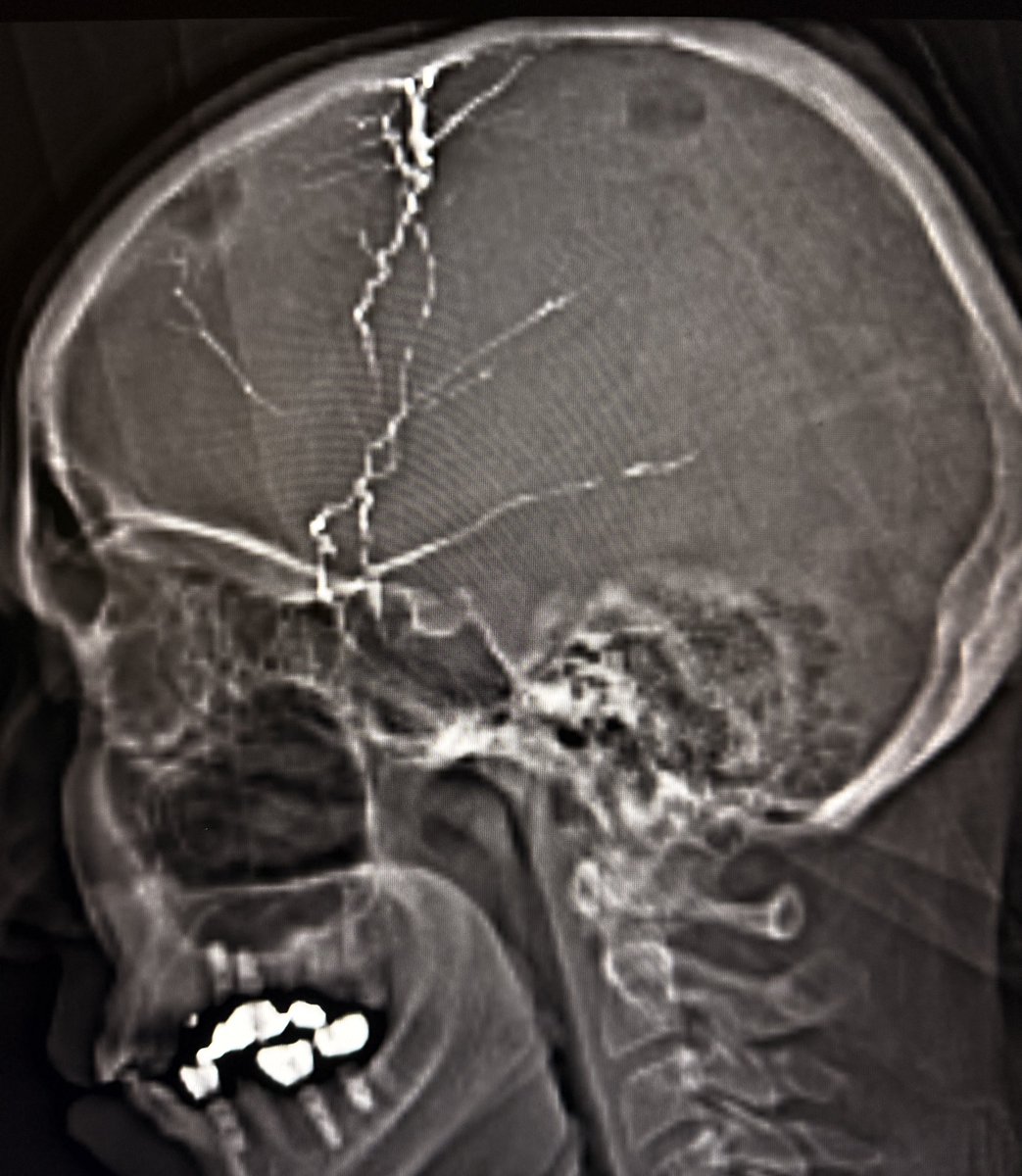
Quiz: Linear radiopaque material tracking along both sides of the skull on CT. What is it?
Answer: Post-procedural changes from middle meningeal artery embolization for chronic subdural hematoma.
Why we do it
•Chronic subdural hematoma is not just “old blood.”
•It is a biologically active membrane disease.
•Outer neomembrane develops along the dura.
•It is vascular, fragile, and fed largely by branches of the middle meningeal artery.
•Recurrent microbleeds and exudation maintain or enlarge the collection.
•Embolization shuts this supply → less rebleeding → lower recurrence.
Where it fits clinically
•Adjunct to burr-hole evacuation to reduce recurrence
•Standalone in selected patients (mild symptoms, high surgical risk)
•Recurrent or bilateral chronic SDH
•Increasing use with growing evidence, but still evolving practice patterns
—Pearls, pitfalls and wisdom from my reporting list
In thalassemia major, SWI can show prominent susceptibility within the choroid plexus, reflecting iron deposition.
Seen at:
• Lateral ventricles
• Roof of 3rd ventricle
• Roof of 4th ventricle and foramen of Luschka
Also note:
• Diploic space widening
• Diffuse low T1 marrow signal (marrow hyperplasia)
Correlation with systemic iron overload is essential.
—Pearls, pitfalls and wisdom from my reporting list
“Hair-on-end” skull: X-ray and CT correlation
X-ray
•Widened diploic space
•Vertical radiating trabeculae
•“Hair-on-end” appearance
CT sagittal:
•Expanded diploic space
•Coarse, thickened trabeculae
•Perpendicular orientation
•Intervening low-density marrow
CT axial: expanded marrow spaces with intervening thickened trabeculae looks like a sponge 🧽
Think
•Marrow hyperplasia from chronic anemia
•Most often thalassemia major
•Less likely due to sickle cell and other chronic hemolytic states
—Classic signs from my reporting list
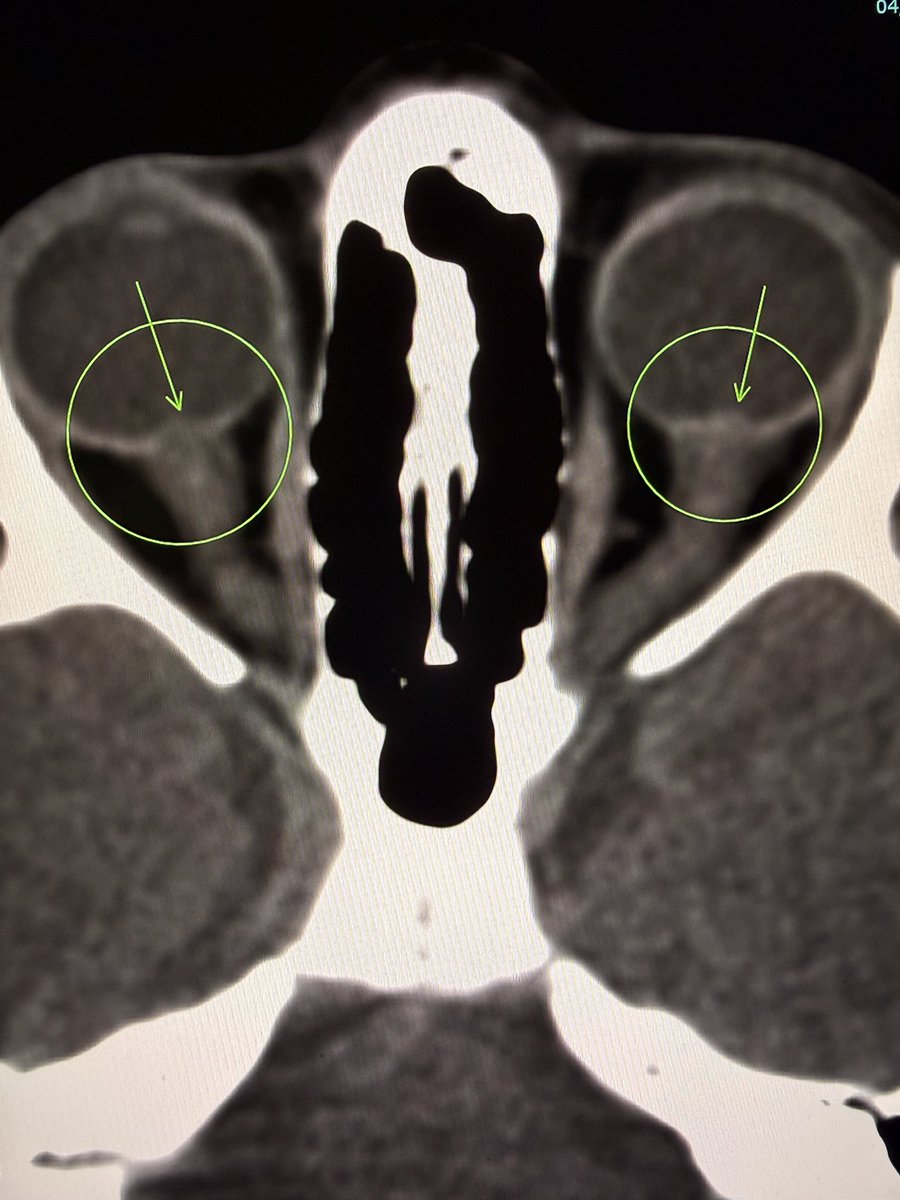
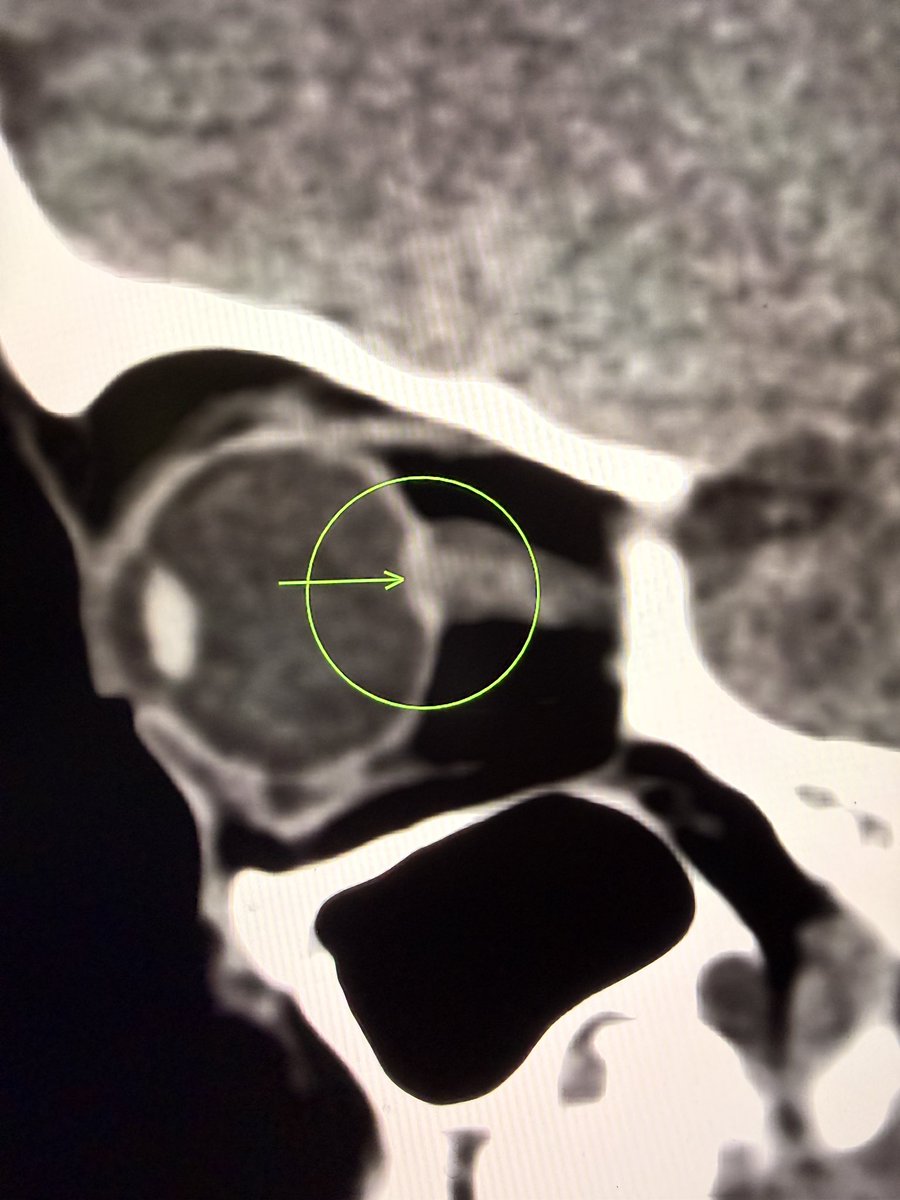
Papilledema on CT.
Look for subtle posterior globe flattening.
In the right context, think raised intracranial pressure.
And don’t stop there.
Ask why.
One important cause you don’t want to miss is cerebral venous sinus thrombosis (CVST). Especially when the brain parenchyma still looks deceptively normal.
—Pearls, pitfalls and wisdom from my reporting list
All three Kerley lines in one image!
B lines at the bases. Millimeteters in length.
A lines from the hilum. Centimeters in length.
C lines as a fine reticular pattern.
This is interstitial edema in full display.
Plain radiographs still teach you how disease evolves.
What a treat to interpret plain radiographs!
—my reporting list
AP chest:
Right heart border absent.
No part of the heart lies to the right of the spine.
Middle lobe disease or chest wall deformity?
Lateral view:
Depressed sternum.
Diagnosis: Pectus excavatum.
Wisdom: Absent right heart border with leftward shift, think chest wall before lung.
—Nothing fancy today
@Cookie169Monste I agree! But today we did this FLAIR 3D sagittal for a patient with suspected demyelination and one of my trainees pointed out this! He flagged it as abnormal.
I just thought of putting it as a reminder!
Posterior pituitary bright spot.
It is a T1 finding.
Often not seen on FLAIR.
So absence on FLAIR does not mean true absence.
Pearl: Judge it on T1.
Pitfall: Calling it absent on FLAIR.
—Today’s reporting list