This poem reminded me of Namjoon so much. He has spoken before about how he wants the personal emotions both he and @BTS_twt express in their lyrics to feel universal, to give comfort. And I just want to let him know that they’ve mastered this in the best way possible.💜✨ #RM
“You know who has blue hair and doesn’t have a problem making money? JUNG KOOK FROM BTS.”
-Bobby Hill
(Mike Judge loves to remind us he’s BEEN ARMY he’s not new to this!!)
A few years ago, Gene Simmons of the famous 70s metal band KISS was asked whether BTS could become the next Beatles. He dismissed the idea almost immediately. He said he didn't know any BTS songs and asserted that, unlike the Beatles, no one would start a garage band because of BTS. He went even further, saying that boy bands like BTS don't change the world; they simply make teenage girls' hearts flutter before eventually disappearing, and that they have no gravitas.
Why am I suddenly bringing this up? Today, on an online community I frequent—members mostly professionals in their 40s and 50s with progressive political views—a post about BTS really caught my attention.
He said he had finally realized that BTS is 대체불가. This word means "irreplaceable." It describes something so unique that nothing else can truly take its place. Words like singular, peerless, or one of a kind also come close to capture the meaning.
He admitted that he used to believe BTS's success had more to do with the global popularity of K-pop than with BTS themselves. He assumed that groups like BLACKPINK or Stray Kids would eventually replace them. Like most Koreans, he also believed military service would effectively end BTS's career. After all, that's what had happened to previous idol groups. They enlist, newer groups debut, and they never quite regain the same level of popularity.
But over the past few months, simply watching the news about BTS's worldwide concerts, seeing the sold-out stadium crowds, reading international media coverage, and watching presidents, celebrities, and people from all over the world react, he suddenly realized something. No, BTS really is different. He compared them to the Beatles, and now believes that no matter how many new idol groups debut from now on, no one will match what BTS has achieved. 대체불가.
His post has already been read by more than 8,000 people today alone, and among them were people who immediately lost their minds the moment they saw BTS and the Beatles mentioned in the same sentence. Some insisted that BTS could never be compared to the Beatles because there aren't BTS songs that "everyone" can sing along to like "Hey Jude," basically echoing almost exactly what Gene Simmons said a few years ago.
Reading those comments, I couldn't help shaking my head. They are judging BTS using standards from a completely different era. During the Beatles' time, British and American popular music dominated the world in a way that's difficult to imagine today. Radio, a handful of television networks, and record stores were the only ways people discovered music. Also, there were relatively few artists and genres competing for people's attention, and almost everyone was exposed to the same songs over and over again.
You didn't really choose whether to hear "Yesterday" or "Penny Lane." Radio stations played them constantly. Record stores played them constantly. Those songs became part of everyday life because nearly everyone was consuming music through the same limited channels.
Today's world couldn't be more different. There are hundreds of genres, tens of thousands of artists, YouTube, Spotify, Apple Music, TikTok, Instagram, and countless other ways to listen to music. Every listener can build a completely different musical world with just a few taps on a phone. That also means it's much harder for any artist to become a truly universal phenomenon.
Over the past ten years, has there really been a song like "Hey Jude" that almost everyone in the world could sing together? I’m sorry but I can't think of one. In fact, the closest examples I can think of aren't even songs by pop stars. They're one-time phenomena like Disney's "Let It Go" or, more recently, Netflix’s "Golden."
That's why I think comparing BTS and the Beatles simply by asking whether everyone can sing one of their songs misses the point entirely. If anything, becoming a global phenomenon in today's fragmented digital media landscape is much more difficult. That's precisely what makes BTS's extraordinary worldwide popularity all the more incredible. If the Beatles were debuting today, their path to global dominance would have been far more difficult than it was in the mid-1960s.
Another commenter claimed that considering the Beatles' musicality and the sheer breadth of their popularity during their era, suggesting that BTS belongs in the same conversation was preposterous. This commenter says that with complete confidence because, like many other Koreans, he doesn't realize how deeply BTS's music has resonated with people around the world. Nor does he realize how highly respected the members are for their songwriting and producing abilities. That's partly because Korean media rarely discusses those aspects of BTS.
Korean media mostly reports BTS's achievements by talking about sold-out concerts, Billboard rankings, awards, or the number of tourists visiting Korea because of BTS. But I don't remember seeing serious discussions about why BTS became this popular in the first place. Very few journalists or programs explore their musicality, the members' songwriting and producing abilities, or why millions of people around the world feel such a deep connection to them and their music. Journalist Kim Ou-joon and the late music critic Kim Young-dae are the only people I can think of who tried.
To me, BTS isn't just a musical phenomenon. They're a cultural phenomenon. Millions of people didn't simply become fans of seven people. They became interested in Korea itself. They started learning Korean. They began reading Korean literature, visiting Korean museums, eating Korean food, and traveling to Korea. That's an extraordinary kind of influence. People didn't begin learning English because of Taylor Swift, nor did they suddenly become fascinated with Britain because of Coldplay. Their music is loved by many, but BTS became something more than a musical phenomenon.
And finally, BTS is also 대체불가 because ARMY is 대체불가. There has never been another fandom quite like it, and I doubt there ever will be.
The way j-hope was on point. He told RM & Suga exactly where to stand, but they went too far and ended up getting dragged right back to the spot j-hope pointed to. He's the dance leader for a reason. The level of precision, awareness & spatial accuracy he has is honestly unreal.
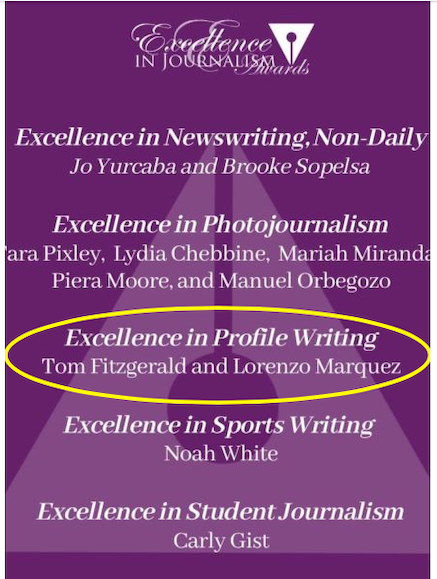
Congrats to GALECA: The Society of LGBTQ Entertainment Critics members Tom Fitzgerald and Lorenzo Marquez (Tom + Lorenzo) on their big win in the NLGJA's annual Excellence in Journalism Awards! Enjoy their smart entertainment & style coverage @tomandlorenzo.
Hi @lastfm
I'm reaching out publicly because I wasn't able to find another way to contact the appropriate people, and I genuinely hope someone on your team takes the time to read this.
I've used https://t.co/bvrfSzrUdh for years and have always considered it a valuable part of my music listening experience. I love music across many genres, and one of the artists I listen to most is BTS. Because I value the platform, I wanted to explain why so many users (including myself) are concerned about recent statements and decisions from your team.
My concern isn't simply that you're changing how the real-time charts work. Companies evolve their products all the time. My concern is why those changes have been communicated and the message they send.
In your official forum response discussing what was called "the K-pop problem," https://t.co/bvrfSzrUdh specifically named BTS as the reason changes were being made to the real-time charts:
"Through this, the phenomenon of BTS and BTS-related artists permanently monopolizing the chart or trending tracks page will be resolved."
Immediately afterward, the post discusses mitigation strategies for "inauthentic" scrobbling activity.
Whether intentional or not, placing those two ideas together creates a very clear implication: that BTS listeners are somehow responsible for inauthentic activity. No evidence was provided to support that connection, yet one specific artist and fandom were publicly singled out.
If your concern is fraudulent scrobbling, then address fraudulent scrobbling. I think every user would support removing fake data. But if your concern is simply that one artist appears at the top of the charts because they have an exceptionally dedicated fanbase, that is an entirely different issue.
https://t.co/bvrfSzrUdh has always presented itself as a platform that measures listening habits. The purpose of data is to reflect reality, not to reshape it because the results are repetitive, inconvenient, or unexpected.
If millions of people legitimately listen to the same artist every day, shouldn't the data reflect that?
Changing a chart to unique listeners rather than total scrobbles is a perfectly reasonable product decision. But justifying that change by naming one artist gives the impression that the methodology is being changed because the data is producing results the company doesn't like.
That's a dangerous precedent for any data platform.
I've also noticed interactions from https://t.co/bvrfSzrUdh's social media account with posts calling BTS fans "bots" or suggesting that our listening habits are somehow illegitimate. Even if those interactions weren't intended to endorse those opinions, they reinforce the perception created by the forum post, that BTS fans are viewed differently from other users.
At the same time, many BTS listeners have reported legitimate scrobbles not being counted despite following Spotify's and Apple Music's streaming guidelines. If that's a technical issue, I sincerely hope it's investigated. If it's an intentional filtering decision, then users deserve transparency about how those decisions are being made.
What concerns me most is consistency.
Would https://t.co/bvrfSzrUdh publicly name Taylor Swift if Swifties dominated the charts?
Would you redesign your charts because another fandom listened more than everyone else?
Would heavy listening by fans of The Beatles, Oasis, Metallica, or any other artist be described as a "problem"?
If the answer is no, then BTS should not have been singled out either.
Every large fandom has people who break rules. Every large fandom has people who stream heavily. Those are separate issues. Legitimate listening should never be treated as suspicious simply because it comes from an organized or passionate fanbase.
The value of https://t.co/bvrfSzrUdh has always been trust.
Users trust that if they play music legitimately, their listening history is recorded accurately.
Artists trust that the data reflects actual listening.
Researchers, journalists, and music fans use https://t.co/bvrfSzrUdh because they believe the platform measures behavior objectively.
The moment users begin to wonder whether certain artists or fandoms are being treated differently, that trust begins to erode.
I'm writing this not as someone looking for an argument, but as a longtime user who genuinely wants https://t.co/bvrfSzrUdh to succeed.
I would appreciate answers to a few simple questions:
** Why was BTS specifically named in an official company response instead of discussing chart methodology more broadly?
** Why were discussions of BTS immediately followed by references to "inauthentic" scrobbling without evidence connecting the two?
**Is https://t.co/bvrfSzrUdh intentionally filtering legitimate scrobbles from certain listening patterns?
**Does https://t.co/bvrfSzrUdh recognize how these communications have created the appearance of bias, even if that wasn't the intention?
**Does the company plan to address these concerns publicly?
I have screenshots of the official forum post, social media interactions, and examples of the issues I've referenced, and I'm happy to provide them if they're helpful.
I truly hope https://t.co/bvrfSzrUdh chooses to address this openly. Music is for everyone, and the data representing that music should be equally fair to everyone.
Thank you for taking the time to read this.
— Teresa