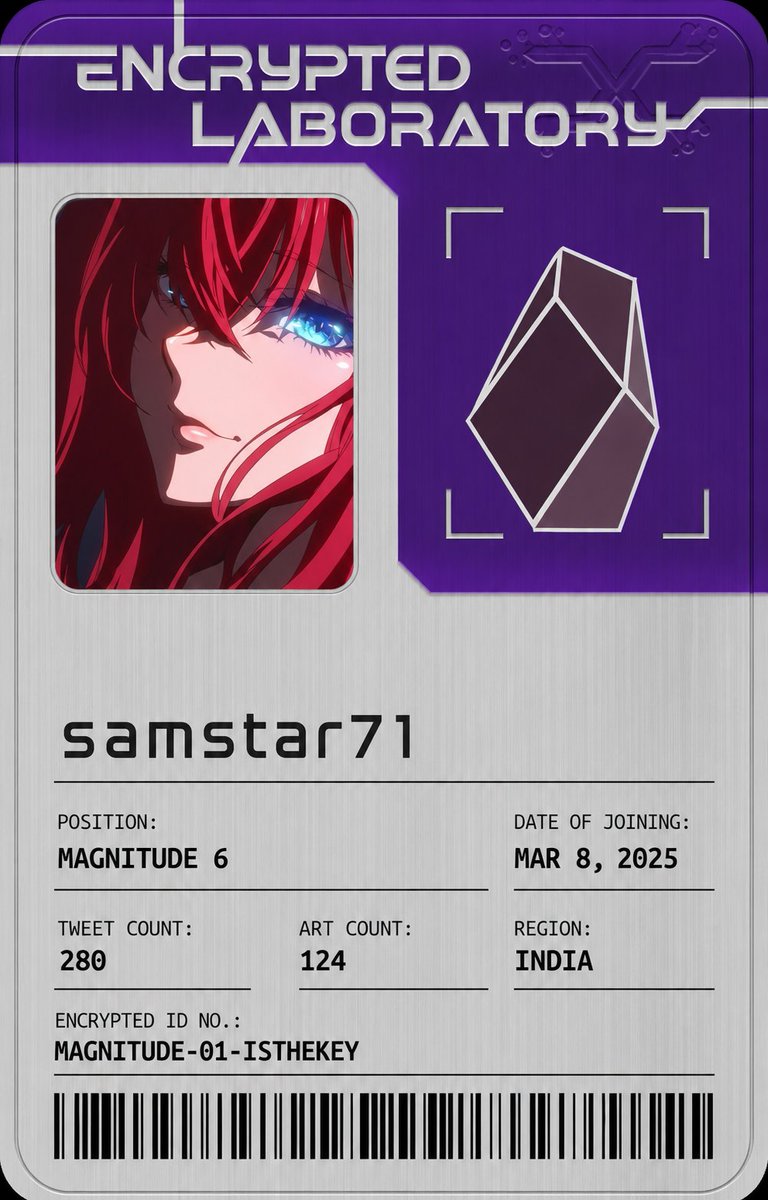
GMIC @SeismicSys family 💜
Been working on something fun for the community.
Introducing my Seismic Encrypted Laboratory ID Cards - personalized cards inspired by the Seismic ecosystem.
Want your own?
• Send your PFP
• Share your MAG level
• Tweet count, Art count & Region
I'll create a custom Encrypted Laboratory ID just for you.
Let's make the Seismic community even more awesome, one card at a time. 🫡
Drop a reply or DM me. 💜
MAGNITUDE is the KEY🔥⚡
@SeismicSys is building with one clear idea:
privacy should be built into the financial system, not added later.
With Seismic, the goal is a new kind of blockchain where confidential finance can still be programmable, usable, and scalable.
One key. One vision.
A more private financial future, powered by Seismic. ❤️
#SeismicYourWay @xealistt@NoxxW3@heathcliff_eth@BharatWormie
GMIC Friends 🤎❤️
Creativity like this is what makes the @SeismicSys community feel special.
Huge shoutout to @03Altasha for this cool photo - the creativity and effort really stand out. Absolute banger from my friend 🤝
Let’s keep bringing our strengths into Seismic and make this community even stronger together 🚀
@xealistt@heathcliff_eth@NoxxW3@BharatWormie@snow_blis
Gmic guys
Here is I create something for my @SeismicSys community.
Just send me ur pfp I will create this creative piece for you guys.
Hope u guys will love it.
@NoxxW3@xealistt@heathcliff_eth
So the complete journey looks like:
Smart Contract ↓ 📡 Event ↓ ✅ Validation ↓ 📥 Queue ↓ ⚙️ FHE Computation ↓ 🔐 Encrypted Result ↓ ⛓️ Publish Onchain ↓ 🔑 Authorized Decryption
And that's what I find interesting about CoFHE.
The magic isn't just FHE.
It's the infrastructure built around it to make encrypted computation usable by EVM applications.
One encrypted request → an entire execution pipeline.
@fhenix@AngieMKTmom
You send an encrypted computation request to CoFHE.
What happens next?
It doesn't just disappear into a black box.
There's an entire pipeline behind that single request.
🧵 Here's the journey of an encrypted request inside CoFHE:
@fhenix
What if Ethereum could outsource one thing it isn't good at… without giving up control of the application?
That's the basic intuition behind CoFHE.
CoFHE = FHE Coprocessor
But what does that actually mean?
🧵👇
@fhenix
⑥ AUTHORIZED DECRYPTION
Sometimes an application actually needs to reveal a result.
That's a separate process.
CoFHE uses threshold decryption, meaning the decryption capability is distributed across multiple parties rather than controlled by one single operator.
Only an authorized request can produce the plaintext result.
GMIC @SeismicSys family ❤️
125+ artworks. 6 Magnitudes. Countless memories. ✨
What started with Magnitude 1 slowly became something much bigger than just creating art.
Every piece taught me something.
Every Mag level pushed me to grow.
Every artwork carried a little piece of my creativity, patience, and love for this community. 🫂
From Magnitude 1 → Magnitude 6, this journey has been full of experiments, challenges, beautiful moments, and people who made it worth continuing.
Today, I’m celebrating 125+ arts - but more than the number, I’m celebrating the passion that kept me creating. ❤️
Next stop: 150 artworks. 🎯
And now, with a fresh heart and even more excitement…
Magnitude 7, I’m coming for you. 🚀
The journey continues.
The canvas is still wide open. 🎨
#SeismicJourney
@xealistt@NoxxW3@heathcliff_eth@BharatWormie@snow_blis
GMIC @SeismicSys family 💜
Been working on something fun for the community.
Introducing my Seismic Encrypted Laboratory ID Cards - personalized cards inspired by the Seismic ecosystem.
Want your own?
• Send your PFP
• Share your MAG level
• Tweet count, Art count & Region
I'll create a custom Encrypted Laboratory ID just for you.
Let's make the Seismic community even more awesome, one card at a time. 🫡
Drop a reply or DM me. 💜
【 Can Assets Manage Themselves? 】
> A token can represent an asset.
But what if the asset could also follow rules that manage parts of its own lifecycle?
━━━━━━━━━━━━━━━━━━━━━━
For most of history:
→ Property generates rent → Someone records it
→ Bond matures → Someone settles it
→ Invoice gets paid → Someone updates the system
Tokenization changes where these records live.
It doesn't necessarily change who manages them.
That's where things get interesting.
━━━━━━━━━━━━━━━━━━━━━━
【 STATIC ASSETS HAVE A PROBLEM 】
Real-world assets are constantly changing:
→ Rent arrives
→ Prices move
→ Contracts expire
→ Payments settle
→ Ratings change
→ Insurance events occur
Yet a token often changes only when someone submits a transaction.
The architecture becomes:
Real-world event → Data service → Monitoring → Transaction → Smart Contract → Asset Update
Every extra layer adds another dependency.
━━━━━━━━━━━━━━━━━━━━━━
【 FROM OWNERSHIP → BEHAVIOR 】
Imagine a tokenized rental property.
Instead of simply representing ownership, it could have rules like:
→ Verified rent received → Distribute proceeds
→ Occupancy changes → Recalculate distribution
→ Maintenance recorded → Update accounting state
The asset doesn't need to "think."
> It needs explicit rules that react to verified events.
@RialoHQ RWA architecture explores this model using real-world connectivity and event-driven execution.
━━━━━━━━━━━━━━━━━━━━━━
【 A NEW KIND OF ASSET 】
A static asset says:
> "This represents something in the real world."
A reactive asset says:
> "This represents something in the real world and these are the rules for what happens when that world changes."
That's a meaningful shift.
Token → Reactive Asset
━━━━━━━━━━━━━━━━━━━━━━
【 BUT DATA STILL MATTERS 】
Self-management doesn't mean automatic truth.
→ APIs can be wrong
→ Data can be outdated
→ External systems can disagree
→ Legal reality can differ from blockchain state
So the real challenge becomes:
Trusted data + clear rules + reliable execution
@RialoHQ approach brings more of that workflow into the programmable environment through external-data connectivity, verification, and reactive execution.
━━━━━━━━━━━━━━━━━━━━━━
【 THE BIGGER QUESTION 】
The goal isn't really:
❌ "Can blockchain make assets autonomous?"
It's:
> "How much of an asset's lifecycle can be expressed as verifiable rules instead of manually coordinated processes?"
That changes the design:
Define asset → Define trusted inputs → Define reactions → Execute automatically
━━━━━━━━━━━━━━━━━━━━━━
【 THE SHIFT 】
The asset still doesn't "manage itself" like a human would.
But it can become something more useful:
> An asset whose rules, data dependencies, and reactions are built into the system itself.
And that may be the next evolution of RWAs:
From tokens that represent assets → to assets that participate in their own lifecycle.
Grialo everyone 🤗
@ericargent31113@itachee_x@0x_alextine@dfwdora@JEAMSETH07