Two favorite sports collide as I throw a pass to Emerson Royal and Leo Ortiz after @dallascowboys practice in Brazil at the @Flamengo training center. Football and futbol!!! I love Brazil!!! What a thrill to meet these stars!!! @1053thefan
Superstar Leo Ortiz of @Flamengo swaps jerseys with @dallascowboys kicker (and former soccer player) Brandon Aubrey during Friday’s Cowboys practice at Flamengo’s training center. @1053thefan@SportsDayDFW
Football meets futbol at the @Flamengo practice field as I teach the “passing tree” to Leo Ortiz and Emerson Royal during @dallascowboys practice in Brazil so that Emerson can use his speed to run a “9” go route and score a touchdown!!! @Flamengo_en
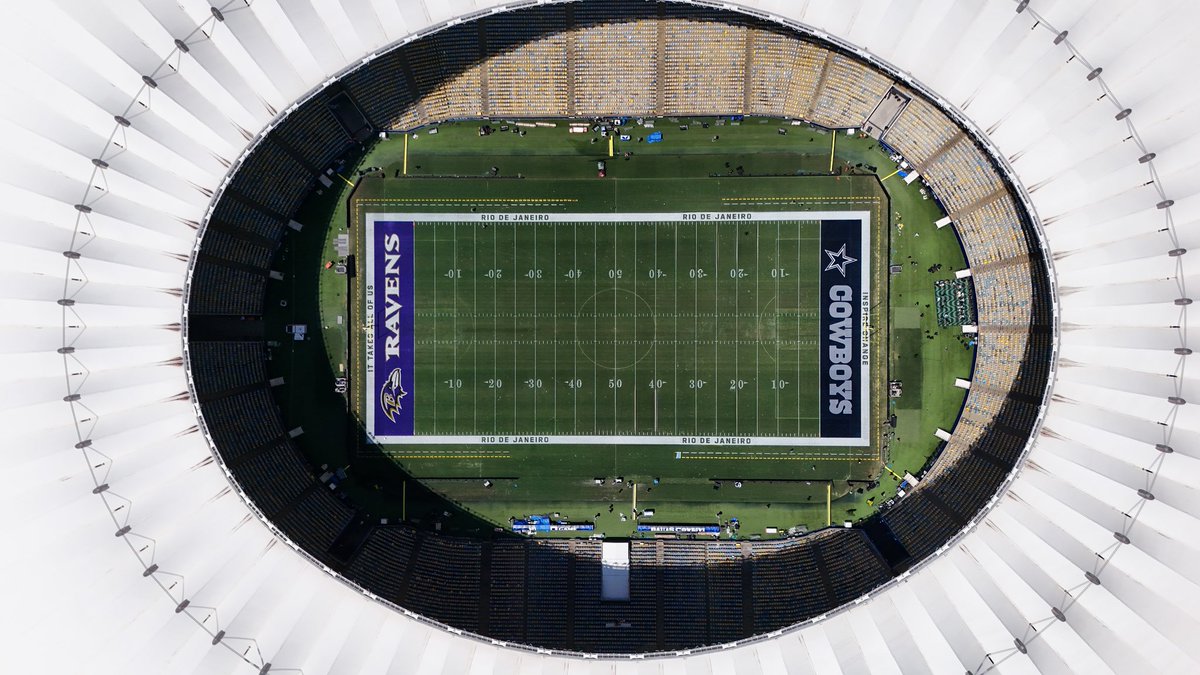
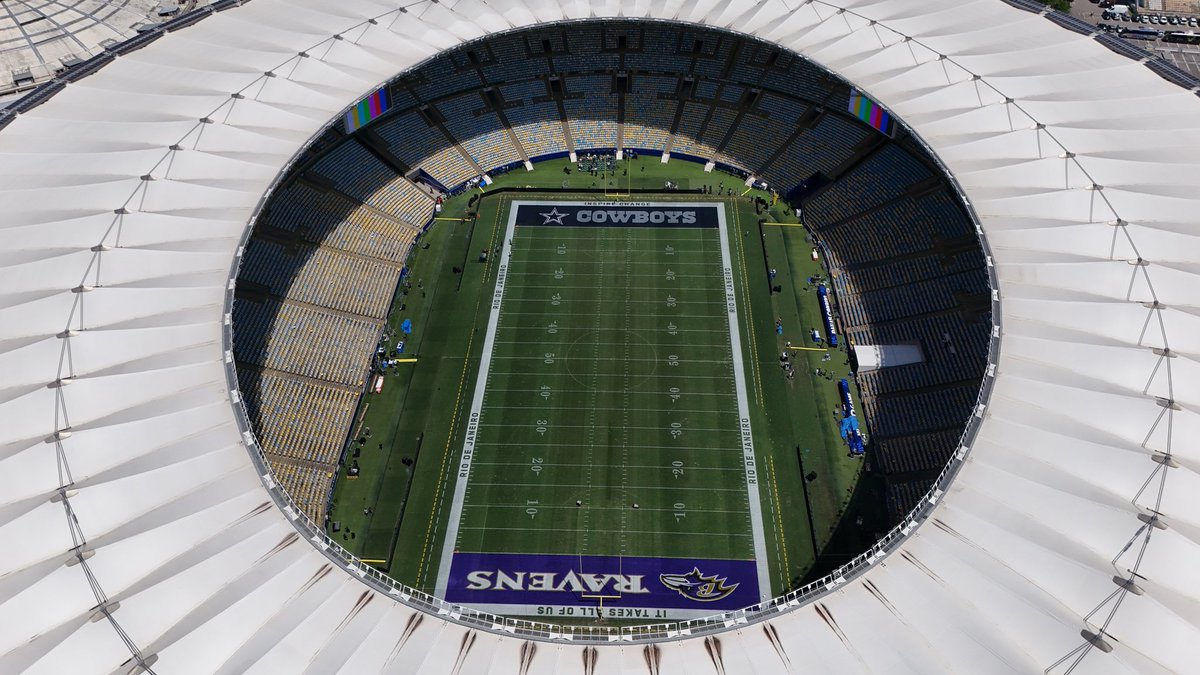
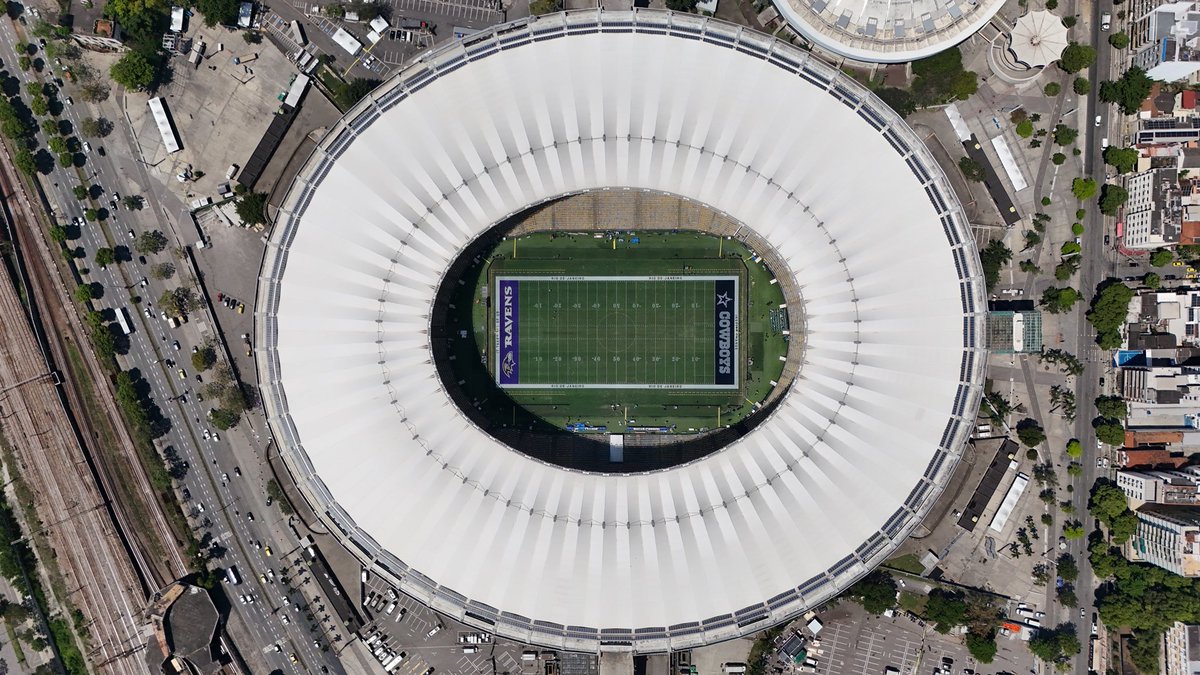
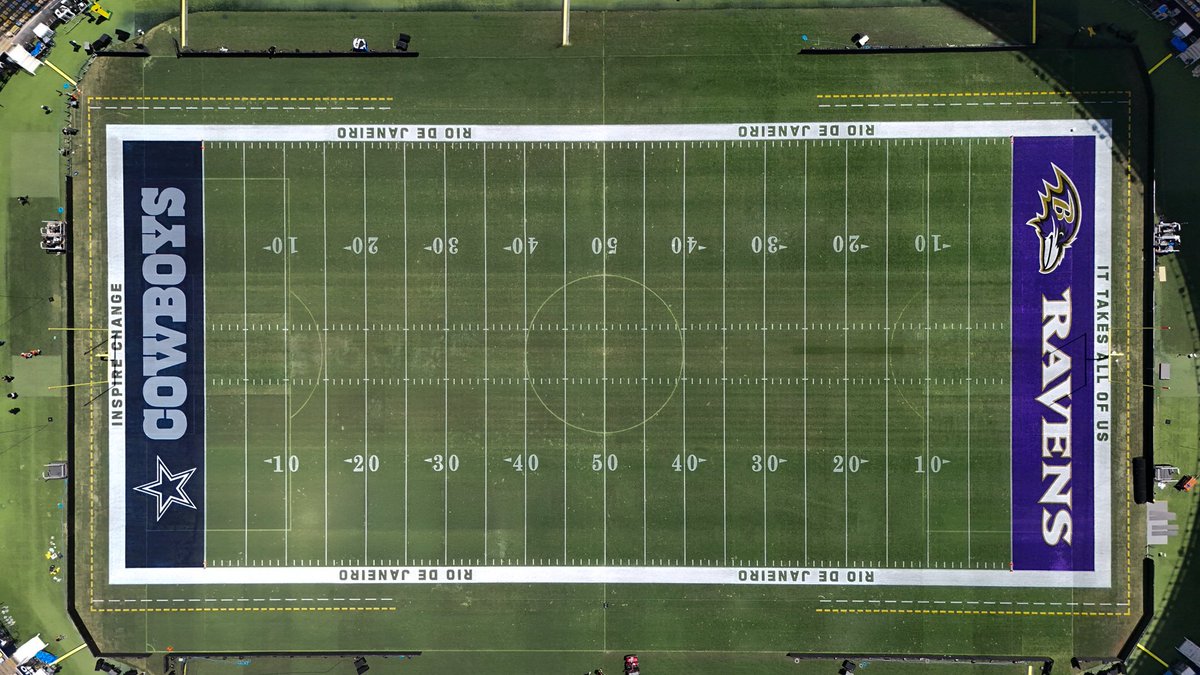
De cima, o palco do NFL Rio Game! 🏈🏟️
A Casa do Inesquecível está se preparando para receber Baltimore Ravens e Dallas Cowboys neste domingo!
Tá chegando! Quem tá ansioso? ⏳👀
@RenanSantosMBL Enfim, estou aqui para lhe desejar boa sorte e reconhecer que sua atitude de se submeter ao que está pleiteando é positiva. Há muito tempo não vejo alguém tomar uma iniciativa assim.
@RenanSantosMBL Cara, vc tá certo. N vou entrar no mérito do discernimento “geral” daqueles que precisam de um desenho para perceber a própria existência.
Como alguém anônimo, n me sinto na posição de questionar isso a fundo.
@RenanSantosMBL No entanto, embora eu não concorde integralmente com o que você propõe, o que me chama a atenção é a sua disposição, no cenário em que vivemos, de questionar — com argumentos e projetos — aquilo que muitas pessoas, infelizmente, aceitam como “comum”.
The green flash is an optical phenomenon consisting of a flash of green light at the moment the solar disk disappears below the horizon or, conversely, appears above it 🔭
How German Physicists Made a “Black Hole” Evaporate in the LabIn a groundbreaking experiment, physicists at the University of Paderborn in Germany have created the first laboratory model of a black hole’s event horizon — and watched it slowly “evaporate” right before their https://t.co/NawkWjPGu5 recreating the physics of Hawking radiation and its elusive backreaction, they’ve achieved something never seen before: a miniature black hole analogue that loses energy exactly as Stephen Hawking predicted. The results, published in Nature, represent a major leap in our understanding of one of the universe’s most extreme phenomena. How They Did It Real black holes are surrounded by overwhelming cosmic noise, making true Hawking radiation almost impossible to detect. So the team built an artificial event horizon using an optical crystal (a waveguide). They fired a powerful, ultra-short laser pulse through the crystal. This pulse dramatically changed the material’s refractive index, creating a moving “boundary” that light could not cross — the laboratory equivalent of a black hole’s event horizon. A weaker probe beam then encountered this artificial horizon. What happened next was extraordinary: The team detected pairs of new signals in the ultraviolet range — the lab version of Hawking radiation.
They observed clear energy transfer: the “black hole” gave up energy to create this radiation.
The system began to lose energy, mimicking how a real black hole should slowly evaporate over time.
Surprisingly, the energy transfer turned out to be much simpler and more linear than theorists expected — no complex cascade of interactions, just a direct, elegant process. Why This MattersThis is the first time scientists have observed the backreaction — the way the black hole itself reacts to the radiation it emits. Understanding this mechanism could bring us closer to solving one of physics’ greatest mysteries: the black hole information paradox.