This video is a call for help.
My mum is battling with stroke, and it is slowly taking her life. She needs urgent medical funds to stay alive, and I cannot do this alone anymore. Please, if you have it in your heart to help or retweet this to someone who can, I beg of you 🤲🏻🙏
Introducing our new payment orchestration platform for Africa!
https://t.co/7T1GBiM3pG
Accept payments from anywhere across the continent with a single, seamless integration. No more juggling multiple providers, just plug in once and go live.
#Fintech#Startups#APIs
Last 4 weeks:
• 5 factories
• 3 states
• 2 countries
Common theme in manufaturing:
• Everyone hates their ERP
• Real-time data does not exist
• Multi-plant visibility is a nightmare
So we do something different to fix that
We send our engineers to live in your factory for 6–7 months
Find the problems, fix them, and deploy AI built around your custom workflows
On a flight to Factory #6 as we speak :)
POV: Most Nigerian manufacturers operate on a 2-3 month replenishment cycle. i.e., the raw materials they are using right now were bought and paid for months ago, before the Middle East war sent global shipping and commodity costs through the roof.
That stock is running out, and the MAN is effectively telling us that prices will go up in Q2 2026.
The problem worsens when you consider that not every manufacturer has the financial capacity (i.e., working capital) to stockpile inventory at current raw material prices.
Some will just stop placing new orders, which slows production, supply tightens, and prices eventually go up anyway.
I came across a company I’d never heard of last night from an Instagram ad: Greyloch Manufacturing.
They aren’t a VC-backed defense tech company.
It’s a cabinet shop in Idaho.
Started 20 years ago. At some point, they decided to become the most modern shop in the country.
They spent years rebuilding the operation and ended up opening a $44M automated facility (congrats to the Stiles Machinery rep who sold that one).
Now they’re running one of the most advanced cabinetry lines in North America. Only 7–9 people are required to run the production line.
High throughput, extremely consistent quality, and a beautiful facility in a town outside Boise.
This is where I think reindustrialization gets misunderstood.
It’s not only about building a hard tech startup with massive VC dollars.
Real industrial growth comes from committed operators who keep reinvesting and let it compound.
A lot of small manufacturers effectively stopped investing 20 years ago, the two I purchased included. Whether it was the recession, China, shifting into cash flow mode, etc.
This is what it looks like when someone doesn’t do that.
It’s easy to think reindustrialization lives in new AI, robotics, or defense startups.
But it’s happening inside very traditional industries, driven by longstanding operators who are embracing these new technologies as a part of their operation.
This is a MASSIVE opportunity.
Take a fragmented, labor-heavy business in a fragmented industry
Keep reinvesting (go vertical?)
Rebuild it around machines + software
There are companies already doing this.
Which means it’s possible for small plastics businesses too.
he literally decomposed a DaVinci Resolve timeline into domain-split JSON so editors, colorists and sound designers never touch the same file.
he's 18 btw.
Fluna has been selected as one of 8 finalists for the prestigious @afreximbank Flagship Accelerator Program, out of over 1,600 applications across Africa and the diaspora.
We'll be working alongside Afreximbank's trade specialists and its extensive network of government stakeholders, private-sector players, and multilateral partners to accelerate our impact across the continent.
We can't keep waiting for the world to bring industrial automation to Nigeria. We have to start building it ourselves.
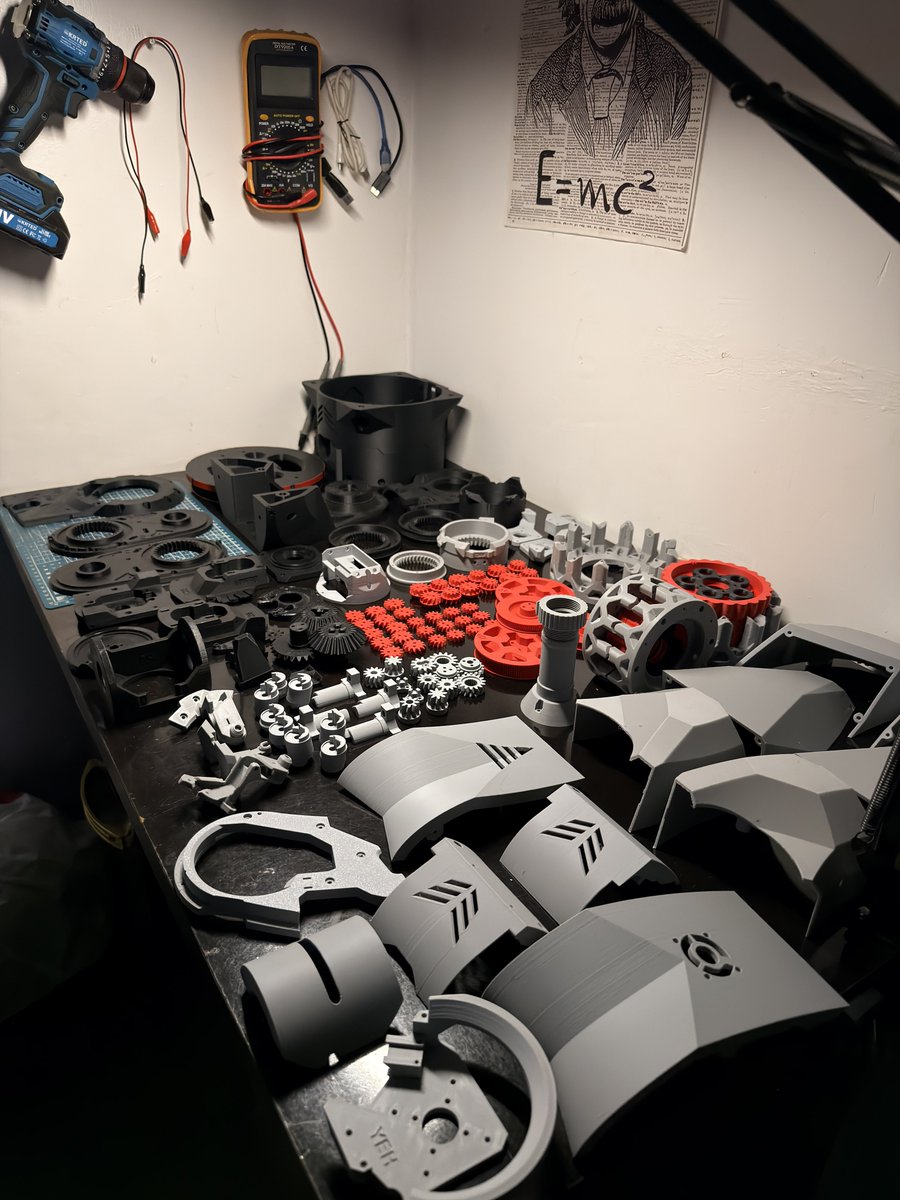
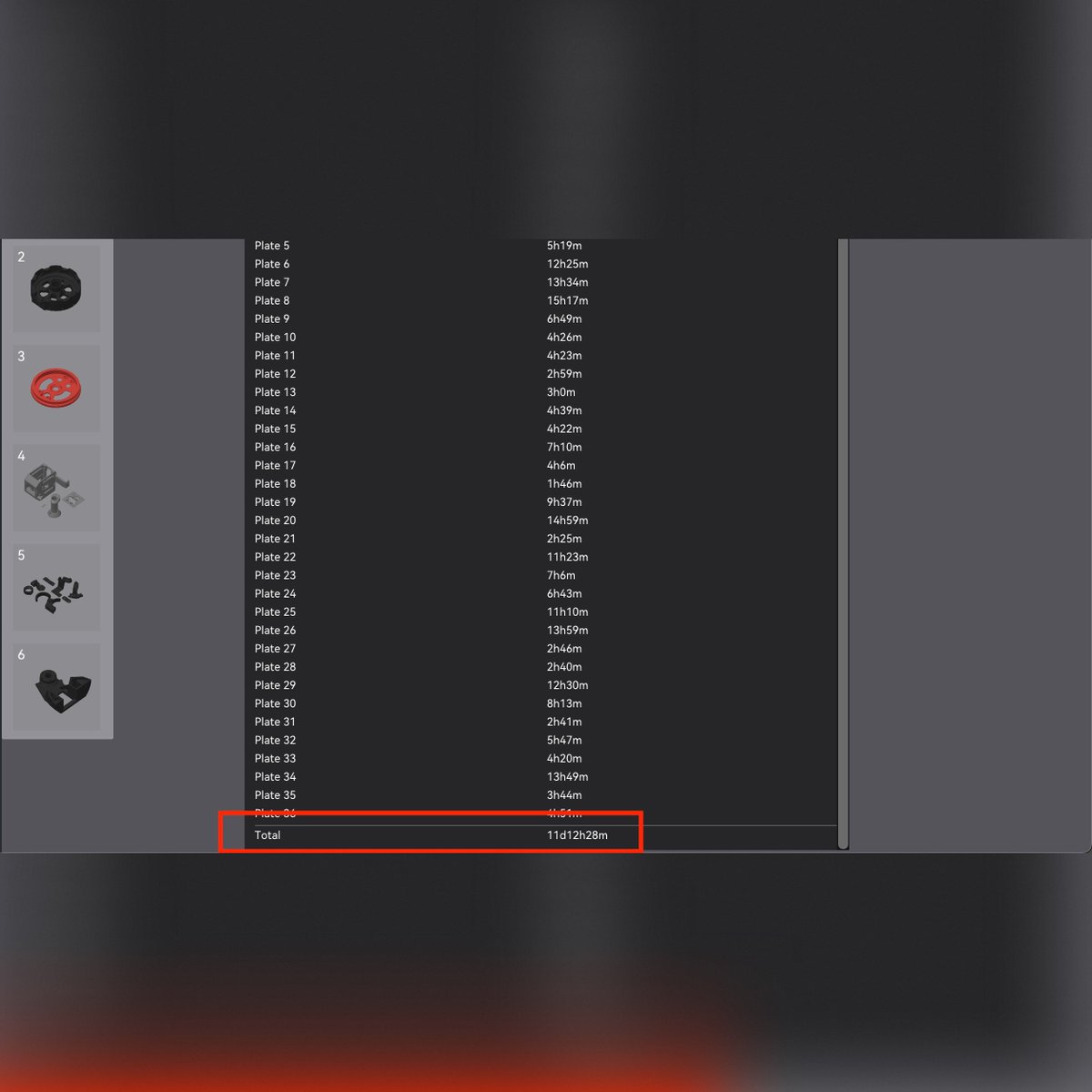
After 300+ hours of non-stop fabrication, spending more than 5kg in material, and gathering hundreds of individual components, this is the foundation of a 6-axis robotic arm built entirely from scratch.
They say hardware is hard. Doing it here is even harder. But holding the pieces of what this could become is a feeling I can't quite describe. Let's see if all the math was right. Assembly begins tomorrow.
𝐌𝐀𝐒𝐒 𝐄𝐓𝐈𝐐𝐔𝐄𝐓𝐓𝐄
𝐋𝐢𝐭𝐮𝐫𝐠𝐢𝐜𝐚𝐥 𝐍𝐨𝐫𝐦𝐬 𝐚𝐧𝐝 𝐃𝐢𝐬𝐩𝐨𝐬𝐢𝐭𝐢𝐨𝐧𝐬 𝐟𝐨𝐫 𝐭𝐡𝐞 𝐒𝐚𝐜𝐫𝐞𝐝 𝐋𝐢𝐭𝐮𝐫𝐠𝐲
FAST
Observe the Eucharistic fast of one hour before Holy Communion.
Only water and medicine are permitted.
Purpose: Interior and bodily preparation for the Blessed Sacrament.
COME EARLY
Arrive before the Entrance Chant.
Use the time for recollection and silent prayer.
Purpose: Dispose the soul for the Sacred Mysteries.
DO NOT EAT
No eating or drinking during the celebration of the Holy Mass.
Purpose: Preserve the sacred character of the liturgical action.
DRESS PROPERLY
Wear modest and dignified attire.
Clothing should reflect reverence for the sanctuary.
Purpose: External comportment should express interior worship.
NO PHONES
Silence all electronic devices.
Avoid interruptions during the Liturgy of the Word and the Liturgy of the Eucharist.
Purpose: Maintain sacred silence and attentiveness.
GENUFLECT
Genuflect on the right knee toward the tabernacle upon entering and leaving the pew.
Purpose: Adoration of Christ truly present in the Eucharist.
PARTICIPATE
Engage in full, conscious, and active participation.
Sing the chants. Make the responses. Join in the prayers.
Purpose: Fulfill the call of the faithful in the Sacred Liturgy.
COMMUNE
Examine conscience before approaching Holy Communion.
Be in a state of grace.
Observe the proper manner of reception.
Purpose: Worthy reception of the Body and Blood of Christ.
THINK OF OTHERS
Maintain order during processions and Communion rites.
Show reverence for shared sacred space.
Purpose: Foster ecclesial charity.
BE STILL
Remain in thanksgiving after Holy Communion.
Avoid unnecessary movement or haste.
Purpose: Interior silence for union with God.
These norms safeguard reverence.
They protect the dignity of the Mass.
They form the faithful in authentic liturgical worship.