A very late life update before the year ends, but I wanted to share that I started my PhD at NYU! @NYU_Courant
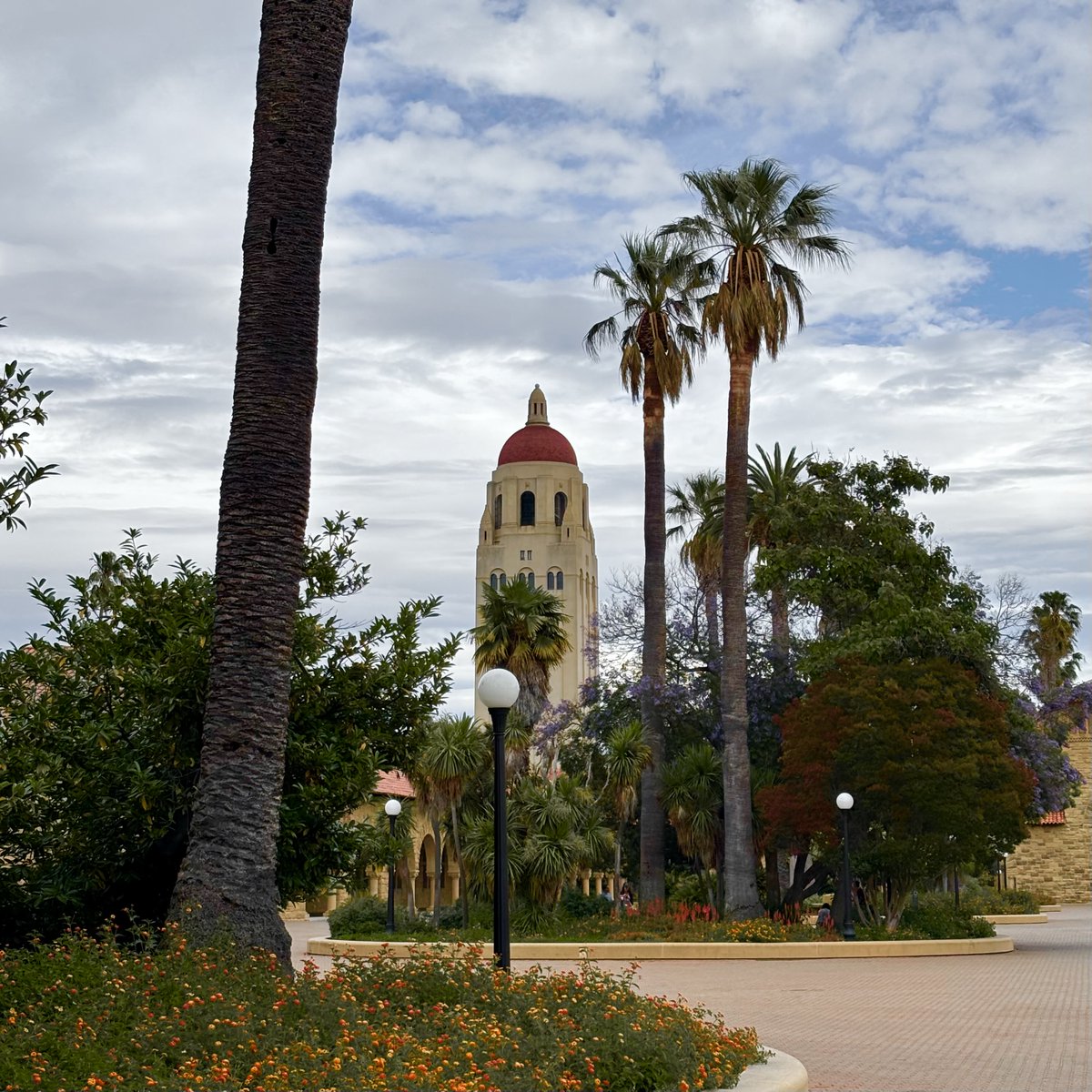
(A picture of the Washington Square Arch in these late-fall days.)
The paper was accepted to The Astrophysical Journal. This is my second first-author paper, so excited to see it released!
Thanks to my amazing co-authors: Vinay Kashyap, Joshua Ingram, David Fouhey, @juramaga, Pavlos Protopapas, Jeremy Drake, Dong-Woo Kim, and Cecilia Garraffo.
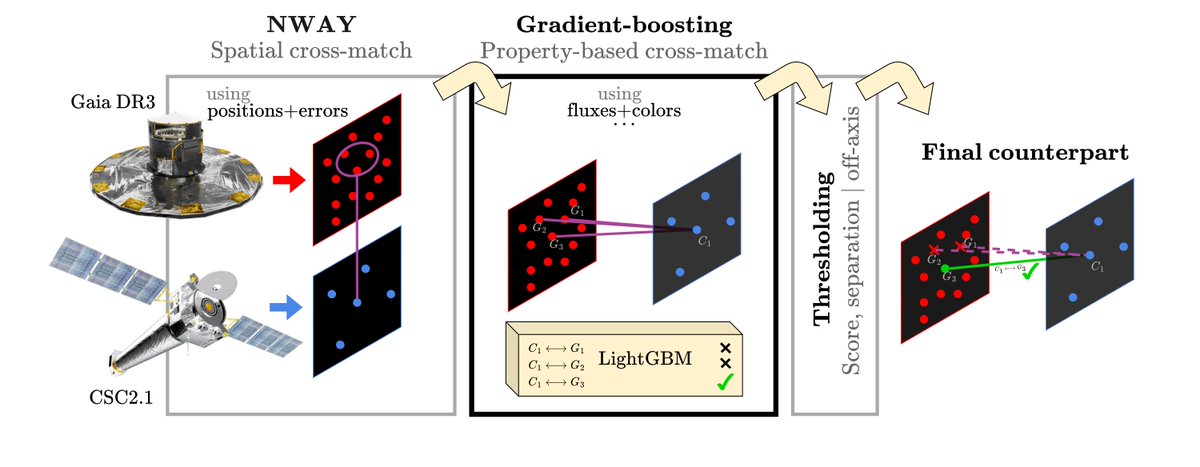
Introducing The Chandra-Gaia Catalog of Counterparts.
We cross-match X-ray sources from Chandra with their optical counterparts in Gaia, using machine learning instead of position alone to resolve ambiguous matches.
🔭Webpage + Catalog + Paper: https://t.co/K9ZXyn2ugL
🧐A question I've long been interested in: how can we learn from human hands and transfer that directly to robots?
Our new work, HUG, makes it possible in three simple steps: (1) collect human grasps at scale, (2) learn from them, and (3) retarget for deployment.
Introducing Human Universal Grasping (HUG): dexterous grasping learned entirely from human hands, with zero robot data.
🌐 Website: https://t.co/78rfwuuh4J
📄 Paper: https://t.co/BhAI4a1esg
💻 Code: https://t.co/omtjbM7Scl
Hey friends, @astro_ai_cfa scientists and other @CenterForAstro colleagues are featured in this Science Magazine piece by Josh Sokol, about the implications of AI for science: https://t.co/964EgIoOQa
What happens to planning and control when world models condition on complex actions?
For example, precisely controlling a human agent may require specifying the motion of each joint.
In this setting, action dimensionality increases, the model becomes difficult to control, and the cost of planning using search-based methods like CEM explodes.
We propose a solution: lift the world model to a higher level of abstraction.
We use a lightweight policy to map high-level waypoint actions → low-level joint sequences, so you can control and plan in a concise space.
Best of all, this is done without finetuning or losing any world model expressiveness.
1/8
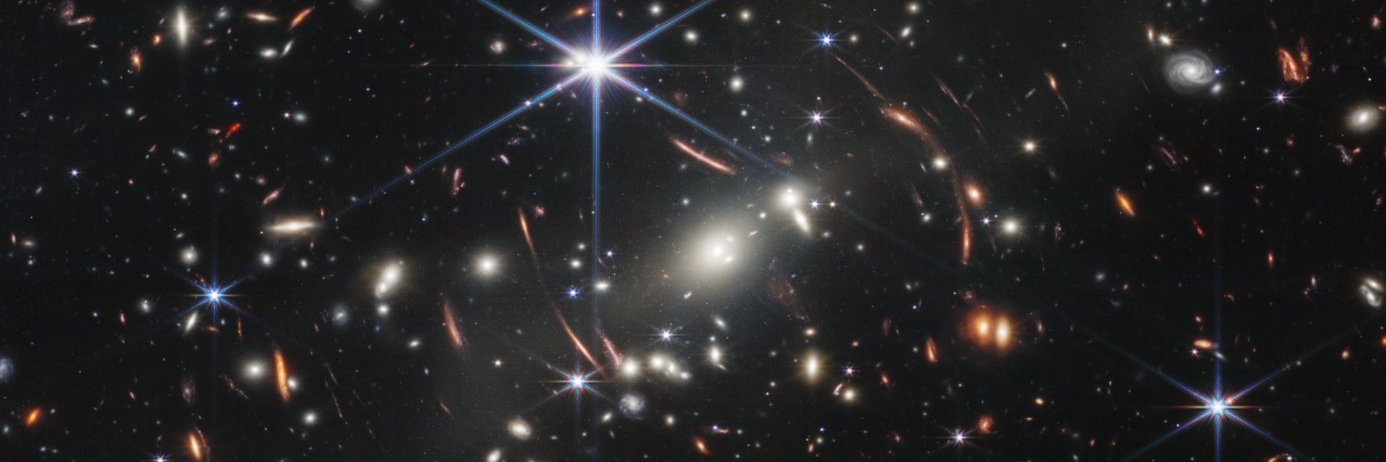
Our JWST image of Westerlund 2, a massive region of star formation in the Milky Way, has been featured as "JWST image of the month" by the European Space Agency. Enjoy this beauty and learn about how young massive stars shape their birth environments! https://t.co/8ciYrTnzmv
NYU Center for Data Science just got a major level-up. 📈✨
CDS is officially a full-fledged Department within the new Courant Institute School—and we need an Inaugural Chair to hold the keys.
Wanted: A visionary to lead the best in the biz in the city that never sleeps. 🗽
Is it you? Or do you know the person who belongs at the head of the table?
Check out the most exciting job in academia right now: 🔗 https://t.co/JZ7aRRRjvE
#NYU #DataScience #AcademicTwitter #Hiring #BigData #NYC
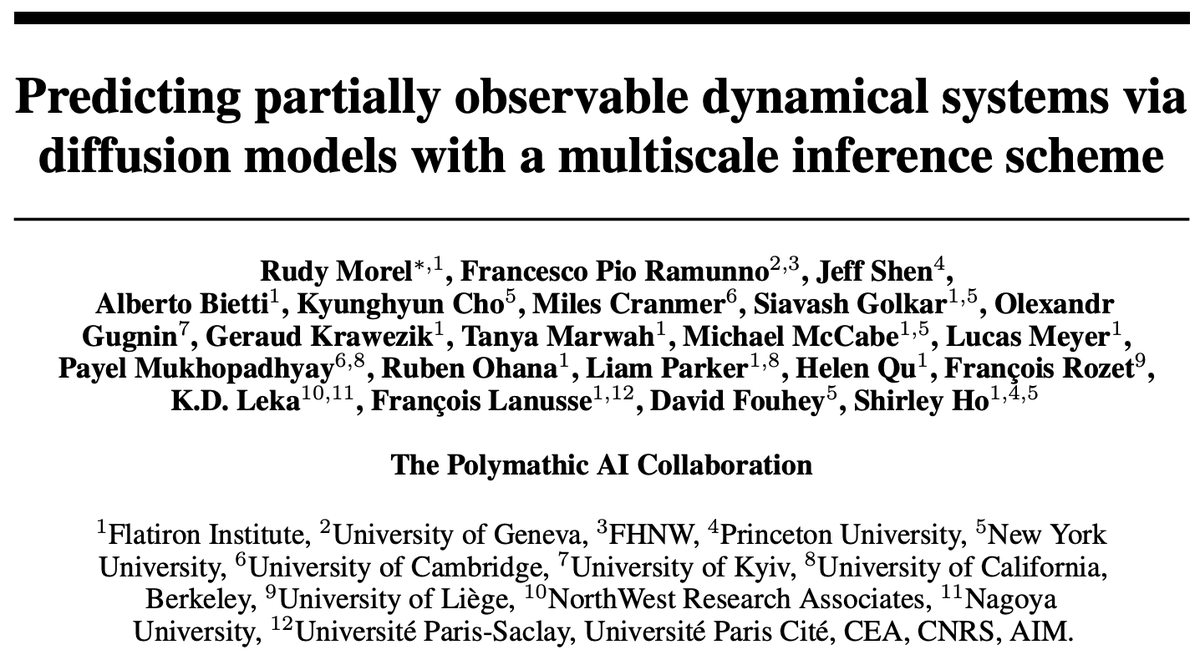
Partial observability is a key challenge in predicting physical systems, where only part of the state is observed.
Check out our poster #2213 at #neurips2025 on Thu, Dec 4, 4:30pm! We propose a multiscale inference scheme for diffusion models to better predict these systems.
Dexterous manipulation by directly observing humans - a dream in AI for decades - is hard due to visual and embodiment gaps.
With simple yet powerful hardware - Aria 2 glasses 👓 - and our new work AINA 🪞, we are now one significant step closer to achieving this dream.
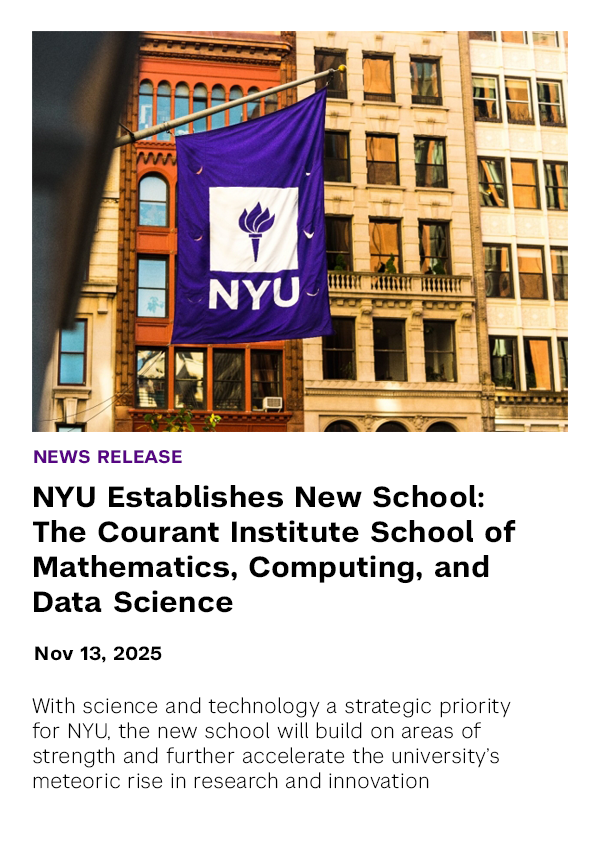
NYU (@nyuniversity) announced the creation of the Courant Institute School of Mathematics, Computing, and Data Science today, signaling the university’s enthusiastic commitment to mathematics, computing, and data science over the coming decades: https://t.co/dz4NsvJg4w
New paper alert 🚨
What if I told you there is an architecture that provides a _knob_ to control quality-efficiency trade-offs directly at test-time?
Introducing Compress & Attend Transformers (CATs) that provide you exactly this!
🧵(1/n) 👇
We are hiring a postdoctoral fellow! Are you interested in applying AI methods to the physical sciences? Do you enjoy working in a vibrant research environment and interacting with experts in Physics, Astronomy, and Computer Science? Come work with us! https://t.co/Q5JZSrbz2R
A very late life update before the year ends, but I wanted to share that I started my PhD at NYU! @NYU_Courant
(A picture of the Washington Square Arch in these late-fall days.)
I’m extremely grateful to the many people, too many to fit in a single post, who helped me get here: mentors, peers, friends, and family. It wouldn’t have been possible without you.