You know you’re in Armenia when a quick 5-minute errand turns into a 45-minute catch-up because you ran into three neighbors on the way. 😂🇦🇲 #ArmenianThings
Former Artsakh Human Rights Defender Artak Beglaryan has applied for a new biometric passport through HayPass, formally demanding that Azerbaijan not be listed as his country of birth.
Beglaryan announced that he is prepared to challenge any refusal in court, including before the European Court of Human Rights (ECHR).
“If my request is rejected, I intend to appeal the decision through the courts, all the way to the ECHR,” Beglaryan stated.
He expressed confidence that the legal challenge would succeed and that Artsakh Armenians would eventually be able to obtain passports without the name of a state he described as responsible for genocide against their people.
Beglaryan also highlighted inconsistencies in his existing Armenian identification documents. His passport, issued in 2024, lists Stepanakert as his birthplace, while his identification card lists the Republic of Armenia.
“So much for legal consistency and certainty,” he remarked.
The dispute follows the introduction of Armenia’s new biometric passport system on November 1, 2026, under which Armenians forcibly displaced from occupied Artsakh who have obtained Armenian citizenship are having Azerbaijan recorded as their country of birth.
On November 19, the Interior Ministry’s Migration and Citizenship Service defended the practice, citing International Civil Aviation Organization (ICAO) Document 9303 and ISO 3166 standards. The ministry argued that standardized country designations were necessary to prevent complications at international border crossings.
However, the Artsakh Union, headed by Beglaryan, challenged that explanation in a November 20 statement, arguing that neither international standard requires Azerbaijan to be listed.
According to the Union, ICAO Document 9303 makes the birthplace field optional and permits the inclusion of a city or locality rather than a country. ISO 3166 standardizes country codes but does not independently require a country to appear in the birthplace field.
The organization identified a May 11, 2026 legislative amendment as the actual source of the change. Under Armenia’s previous passport legislation, citizens could request that their city or village of birth be recorded. The new Law on Identity Documents instead requires the birthplace field to specify a country, removing that option.
The Union argues that the restriction results from a domestic legislative decision rather than a binding international obligation.
The controversy carries particular significance for the more than 100,000 Armenians forcibly displaced from Artsakh following Azerbaijan’s September 2023 military offensive and the ethnic cleansing of the region’s Armenian population.
For those born in Stepanakert, Martuni, Askeran and other Artsakh communities, the designation raises questions about how their origins and identities are represented in official Armenian documents.
The Artsakh Union has called for amendments restoring the right to list a city or locality of birth. It has also urged affected citizens to submit written objections and request formal administrative decisions that can be challenged in court.
Beglaryan’s application could become an important legal test of the policy, with the possibility of judicial proceedings extending beyond Armenia if domestic remedies fail.
🇦🇲 Discover the unique beauty of Gyumri, Armenia!
The iconic Iron Fountain is a remarkable example of Soviet-era Brutalist architecture. A fascinating blend of history, design, and urban character.
Would you add this architectural gem to your travel bucket list? ❤️🇦🇲
There is something timeless about the stone bridges and winding canyons of Lori. Every time I visit, I feel like I’m discovering a new corner of the country. 🏔️🇦🇲 #Lori
The intricate stone carvings on medieval Armenian khachkars are seriously some of the most detailed art you’ll find anywhere. A true national treasure. 🇦🇲✨
The European Federation of Journalists (EFJ) has condemned Nikol Pashinyan’s hostile rhetoric toward journalists after he repeatedly insulted journalist Hripsime Jebejyan during a televised press briefing on November 19.
In a November 20 statement, the EFJ joined the Union of Journalists of Armenia (UJA) in demanding an immediate end to intimidation, verbal attacks, and attempts to discredit journalists performing their professional duties.
The confrontation began when Jebejyan questioned Pashinyan about the deaths of Armenian servicemen and Yerablur Military Pantheon, where soldiers killed during the wars in Artsakh and subsequent Azerbaijani military attacks are buried.
The exchange escalated after Jebejyan recalled Pashinyan’s previous threats against political opponents, including statements about forcing people to kneel, making them “lick the asphalt,” and breaking their hands with a chair.
Pashinyan responded by accusing Jebejyan, other journalists, and opposition forces, including the “Strong Armenia” party and “Armenia” parliamentary faction, of exploiting Yerablur for political purposes.
He repeatedly described the journalist’s conduct as “despicable” and directed personal insults at her.
The Union of Journalists of Armenia described the incident as part of a broader pattern of hostility toward critical media, accusing Pashinyan and his political team of targeting journalists who ask uncomfortable questions.
The EFJ endorsed these concerns, emphasizing that public officials must respect journalists regardless of political disagreements.
“Insulting a journalist is not only an attack on one person; it is an attack on freedom of expression and on the values of a democratic society,” EFJ President Maja Sever stated.
The federation called for an immediate end to hostile rhetoric and intimidation against journalists.
Read the full statement at https://t.co/hdr488LY1m.
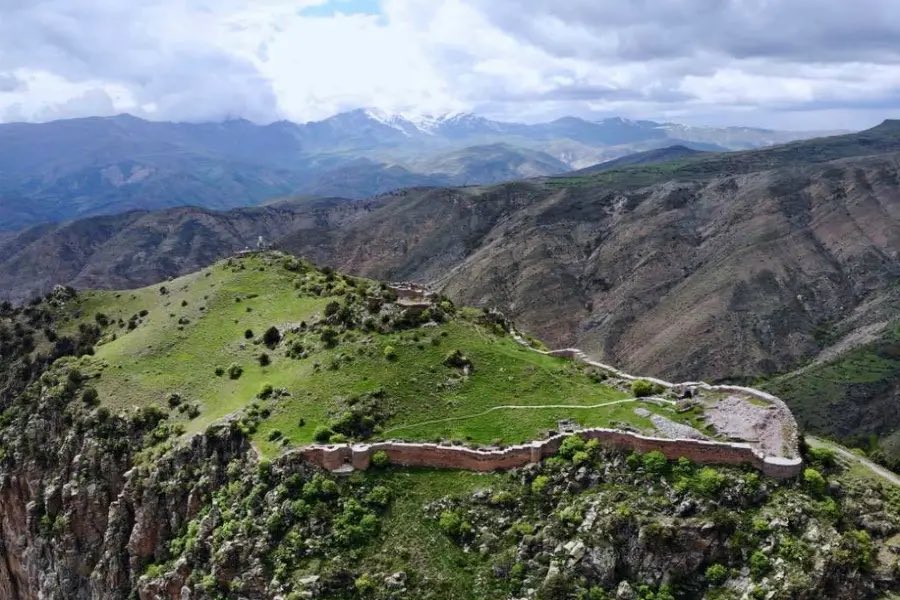
Today we shine the spotlight on Vayots Dzor! 🌟Happy Vayots Dzor region day!!🥳✨
VAYOTS DZOR: EXPLORING ITS INDUSTRIAL IDENTITY
Beyond its breathtaking landscapes and natural beauty, Vayots Dzor holds an important place in Armenia's economy. Its natural resources, production activities and local industries contribute to the country's economic landscape, making the region much more than a tourist destination.
The region's economy is shaped by several key sectors:
⛏️ Mining & Mineral Resources:
Vayots Dzor is home to valuable mineral deposits and mining activities, contributing to Armenia's resource-based economy and industrial sector.
💧 Mineral Water Production:
The region's natural mineral water resources support beverage production and processing, connecting local natural assets with industrial development.
🍷 Winemaking:
With Areni at the heart of its winemaking heritage, Vayots Dzor has a long-standing tradition of grape cultivation and wine production. The sector represents an important part of the region's agricultural and manufacturing identity.
🧀 Food Processing & Manufacturing:
Dried fruit production, dairy processing, cheese-making and other food manufacturing activities contribute to local production, value creation and employment.
These sectors reflect the diversity of Vayots Dzor's economy and its contribution to Armenia's productive capacity.
Vayots Dzor is not only defined by what nature has created, but also by what its resources and industries make possible.
#VayotsDzor #ArmenianEconomy #IndustrialDevelopment
Disclaimer: The photographs featured in this publication are used for illustrative and informational purposes only. We do not claim ownership or copyright over any of the images presented. All rights and credits remain with their respective copyright holders and original creators.