Continuing our Mutual Fund series, this thread will focus on ‘Demystifying the Debt Mutual Fund Categories’
Do ‘re-tweet’ & help us educate more investors (1/10)
It was never Retail investors model to worry about what FIIs will do when they (retail) do their SIPs and still they are being criticized.
Retail did their job exceptionally well in investing in liquid mutual fund/stock market investments which post tax did better than keeping money in FDs and this is even after 2 years of poor performance of the market.
Advising retail to focus on illiquid, non transparent, high transaction cost, large ticket price "real estate" investment is poor advice indeed.
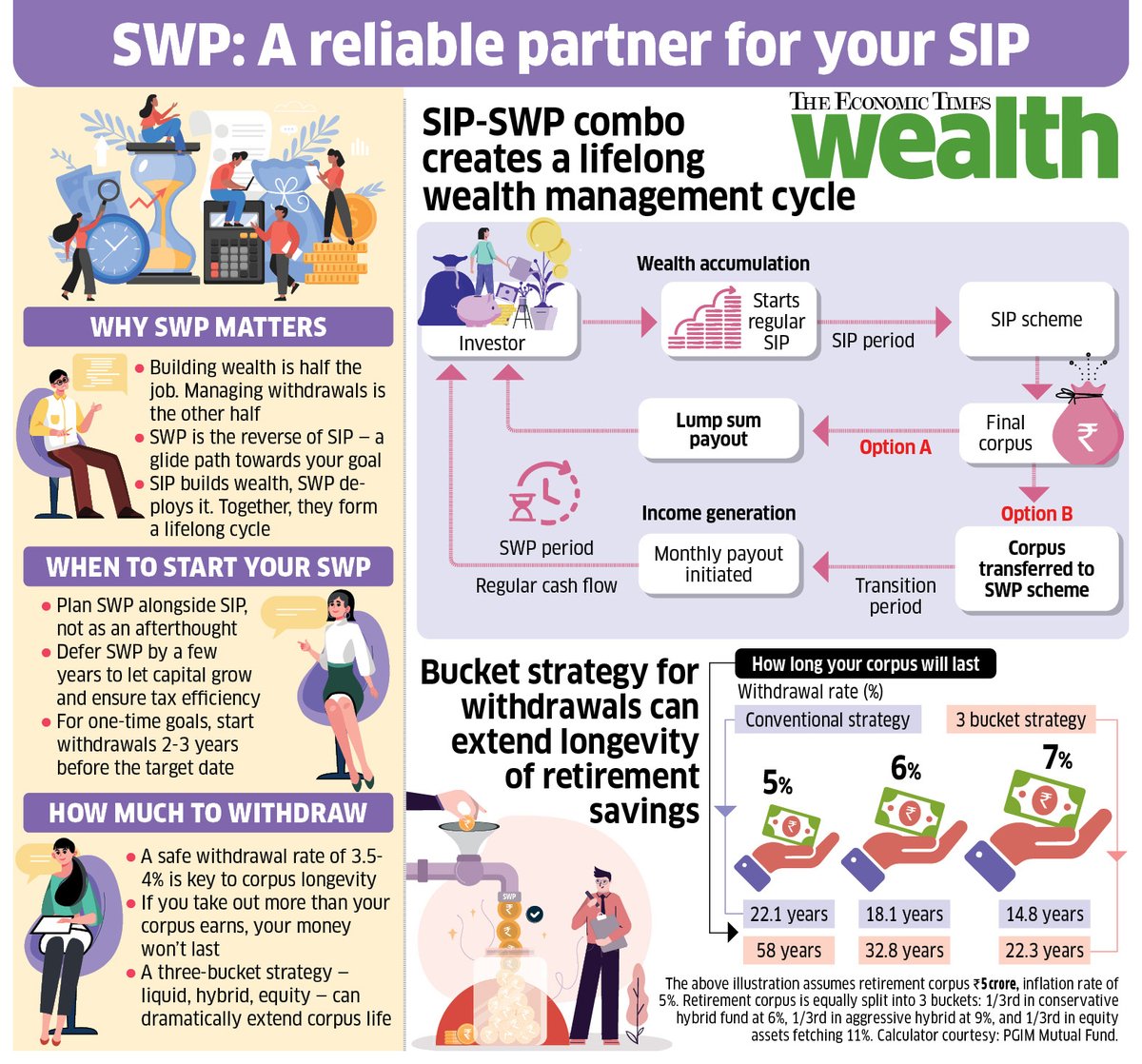
You’ve started your SIPs, but have you thought enough about your exit strategy?
Even if you are diligent with your SIP, withdrawing funds in haste or during a market decline can leave you short of your financial goal.
Three broad ways to improve your existing strategy to make sure your patient investment bears fruit.
1) Defer your SWP; let your SIPs / lump-sum investments grow reasonably first,
2) Choose your SWP funds wisely,
3) Keep your withdrawal rate real.
@SanketD_ET explains the hows and whys in this week’s @ET_Wealth cover story
(Story in the comments section👇)
Meet Chandrakant Sampat - India's first successful value investor.
> Born into a Gujarati business family, he chose the stock market over the family business. He entered Dalal Street in 1955.
> He once said, "I got into the market because it was simple. You just needed a cheque book and a pen."
> Deeply influenced by Peter Drucker, he believed in buying high quality, simple to understand businesses.
> Low debt. High ROCE. Strong free cash flow. Reasonable valuations. But above all, quality of management and smart capital allocation.
> He preferred concentrated portfolios, usually 8-10 stocks. He believed over diversification hurts long term returns.
> Longevity of business mattered more than short term noise.
> 1973 changed everything. With the introduction of FERA, foreign companies were required to list in India and dilute equity.
> Many MNC stocks became available at attractive valuations. Sampat ji saw a generational opportunity.
> He invested heavily in companies like Colgate, Gillette, P&G, HUL and Nestle and held them for decades.
> After splits and bonuses, his effective buying cost became negligible. In some cases, he made 100-200x returns.
> 1984 brought another opportunity. After Indira Gandhi's assassination, markets crashed in panic.
> While others were fearful, he bought aggressively. He accumulated Bosch at deeply beaten down prices.
> He later guided investors like Rakesh Jhunjhunwala, Radhakishan Damani and Nimesh Shah.
> Parag Parikh once said, "Whatever I am, it's because of Sampat ji."
> He lived simply and stayed away from the spotlight. No mobile phone. Minimal media presence. Frugal lifestyle.
> He believed markets and our own mistakes are the best teachers.
> In later years, he turned cautious about valuations, governance and rapid technological shifts.
> Sampat ji passed away in 2015 at the age of 86 in Mumbai.
> He avoided limelight, but shaped generations of investors.
> Ending it with his words:
"To be a good investor, all one has to do is dream."
One of the first launches in the multi asset omni category, this idea has now been tested in some volatile times.
The idea - build a boring thali.
No forecasts, but the simple 65-10-10-15 structure across equity-gold-silver-debt. And within equity, a large and midcap portfolio with a small allocation to play themes at the right point in the cycle.
Disclaimer: https://t.co/SDh8yehs3F, see Edelweiss Multi Asset Omni Fund of Fund
@iRadhikaGupta start with below:
1.gratitude + forgiveness
2.water (plain/jeera +ajwain/lemon+chia)
3.breath work (deep shallow breathing, 15-20 mins)
4.moving / walking / workout
5.cold shower (if possible)
tweak this as per your convenience, but dont miss breathwork, ever.
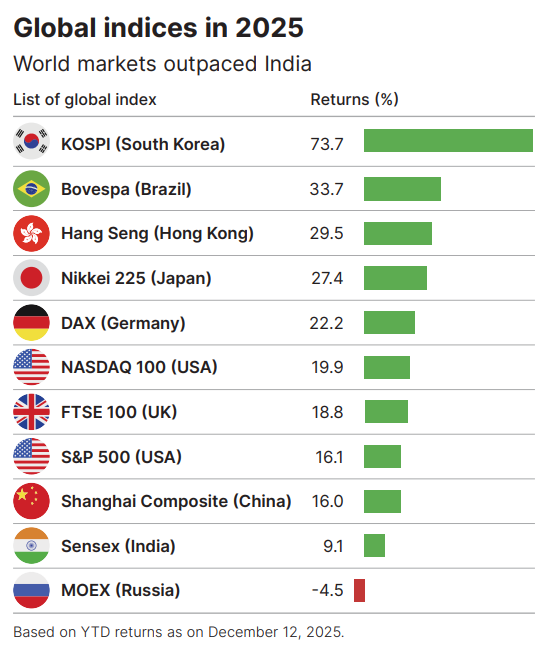
Indian investors want global exposure.
Right now, most doors are shut.
We have one that’s still open.
Not fully global. Not fully local.
Just diversified, disciplined, & limited.
Global markets have run up.
So we don’t recommend lump sum.
We recommend patience.
A 10-year SIP.
So volatility works for you, not against you.
Naam : https://t.co/EKOoN76NAK