Manchester United Financial Results, what you need to know & helping make sense of it:
£142.2m: 24/25 Q4 Revenue
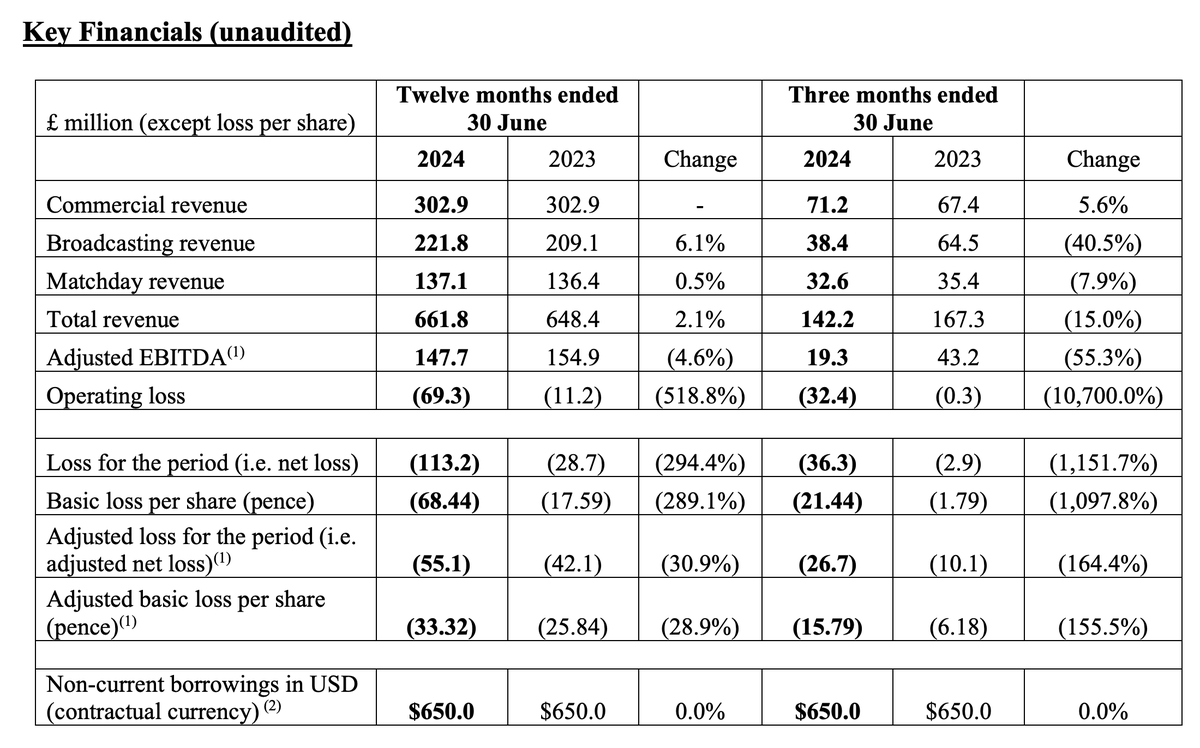
£661.8m: 24/25 FY Revenue
£32.6m: Q4 Matchday Revenue
£13.8m: FY Operating Expenses
£180m-200m: Adjusted EBITDA Range
£650m-£670m: 25/26 FY Revenue Guidance
£145m-£160m: Adjusted EBITDA Guidance
EBITDA shows clearer view of operational ability to generate cash, better indicator than revenue alone.
The revolving credit facility as of 30 June 2024 was £30m & total current borrowings including accrued interest was £35.6m. Current borrowings including accrued interest, at 30 June 2024 were £35.6m compared to £106m at 30 June 2023. We won't have full details of the credit facility until the Annual Report.
Amortisation for the year was £190.1m, an increase of £17.4m, or 10.1%, over the prior year, due to investment in the first team playing squad. The unamortised balance at 30 June 2024 was £408.6m.
Overall cash & equivalents decreased by £2.5m in the year, compared to a decrease of £45.2m in the prior year. As of 30 June 2024, cash & equivalents were £73.5m compared to £76.0m at the prior year end.
USD debt as of 30 June 2024 is $650m, which was unchanged from 30 June 2023, when converted to GBP were £511m, compared to £507.3m last year.
Commercial revenue for the year was £302.9m, in line with commercial revenue of £302.9m in the prior year.
Included in full year revenue guidance is an approximate £30m improvement to Retail, Merchandising and Licensing revenues.
Full year Broadcasting revenues in fiscal 2025 will be approximately £30m lower than the prior year, given the men’s first team’s participation in the UEFA Europa League versus Champions’ League participation in fiscal 2024.
Retail, Merchandising, Apparel & Product Licensing revenue was £125.1m, an increase of £11.7m, or 10.3%.
'Beginning in the third quarter of fiscal 2024, the club commenced a business transformation plan to unlock operational efficiency with the ultimate goal of improving the club’s financial sustainability and maximize the resources available to improve football operations.
These initiatives included installing a new executive leadership team covering both the business and sporting side, streamlining the organizational structure and, following a thorough cost review by Interpath Advisory, the club implemented a significant cost rationalization program.
In total, the club expects to realize annualized cost savings of approximately £40 million to £45 million, before implementation costs of £10 million. Due to timing and other contractual obligations, the club expects to realize these savings over fiscal years 2025 and 2026.'