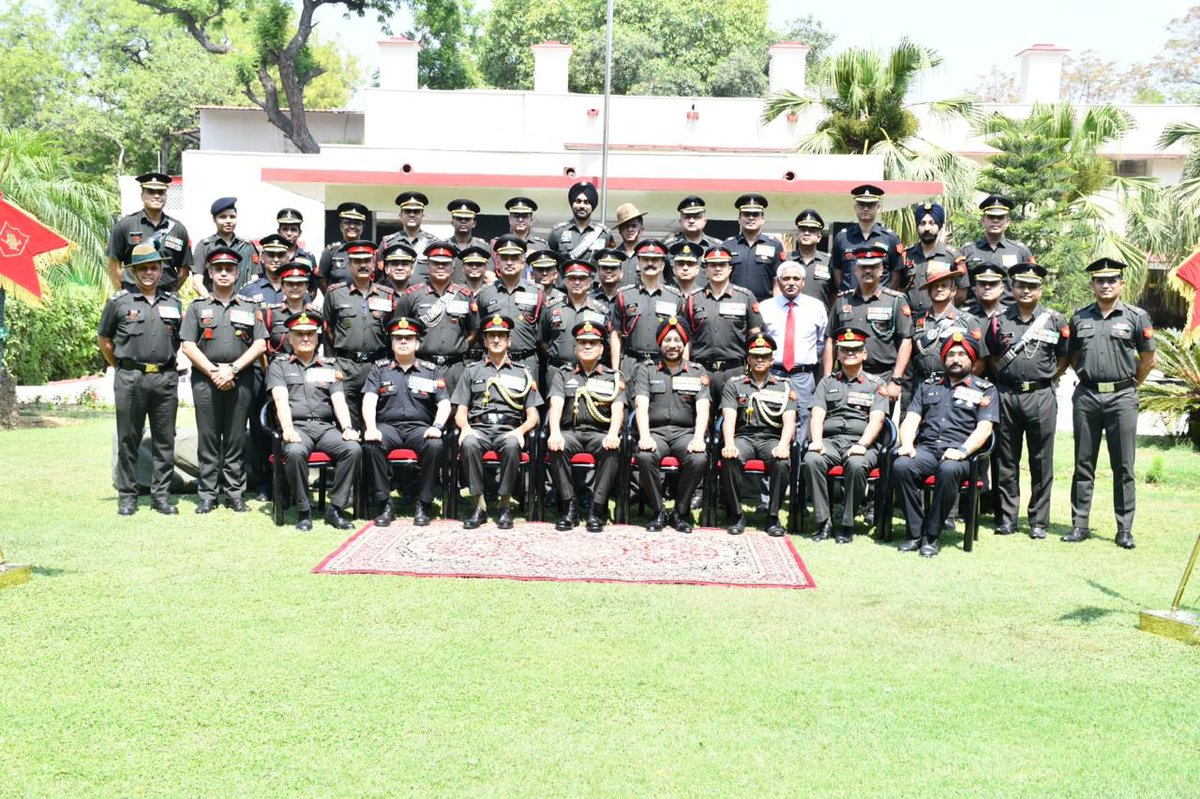
A TB Mukt Bharat Abhiyaan campaign was conducted by the Department of Community Medicine, #AFMC Pune at the Urban Health Training Centre, Wanwadi. Medical undergraduates, 3 Maharashtra Med NCC Battalion cadets, District TB Centre Pune, residents, healthcare workers and community volunteers participated in door-to-door screening, active case finding and TB awareness activities, reaffirming the commitment of the #AFMS towards TB elimination through the spirit of #JanBhagidari.
@DefenceMinIndia@adgpi@indiannavy@IAF_MCC@HQ_IDS_India@SpokespersonMoD@IaSouthern@PIB_India@PRODefPune
#DGAFMS
#AFMC
𝑺𝒆𝒓𝒗𝒊𝒄𝒆 𝑩𝒆𝒇𝒐𝒓𝒆 𝑺𝒆𝒍𝒇
The #SelaWarriors of #GajrajCorps rushed to the aid of two civilians injured in a road accident near Baisakhi, at an altitude of over 12,000 ft, en route to Tawang.
The Regimental Medical Officer and Battlefield Nursing Assistants provided timely emergency medical care, stabilising the critically injured driver before evacuating him to Civil Hospital, Tawang. The swift response reaffirmed the Indian Army's unwavering commitment to serving citizens, even in the remotest corners of the nation.
#GajrajCorps के #SelaWarriors ने Baisakhi के पास, Tawang जाते समय 12,000 फीट से अधिक ऊँचाई पर हुई एक सड़क दुर्घटना में घायल दो नागरिकों की तुरंत सहायता की।
Regimental Medical Officer और Battlefield Nursing Assistants ने समय पर आपातकालीन चिकित्सा सहायता प्रदान कर गंभीर रूप से घायल चालक की स्थिति को स्थिर किया और उसे आगे के उपचार के लिए Civil Hospital, Tawang भेजा। यह त्वरित कार्रवाई देश के सबसे दुर्गम क्षेत्रों में भी नागरिकों की सेवा के प्रति Indian Army की अटूट प्रतिबद्धता को दर्शाती है।
#ServiceBeforeSelf
#NationFirst
#SavingLives
@adgpi@easterncomd@PROTEZPUR@prodefgau
Since ‘Swarajya Staff’ has been pandering to all kinds of innuendoes regarding my bias against a Rocket Force; here is my take on it and it is not an institutional bias. I am arguing on merits.
@shiv_cybersurg
https://t.co/uiCzs1lAXN
Mil auth is diminished when it feels the need to constantly display itself.Overloaded uniforms & theatrical ceremonies project insecurity, not str. The most formidable instns let austerity, discp, competence & performance speak for them.Not mere spectacle!
https://t.co/77P2hSXAEj
*IDHAR UDHAR KI BAAT 137 — CMP AA RAHA HAI*
Brig PS Gothra (Retd)
“Aaj CMP aa raha hai, Saab!” Sepoy Ravi's face was glowing with happiness. For a moment I thought some senior officer from the Corps of Military Police was visiting our cut-off post.
I later realised that CMP was not a military policeman. It was the chicken. More specifically, those old layer hens with a bright red comb on its head that resembled the red beret of the Corps of Military Police. The live chicken was being brought to the post for dinner. And that was enough to make the entire post cheerful. That day I learnt something important. Indian soldiers find happiness in the smallest of things.
A kheer-papad in a Barakhana. A plate of chai-pakora after a long patrol in rain and slush. A bright sunny day after a week of snowfall so that clothes can finally dry. A rainy morning accompanied by the magical announcement: “Aaj PT nahin hai!” Wearing civil clothes on the administration day. An extra peg in the rum issue. A volleyball match against the neighbouring unit that becomes a matter of national prestige. A samosa or an omelette from the wet canteen. “CO Saab ne good bola.” “Chutti sanction ho gayi.”
“Theek hai, Saab.” “Nalla Saar.” “Chardi Kala.”
These are the answers you will receive from him even when circumstances suggest he should be miserable. He can be standing in knee-deep snow. Marching through deserts. Or carrying loads that would make a mule complain. Yet somehow, he remains cheerful.
The Indian soldier is perhaps the world's greatest improviser. Give him a vegetable tin and he will cut it open and turn it into a tawa. Give him a bamboo stick and it becomes a spatula. Give him atta and he will mark a volleyball court. ....Read the rest of the story on the blog. Link given in comments
Mewar is not just a name of a region but it is a synonym of sacrifice and courage. Today on the occasion of Maharana Pratap Jayanti let us go through the brief history of the Mewar Infantry now known as IX GRENADIERS, MEWAR. (1/22)
There is a lot of discussion about creating a a Rocket Force these days. My argument is simple...why are we re-inventing a wheel which has been in existence since 25 years?
Have a look at my views...I am open to debate...provided it is not through the prism of 'lanyarded' vision.
@adgpi@PMOIndia@SpokespersonMoD@SandeepUnnithan (we have discussed this in detail)
I have miles to go before I sleep.....
https://t.co/sq2MB7AItm
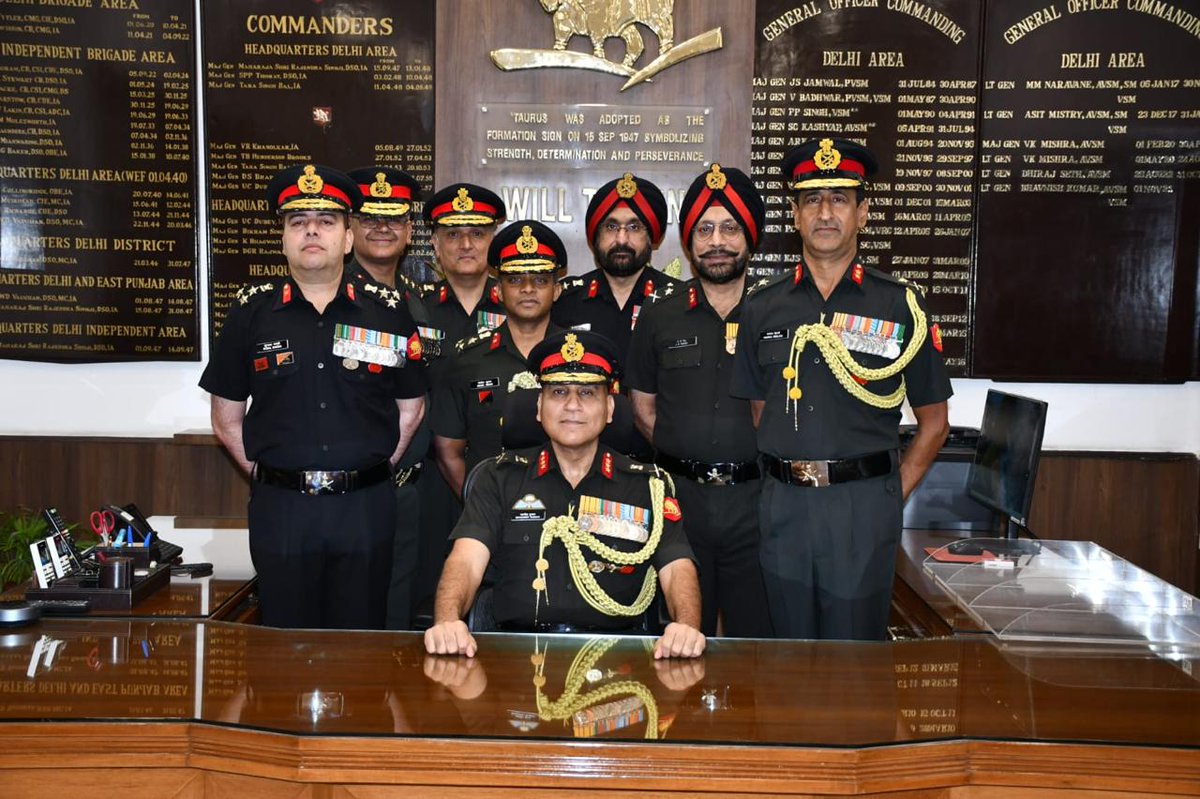
HQ #DelhiArea, bids a fond farewell to Lieutenant General Bhavnish Kumar, AVSM, VSM, General Officer Commanding, Delhi Area, on his superannuation, marking the culmination of an illustrious military career spanning 37 years of distinguished service to the Nation.
His tenure was marked by exemplary leadership, professional excellence and an unwavering commitment to operational effectiveness, fostering organisational growth and strengthening institutional values across the formation.
His legacy of dedication, integrity and service will continue to inspire all ranks.
#IndianArmy
#ServiceBeforeSelf
#NationFirst
@adgpi@westerncomd_IA
"The Generals loom before me like a nightmare … I curse God and man for having weakly said I would do them, for I have no ideas about it and I foresee a horrible failure."
- John Singer Sargent, letter to Evan Charteris (12 May 1920).
The painting 'General Officers of the Great War' by John Singer Sargent (1922) was commissioned by the South African financier Sir Abraham Bailey, who sought to honour the British and Imperial commanders of the Great War. He paid Sargent £5,000 for the work and later presented it to the National Portrait Gallery in London.
Though reluctant, Sargent accepted the formidable task in 1920. He privately described the generals as "a nightmare" and gloomily predicted "a horrible failure," lamenting that he was forced to paint them "standing up in a vacuum."
The resulting composition - 22 stiff figures in khaki against a plain, neutral background - struck many as static and uninspired when first exhibited at the Royal Academy in 1922. Critics found it formal and lifeless, a judgment Sargent himself seemed to share, yet the work endures as a commanding historical record of the era's military leadership.
I always make time to see it whenever I wander around the National Portrait Gallery. For all its stiffness, Sargent’s painting of those generals actually works because it's so formal. It doesn't try to loosen up or romanticise them – it just lines them up like a row of khaki pillars, and that very rigidity feels completely right. These were the men who commanded millions through the horror of the trenches and then turned up for their official portrait still expecting everything to look smart and orderly.
At first glance it seems a bit lifeless, but the longer you look, the more honest it feels. It shows them exactly as they were: the last grand figures of the old Empire, caught at the moment when the world was already changing and leaving their kind behind. That awkward grandeur is what makes it stick in your mind.
From left to right, the 22 generals depicted in John Singer Sargent's General Officers of the Great War (1922) are:
Field Marshal William Birdwood, 1st Baron Birdwood
Field Marshal Jan Smuts
General Louis Botha (noted for blue lapel flashes)
Field Marshal Julian Byng, 1st Viscount Byng of Vimy
General Henry Rawlinson, 1st Baron Rawlinson (carrying a coat)
Major-General Sir Henry Lukin
General Sir John Monash
General Henry Horne, 1st Baron Horne
Field Marshal George Milne, 1st Baron Milne
Field Marshal Sir Henry Wilson, 1st Baronet
Major-General Sir Andrew Hamilton Russell
Field Marshal Herbert Plumer, 1st Viscount Plumer (white moustache)
General Sir John Cowans
Field Marshal Douglas Haig, 1st Earl Haig (with baton)
Field Marshal John French, 1st Earl of Ypres (with baton, wearing coat)
Field Marshal Sir William Robertson, 1st Baronet
Lieutenant-General Sir Stanley Maude
Field Marshal Edmund Allenby, 1st Viscount Allenby (turning away, with sword)
Lieutenant-General Sir William Marshall
General Sir Arthur Currie (carrying coat)
Field Marshal Rudolph Lambart, 10th Earl of Cavan
General Sir Charles Macpherson Dobell
Wojtek was considered a full-fledged soldier. He had his own military serial number, the rank of corporal, rations, and even a salary. A private of the 22nd Artillery Supply Company of the 2nd Polish Corps. Only instead of carrying a rifle, he carried crates of artillery shells.
---
Polish soldiers found him as a bear cub in Iran in 1942 — small, hungry, and without his mother. They fed him from a bottle and took him with them. When the unit was boarding a ship to Egypt, the British refused to allow a bear on board. So the Poles officially enlisted him into the army. They issued him documents and entered his name into the personnel records. That is how Wojtek became a soldier.
By 1944, he weighed nearly 200 kilograms. And when the Battle of Monte Cassino began — one of the bloodiest battles of the Italian campaign — Wojtek worked alongside the men. He carried crates of 25-pound artillery shells from the supply depot to the guns. For 4–6 hours at a time, under constant shellfire.
After the battle, soldiers recalled that he never dropped the crates. He carried them carefully and placed them exactly where he was shown. He saw that the men were exhausted and wounded, yet he kept working.
After the capture of Monte Cassino, the image of a bear carrying an artillery shell became the official emblem of the 22nd Company. It was painted on vehicles and worn as patches. Wojtek became the symbol of the unit.
He drank beer — the soldiers shared their rations with him. He loved cigarettes, or rather chewing them. He slept in tents beside the men. When a soldier was wounded, Wojtek would come over, lie beside him, and refuse to leave until the man was taken to the hospital.
After the war, Wojtek was sent to the Edinburgh Zoo, where he lived until 1963. Veterans from his unit came to visit him — and he recognized them. He would stand on his hind legs and become visibly excited.
There is a monument to him in Edinburgh. Another in Kraków. And one more in London.
A bear who went through war, helped save lives through his labor, and remained in history not as a savage beast, but as a comrade.
And perhaps the most remarkable thing about Wojtek’s story is this: in the midst of total brutality, people still found the strength to give warmth and care to a helpless wild animal — and he answered them with the purest loyalty a living creature can offer.
Dear,My complaint already forwarded to customer care but no action yet. Your delivery agent is falsely updating “no response from receiver” while refusing doorstep delivery and forcing me to collect the parcel from his office or it will be returned.
@DTDCIndia
If you speak Kannada, Telugu, or Sanskrit, you’ve likely noticed that Hindi sounds "clipped."
Rama becomes Ram. Shiva becomes Shiv.
Even in English, "Chocolate" feels like it’s missing a syllable. Ever wondered why?
I went down this rabbit hole yesterday and was fascinated with what I learnt.
Welcome to the world of 'Schwa Deletion' in linguistics. 🧵👇