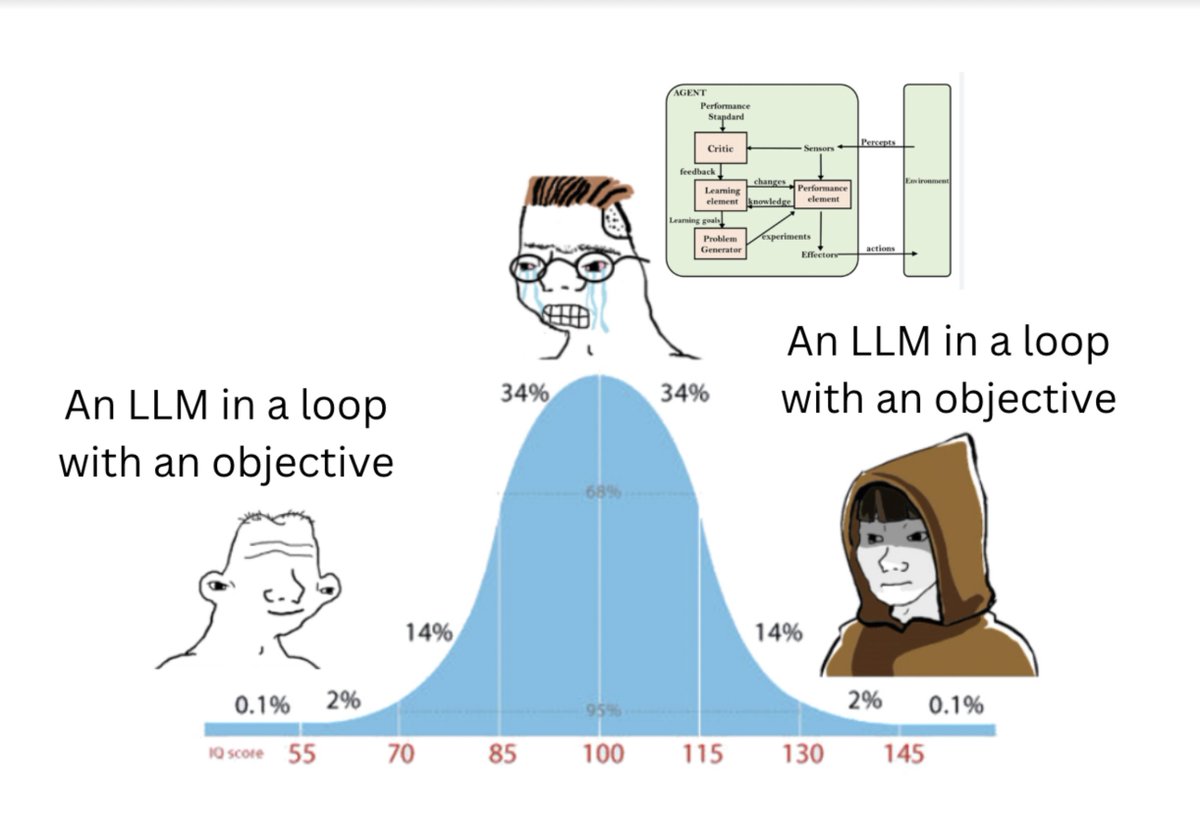
LLMs are like gasoline. Harnesses are like cars.
Some built for speed, some for all-terrain, some for efficiency. Same fuel, wildly different machines, each tailored for specific job.
> Great interfaces rarely come from a single thing. It's usually a collection of small details that compound into a great experience
https://t.co/R2ZWhYnsSQ
Mistakes happen. As a team, the important thing is to recognize it’s never an individuals’s fault — it’s the process, the culture, or the infra.
In this case, there was a manual deploy step that should have been better automated. Our team has made a few improvements to the automation for next time, a couple more on the way.
seems obvious but:
things that are changing rapidly:
1. context windows
2. intelligence / ability to reason within context
3. performance on any given benchmark
4. cost per token
things that are not changing much:
1. humans
2. human behavior, preferences, affinities
3. tools, integrations, infrastructure
4. single core cpu performance
therefore,
ngmi:
1. "i found this method to cut 15% context"
2. "our method improves retrieval performance 10% by using hybrid search"
3. "our finetuned model is cheaper than opus at this benchmark"
4. "our harness does this better because we invented this multi agent system"
5. "we're building a memory system"
6. "context graphs"
7. "we trained an in house specialized rl model to improve task performance in X benchmark at Y% cost reduction"
wagmi:
1. product/ui
3. customer acquisition
4. integrations
5. fast linting, ci, skills, feedback for agents
6. background agent infra to parallelize more work
7. speed up your agent verification loops
8. training your users, connecting to their systems and working with their data, meeting them where they are