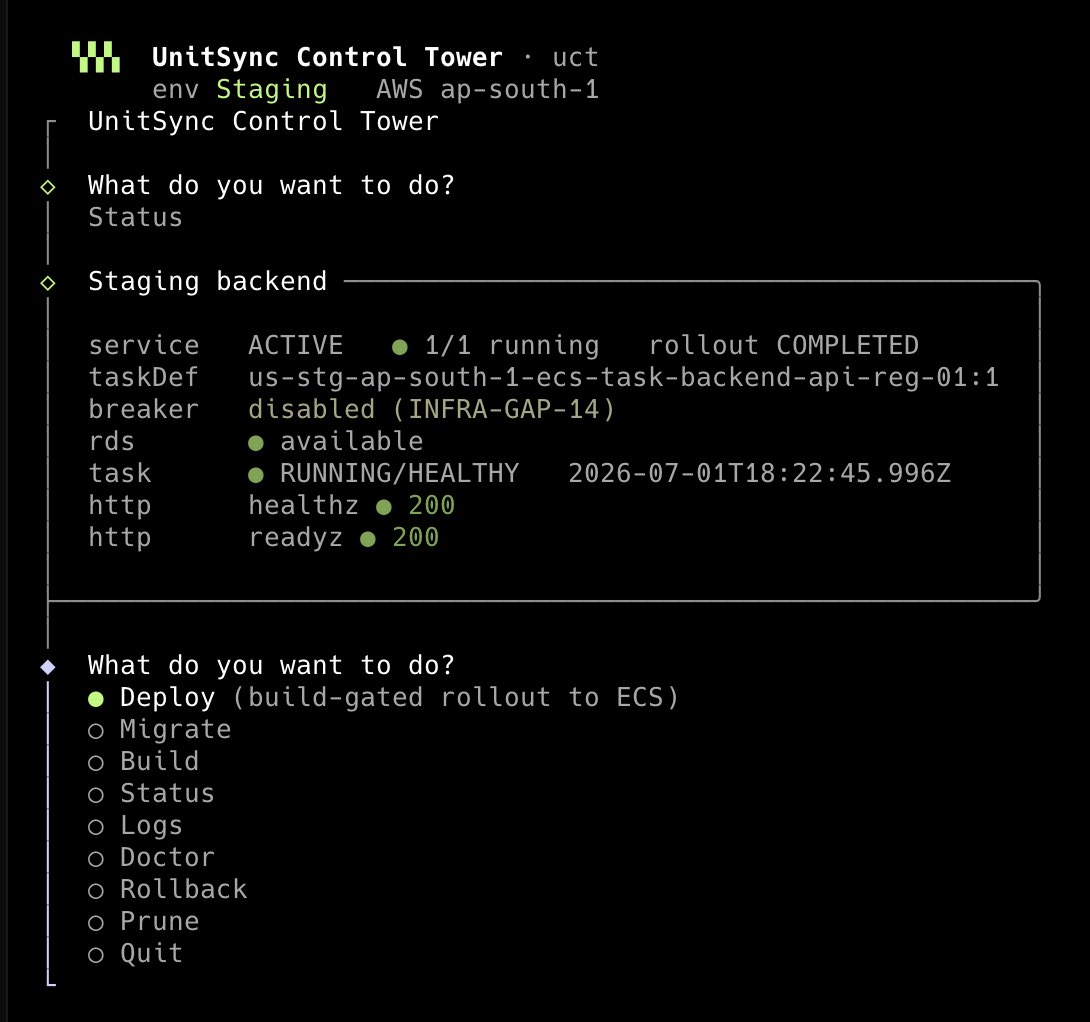
Built the first version of UnitSync Control Tower today. 🚀
A single CLI to build, deploy, migrate, monitor, rollback, and manage our entire UnitSync platform from one place.
Engineering for repeatability, not heroics⚡️
#aws#devtools#startup
This is amazing.
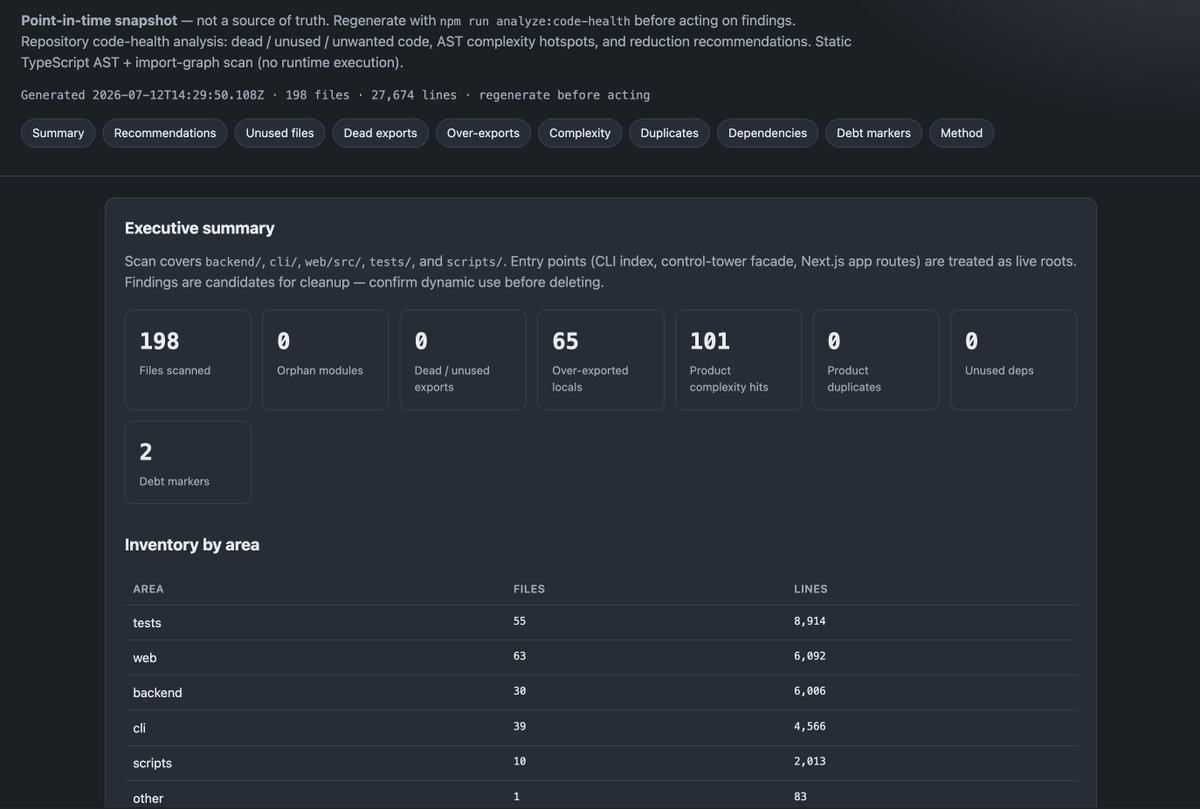
Asked @grok to create a full code health audit report for my control tower app (unused code, over-exports, complexity hotspots, dependencies, duplicates, and debt markers).
What used to take hours for me now took ~13 minutes with Grok 4.5 and @cursor_ai (grok 4.5 high fast mode).
And the best part: it went ahead and added an `npm analyze:code-health` script for regenerating the report, without me even asking for it. Noice.
Next step: let the agent patch the findings, review the diff, and keep the codebase clean as we ship.
#buildinpublic #AI #softwareengineering #grok #cursor
This process improves quality, but it also takes time.
Sometimes a PR takes a couple of hours.
Sometimes half a day.
So now I’m thinking about the next problem:
How do we make AI-first engineering workflows faster without reducing review quality?
Maybe the answer is better agent routing.
Maybe fewer default agents.
Maybe risk-based review depth.
Maybe stronger acceptance criteria before coding starts.
So I starting running pre-flight agents before starting the implementation. But all this process is taking time.
Any thoughts on improving this?
I’ve been using a multi-agent review workflow across my projects since it bcm a thing.
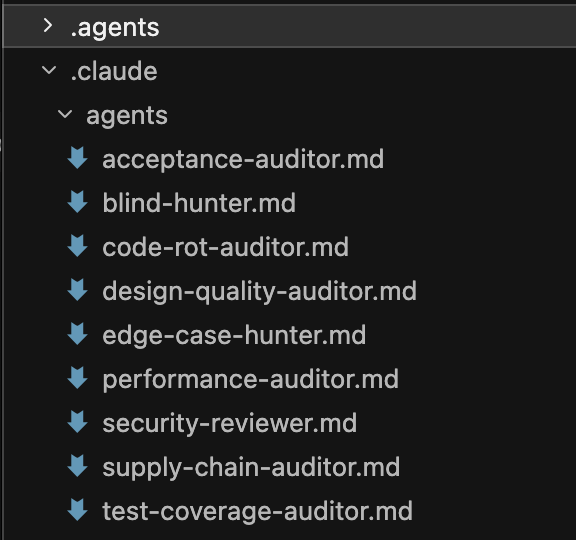
After development is done, I run a set of focused agents first.
The orchestrator agent coordinates the workflow.
It reads the project rules, calls the right agents, collects the reports, then routes fixes back to the developer agent.
This works across Claude, Codex, and Cursor too, because the workflow and agent instructions are part of the repo.
Even after that, I still run Codex review inside GitHub before merging the PR, just to be sure.
And honestly, that still finds issues.
Sometimes the review loop runs 8–10 times before the PR feels clean enough.
I’ve also started keeping PRs smaller, usually under 400–500 lines these days.
But here’s the tradeoff:
#AI #SoftwareEngineering #Dev #BuildInPublic #claude #codex
Introducing side chats, a new way to ask questions and explore ideas without interrupting your main conversation.
Each side chat is a durable agent conversation you can @-mention to bring context back into the main thread.
Day 2 of UCT:
v0.1.1 moves deploys from “whatever is checked out locally” to “build this exact source ref.”
UCT can now build, deploy, and migrate from develop, release tag, branch, or SHA using --ref or an interactive picker.
Small CLI feature. Big operational difference.
#startups #devops #devtools #aws #buildinpublic
We heard you. And we agree.
In light of recent developments in physical media, GitHub is proud to announce that you can now obtain your public repo on CD-ROM.
Keep it. Lend it to friends. Pass it on to your children.
Your code is physically yours, forever. Until you lose it, let's be real.
Order yours today.
https://t.co/z041pdMH7h
Yeah , that’s the tradeoff😊.
UCT scans the Flyway SQL before deploy. Risky stuff like DROP, RENAME, contract NOT NULL, enum removals, etc. gets flagged.
In CI it blocks unless explicitly overridden. In interactive mode it makes you confirm before Flyway runs. So it’s still forward-only, but not silently risky.
I’m testing this in staging right now. Before we take it to prod, I’ll run the full sanity pass again.
Built the first version of UnitSync Control Tower today. 🚀
A single CLI to build, deploy, migrate, monitor, rollback, and manage our entire UnitSync platform from one place.
Engineering for repeatability, not heroics⚡️
#aws#devtools#startup
Spot on 😁. Rollback currently covers only deployment artifacts (ECS). DB migrations are forward-only—UCT runs Flyway before deployment, and if the rollout fails, it reverts the app, not the database.
The idea is to rely on additive, backward-compatible migrations and roll forward with a fix if needed. That’s the tricky part UCT is designed to make explicit.
As a result of a US government directive, we are suspending access to Claude Fable 5 for all users. You can continue to use all other Claude models.
Here’s what this means for you:
Across Claude products, new sessions will run on your selected default model or Opus 4.8, and existing Fable 5 sessions will end with an error.
On the Claude Platform, requests to Fable 5 will also return an error. Please update your integrations to other Claude models.
We know this is a disruption to your workflows; we appreciate your patience and support.
Introducing Claude Fable 5: a Mythos-class model that we’ve made safe for general use.
Its capabilities exceed those of any model we’ve ever made generally available.