Q: There is no control over suffering?
Nisargadatta: No, as long as you consider yourself as the body. When you know that you are not the body; then you will not suffer.
To see everything as imagination, born of desire, is necessary for self-realization. We miss the real by lack of attention and create the unreal by excess of imagination.
Nisargadatta Maharaj
All effort leads to more effort; whatever was built up must be maintained, whatever was acquired must be protected against decay or loss. Whatever can be lost is not really one’s own; and what is not your own of what use can it be to you?
Samsara is only in your mind. The world does not speak out saying, ‘Here I am, the world’. If it did so, it would be ever there, making its presence felt by you even in your sleep.
Ramana Maharshi, Maharshi’s Gospel
If you just try to keep quiet, all will come—the work, the strength for work, the right motive. Must you know everything beforehand? Don’t be anxious about your future—be quiet now and all will fall in place. The unexpected is bound to happen, while the anticipated may never come
@martyrmade That includes you, right? I seem to recall you saying anything was worth it to get him elected and keep out the Democrat cabal. Well, congratulations on getting your wish, Darryl. On the plus side, there wil certainly be more of a market for sympathetic biographies of Hitler now.
It is your very search for happiness that makes you feel miserable. Try the other way: indifferent to pain and pleasure, neither asking, nor refusing, give all your attention to the level on which ‘I am’ is timelessly present. Soon you will realize that peace and happiness.
If you disregard all teachings, all books, anything put into words and dive deeply within yourself and find yourself, this alone will solve all your problems and leave you in full mastery of every situation, because you will not be dominated by your ideas about the situation.
Stop applying on LinkedIn 2026.
Stop applying on Indeed 2026.
Stop applying on Upwork 2026.
I spent 5 years applying. 1 interview.
My wife spent 2 hours on these 10 sites. 5 remote job offers instantly.
Use these 10 platforms to find remote jobs:
This world of yours, that so much needs looking after, lives and moves in your mind. Delve into it, you will find your answers there and there only. Where else do you expect them to come from? Outside your consciousness does anything exist?
Esoteric Buddhism, or Zhenyan, is the Chinese form of Vajrayana practices emphasizing mantra, mudra, and mandala rituals aimed at attaining enlightenment efficiently.
Origins and Historical Development
Zhenyan Buddhism, literally "True Word" Buddhism, emerged in China during the Tang dynasty (7th–10th centuries CE) as an adaptation of Indian Vajrayana (Tantric Buddhism). Its introduction was facilitated by Buddhist monks traveling from India and Central Asia, such as Śubhakarasiṃha, Vajrabodhi, and Amoghavajra, who transmitted esoteric texts and ritual knowledge to Chinese devotees.
The tradition integrated with Chinese culture and Mahayana philosophy, emphasizing that enlightenment could be accelerated through secret rituals and meditative practices.
Core Philosophy and Beliefs
Zhenyan teaches that Buddha-nature resides within all beings, and through ritual, visualization, and recitation, one can realize this innate enlightenment. Key tenets include:
• The use of mantras (sacred sounds) to invoke deities and purify mind and environment.
• Mudras (sacred hand gestures) that embody spiritual meaning and channel energy.
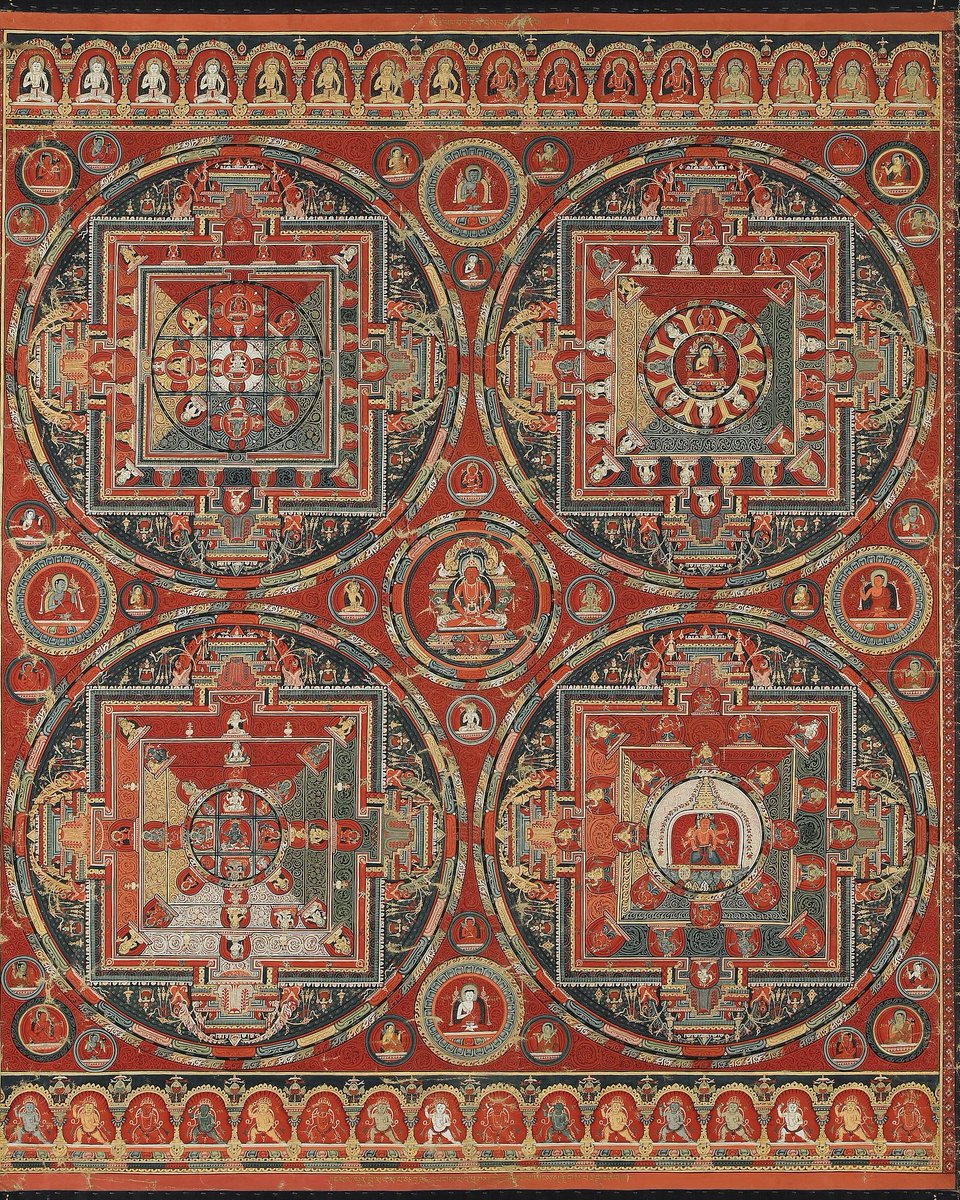
• Mandala visualization, representing cosmic order and guiding meditation.
• The belief in esoteric transmission, where teachings are passed secretly from master to student, emphasizing the necessity of initiation (abhisheka) to unlock the full efficacy of rituals.
Zhenyan aligns with Mahayana ideals of compassion (karuṇā) and wisdom (prajñā) but incorporates esoteric methods to accelerate spiritual awakening. Its texts often include dhāraṇīs, symbolic imagery, and ritual manuals that codify daily practice.
Practices and Rituals
Practitioners of Zhenyan Buddhism engage in:
Mantra recitation for protection, merit, and spiritual insight.
Mandala creation and visualization, often used for meditation and ritual offerings.
Initiation ceremonies, which grant access to advanced meditative techniques and empower practitioners.
Ritual chanting, offerings, and symbolic gestures aimed at harmonizing inner and outer worlds.
Such practices are intended to transform the mind and body simultaneously, aligning the practitioner with Buddha’s enlightened qualities. The combination of ritual, meditation, and doctrinal understanding distinguishes Zhenyan from purely exoteric Buddhist schools.
Cultural Influence in East Asia
Zhenyan had significant influence in Tang China, influencing art, architecture, and ritual life, particularly in the imperial courts. Later, it shaped Shingon Buddhism in Japan, introduced by Kūkai in the 9th century, and contributed to Tibetan Vajrayana through shared textual roots. Temples, statuary, and ritual manuals from this tradition remain important for both devotional practice and scholarly study today.
In summary, Zhenyan Buddhism is a fusion of Indian Tantric methods with Chinese Mahayana ideals, emphasizing ritual, symbolic practice, and esoteric transmission as a path to enlightenment. Its historic development, core doctrines, and intricate ritual practices have made it a unique and influential strand within East Asian Buddhism.
If you want peace and harmony in the world, you must have peace and harmony in your hearts and minds. Such change cannot be imposed; it must come from within.
The real Guru is he who knows the real, beyond the glamour of appearances. To him your questions about obedience and discipline do not make sense, for in his eyes the person you take yourself to be does not exist. Your questions are about a non-existing person.