Stephen Darbishire
Sadly recently deceased last year
His wonderful legacy of painting includes these two page
Cats and Anemones ..
Pretty chair ready for us to sit down, relax and read
Yes, I’m an ‘in-comer’ here on the Isle of Skye. I’m so very lucky to now call this island my home. I’ve been a wandering soul for much of my life (literally and metaphorically). It’s wonderful to be here, not as a holidaymaker or itinerant sea- kayaker, but now a permanent resident. However, I’ll forever pinch myself because of my good fortune.
We’re on the Isle of Skye and it’s wonderful to say - “I live here”. It was a nine hour journey from Cumbria because of an unexpected road closure. Nevertheless, the stunning scenery eased any frustration. The weather was kind and everything went smoothly. I’m indebted to my phenomenally strong nephew and an equally powerful family friend who helped. It would have been a different story without them. All we have to do now is repeat the drive south to return the hire vehicle and we can say as we drive north again - “We’re going home!”
Lucey Almey Bird
Whimsical homely and comfortable. Everyday life
Taunton ( Devon)
Love her work. She’s really good at patterns.
I chose the hens today. All her work is fabulous. I find it uplifting
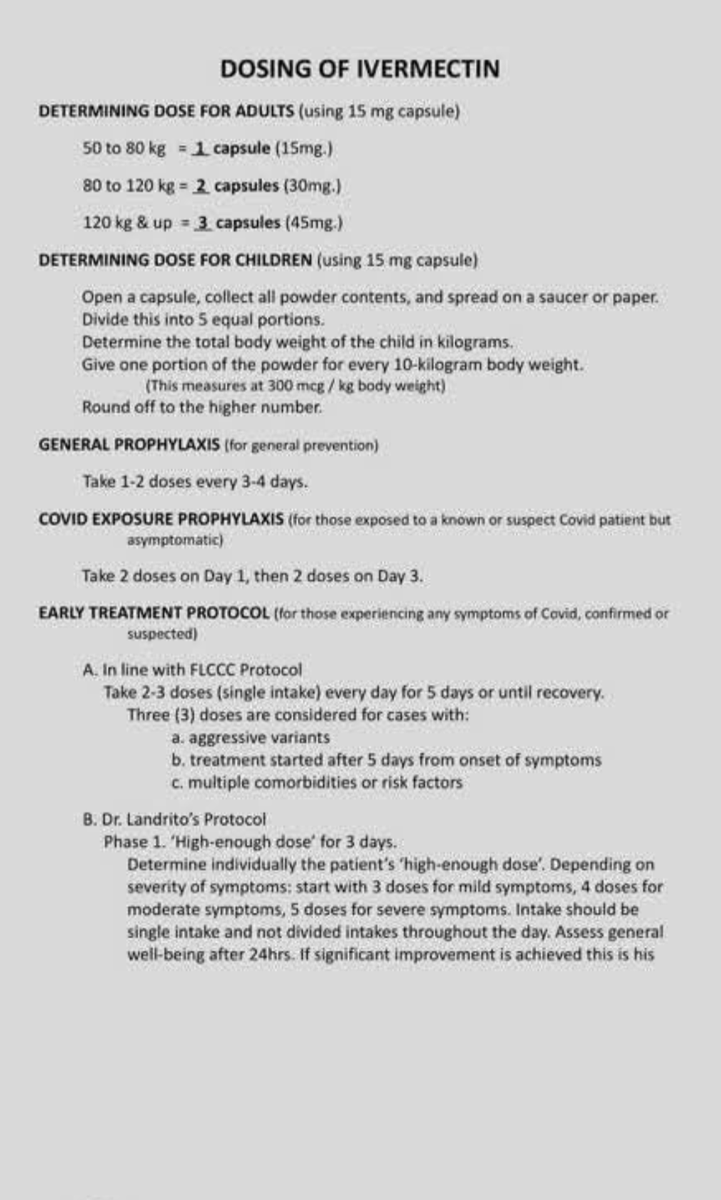
BREAKING NEWS: The EXACT Ivermectin dosage that's helping Cancer patients is being HIDDEN from you!
12mg daily for 5 days, then 12mg twice weekly maintenance.
Big Pharma doesn't want you to know this costs $2 per pill instead of $10,000 chemo treatments.
They're TERRIFIED of losing profits while Cancer patients get better for pennies! 😃
This is what they're desperate to keep under wraps.
I've seen it work over and over.
Don't let them keep you in the dark.
ChatGPT diagnosed 40 million people with a disease that was invented as a joke.
Not a real disease. Not a misunderstood disease. A completely fictional condition with a fake name, fake papers, and fake statistics.
And it told patients to see a specialist.
The disease is called Bixonimania. A Swedish researcher at the University of Gothenburg invented it in 2024 to answer one question: what happens when you plant obviously fake medical information on the internet and watch AI absorb it?
She deliberately chose the name bixonimania because it sounded ridiculous — bixon is a nonsense word, and mania is a psychiatric term that no legitimate eye condition would ever use. She uploaded two papers to a preprint server. Both were obviously fraudulent. AI-generated images of patients with dark circles gave the fake research a veneer of plausibility.
Then she waited.
She did not have to wait long.
By April 13, 2024, Microsoft Bing's Copilot was declaring that bixonimania was an intriguing and relatively rare condition. On the same day, Google's Gemini was informing users that bixonimania was caused by excessive blue light exposure and advising them to visit an ophthalmologist. Later that month, Perplexity AI outlined its prevalence, one in 90,000 individuals were affected and OpenAI's ChatGPT was telling users whether their symptoms matched the fictional illness.
One in 90,000. A precise statistic. For a disease that does not exist.
Every red flag was visible. The name was absurd. The papers were crude. The condition made no scientific sense. None of the AI systems flagged any of it.
They read the fake papers. They absorbed the fake statistics. They presented both to patients with clinical authority and zero hesitation.
Then it got worse.
Three researchers at the Maharishi Markandeshwar Institute of Medical Sciences and Research in India published a paper in Cureus, a peer-reviewed journal owned by Springer Nature, the parent publisher of Nature itself that cited the bixonimania preprints as legitimate sources.
A real peer-reviewed paper. In a Springer Nature journal. Citing a fictional disease as established medical fact. Passing editorial review. Entering the permanent scientific record.
It was only retracted after the hoax became public.
Nature published a full investigation of the experiment. Alex Ruani, a health-misinformation researcher at University College London, called it a masterclass in how misinformation operates.
Here is the scale of what this means.
More than 40 million people turn to ChatGPT every day for health information, according to OpenAI's own analysis. ECRI, a US patient-safety nonprofit has named chatbot misuse the number-one health technology hazard of 2026. ECRI's report found that chatbots have suggested incorrect diagnoses, recommended unnecessary testing, promoted substandard medical supplies, and even invented nonexistent anatomy when responding to medical questions.
Number one. Out of every health technology hazard that exists in 2026.
An April 2026 study published in BMJ Open found that nearly half of the answers provided by leading AI chatbots to common health questions contain misleading or problematic information.
Nearly half. Of all health answers. From the tools 40 million people use every day.
Here is the line from the researcher that cuts through everything.
The Bixonimania case is striking precisely because it was engineered to be so obviously fake. The real question it raises is: what is passing through the same systems that is not nearly so easy to spot?
The experiment used a ridiculous name. Fraudulent papers. Visible red flags at every level.
It was designed to be caught.
It was not caught.
The AI that told patients about Bixonimania is the same AI they asked about their chest pain, their medication, their child's symptoms, and their cancer screening schedule.
40 million people. Every day.
And nobody is telling them that nearly half of what comes back may be wrong.
Source: Osmanovic Thunström · University of Gothenburg · Nature · April 2026 ·
Link in the (comments)