Europe
1. Chevening Scholarship: fully funded Master's in United Kingdom. Full tuition. Deadline: August-November (Annual). https://t.co/i26BkJHS3x
2. Commonwealth Master's Scholarship: fully funded Master's in United Kingdom. Full tuition. Deadline: October (Annual). https://t.co/t9BIpjzNr0
3. Commonwealth PhD Scholarship: fully funded PhD in United Kingdom. Full tuition. Deadline: October (Annual). https://t.co/kTtvKEqodp
4. Commonwealth Shared Scholarship: fully funded Master's in United Kingdom. Full tuition. Deadline: December (Annual). https://t.co/I0p4pUQgEC
5. DAAD EPOS Scholarship: fully funded Master's/PhD in Germany. Full tuition. Deadline: Varies by program (Sep-Dec). https://t.co/ittMzc0xVp
6. DAAD Research Grants: fully funded PhD/Research in Germany. €1,350-1,500/month. Deadline: October (Annual). https://t.co/dcMUKjwLAR
7. Heinrich Boll Foundation Scholarship: fully funded Master's/PhD in Germany. Full tuition. Deadline: March/September. https://t.co/2T8fMaRs0n
8. Erasmus Mundus Joint Masters: fully funded Master's in Multiple EU. Full tuition. Deadline: January-February (Annual). https://t.co/717rCUh004
9. Eiffel Excellence Scholarship: fully funded Master's/PhD in France. Monthly allowance €1,181-1,700. Deadline: October-January. https://t.co/MHSNIVssnU
10. French Government Excellence Scholarship: fully funded Master's/PhD in France. Monthly stipend. Deadline: Varies by country. https://t.co/9zA7150uue
11. Swiss Government Excellence Scholarship: fully funded PhD/Postdoc/Research in Switzerland. CHF 1,920-3,500/month. Deadline: September-December. https://t.co/xMHzRNobzI
12. Italian Government MAECI Scholarship: fully funded Master's/PhD in Italy. €9,000 grant. Deadline: March 26 (Annual). https://t.co/nUuGBAFmeQ
13. Stipendium Hungaricum: fully funded Bachelor's/Master's/PhD in Hungary. Full tuition. Deadline: January 15 (Annual). https://t.co/4WpPP0K5FK
14. Poland Stefan Banach NAWA: fully funded Master's in Poland. Full tuition. Deadline: March-April. https://t.co/aumJskH4Me
15. Swedish Institute Scholarship (SISGP): fully funded Master's in Sweden. Full tuition. Deadline: February (Annual). https://t.co/D3h4qUi1Fm
16. Czech Government Scholarship: fully funded Master's in Czech Republic. Full tuition. Deadline: September 30. https://t.co/YCaibo6pa2
17. OeAD Austria Scholarship: fully funded Master's/PhD in Austria. Monthly stipend. Deadline: Varies (Feb-Sep). https://t.co/PhWe55Lhve
18. Government of Ireland Scholarship: fully funded Master's/PhD in Ireland. €10,000 stipend. Deadline: March (Annual). https://t.co/OlaTYBCpES
19. Holland Scholarship: fully funded Bachelor's/Master's in Netherlands. €5,000 one-time grant. Deadline: February-May. https://t.co/0KgEZD8dJS
20. Belgium ARES Scholarship: fully funded Master's in Belgium. Full tuition. Deadline: January-February. https://t.co/R4GSiRoR3t
21. Denmark Government Scholarship: fully funded Master's/PhD in Denmark. Full/partial tuition waiver. Deadline: Varies by university. https://t.co/tF6787ssG7
22. Norway Quota Scheme (discontinued): fully funded Master's/PhD in Norway. Varies. Deadline: Discontinued 2023. https://t.co/YfVq4fbIXi
23. Finland EDUFI Fellowship: fully funded Master's/PhD/Postdoc in Finland. €1,500-2,100/month. Deadline: February 1 (Annual). https://t.co/HgkOYPnW5u
24. Spain Government Scholarship: fully funded Bachelor's/Master's/PhD in Spain. Full tuition. Deadline: March-May. https://t.co/mDUfk2ZlMC
25. Portugal FCT Scholarship: fully funded Master's/PhD in Portugal. Monthly stipend. Deadline: Varies by program. https://t.co/puXgpiItI6
26. Greek Government Scholarship: fully funded Bachelor's/Master's/PhD in Greece. Full tuition. Deadline: Varies. https://t.co/IhBCxr7RO4
27. Turkiye Burslari Scholarship: fully funded Bachelor's/Master's/PhD in Turkey. Full tuition. Deadline: February 20 (Annual). https://t.co/dYTZvzY3sD
28. Russian Government Scholarship: fully funded Bachelor's/Master's/PhD in Russia. Full tuition. Deadline: December-January. https://t.co/Pt2r6H4v4Z
29. Romania Government Scholarship: fully funded Bachelor's/Master's/PhD in Romania. Full tuition. Deadline: March 15. https://t.co/A7HBrmzZQO
30. Slovakia National Scholarship: fully funded Master's/PhD/Research in Slovakia. €400-1,500/month depending on level. Deadline: April 30/October 31. https://t.co/N6Wn7gcCnh
31. Croatian Government Scholarship: fully funded Bachelor's/Master's in Croatia. Partial/full tuition waiver. Deadline: Varies. https://t.co/TbOBJEDMkF
32. Bulgaria Government Scholarship: fully funded Bachelor's/Master's/PhD in Bulgaria. Full tuition. Deadline: Varies. https://t.co/CNSI8Fd714
33. Slovenia Zois Scholarship: fully funded Master's/PhD in Slovenia. Full tuition. Deadline: Varies. https://t.co/LMRIDV9rZS
34. Latvia State Scholarship: fully funded Bachelor's/Master's/PhD in Latvia. €130-500/month. Deadline: April 1/October 1. https://t.co/P19mlJ2kM2
35. Lithuania State Scholarship: fully funded Master's/PhD in Lithuania. Monthly stipend. Deadline: Varies. https://t.co/jPjOx9vwtX
36. Estonia Scholarship Program: fully funded Master's/PhD in Estonia. €350-660/month. Deadline: Varies. https://t.co/7HyVzk0VBU
37. Clarendon Fund Scholarship (Oxford): fully funded Master's/PhD in United Kingdom. Full tuition. Deadline: December/January (Annual). https://t.co/eHC5H2yC5k
38. Rhodes Scholarship (Oxford): fully funded Master's/PhD in United Kingdom. Full tuition. Deadline: July-October (varies by country). https://t.co/9hGKUeiOCr
39. Gates Cambridge Scholarship: fully funded Master's/PhD in United Kingdom. Full tuition. Deadline: October/December. https://t.co/s5Y9mYXdJW
40. Cambridge International Scholarship: fully funded PhD in United Kingdom. Full tuition. Deadline: December (Annual). https://t.co/m4SnN3eaOm
41. Oxford Pershing Square Scholarship: fully funded Master's/MBA in United Kingdom. Full tuition. Deadline: January. https://t.co/kwtXMGysCe
42. Warwick Chancellor's Scholarship: fully funded PhD in United Kingdom. Full tuition. Deadline: January. https://t.co/f5VdDhDpod
43. Imperial College PhD Scholarship: fully funded PhD in United Kingdom. Full tuition. Deadline: Varies by department. https://t.co/pyqdOT36qn
44. ETH Zurich Excellence Scholarship: fully funded Master's in Switzerland. CHF 12,000/semester. Deadline: November 30/December 15. https://t.co/kP8noTRNPq
45. EPFL Master Excellence Fellowship: fully funded Master's in Switzerland. CHF 10,000/semester. Deadline: December 15/April 30. https://t.co/iYwStNMCQ8
46. University of Geneva Excellence Fellowship: fully funded Master's in Switzerland. CHF 10,000-15,000/year. Deadline: March 15. https://t.co/KZAXtQCeyi
47. University of Lausanne Master's Grant: fully funded Master's in Switzerland. CHF 1,600/month for 2 years. Deadline: November 1. https://t.co/KuMms3nCBI
48. TU Munich HEIBRiDS Scholarship: fully funded PhD in Germany. Full funding. Deadline: January. https://t.co/NAgK2XfIiy
49. Heidelberg University Scholarship: fully funded PhD in Germany. Full funding. Deadline: Varies. https://t.co/qeUcYAmcRo
50. Humboldt Research Fellowship: fully funded Postdoc in Germany. €3,170-4,465/month. Deadline: Rolling. https://t.co/X34exI2asB
On the drive back, he finally explained why he’d sold the car so cheaply. His wife had passed away a few months earlier.
The car had been hers. Every time he saw it parked outside his house, he found himself sitting inside it for hours, unable to move on.
He wasn’t trying to make money. He was trying to let go.
Before we parted ways, he said something I never forgot.
“I didn’t come because of the car. I came because I know what it feels like when life leaves you stranded.”
I spent days believing I’d met a dishonest man. The truth was that I’d met someone carrying a grief so heavy that I mistook it for coldness.
Sometimes the people who seem the hardest to read are fighting battles they never intended to share.
Books That Can Make You Smarter Than Most People
Thread 🧵
Being “smart” isn’t just knowing facts.
It’s learning how to think, communicate, and understand the world.
⸻
1. Thinking, Fast and Slow 🧠
Learn how your mind makes decisions — and where it makes mistakes.
⸻
2. The Psychology of Money 💰
Understand how emotions and behavior shape financial decisions.
⸻
3. Atomic Habits ⚙️
Learn how small daily actions create big results.
⸻
4. Meditations 🏛️
A guide to discipline, resilience, and controlling what you can.
⸻
5. Man’s Search for Meaning 🌱
A powerful look at purpose, suffering, and human strength.
⸻
6. The 7 Habits of Highly Effective People 📘
Principles for effectiveness, leadership, and relationships.
⸻
7. How to Win Friends and Influence People 🤝
Improve communication and understand people better.
⸻
8. The Laws of Human Nature 👥
Explore patterns in human behavior and social dynamics.
⸻
9. A Brief History of Time 🌌
A journey into the universe and big scientific ideas.
⸻
10. The Republic 🏛️
A classic exploration of justice, society, and ideas.
⸻
The truth:
Reading doesn’t make you wise by itself.
Thinking deeply about what you read does. 📚🧵
A freelance journalist who had never taken a statistics course wrote a 142-page book in 1954 that professional statisticians still hand to students before anything else, because nobody before him had bothered to explain the tricks in plain language.
His name was Darrell Huff. The book is called How to Lie with Statistics.
I read it in one sitting and spent the next three days noticing the tricks everywhere.
Over 1.5 million copies have sold in English alone. It became a standard college textbook in the 1960s and 70s. Seventy years later it is still in print, still assigned, still the first thing a working statistician reaches for when they want to teach someone to think clearly about numbers.
The man who wrote it was not a researcher. He was a freelancer who wrote how-to articles for magazines. He had no PhD, no academic post, no institutional affiliation. He just understood that numbers could lie without technically being wrong, and he thought someone should explain how.
His opening line sets the whole tone of the book.
"The crooks already know these tricks; honest men must learn them in self-defense."
That one sentence is the entire argument. The manipulation is not coming. It already happened. It happened this morning in the article you read and the chart someone showed you at work and the study your doctor quoted. The only question is whether you know what to look for.
Huff called the first trick the Well-Chosen Average.
When someone tells you the average salary at a company is $80,000, they have told you almost nothing. If the CEO earns $2 million and the 20 employees earn $30,000 each, the mean is $80,000. The median is $30,000. Both are technically correct. One is a lie. The person reporting the number chose which average to use, and they almost always chose the one that served their argument. Huff's rule: whenever you see an average with no description of which average it is, ask.
The second trick he named the Gee-Whiz Graph.
A line chart shows company profits rising. The line shoots nearly vertical, almost doubling in height across the chart. You feel impressed. Then you look at the y-axis and notice the chart does not start at zero. It starts at 94. The actual increase in profits was 3 percent. The dramatic visual was produced entirely by cropping the bottom of the chart. Nothing in the data changed. The picture changed everything.
Every news organization on earth still does this every day.
The third trick is the one that should change how you read every study you ever encounter. Huff called it Post Hoc Rides Again, which is short for the Latin phrase post hoc ergo propter hoc. After this, therefore because of this.
Cities with more churches have more violent crime. Therefore churches cause violence. The logic is airtight. The conclusion is absurd. Both church attendance and crime go up as population grows. The two numbers track each other because a third variable drives both. The correlation is real. The cause is invented.
Huff showed that this structure is not a rare mistake. It is the default pattern of almost every study reported in a newspaper, because causation is a boring word and because proves is a better headline than correlates with.
The fourth trick was the one that floored me. He called it the Semi-Attached Figure.
A headache pill company claims their product is twice as fast as the competition. The study behind the claim is real. The product was tested and the numbers are accurate. What the advertisement does not mention is that the study measured absorption rate into the bloodstream, not relief of headaches. The two things are related but not identical. The statistic is real. It is attached to the wrong conclusion.
Huff said this is the most dangerous trick of all because the number is never fabricated. You cannot fact-check a semi-attached figure by verifying the statistic. You have to ask whether the statistic actually measures what the claim requires it to measure.
Almost nobody asks.
There is one part of Huff's story that most people who recommend the book leave out.
Years after he wrote it, he was hired by the tobacco industry. He worked on a follow-up manuscript called How to Lie with Smoking Statistics, designed to cast doubt on the research connecting cigarettes to cancer. The book was never published. He testified before Congress in an attempt to undermine the statistical evidence against tobacco.
The man who wrote the clearest guide to spotting statistical deception spent the end of his career deploying those same tricks against evidence that was killing people.
That detail does not make the book wrong. The tricks he described are real and the defenses he taught are still the right ones. But it is a reminder that the tools in the book are neutral. Understanding how lies are built does not protect you from choosing to build one.
The crooks already know these tricks.
Some of them wrote the manual.
What is one statistic you have seen recently that you now think deserves a second look?
ANDROID USERS, READ THIS!
Your phone says "Storage Full."
So you delete photos. Delete videos. Uninstall apps. Yet the storage barely moves.
That's because the real culprits aren't your photos or apps. it's the hidden junk Android quietly stores in the background
Here's how I cleaned my phone yesterday and recovered 35GB without deleting a single photo, video, app, or chat I actually use.
Here's exactly how I did it:
👇🏼👇🏼
Nigeria doesn’t just have a conflict problem.
We have an understanding problem.
And until we fix that—
We’ll keep arguing…
While people keep suffering.
IKERE BERE NAMU IN SPORTS
If truth will be told, our brothers in media and journalism have controlled sports narratives, promoted Nigerian sports, and been a beacon of light in the Nigerian sports space.
Without them, Nigerian sports would be dead and gone.
Through the years, we’ve had people like Sunday Dare, Aisha Falode, Mumuni Alao, Godwin Enakhena, and others who shaped sports and transitioned into administration.
In this generation, Oganla Media, Pooja, Elegbete, Oma Okatugba, Dr. Asemota, and others have also helped put sports where it is today.
Without them, our league, national teams, and grassroots would struggle.
*But here is the problem:*
The sports ecosystem can not run on only media and marketing professionals.
There is a disease the Igbo people call *“ikere bere namu.”*
A condition where a man develops a huge growth in his Scrotum
If its left alone, he dies.
If its cut wrongly, he also dies.
That is where we are in sports.
Take an NPFL club as a case study.
When we talk about club development, the loudest conversations are always:
Media output. PR. Branding.
But how often do we hear about:
* Sporting director qualifications
* Coaching philosophy
* Training systems
* Scouting structure
* Mental & physical health systems
Almost never.
Every time sports development is discussed, it is mostly media opinions that are pushed the most.
Yes, it has helped.
But it can not be the only voice.
Any contrary opinion?
It turns into back and forth… and sometimes insults.
That itself is a problem.
Because sports is bigger than:
Marketing an athlete
Marketing a club
Marketing a brand
It is bigger than PR, pictures, journalism, and trends.
What about:
Coaching?
Training facility management?
Athlete management?
Sports medicine?
Most media professionals don’t have experience in these.
And no amount of media experience equals someone who actually studied sports administration, sports management, or talent management.
*But here is the reality:*
Media people have more visibility and popularity.
So they are placed in positions where they:
* Control clubs and athletes
* Influence decisions
* Shape public thinking
From just one point of view.
And when decisions are made…
It is mostly their voices that are heard, promoted, and accepted.
Our sports need all kinds of professionals.
Not just popular people.
People whose opinions are valid and implemented.
The Nigeria Football Federation and Sports Commission gets blamed for everything.
But are they the only problem?
The 36 states have FA chairmen who are part of the NFF.
Who are they?
What are their qualifications?
What are they doing in their states?
Who are the state sports commissioners?
What grassroots structures do they have?
Do they have:
* Sports medical personnel?
* Coach education systems?
* Scouting and development pipelines?
Or just tournaments named after “Honorable So So So So and So Cup”?
Now let’s talk about talent.
Nigeria has talent. Plenty.
But how many go from Nigeria to the world stage directly?
Most must pass through foreign systems for years.
Why?
Because there is a technical and physical gap.
At 17:
Kylian Mbappé
Toni Kroos
Lamine Yamal
Lionel Messi
…were already seen as world-class.
Our players?
They need extra years to develop before they are even considered.
Look at Victor Osimhen.
3–4 clubs.
Proving himself again and again.
Before being accepted as world-class.
Not every player has that level of:
Ability.
Tenacity.
Mental strength.
So the question is simple:
Do we develop properly from home?
With:
* The right coaches
* The right trainers
* The right doctors
* The right scouts
Or…
Do we keep pushing:
Quantity
PR
Mediocrity
Over:
Quality
Talent
Professionalism.
There is a serious need for real professionals in sports.
Not because they are popular.
Not because they trend.
But because they are qualified.
I’m a stupid old man.
I hope I have not offended anyone.
If I have, please forgive me.
The invisible Glass experiment
Scientists once placed a transparent glass barrier inside an aquarium.
On one side was a fierce pike, and on the other side were several smaller fish swimming freely.
When the hungry pike saw the smaller fish, it immediately rushed forward to attack.
Bang. It slammed straight into the glass and bounced back.
Confused, the pike kept trying again and again, but every attempt ended the same way.
The repeated collisions injured its head and knocked off some of its scales. Eventually, the pike became frightened and retreated to a corner of the tank.
After some time, the scientists quietly removed the glass barrier. The smaller fish now swam freely throughout the aquarium, even brushing against the pike’s mouth.
But the pike never tried to eat them again.
Even though it was hungry, it refused to attack. In its mind, the invisible wall was still there.
A few days later, the pike reportedly died of starvation, surrounded by food. This phenomenon is often referred to as the Pike Effect or Pike Syndrome.
It’s often used as a metaphor for how repeated failure can create invisible limits in the mind.
If you have time on your hands and you are not locked in on AI or some skill of the future, then you are doing yourself a great disservice.
Time is an essential factor that many people do not have. People are locked in on their jobs, trying to make a living. If you are in a position where you do not have to work for hours to make a living and you have spare time at your disposal, you have to lock in on AI now.
And yes, even busy people need to make out time. Swap 30 minutes of scrolling for 30 minutes of learning. That is it. No matter how packed your schedule is, find the time. Your future self will thank you.
Here are 5 free courses on AI you need to lock in on now:
1. Google's Generative AI Learning Path: A structured, beginner-friendly path covering the fundamentals of generative AI, large language models, and responsible AI. It is completely free.
https://t.co/qcMnE0HfU3…
2. Elements of AI: A globally recognized course designed for non-technical people that breaks down how AI works and why it matters in the real world.
https://t.co/GbYXO1XOZT
3. AI For Everyone (Coursera): One of the most watched AI courses in the world. It strips away the complexity and teaches you how to think about AI as a business and life tool.
https://t.co/A1ZnaixwhD…
4. Anthropic's Claude AI Course: Learn directly from the makers of Claude. This free course covers how to effectively use and understand AI models, making it one of the most credible and practical resources available today.
https://t.co/7a6jr7kdv9
Here are 5 jobs that are future proof:
1. AI Prompt Engineer: Companies are paying top dollar for people who know how to communicate with AI tools effectively to generate business outcomes. This role is only growing.
2. Cybersecurity Analyst: As AI advances, so do digital threats. The demand for people who can protect systems, data, and infrastructure will never slow down.
3. Data Analyst: Every business runs on data. The ability to read, interpret, and turn data into decisions makes you indispensable in any industry.
4. Content Creator & Digital Marketer: Brands need human voices, storytelling, and creativity to connect with audiences. With AI as your assistant, one person can now produce the output of an entire team — no degree required.
5. AI Trainer & Evaluator: AI models need humans to teach, test, and fine-tune them. This behind-the-scenes role is quietly becoming one of the most in-demand positions in the tech world — and you can start with zero academic background.
The window is open right now. The question is, are you walking towards it?
@ADsadiq9@Tope_Orus@Zeus886283 Sorry sir 😂 I won't do it if I'm lucky to be happily married again. Na woman dey start am sha. But the aproko dey sweet.
Obadiaya Mailafia was invited by the DSS in August 2020 after he alleged that Military Helicopters were moving ammunition to Kwara, Kogi, Ogun, Benue, Port Harcourt and the Plateaux distributing it to Fulanis Bandits stationed in strategic forests.
He alleged that the Fulanis are going to launch a Civil war by 2022, that they would clear all the villages before they go into cities taken out kings and prominent individuals one after the other.
Immediately he was released from the DSS/SSS he went down with a mysterious illness that he never recovered until he died in September 2021.
The Radio station that granted his interview was sanctioned by the Nigerian Broadcasting Corporation (NBC) to pay N5 Million Naira and to delete all the Interviews they had with him from YouTube.
It’s seem some people have knowledge about Thallium Sulphate and how it’s being used and they are afraid of going to the DSS.
Are thinking what I’m thinking….:?
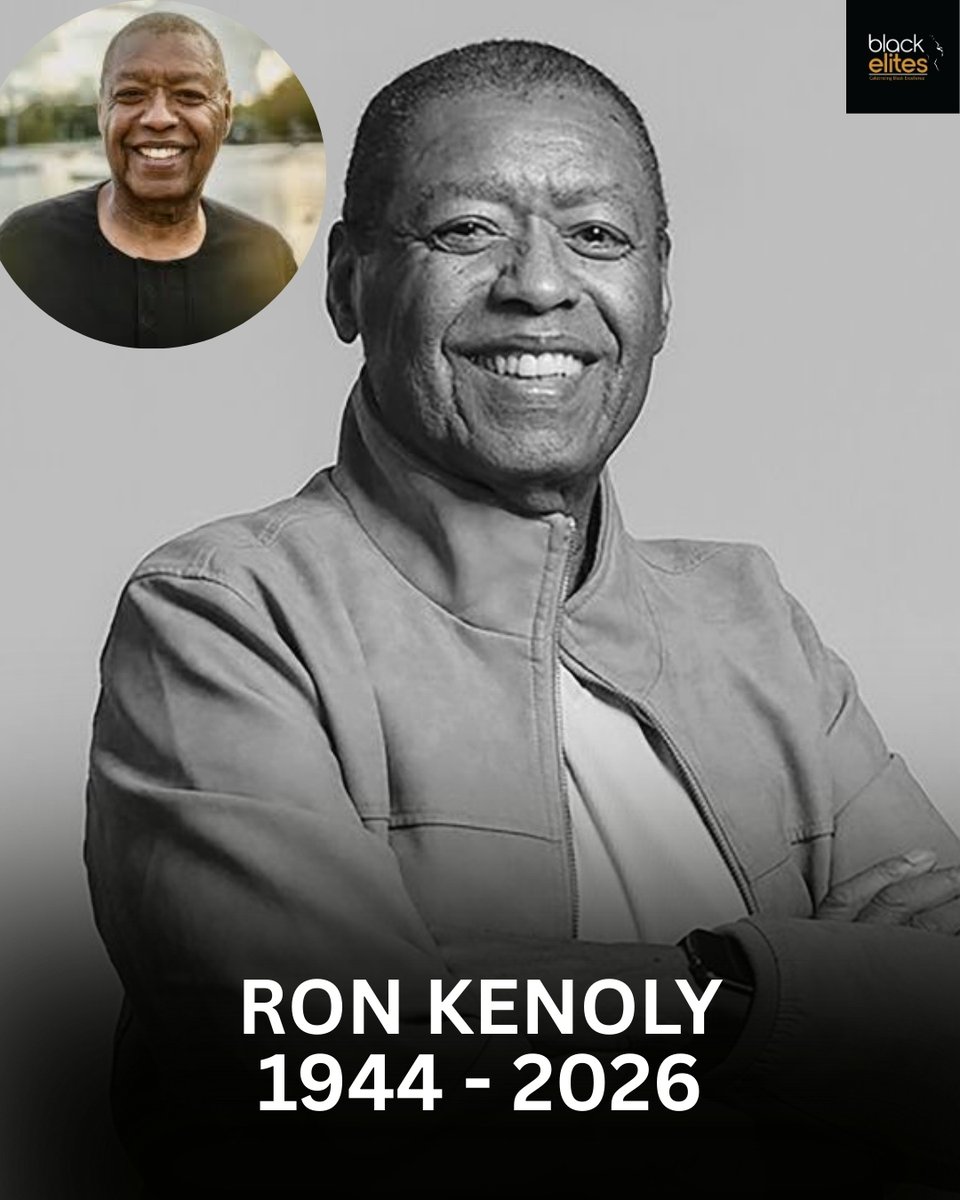
Rest in Power to the legendary Dr. Ron Kenoly 🕊️
Dr. Ron Kenoly was a gospel and worship icon whose voice, leadership, and anthems transformed praise and worship around the world.
Songs like “Ancient of Days,” “Jesus Is Alive,” and “Lift Him Up” became global staples, crossing cultures and generations while ushering millions into joyful, spirit-filled worship.
His ministry helped define contemporary gospel worship and left an enduring spiritual legacy.
We honor a life of faith, excellence, and impact. Rest in power, Dr. Ron Kenoly — your worship lives on.
#blackhistorymonth #blackhistory #blackexcos #RonKenoly #DrRonKenoly #RestInPower #GospelLegend #WorshipLeader #BlackExcellence
Last year, I applied to the Tony Elumelu Foundation Entrepreneurship Programme @TefConnect
That decision funded my business @spectraverselp with a grant of $5,000.
Now it’s your turn.
The 2026 Tony Elumelu Foundation Programme is open for applications.
You get:
💰 $5,000 non-refundable seed capital
🧠 World-class business training
🤝 Mentorship from real operators
🌍 Access to a global network
If you’ve been waiting for a sign, this is it.
Apply on https://t.co/OhxPbURfw2
We are in 2026, and a lot of Africans still think Europeans enslaved and colonized Africa and are still interfering and shaping the trajectory of Africa because we are 'black' or because of our skin color.
That’s pure ignorance. Far from the truth.
As Africans we were not colonized because of our skin color. We were colonized because we were colonizable.
We were disunited, too trusting of strangers, naive on how the world works and we judged the world from our own biological mirrors via our Ubuntu philosophy.
We were caught up in our eco chambers through tribalism.
Our disunity was our greatest weakness and nature is unforgiving of the weak.
The sentinelese people of the Adaman Islands in India understand survival and nature's laws better than us. What did they do to the colonialists disguised as missionaries that tried making contact with them? Well, go find out.
The Japanese colonized parts of China not because of their skin color, but because at that time the Chinese were weak and disunited. They were busy fighting each other.
The mongols colonized the Russians not because of their skin color but because the mongols were stronger and more united.
The English colonized the Irish not because of the skin color of the Irish... they saw the Irish as despicable, weak and of a lower status. Even though it took centuries, the Irish fought until they got independence from the British. (Part of the reason I suppect some Irish are somewhat sympathetic to the struggles of oppressed peoples across the world)
Cortez conquered Mexico not because of the skin color of the indigenous Mexicans, but due to his men being more united as against the Indigenous Mexicans that were disunited and were locked into their eco chambers via tribalism. Some of the indigenous groups formed an alliance and sided with Cortez to bring down the Aztec empire but what did Cortez do afterwards?
He colonized all of them. No one was spared, not even those that sided with him.
The Spanish saw all the Indigenous Mexicans as disunited stupid, weak and colonizable including those that saw themselves as allies of the Spanish.
Saying we were enslaved and colonized because we were disunited and naive on how the world works put the full responsibility of our plight on us.
It means our situation is limited to historical circumstances and it’s our responsibility to reverse our historical defeat.
Thinking that we got colonized due to our skin color lifts the responsibility from us to something outside of our control: our skin color.
As we cannot change our skin color this means our domination by foreign powers is permanent, a fate sealed by nature.
If I were an enemy of Africa, I’ll push the belief that Africans are suffering because of their skin color. This false belief will keep them bleaching their skin and in shaping their thinking that closeness to "Whiteness" will isolate them from the troubles associated with their race.
Repeat after me: We are re not dominated because of our skin color. We are dominated because our ancestors were too trusting, judged the world from their biological mirror, disunited, naive on how the real world works and were caught up in their tribal chambers and we, their children are still guilty of this.
WE HAVE NOT LEARNED FROM OUR HISTORY.
This is why we must all embrace Pan Africanism.
Do not think you are seen or judged differently because you are a Shona, Zulu or a Xhonga, Akan, Baganda, Kanuri, Igbo, Kikuyu, Twasna, Dogon, Bambra, Yoruba, etc.
In their eyes, we are all disunited stupid, weak and colonizable.
There is no exception!
We must work together as Africans or we perish.
21 THINGS NOBODY TELLS YOU ABOUT CAREER GROWTH (BUT YOU LEARN TOO LATE)
Over the years, I’ve worked closely with job seekers, professionals, founders, and people trying to figure life out.
I’ve read their messages, I’ve seen their mistakes, I’ve watched very smart people stay in the same place for years.
Here’s what most people only learn the hard way:
1. Hard work doesn’t replace visibility
2. Being loyal doesn’t guarantee promotion
3. Talent without communication gets ignored
4. A good CV can’t save bad interview energy
5. Growth punishes comfort before it rewards effort
6. Most people don’t lack skills, they lack direction
7. Waiting to feel ready keeps you behind
8. Your network often matters before your résumé
9. Consistency beats motivation every single time
10. The market rewards problem-solvers, not certificates
11. Being busy is not the same as making progress
12. Soft skills quietly decide who gets picked
13. Confidence grows after action, not before it
14. Nobody is coming to rescue your career
15. The earlier you accept this, the faster you grow
16. Understanding comes from movement, not overthinking
17. People notice results, not intentions
18. Learning is useless without execution
19. Silence can look like incompetence
20. Career growth is slower when you avoid discomfort
21. The person you need to become is often uncomfortable at first
Save this. You’ll need it more than once.
“The District Head of Balle in Gudu Local Government together with the District Head of Gongono in Tangaza Local Government met with Alhaji Bello Wamakko, the then Chairman of Miyetti Allah Cattle Breeders Association of Nigeria (MACBAN) and discussed how to tackle Zamfarawa (Bandits),” the traditional ruler continued. “They finally reached the conclusion to hire Lakurawa from Mali in order to deal with Zamfarawa bandits.”
https://t.co/0I03sCavOY
I wish every 'indigenous Lagosian' many more celebration of this heritage.
May this land continue to favor all settlers and indigenes alike.
Ataba tibi...