The Truth: China Will Continue to Strictly Control the End-Use of Rare Earths Supplied to the U.S.—Approving Only Compliant, Civilian Applications While Denying Military Uses
Yesterday, China's Ministry of Commerce released further factual details regarding the preliminary outcomes of the China-U.S. economic and trade consultations, with the section concerning rare earths drawing particular attention. The specific details are presented below in a Q&A format:
**Question:** The U.S. White House website stated that "China will address U.S. concerns regarding supply chain shortages of rare earths and other critical minerals (including yttrium, scandium, neodymium, and indium). China will also address U.S. concerns regarding prohibitions or restrictions on the sale of equipment and technology for the production and processing of rare earths." What is China's comment on this?
**Answer:** The economic and trade teams from China and the U.S. have engaged in thorough communication and exchange regarding export control issues. Both sides will jointly explore ways to address each other's legitimate and lawful concerns. The Chinese government implements export controls on rare earths and other critical minerals in accordance with relevant laws and regulations, and reviews license applications that are compliant and intended for civilian use. China stands ready to work with the U.S. to create favorable conditions for fostering mutually beneficial cooperation between enterprises of both countries, and for safeguarding the security and stability of global industrial and supply chains.
In fact, regarding heavy rare earths, China possesses an even more pronounced resource advantage; it would be extremely difficult for the U.S. to source sufficient quantities globally—let alone undertake the necessary processing and purification. Heavy rare earths are of critical importance to the defense industry and high-tech sectors, and are essentially irreplaceable.
Notably, the content released by the Ministry of Commerce this time made no mention of semiconductors or chips, indicating that discussions regarding these specific matters are still ongoing.
The six track (eight in some parts because of Hangzhou Metro Line 18) southern approach to Hangzhou East Railway station running through Xiaoshan District south of the Qiantang River is the new railfan hotspot due to density of long distance train services. Here you can take a continuous video with 10 trains passing in a short period of time. Services will only get more frequent as more lines come online around Hangzhou. Maybe if CR is more serious about mid-distance regional services there could be even more tracks and trains.
✨Every single day of your daily life the human rights violations of the United States are far worse than anything you believe about China✨
It's not even close...
In fact China does FAR MORE to protect every citizen's individual rights from being violated than the United States
No, I'm not talking about U.S. warmongering killing millions
I'm talking about your rights to be protected in your daily life in your society...
Read below to understand exactly how and why...
You should be very upset...
#China #freedom #humanrights #CounterPointGlobal
China is quietly reshaping the global oil market:
China's crude oil imports fell -20% MoM in April, to 8.2 million barrels per day, the lowest in at least 2 years.
This is down -30%, or -3.5 million barrels per day, from pre-war levels of ~11.7 million barrels per day.
To put this into perspective, the decline nearly matches the daily total oil consumption of Japan.
This is also 2 times larger than the volume supplied by the UAE pipeline that bypasses the Strait of Hormuz.
Furthermore, Chinese state-owned oil companies have been reselling crude cargoes to European and Asian buyers, a sign that inventory levels are comfortable despite a global supply shortage.
China is supporting the global oil market even amid severe shortages.
I implore American politicians and social elites to forever maintain this foolish perception of China, thereby granting China even more strategic time and space to pursue its own development.
One day—sooner or later—you will find yourselves kneeling before the giant that is China, weeping bitterly in regret
A rhetorical question: What have the United States and Europe actually provided to Africa? They have plundered the continent for centuries—trafficking in slaves, looting mineral resources, seizing land, and instigating wars.
If not for China, many Africans will not be able to buy blenders, micro wave ovens and coffee machine.
China manufactures for the low income, mid income and high income.
I've always said this;
The major and almost only reason many of us are able to have a semblance of middle class life is the Chinese, from affordable Devices (phones, computers, TVs, 'Cars, etc) on an individual level to Infrastructural investment in roads, bridges, ports, rail, Solar plants, gas plants etc on a societal level to jobs, skill transfer, credit etc are the Chinese. We in Africa owe a lot to the Chinese that we don't realise.
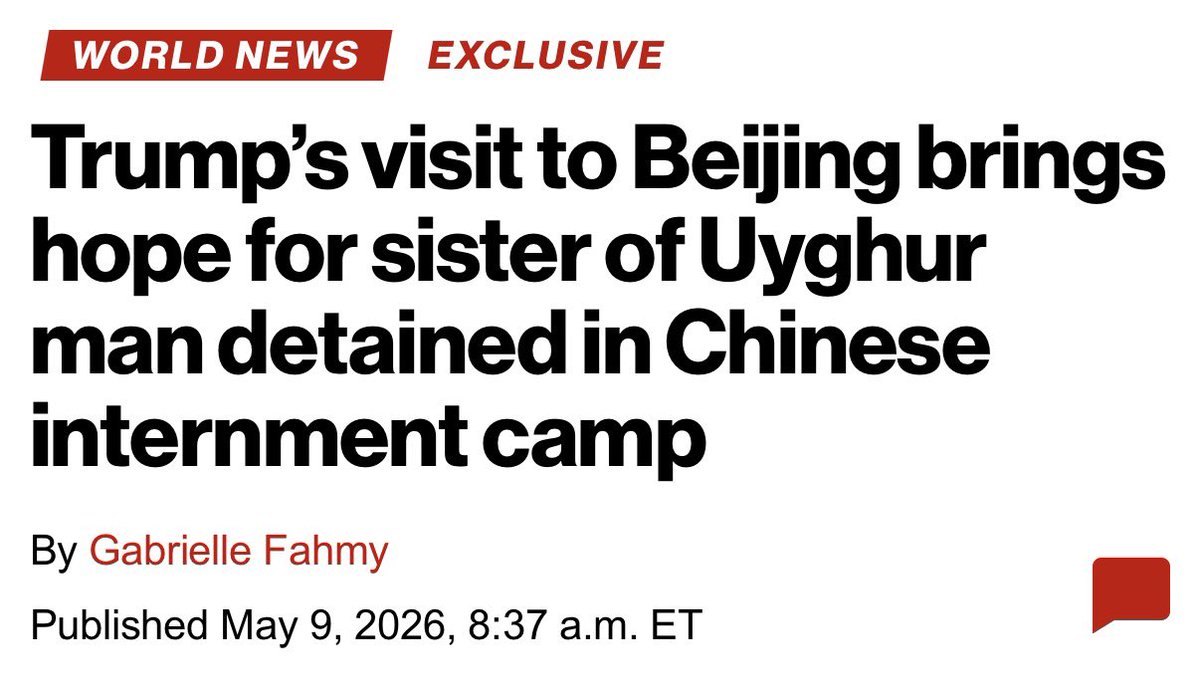
Have a go and read some American news this week on China stories… so much about Xinjiang my god!! Trump ofc soon visiting China for trade talks.. yet its ALL about Uyghurs. Rayhan Asat asking Trump to raise her brother’s case.. The World Uyghur Congress wanting Trump to push Uyghur human rights, USCIRF wanting religious freedom there, Senator Risch also bringing it up.
Which … is stupid as Trump is not going to Beijing with human-rights lawyers is he? He’s going with a trade agenda, tech issues, and bringing CEOs with him..(Nvidia, Apple, Qualcomm, Citigroup and Boeing etc). The whole point they’re meeting so soon is because of all the sanctions and financial difficulties!!
Its been quite nice that Xinjiang, the place i live, has been pretty quiet in the news this year, but its been brought up again just for politics😂 Guarantee Trump would never even care on visiting here either to understand the place (would be awesome if he proved me wrong!!)
The billionaire oligarch who got $38 billion from the US government, and successfully lobbied for tariffs on his Chinese competitors, preaches the "gospel of free market capitalism".
This is how capitalism always works: preach the "free market" for others, but never yourself.
>go to China to film a concentration camp
>it's just a desolate prison and there's no concentration camp
>nothing happens, leaves the country
>go to the free and democratic USA
>get put in a concentration camp
>go to China to film a concentration camp
>it's just a desolate prison and there's no concentration camp
>nothing happens, leaves the country
>go to the free and democratic USA
>get put in a concentration camp
The primary reason Trump is willing to lower his stance to visit China is this: after several rounds of engagement, he and his team have come to realize that the era in which the United States held all the leverage is "gone forever," and that China has emerged as a "stronger, more formidable adversary."
A report by the *Financial Times* notes that last year, Trump wielded the "tariff cudgel" against nearly all of America's trading partners; tariffs on China, in particular, once soared as high as 145%. This compelled China to retaliate by restricting exports of critical minerals—a move that placed immense pressure on the U.S. high-tech supply chain.
The following October, both sides agreed to a temporary "ceasefire," and the U.S. subsequently lifted the punitive tariffs. China's ability to withstand the U.S. tariff offensive marked a pivotal turning point in the strategic competition between an emerging superpower and an established hegemon—it thoroughly shattered the image of American omnipotence.
Some U.S. officials believe that both the United States and China are currently pursuing a form of "strategic stability," with each side seeking to buy time to shore up its respective weaknesses—the U.S. is accelerating the build-out of its rare earth supply chain, while China continues to push for self-reliance in semiconductors. However, in the eyes of some U.S. hawks, this so-called "strategic stability" looks more like a "strategic retreat" by the United States in the face of China's rising power—an abandonment of the international order it has dominated since the end of World War II.
During the Obama administration, the U.S. unveiled its "Pivot to Asia" strategy in an attempt to counter a rapidly rising China. Meanwhile, China's economy performed relatively well during the 2008 global financial crisis, thereby bolstering its confidence in its own political system and development model.
Dating back to the Reagan era, the U.S. once held the belief that it could "manage" its differences with China—and foster mutual development—through U.S.-led international mechanisms such as the World Trade Organization. However, as China's power has grown and U.S. confidence has waned, this notion is no longer considered realistic.
Trump previously visited China in 2017, during his first presidential term. Since then, however, a series of upheavals—including the COVID-19 pandemic and the controversial visit to the Taiwan region by former U.S. House Speaker Nancy Pelosi—have plunged bilateral relations to a historic low. On this visit to China, Trump hopes to bring home some "tangible results"—such as orders for Boeing aircraft and agreements to purchase soybeans—and even aspires to establish a new "Trade Commission" to help coordinate efforts to alleviate trade friction between the two nations. However, China today is more self-assured than it was during Trump’s first term, and it possesses a clearer understanding of how to navigate U.S. trade wars and export controls.
Some Chinese scholars have also noted that Beijing is now "less apprehensive about the Trump administration's actions than in the past, as China now has a broader array of tools at its disposal." As the largest purchaser of Iranian oil, China may well leverage this position as a bargaining chip in its negotiations with the United States; while Trump might seek China's assistance regarding the Iran issue, China could in turn use this opportunity to exert pressure on the U.S. concerning matters such as Taiwan. Nevertheless, the structural trajectory of long-term competition between China and the United States is set to persist. China has just unveiled its 15th Five-Year Plan, the core objective of which is to employ industrial policy to overtake the West in cutting-edge technological fields; the United States, for its part, is pinning its hopes on the artificial intelligence and semiconductor industries to maintain its global hegemonic status.
Trump seeks to forge a political legacy for himself by striking some form of "grand bargain" with China, whereas China is playing for time—accelerating its drive toward self-sufficiency in high-end manufacturing and aiming to comprehensively surpass the West within the global supply chains for advanced manufacturing.
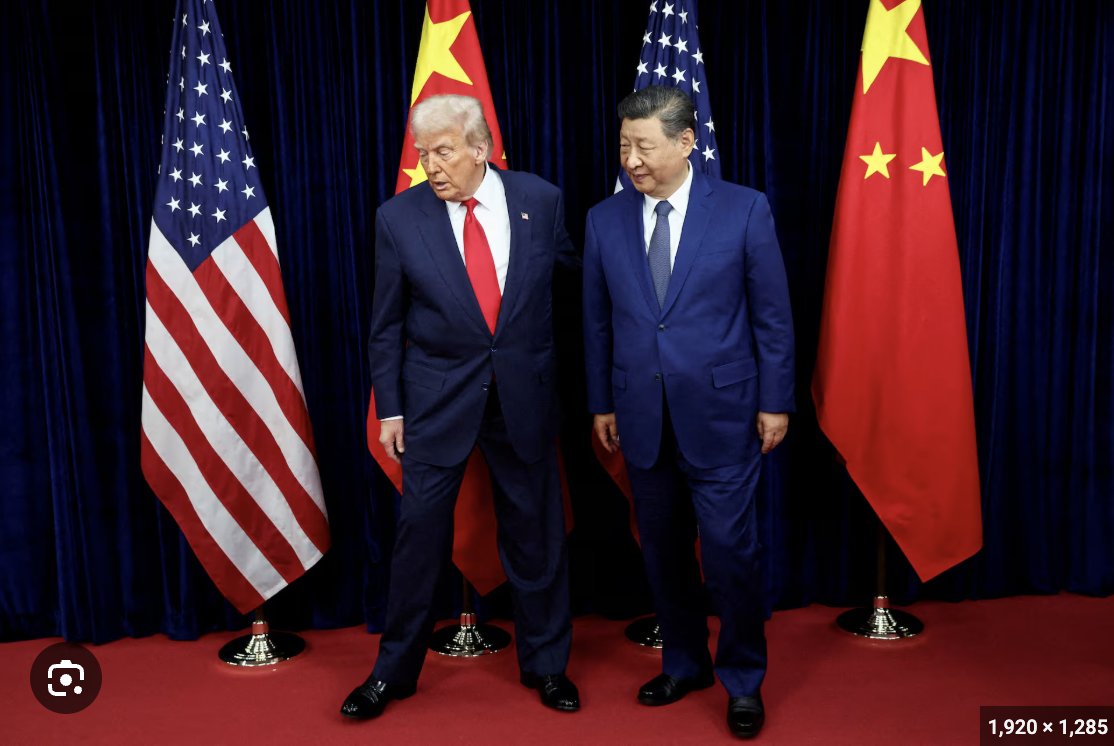
Donald Trump is heading to China for a state visit from May 13–15, and regardless of your political viewpoint, this is a major moment for the global economy. The fact that this visit is happening at all tells you something important: despite years of tariffs, sanctions, technology restrictions and increasingly aggressive rhetoric from both sides, the United States and China still cannot ignore each other. These are the world’s two largest economies, deeply connected through trade, manufacturing, finance, supply chains and technology, and what happens between them affects almost every country on the planet.
From China’s perspective, this visit projects confidence. Over the last several years, China has faced enormous external pressure from the US and its allies, particularly in areas like semiconductors, AI and advanced manufacturing. But instead of slowing down, China accelerated its push toward domestic innovation and industrial self-sufficiency. Chinese companies are now leading globally in sectors like EVs, batteries, solar, drones and increasingly AI. Beijing likely sees this visit as recognition that attempts to economically isolate China have not achieved the intended result, and that the US still needs to engage with China on trade, manufacturing and global stability.
From the American side, this could signal a more pragmatic shift in strategy. The reality is that many US companies still rely heavily on Chinese manufacturing capacity, rare earth supply chains and consumer demand. At the same time, inflation, supply chain instability and rising global competition have forced Washington to reconsider how far economic decoupling can realistically go. The US still wants to compete with China technologically and strategically, but there is also growing recognition that competition alone cannot define the relationship forever.
This does not mean tensions suddenly disappear. The rivalry between the US and China is still very real, especially around AI, chips, trade, military influence and global leadership. But high-level meetings like this matter because they shape the tone of the relationship moving forward. The next few days could have significant implications for tariffs, export controls, investment, manufacturing and broader market confidence.
Whether people support China, support the US, or sit somewhere in the middle, one thing is becoming increasingly clear: the future global economy will not be built around one superpower acting alone. The US and China are both too large, too interconnected and too important to the modern world for that.
China’s research and development of 6G technology currently holds a leading position globally and has entered a critical phase of industrial implementation.
The Ministry of Industry and Information Technology (MIIT) of China recently granted the IMT-2030 (6G) Promotion Group a license to utilize 6G experimental frequencies within the 6 GHz band. This authorization supports the group in conducting 6G technology trials in select regions, focusing on technical R&D breakthroughs and verification testing aligned with the typical scenarios and key performance indicators for 6G established by the International Telecommunication Union (ITU). The approval of these experimental frequencies marks a pivotal transition in China’s technological research—moving from the laboratory into the realm of industrial application.
As of June 2025, China accounted for approximately 40.3% of global 6G patent applications, ranking first worldwide; commercial deployment is projected to commence in 2030.
China’s proactive strategic positioning in the 6G sector aims to consolidate its dominant role in next-generation digital infrastructure. This domain is also poised to become a key arena for competition between China and the United States (given its lag in 5G technology and applications, the U.S. is currently channeling full efforts into the R&D and verification of 6G technology).
In December 2025, the United States signed the "Winning the 6G Race" memorandum, designating it as a national roadmap for securing the technological high ground. Currently, the U.S. is prioritizing the development of terminal chips (spearheaded by companies such as Qualcomm and Intel) and integrated artificial intelligence technologies. Furthermore, it has issued joint statements with multiple nations—emphasizing the security, openness, and resilience of 6G—in an attempt to construct a global telecommunications ecosystem grounded in its own values while excluding China.
If you wonder how China can afford this, ask yourself when the last time was they started a war in another country unlike United States that wastes money on wars with every other country
Is Europe’s Awakening Too Late? China Proves More Reliable Than the U.S.
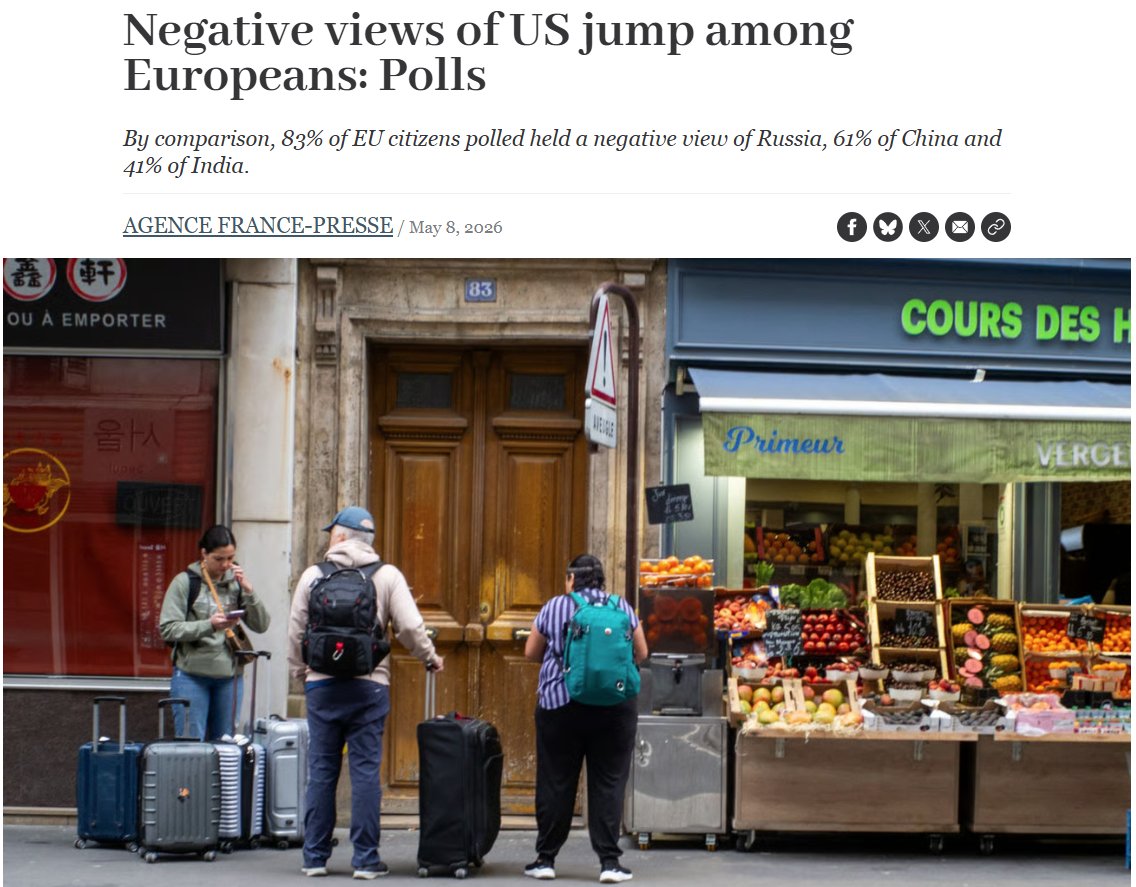
According to the latest "Eurobarometer" survey released on May 8, 2026—alongside various other international polls—European public opinion regarding the United States has reached a historic low, signaling a significant intensification of the crisis of trust.
Currently, approximately 74% of European respondents hold a negative view of the United States—a figure that has surged by 14 percentage points since late 2025. In major EU nations such as Germany, Italy, Spain, and Belgium, the proportion of the public viewing the U.S. as a "threat" (36%) has now surpassed the proportion viewing it as an "ally" (12%). In some countries, citizens even perceive the threat posed by the United States to be greater than that posed by China.
Since Donald Trump’s return to the White House in January 2025, the policies he has implemented have triggered a fierce backlash across Europe: • Tariff Sanctions: The U.S. imposed punitive tariffs of 25% on European automobiles—a move widely perceived as a breach of agreements and a betrayal of allies. • The Greenland Dispute: Trump once again floated the idea of annexing Greenland—an autonomous territory of Denmark—and signaled territorial ambitions toward Canada, sparking diplomatic outrage throughout the Nordic region and across Europe.
• Middle East Conflicts: European nations largely refused to participate in U.S.-led military operations against Iran, creating a serious rift between the two sides regarding regional security issues.
• Eroding NATO Commitments: U.S. threats to withdraw from NATO and to redeploy American troops stationed in Germany have caused the long-standing European trust in the U.S. security umbrella to collapse.
• Divergent Stances on Ukraine: Shifts in the U.S. position regarding the conflict in Ukraine—coupled with public criticism directed at Ukrainian President Zelenskyy—have deepened mutual suspicion among allies.
Europe’s Strategic Pivot: From "Dependence" to "Autonomy"
As trust in the United States plummets to new lows, a staggering 81% of respondents now support the establishment of a common EU defense and security policy—the highest level of support recorded in 20 years. In key strategic sectors—such as technology, aerospace, and defense—European nations are increasingly turning toward domestic suppliers (including companies from France, Italy, and Germany) rather than relying on their traditional American partners. An increasing number of Europeans are inclined to view China as "more reliable" than the United States—particularly against the backdrop of "America First"—and as holding a leading position in cutting-edge technological fields such as artificial intelligence.
Ok…so the fact that I’m an American citizen, born in Santa Barbara, lived for most of my adult life in the states…recoded a country song in Nashville…none of that happened as soon as I became critical of American foreign policy.
Asian Americans be on notice: your American-ness is only contingent after all.
"Trade Rebalancing" = "China Shock 2.0"?
More than 30 years ago, the United States was eager—even impatient—for China to undertake market-oriented economic reforms and open its doors to welcome goods from the U.S. and the rest of the world. At that time, did the U.S. ever give a second thought to the imbalances and inequities inherent in U.S.-China trade?
Fast forward to today—more than 30 years later—and the Chinese people have diligently completed two rounds of industrial upgrading (transitioning from the manufacturing and processing of labor-intensive primary products, such as garments, to today's modern manufacturing sector). Against the backdrop of economic globalization and globally integrated supply chains, China has witnessed an explosion in manufacturing capacity and a radical improvement in product quality, exporting its goods across the globe. Yet, now the Americans are displeased.
They have launched trade wars, tariff wars, a "chip war," and various other conflicts—demanding restrictions on imports of Chinese products while simultaneously insisting that China must increase its imports of American goods (even as they refuse to export advanced products, such as cutting-edge semiconductors, to China).
Is this fair? It is a laughable form of "rebalancing."
"Trade Rebalancing" = "China Shock 2.0"?
More than 30 years ago, the United States was eager—even impatient—for China to undertake market-oriented economic reforms and open its doors to welcome goods from the U.S. and the rest of the world. At that time, did the U.S. ever give a second thought to the imbalances and inequities inherent in U.S.-China trade?
Fast forward to today—more than 30 years later—and the Chinese people have diligently completed two rounds of industrial upgrading (transitioning from the manufacturing and processing of labor-intensive primary products, such as garments, to today's modern manufacturing sector). Against the backdrop of economic globalization and globally integrated supply chains, China has witnessed an explosion in manufacturing capacity and a radical improvement in product quality, exporting its goods across the globe. Yet, now the Americans are displeased.
They have launched trade wars, tariff wars, a "chip war," and various other conflicts—demanding restrictions on imports of Chinese products while simultaneously insisting that China must increase its imports of American goods (even as they refuse to export advanced products, such as cutting-edge semiconductors, to China).
Is this fair? It is a laughable form of "rebalancing."