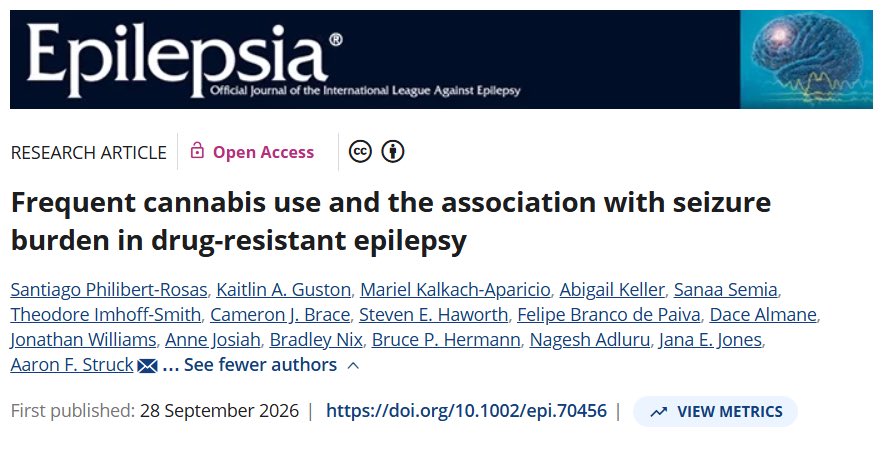
Thrilled our paper is out in Epilepsia!
Frequent cannabis use in DRE was linked to a more severe course, especially in TLE.
Thanks @StruckAF, Jana Jones, Kaitlin Guston, everyone else involved and @WashUNeurology and @UWMadison.
https://t.co/UbXr4WJpwk #epilepsy#neurology
WashU Medicine neurologist Aaron Struck noticed a puzzling pattern: young patients with brutal seizures, normal brain scans and none of the usual risk factors. The one thing they had in common was frequent, high-potency cannabis use. Nobody had studied it. So his team did. https://t.co/QnZPP62weE
In today’s #GrandRounds, Lawrence J. Hirsch, MD, from @Yale gave the annual Sidney Goldring Lecture, covering critical topics in the field of epilepsy including the importance of monitoring for nonconvulsive seizures and various resources related to NORSE/FIRES.
Nice to see this work published.
These findings further support the heterogeneity of JME and its cognitive associations. Happy to have been part of it. @StruckAF
Aaron Struck, MD, & his lab used MRI & data-driven analysis to show juvenile myoclonic epilepsy isn’t one-size-fits-all. They identified three distinct brain patterns tied to differences in thinking skills, though seizure control was similar across groups.
https://t.co/nA7LKuJz5K
Looking for someone interested in epilepsy, EEG, neuroimaging, and neurocritical care. Great opportunity to get involved in meaningful clinical research.
Join our team at WashU Medicine! We’re looking for a Research Specialist (Hybrid) – Neurology to work on epilepsy and neurocritical care research, including EEG, neuroimaging, data analysis, and clinical research coordination. Full-time in St. Louis. Apply here: [link] https://t.co/8mE29hxavg @WashUNeurology@fabnascimen@SantPhilibert
At #AES2025 in Atlanta, I presented our work during the Drugs of Abuse in the Epileptic Brain workshop.
Thanks to @AmEpilepsySoc and Michelle Antoine for the invitation, and to @StruckAF, Jana Jones, and their teams for the support. More to come.
#Epilepsy#Research
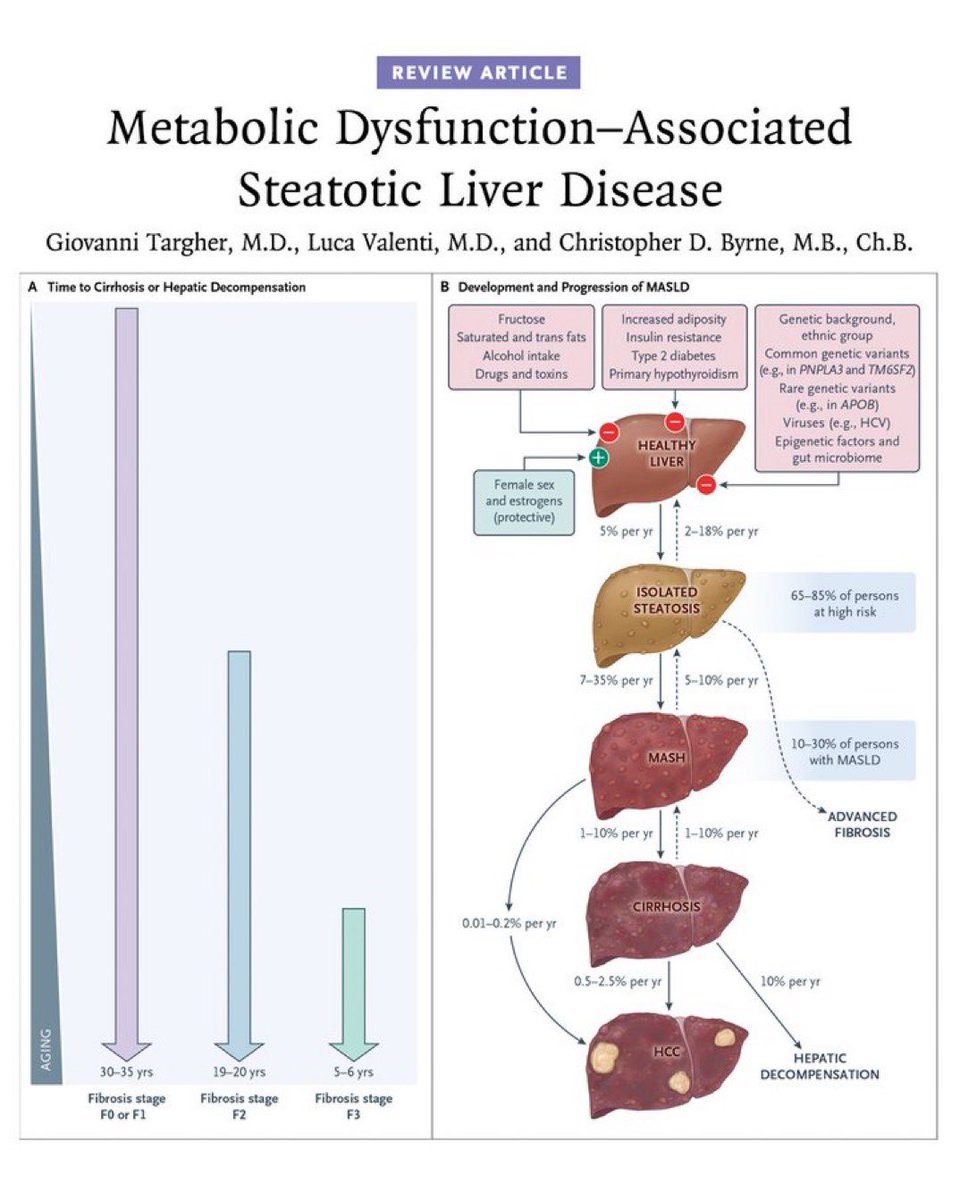
A must-read review in the @NEJM on the most common cause of chronic liver disease: MASLD.
All you need to know: trends, pathogenesis, early detection, co-morbidities, lifestyle changes and novel and future drugs…..
https://t.co/epAuzLl6E7