After his speech at the ZANU PF conference, it's clearer than ever that General Chiwenga represents the only immediate hope for the redemption of our country. The country is behind you sir. An invitation from you will fill the streets without delay. Azikhale!
🔸Good day @marapira_farai,
Murikuitana sei kuconference kwenyu uko? Rigyoni azodii paye? Uri kuside kwaani?
Don’t answer kana zvichizokudzingisa basa.🙌🏽
We need new leaders.🇿🇼
And perhaps the most expensive form of stupidity is not the inability to make money, but the inability to listen when you finally have enough money to change your future.
Money can open doors that poverty keeps closed. But without wisdom, discipline and humility, even six-figure earnings can become nothing more than an expensive demonstration of poor judgment.
1/20 Somebody at PRAZ needs to explain this to me. Three government awards. Each tender asked bidders to bid in local currency. Each award notice says the contract was awarded in US dollars. The gap is about 26 times. Here is how I found it. THREAD.
WHEN THE GODFATHER LOSES HIS GRIP
The rise of Chiwenga, the shadow of Mnangagwa, and the dangerous illusion of absolute power
By a Political Observer Hon IS
In Zimbabwean politics, power has always been more than the title one holds. It is about who controls the machinery of the state, who commands the loyalty of those who carry weapons, who influences the decisions made behind closed doors, and, perhaps most importantly, who is feared when they enter a room.
But history teaches us a difficult lesson: the very people who help a leader ascend to the highest office can eventually become the greatest threat to his continued dominance.
The relationship between President Emmerson Mnangagwa and Vice-President Constantino Chiwenga provides a compelling lens through which to examine this political reality.
Their political partnership was forged in a defining moment in Zimbabwe's history. The military's intervention in November 2017 culminated in Robert Mugabe's departure after nearly four decades in power, paving the way for Mnangagwa's presidency. Chiwenga, then commander of the Zimbabwe Defence Forces, occupied a central position in those events.
The subsequent political order raised a fundamental question: when two powerful figures participate in the creation of a new political reality, who ultimately owns the power that follows?
Was it the man who became President, or the man whose military position helped make that transition possible?
Perhaps the more important question is whether either man can permanently claim ownership of a political system sustained by institutions, alliances, and individuals whose loyalties may change over time.
THE GODFATHER ILLUSION
Every political godfather eventually confronts a dangerous contradiction.
At the beginning, influence is built through relationships. The leader rewards loyalty, elevates trusted allies, and constructs a network of people who depend on his authority. Over time, however, the beneficiaries of that system accumulate influence of their own.
The president who once appeared indispensable may gradually discover that the people around him have developed independent ambitions, interests, and calculations.
This is the paradox of political patronage: the stronger a leader makes his network, the more powerful that network can become.
Mnangagwa's political longevity has been associated with his experience within ZANU-PF, his ability to navigate its internal struggles, and his understanding of the country's political establishment. Yet experience, however extensive, cannot guarantee permanent control over every institution or individual.
The title of President may confer constitutional authority, but political influence depends on more than a title.
A leader can occupy the highest office while facing growing questions about the durability of his alliances. Conversely, a political figure holding a subordinate constitutional position may retain influence through networks, institutional relationships, and personal standing.
This does not automatically mean that one has defeated the other. It means that power is rarely as simple as the official hierarchy suggests.
THE CHIWENGA QUESTION
Constantino Domnic Nyikadzino Chiwenga occupies a distinctive place in Zimbabwe's contemporary political history because of his military background and his role in the events that preceded Mnangagwa's presidency.
That history inevitably invites speculation about the balance of influence between the two men.
Could Chiwenga eventually emerge as a more consequential political force? Could the relationship between the President and his deputy change as succession questions become more prominent? And how much influence can either man exercise over a political establishment that has its own interests to protect?
These are legitimate questions for political analysis, but they must be distinguished from unverified claims about secret conflicts, military loyalties, or an imminent transfer of power.
The central issue is not simply whether Chiwenga is becoming stronger or Mnangagwa is becoming weaker.
It is whether the political relationships that once sustained the existing arrangement will continue to operate in the same way.
In politics, history can create expectations, but it cannot guarantee outcomes.
The person who once helped open the door to power may later be viewed as a potential successor. The person who entered through that door may, in turn, seek to ensure that the succession occurs on terms favourable to his own political interests.
That tension is hardly unique to Zimbabwe. It is a recurring feature of political systems in which personal relationships, party structures, security institutions, and succession calculations intersect.
WHEN LOYALTY BECOMES A QUESTION
One of the most persistent misconceptions about political power is that loyalty is permanent.
In reality, political loyalty can be shaped by institutional obligations, personal interests, career prospects, ideology, and perceptions of who is likely to exercise authority in the future.
This is particularly important when discussing military and security institutions.
Junior officers and lower-ranking security personnel should not be treated as a single political bloc whose allegiance can be inferred from speculation. Their individual views are not necessarily known, and the institutional behaviour of the security services cannot be reliably predicted from assumptions about the ambitions of senior politicians.
Nevertheless, one general principle remains relevant: a political leader who depends entirely on personal loyalty, rather than durable institutions and legitimate authority, risks discovering that influence is more fragile than it appears.
The appearance of unquestioned obedience can conceal a far more complicated reality.
People may comply because of their professional responsibilities, because institutional procedures require it, or because they see no alternative. Such compliance does not necessarily establish personal devotion to a particular leader.
The distinction matters because political authority built on the assumption that everyone is personally loyal can become vulnerable when circumstances change.
THE COST OF ENJOYING THE EPITOME OF POWER
There is a moment in the life of many powerful leaders when political success begins to feel permanent.
They have occupied the highest offices, shaped major decisions, outlasted rivals, and watched former critics become allies. Their names dominate political conversations, and their approval becomes important to those seeking advancement.
At that moment, the greatest danger may no longer be the opposition.
It may be the belief that the political environment will remain unchanged.
Power can create distance between a leader and the people whose cooperation sustains his authority. Advisers may become reluctant to deliver uncomfortable truths. Political allies may calculate their future independently. Institutions may continue functioning outwardly while the relationships within them evolve.
The leader then faces a difficult question: does the loyalty surrounding him reflect enduring confidence in his leadership, or does it depend on his continued ability to control the circumstances in which that loyalty is expressed?
For Mnangagwa, as for any long-serving political leader, this is ultimately a question of political sustainability rather than merely personal popularity.
And for Chiwenga, the challenge is equally significant. Historical influence does not automatically translate into a successful political future. Any succession ambition would encounter constitutional requirements, party dynamics, public expectations, and the realities of governing a country facing substantial economic and social pressures.
Neither history nor rank guarantees the outcome.
THE REAL GODFATHER IS THE SYSTEM
Perhaps the greatest mistake in Zimbabwean political commentary is to imagine that the country's future depends exclusively on a contest between two powerful individuals.
Mnangagwa and Chiwenga are important figures, but the broader political system matters just as much.
ZANU-PF's internal dynamics, constitutional provisions, the conduct of elections, economic conditions, public opinion, and the institutional independence of state bodies all influence the direction of national politics.
A political leader may command considerable influence within one sphere while facing constraints in another. A powerful ally may become a rival, but a rival must still navigate the institutions and constituencies through which political authority is exercised.
This is why predictions of an inevitable victory for either man should be treated cautiously.
Political succession is rarely a straight line. It is a process shaped by negotiation, competition, institutional rules, and events that even experienced political actors may not anticipate.
The real question is whether Zimbabwe can develop a political culture in which the transfer of authority depends less on personal rivalries and more on transparent constitutional procedures, institutional accountability, and the will of the electorate.
HISTORY HAS A WAY OF HUMBLING THE POWERFUL
Zimbabwe's political history offers a recurring warning: no individual, however influential, can assume that the alliances sustaining his authority will remain unchanged forever.
The political fortunes of yesterday's indispensable figures can shift dramatically. Former allies can develop competing ambitions. Institutions can respond to new circumstances. Public expectations can evolve.
Yet it would be premature to conclude that Mnangagwa has lost control or that Chiwenga has decisively overtaken him. Such conclusions require credible evidence, not simply interpretations of political history or speculation about private loyalties.
What can reasonably be said is that the relationship between the President and his deputy remains a significant subject for examining Zimbabwe's political future, particularly in the context of succession and the distribution of influence within the ruling establishment.
The ultimate test of leadership is not how long a person can remain surrounded by powerful allies. It is whether the political order can function legitimately and peacefully beyond the individual who currently occupies the highest office.
And that brings us to the most uncomfortable question of all.
If a political leader's power depends on the continued loyalty of those he once elevated, who truly holds the power when those individuals begin to imagine a future without him?
Is it the President, whose signature carries constitutional authority?
Is it the deputy, whose political history may shape expectations about succession?
Or is it the wider system, whose institutions, alliances, and competing interests determine which ambitions can become reality?
Zimbabwe's next political chapter will be shaped not merely by who appears strongest today, but by how these competing sources of authority interact in the years ahead.
Because in politics, the most dangerous moment for a powerful man is not necessarily when his enemies challenge him.
It may be when he begins to believe that nobody ever will.
Wicknell Chivayo’s reported death remains an open hypothesis—not a confirmed fact. But in an age of misinformation and manufactured narratives, critical thinking remains essential.
What do you believe—and what evidence supports your position?
1/3WICKNELL .M. CHIVHAYO DEAD!!! WHAT IF THE STORY IS NOT WHAT IT SEEMS?
The reported death of Wicknell Chivayo has been officially confirmed, yet there continues to be a question whether the public has received the complete picture.
Are unanswered questions proof of deception—or merely part of an ongoing investigation?
Questioning public information is healthy. Turning suspicion into “fact” without evidence is not.
Until verifiable evidence proves otherwise,
Back to Triangle 🔺️. I grew up among strong cane cutters. Decades later I see strong men at work. End product is sugar for you. Triangle, Hippo Valley, Mukwasini is were strong men are. Ask @Pachisolife@tendaiwo . KwaMeke 🇿🇼🇿🇼🇿🇼🚜🚜✅️
@maphanga_T We must not endorse rigged elections and we must not support repression in SADC be it Eswatini, Zimbabwe or Mozambique.
We have a moral duty to push back on the regimes which are doing these things in SADC.
“The President was invited by his counterpart to Zimbabwe. He had no knowledge of who would be there. When he was there, he had no sense of who this person was….”
South African presidential Spokesperson Vincent Magwenya says President Cyril Ramaphosa travelled to Zimbabwe at the invitation of President Emmerson Mnangagwa and didn’t know who else would be there.
Ramaphosa has faced criticism over the meeting, which was attended by Wicknell Chivayo, a “person of interest” to South African law enforcement agencies. South Africa’s Financial Intelligence Centre, which tracks how criminals move money, has flagged transactions between a Chivayo-linked firm and a South African printing company.
@SpokespersonRSA says SA law enforcement should continue any investigations “with no fear or hesitation.”
Nie uwierzycie. Przed chwilą Ministerstwo Spraw Zagranicznych Izraela i ambasada Izraela w Polsce wystosowały oczekiwanie do polskich władz, by zareagować na moje ostatnie wystąpienie. Zasugerowano, by pozbawić mnie mandatu posła. Rozumiecie? Ministerstwo Spraw Zagranicznych Izraela domaga się, by polskie władze zrobiły coś, bym nie zasiadał w ławach polskiego parlamentu.
To nie Izrael będzie decydować, kto może zasiadać w polskim parlamencie, a kto nie. Historia pokazała, do czego prowadzi nazizm - Polska wie o tym aż za dobrze. Dlatego nie jesteśmy i nie będziemy obojętni na powtórkę z historii, która właśnie się odbywa na Bliskim Wschodzie.
Mam nadzieję, że bezczelne kłamstwo o moim rzekomym „publicznym poparciu nazizmu” spotka się z odpowiednią reakcją polskich władz i wymiaru sprawiedliwości. A Izraelowi radzę, by zajął się prawdziwymi nazistami, których ma w swoim rządzie, na czele z premierem - zbrodniarzem i ludobójcą Benjaminem Netanjahu.
So this video of me has been trending... people have offered by land, klipdrift, even EFF membership... but all I want is the Madam to acknowledge there is a genocide and retire...
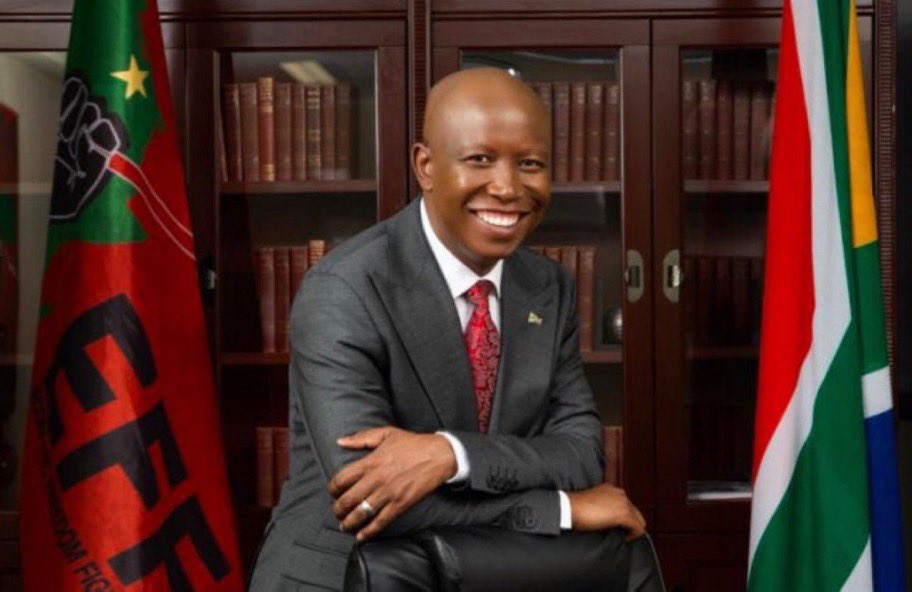
I stand unequivocally with my #EFF President and Commander in Chief, #JuliusMalema.
This ridiculous and outrageous sentence that the racist white Afrikaner (Boer) woman magistrate imposed on my CIC is a travesty of justice, persecution, and only and totally politically motivated.
#VivaCICJuliusMalema! ✊🏾
#VivaEFF!✊🏾
A LUTA CONTINUA!✊🏾
#HandsOffCICJuliusMalema! ✊🏾
#VoetsekAfriForum! ✊🏾
#DownWithAfriForum! ✊🏾 DOWN!!!