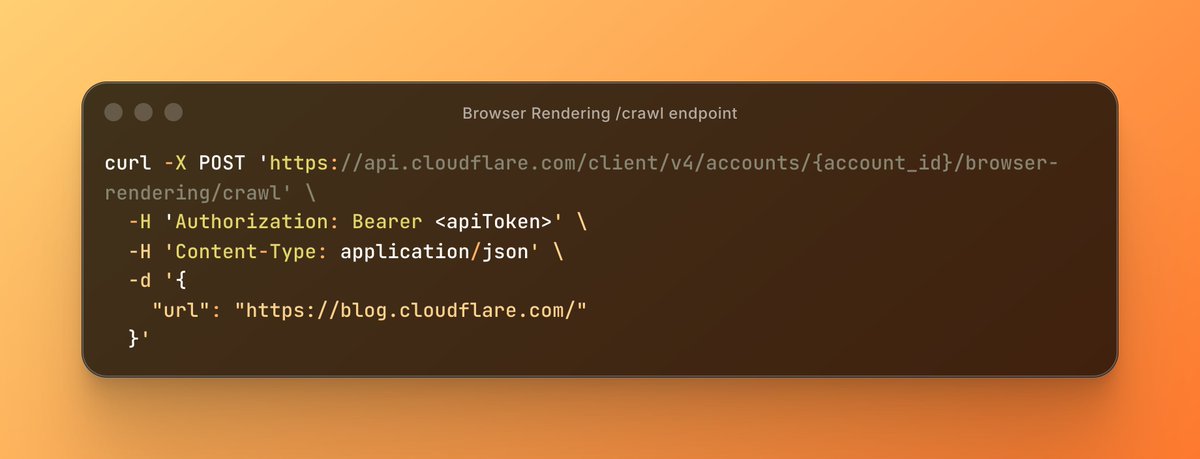
Introducing the new /crawl endpoint - one API call and an entire site crawled.
No scripts. No browser management. Just the content in HTML, Markdown, or JSON.
The fix isn't adding AI features to your roadmap.
It's getting specific about who you actually serve, putting founder-level ownership around each segment, and building relationships that make leaving feel like a real loss.
Wrote the full breakdown here 👇
https://t.co/oewK493GBg
#SaaS #MicroSaaS
AI isn't killing SaaS. It's killing the excuses SaaS was built on.
For 20 years, the moat was simple: building software was expensive, slow, and risky. SaaS absorbed all of that on your behalf.
That's gone. And most founders haven't felt it yet.
The dangerous part isn't the technology. It's the proximity.
Right now, 2-3 person teams are building focused vertical products for the exact customers you deprioritised in your pursuit of scale. They know those customers by name. They're in the group chat with them.
That relationship is the new moat.
Developers are not dead. Far from it.
They're at the core of agentic AI systems, directing them, augmenting them with human intuition, and owning the output in a way no AI can replicate.
The role didn't disappear. It levelled up.
https://t.co/W7hYgc8f6r
Opus 4.5 was a game changer, when it released in Nov, I felt the change.. Opus 4.6 it feels more closely aligned with my thinking when solving a problem or implementing a feature.. if this is a taste of the future we are in for a treat!
Traditional e-commerce search is like playing a game of 'word match' - you either guess the exact product name or leave empty-handed. AI-powered search is like having a personal shopping assistant who gets your style. Whether you say 'comfy work shoes' or 'professional kicks that won't kill my feet' - it understands the vibe, not just the vocabulary. Welcome to the future of search. 🔍
Map the dependencies: AI agents need to understand endpoint connections. Which calls must occur in sequence? What are the hidden dependencies? Document the complete API graph.
Very interesting take and certainly thought-provoking. I think the future would perhaps look something like this:
AI agents will build the backend based on business needs (in real-time) and then actively monitor business changes to continue refining the business logic (in the backend).
This is more plausible than the AI agents are "the backend".
Business logic would need to be predictable 100% of the time; AI, as we have it today, is not!
Watch Nadella describe SaaS apps as nothing more than a CRUD database with some business logic, but once the business logic moves to AI agents, SaaS is over: