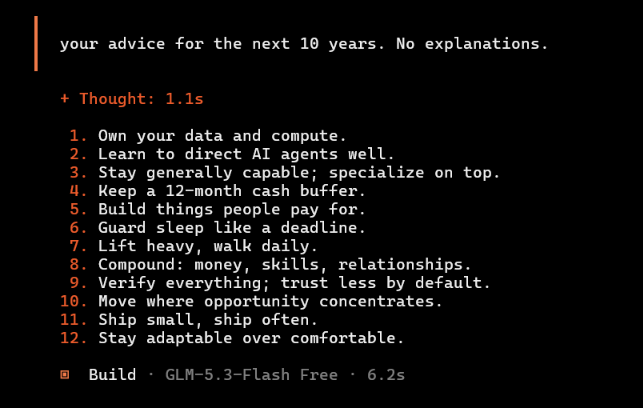
@akramcodez I don't have subscription either and beleive that makes me use opencode with more structured files and more...if you be so specific about it, the models perform very well... atleast for small task it does.... can't say the same for reasoning.
The new MCP spec makes the protocol stateless.
The old initialize handshake and session IDs are gone.
Every request now carries its own version, client details, and capabilities, so any server instance can handle it without sticky sessions or shared storage.
If a server needs to remember something across calls, it creates an explicit handle and the model passes it back as a normal argument. This is cleaner than hidden session state.
When a tool needs something mid-way (a confirmation, missing info, or similar), it no longer keeps a stream open. It returns a result saying input is required. The client then retries the same call with the answers attached.
Method and tool names now travel in simple HTTP headers. Gateways and rate limiters can route or authorize without reading the full request body.
List responses (tools, prompts, resources) now include cache hints and a stable order. Clients can cache catalogs properly and keep prompt caches stable across reconnects.
Authorization got tighter. Servers should follow standard OAuth practices like issuer validation. Dynamic client registration is being phased out in favor of client metadata documents. Credentials stay tied to the server that issued them.
Tasks for long-running work moved out of the core protocol into an official extension, using a simpler polling style. Roots, sampling, and logging are deprecated but will keep working for at least a year. There’s now a formal twelve-month deprecation window so upgrades can be planned.
FYI, they didn't ask anything technical, it's a night shift 6:30-3:30, 694 students applied, late night cab only for girls. Not sure but I think they have a bond as well. Congrats to them but
what are they even celebrating about? Bruh tcs has literally removed your cllg from their priority, one big tech company has banned you for 3 years straight cause last year a few faculties had an argument with the panel...
@OjasSharma276 At the same time, for the sake of learning, I try to write specific code myself just to get into my nerves how things actually work in the pipeline. Helps a lot when I delegate the same task to claude later.
How recursive chunking algorithm works efficiently?
In systems that answer questions by pulling relevant pieces from your documents, long files need to be broken into smaller parts first. Those parts get searched later when someone asks something.
A simple way is to cut the text every fixed number of characters or words. This often slices right through the middle of a sentence or idea, so the small piece loses its meaning.
Recursive chunking does it smarter. It first tries to split on bigger natural breaks, like between paragraphs. If a piece is still too long, it splits that one on smaller breaks, like sentences, and keeps going until every piece is the right size.
Because it prefers natural breaks, related sentences and ideas stay together more often. The system later finds cleaner, more complete pieces when looking for answers.
This leads to better matches and fewer half-stories being retrieved. The final answers become more accurate and make more sense, especially with messy or long documents.
It is simple to apply, works well on most everyday text, and is usually a strong starting point for preparing documents in these question-answering setups.