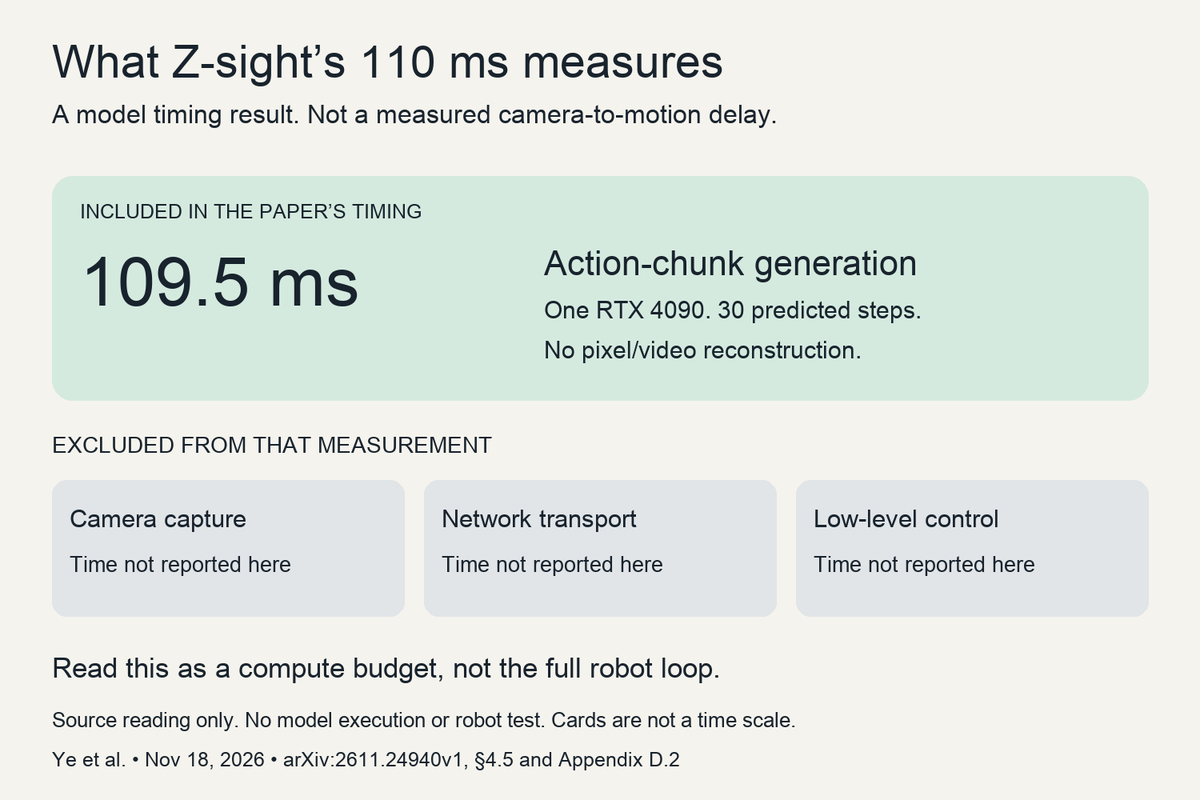
Z-sight's ~110 ms is model compute on an RTX 4090. Camera capture, network transport and low-level control are excluded.
It predicts future visual features alongside actions, without rendering video.
Nov 18 paper. My source-reading diagram.
https://t.co/qzXzZzeH7E
@JohannesTscharn@specs@dimensionalos When hand tracking drops, what happens to the current arm target? And does control need an explicit re-engage after tracking returns? Curious how you handle that transition when the operator is looking through the overlay.
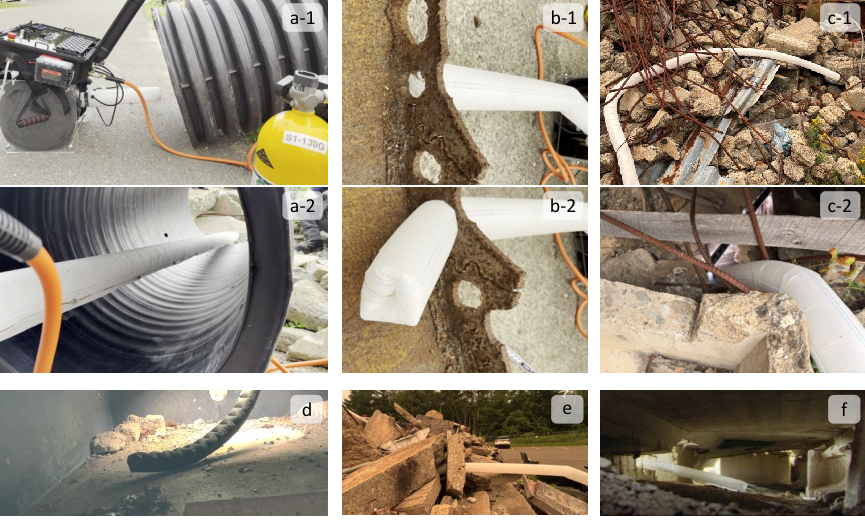
SPROUT grows a fabric tip into rubble using air. An operator steers it.
Its 7.62 cm body passed a 3.81 cm steel opening in rescue-training tests. Softness buys access to tight voids.
Sept study, revised Nov 18. Fig 5, Alvarez Valdivia et al., CC BY-SA.
https://t.co/r8KvhxpKRD
BYU's truss robot bends through passive joints, but people still swap its triangular units. Shape change and reassembly are different jobs.
The solar panel is a mock-up. Nov 20 study, Rose et al. Fig 10, CC BY.
https://t.co/Xth3TbQKZ0
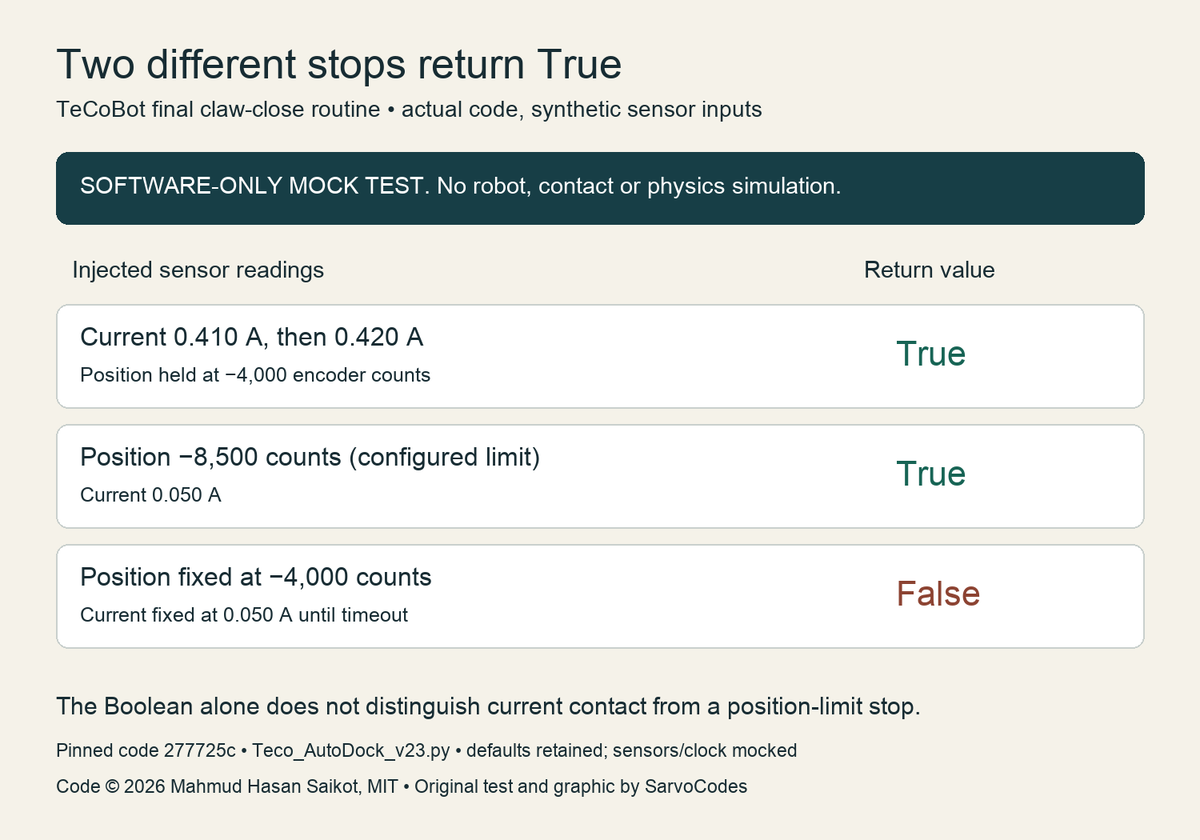
I replayed TeCoBot's claw-close code with fake sensor readings. High current and reaching the position limit both returned True.
That return value alone doesn't tell you which happened.
Software mock, no robot test. Saikot et al., Nov 11 study.
https://t.co/JNMvPwKPWZ
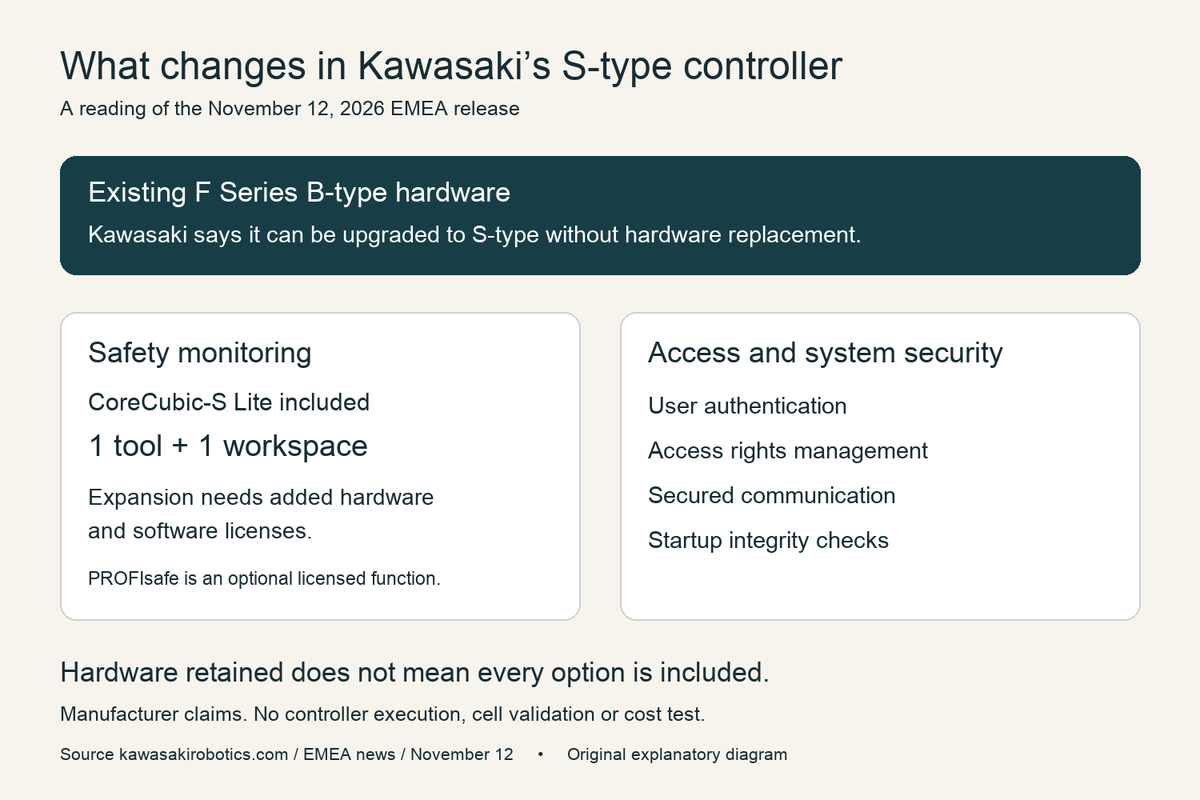
Kawasaki says F Series B-type controllers can become S-type without replacing hardware.
CoreCubic-S Lite covers one tool and one workspace. Expansion needs added hardware and software licenses.
Nov 12 release. My diagram, no hardware test.
https://t.co/mcgaO0kPM6
@aidandizaji The methods give no failure-mode counts for those 10 retained real runs. They balance success vs failure, which doesn’t establish failure diversity. The simulated play data include misses, slips and collisions, but that’s a separate dataset.
https://t.co/aZ8tY2UcCb
WEVO keeps 10 successful and 10 failed robot runs per task to tune its video world model. Getting those 20 can take more attempts.
A useful detail when budgeting humanoid training. Code is still pending.
Nov 18 paper. Fig 1, Chen et al., CC BY 4.0.
https://t.co/dvMf2wcczA
@Sentdex After the Wi-Fi drop, does the harness re-check the gripper and object state before resuming? A command might finish on the robot even if its response never reaches the loop. Curious how you avoid repeating a completed action.
RoboBuilder's agent asked humans to test a friction pin. It held 4.5 N·mm, not the assumed 24.5.
Measure the joint before trusting the simulated robot.
Nov 18 study, Nehme et al. Simulated test illustration, not real footage.
https://t.co/VxwaYmFUlV
https://t.co/wYp9fDVxI0
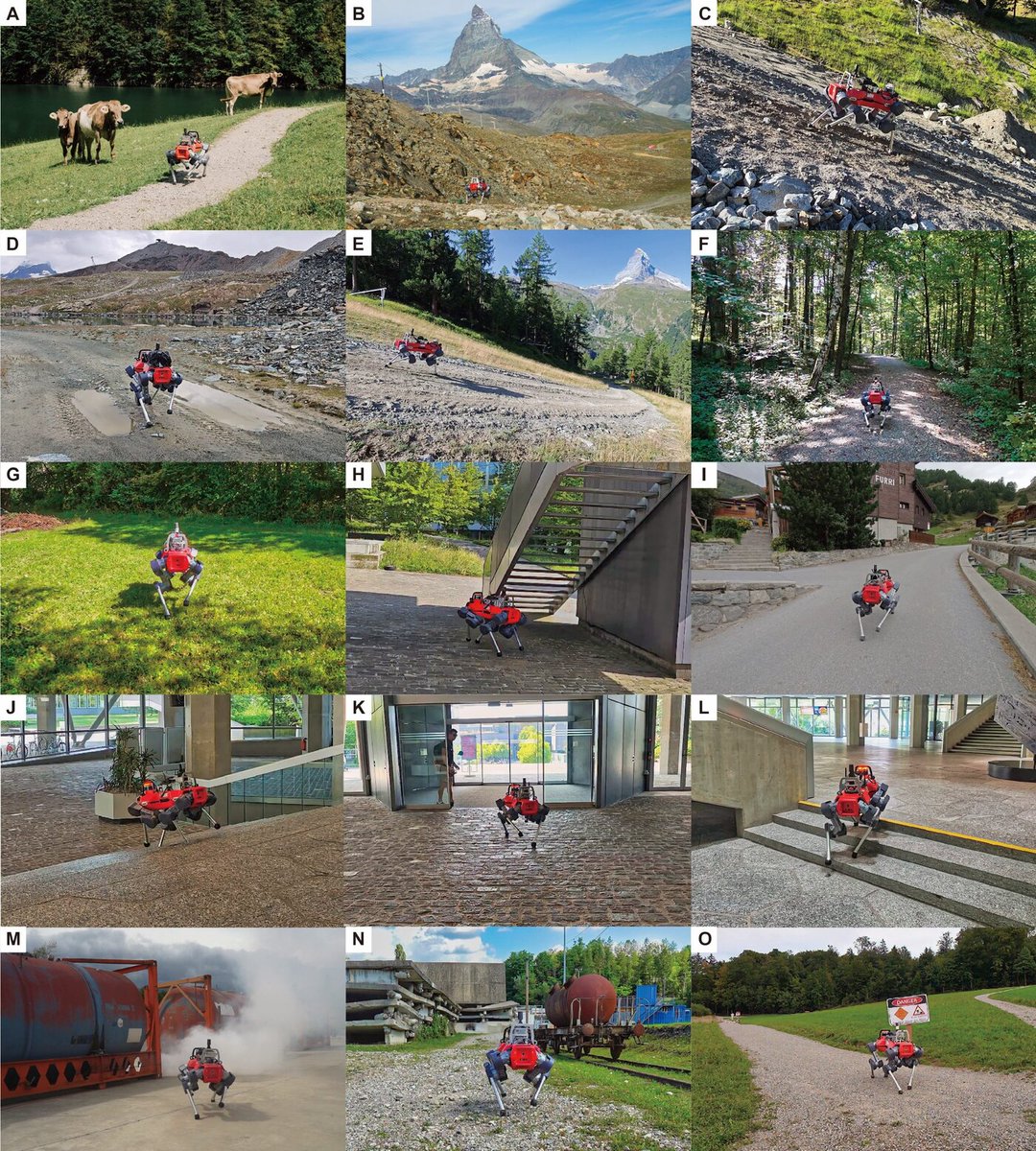
ROAM's VLM could label a fence as risky while segmentation missed where it was.
Across 2 hikes, authors traced 4 of 5 intervention events to segmentation. Naming a hazard isn't locating it.
Nov 18 paper. Photo RSL, ETH Zurich, MIT license.
https://t.co/WSccwMlAJk
A magnetic pulse closes this origami robot. It keeps holding after the field is removed.
Moving-silkworm capture worked in 4/100 tries. Holding and catching differ.
Nov 6 study. Huang et al. Movie S5 excerpt, speed labels kept.
https://t.co/4mZ0BGRPPp
https://t.co/tVb5G0grwz
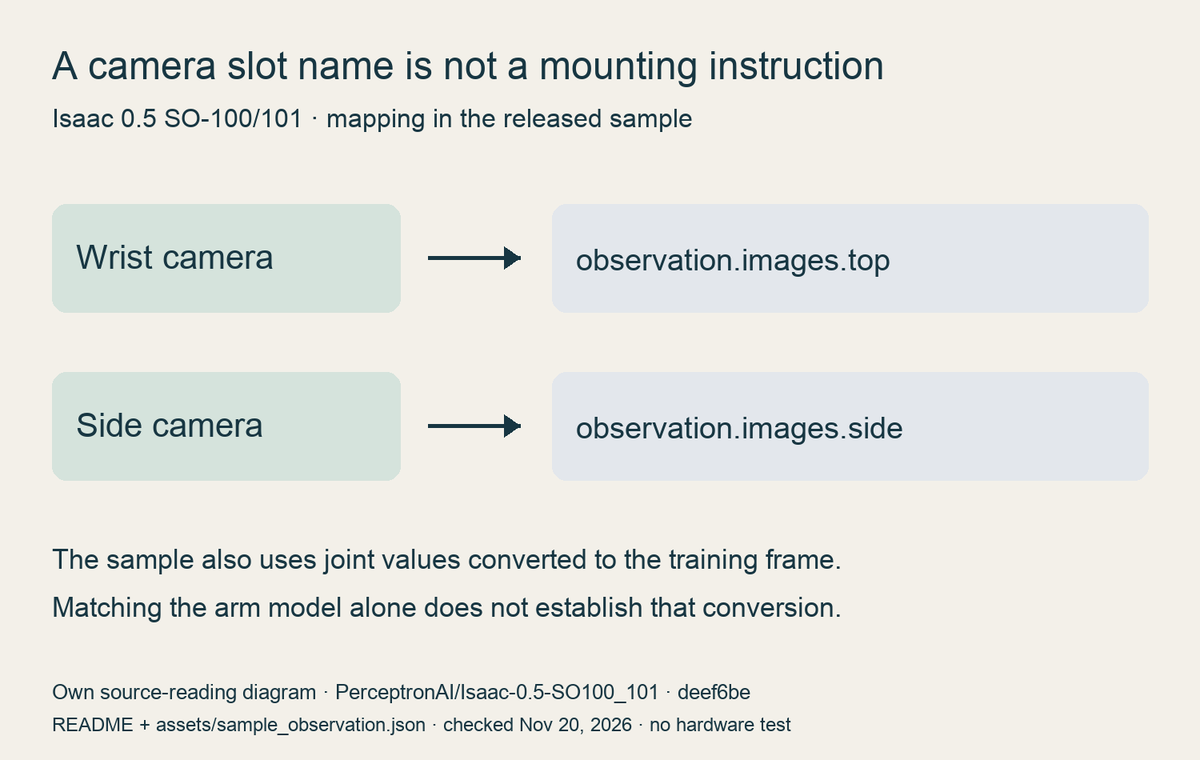
Isaac 0.5's SO-100/101 sample feeds a wrist camera into a slot named "top".
Copying camera names isn't enough. The sample's joint values are also converted to its training frame.
Nov 20 checkpoint announcement. My diagram, no hardware test.
https://t.co/UI6mIctpNO
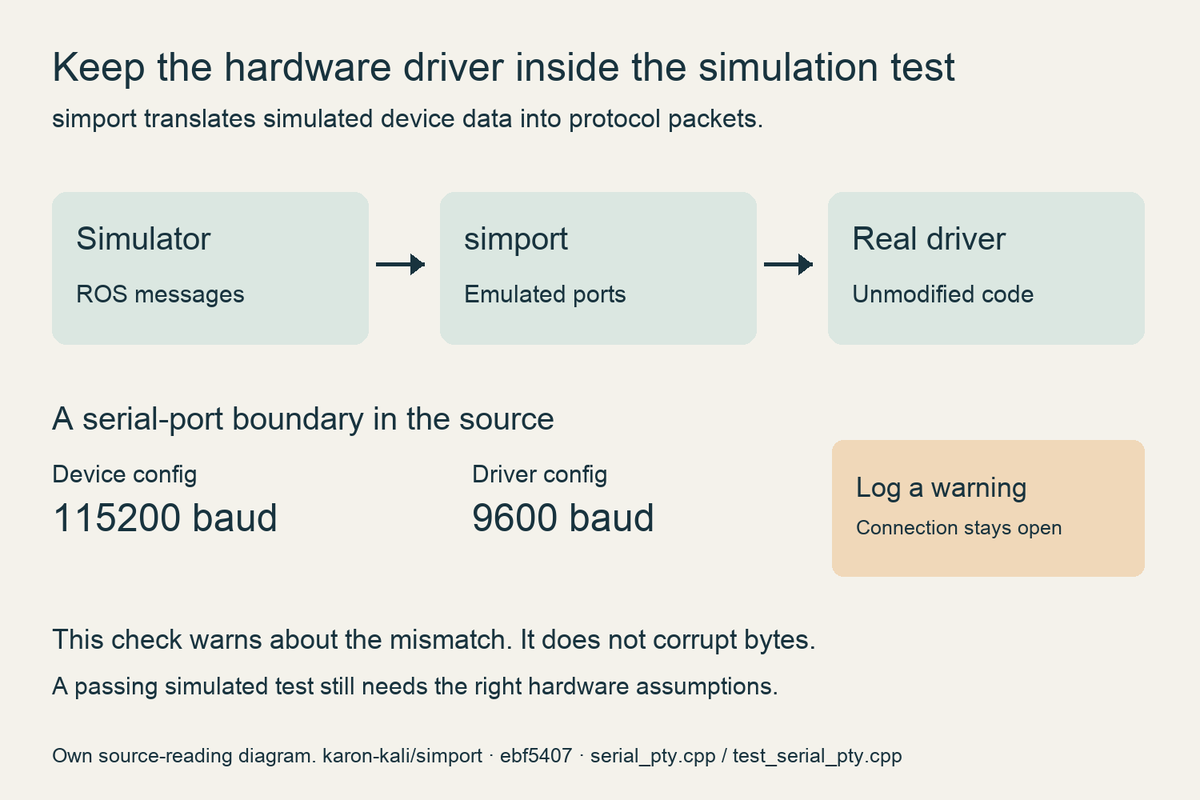
simport keeps the real ROS 2 driver in the simulation loop by emulating device ports.
One boundary in its serial code. A wrong baud rate raises a warning. It doesn't corrupt the bytes.
Nov 19 announcement. My diagram.
https://t.co/92yt8E6JIK
@perceptroninc For SO-100/101, what camera views and action calibration does the checkpoint expect? A matching arm alone doesn't guarantee the observation and action formats line up.
These blocks help the robot place them.
MILAbot drops a voxel, then steps on it to engage snap-fit joints. Geometry handles some precision.
MIT's April study, revisited Nov 18. Lab demos, not proven building-site throughput.
Photo courtesy researchers.
https://t.co/rtiH9rawnW
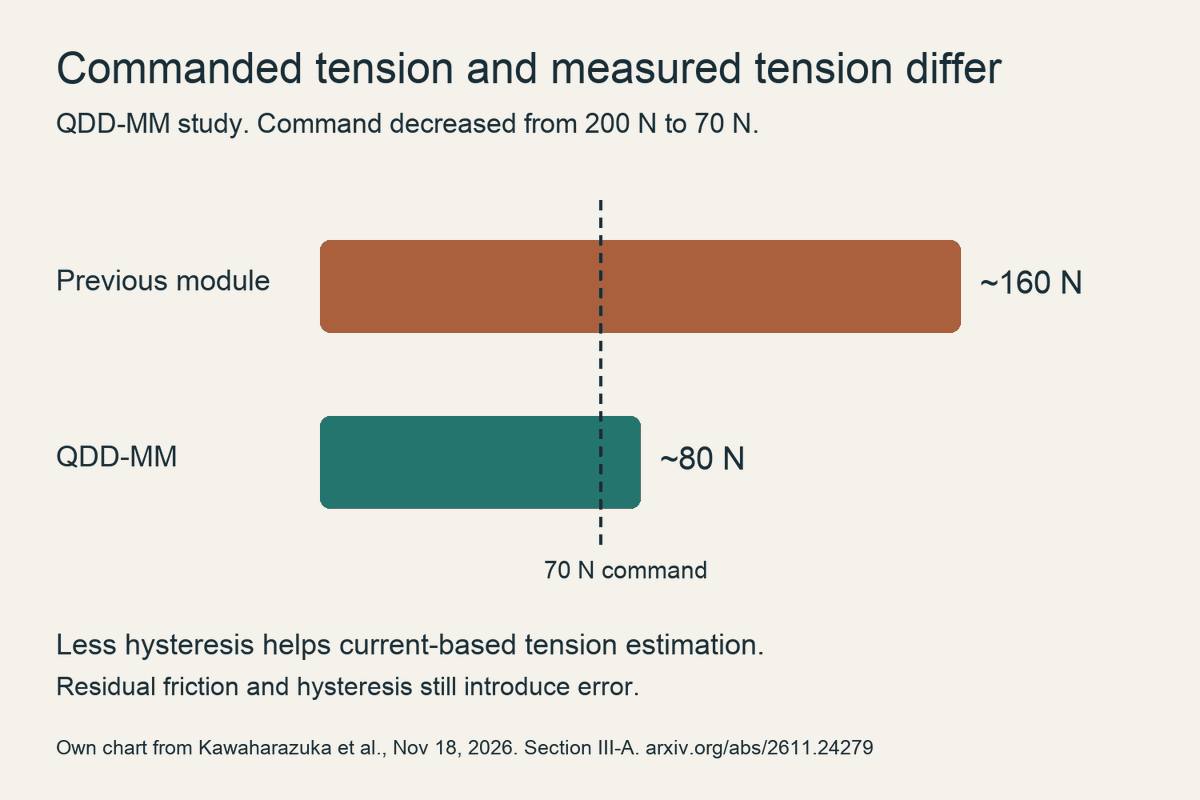
QDD-MM estimates tendon tension from motor current. Low gearing helps, but friction leaves error.
After a 200 N command dropped to 70 N, measured tension was about 80 N, versus 160 N in the older module.
Nov 18 study, @KKawaharazuka et al. My chart.
https://t.co/s7clO8w1M3
An API can start a washer. It can't load it.
PAIR tests both in simulation. APIs helped isolated subtasks, but none of 6 setups finished a full task. All tasks needed physical steps, with only 340 training demos.
Nov 17. Figure Pyo et al., CC BY 4.0.
https://t.co/q9BAKEKIHY
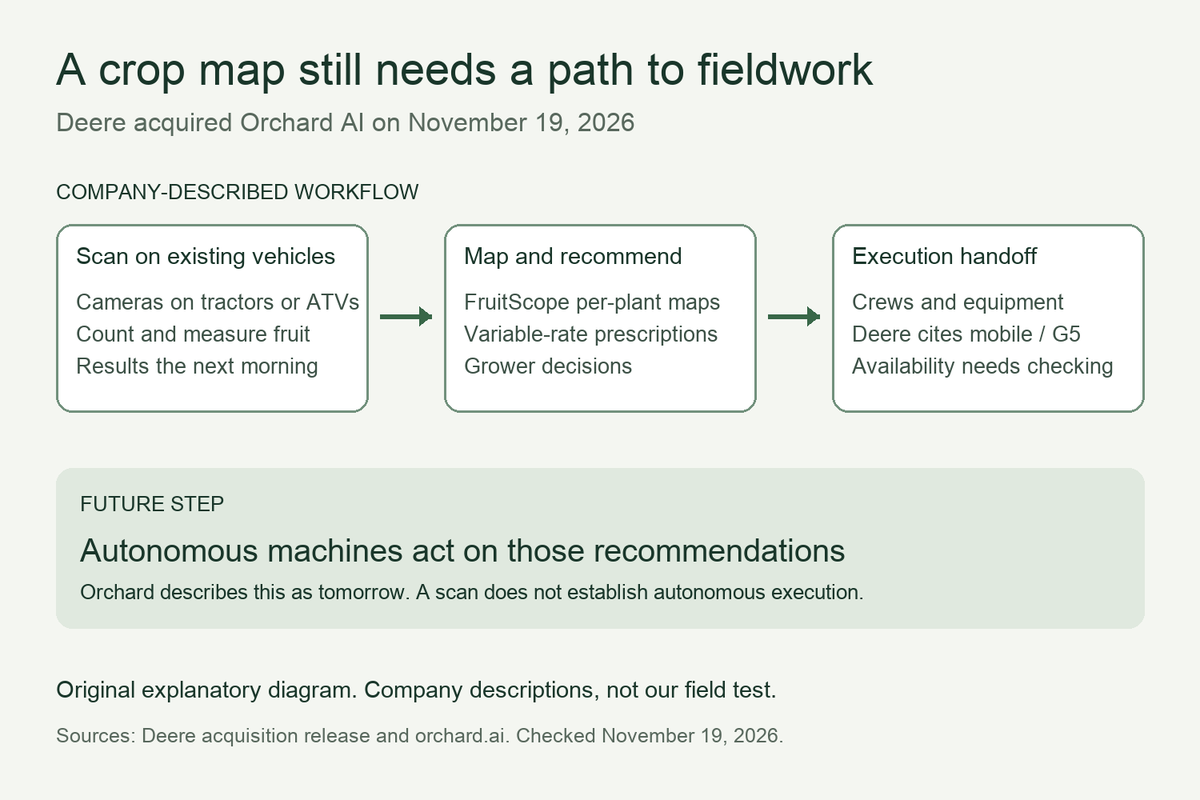
Deere bought Orchard AI on Nov 19. Its cameras ride on existing vehicles to build per-plant crop maps.
Orchard describes crews and equipment acting today, autonomous machines tomorrow. Scanning and acting are separate steps.
My diagram.
https://t.co/9bOa9OjoFo
@charliewu@orchard_robots@JohnDeere For a grower scanning with an ATV, can a FruitScope spray prescription go straight to a G5 display today, or is that part of the integration ahead?