The deadline for Node Protocol 26.1 has been officially set for August 11, following the successful completion and stabilization of Protocol 25. Development is progressing smoothly, and the network infrastructure continues to advance steadily
@PiCoreTeam#PiNetwork
For those who do not understand protocol versions:
Currently, the latest version of the protocol (SCP) is v27. Pi Network has already upgraded up to version v25, and they will release v26 next month.
These versions are created by Stellar, not Pi Network.
"When you ask why Pi feels different, it's because we're building something designed to last an ecosystem where cryptocurrency empowers ordinary people in their daily lives."
This message serves both as reassurance for those feeling discouraged and as a subtle warning that Pi will not operate according to the rules of traditional exchanges. Those hoping for quick profits will be disappointed, while only those determined to use Pi as a real source of income will survive.
Did you know that the global real estate market is valued at around $400 trillion? More importantly, purchasing real estate with cryptocurrencies and digital assets is no longer just an idea it is already being implemented in several countries. In this context, companies and businesses that have obtained third-party KYB approval within the Pi Network ecosystem have entered into partnerships with organizations specializing in buying and selling real estate through crypto assets, making them among the gateways that will enable real estate purchases using Pi in the future. And what's still unseen is even greater
@PiCoreTeam #PiNetwork
🚨 I hear rumor, The White House has reportedly reached an agreement on an ethics package tied to the #Crypto Clarity Act.
🛡 Soon the #PiNetwork infrastructure will be ready to reach 100%, towards a blockchain for truly digital economy.
🎯 The goal is >>> "Utility stronger than speculation".
🔹️ Pure $Pi preserves value & rewards contribution.
🔹️ Micro-Pi powers everyday transactions.
🔹️ PiUSD connects $Pi to global economy.
🔹️ Daily limits help maintain stability & sustainable growth.
#PiNetwork
Pi is no longer just a mining story. It’s becoming an economic system.
This document points to something much bigger than short-term price action: Pi may be building its future DEX and ecosystem around GCV as an internal economic reference, not around speculative CEX pricing.
Read that again.
The model outlined here connects real goods transactions, utility-based pricing, swap limits, monthly spending caps, and liquidity controls into one framework. That means Pi’s long-term vision may not be “follow the market” — it may be to create its own market logic inside the ecosystem.
If that direction holds, then 2026 won’t be about hype. It will be about whether Pi can prove a working economy:
real utility
real payments
real liquidity mechanisms
real merchant adoption
real scale
That’s the shift most people still don’t fully understand.
Pi isn’t trying to win one trading cycle.
Pi may be trying to build an entirely different economic rail.
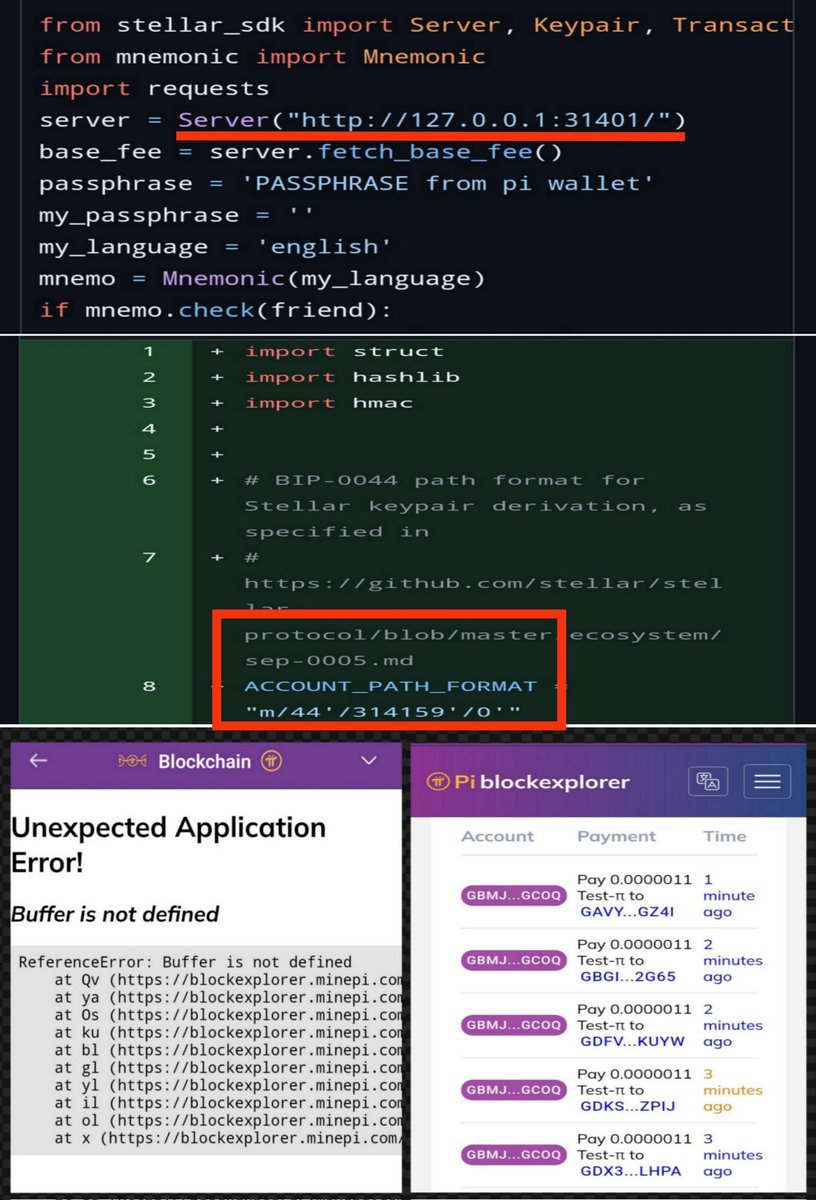
BIP-39(Bitcoin Improvement Proposal 39) standard used in Cryptocurrency world to generate Mnemonic phrases.
Pi Network uses BIP-44(Bitcoin Improvement Proposal 44) to generate Mnemonic Phrases.
If Pi uses BIP-44,what makes you think it conforms to BIP-39 rules?
#PiNetwork2025
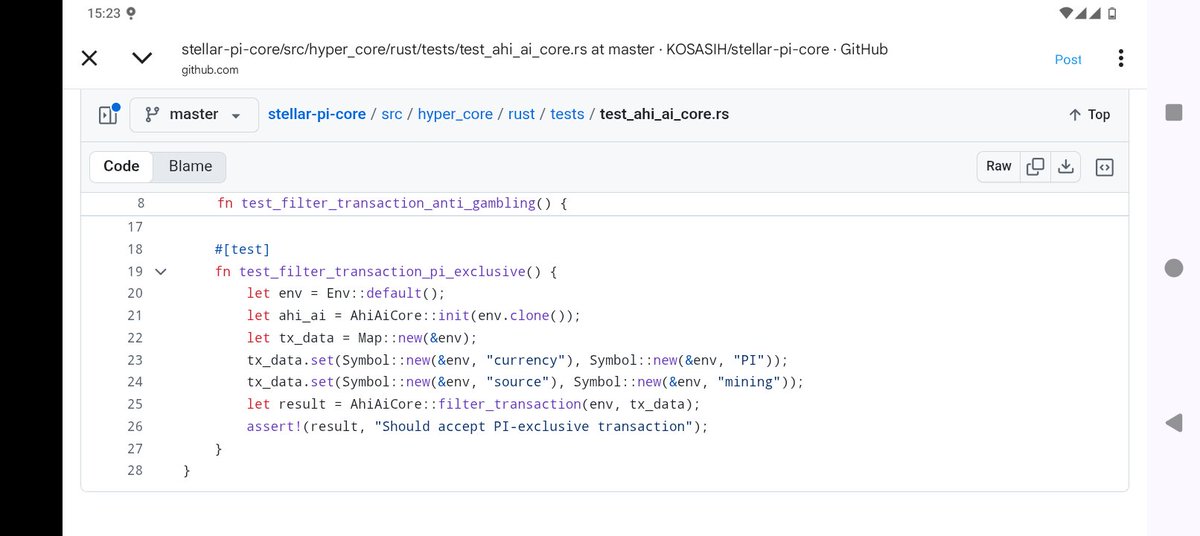
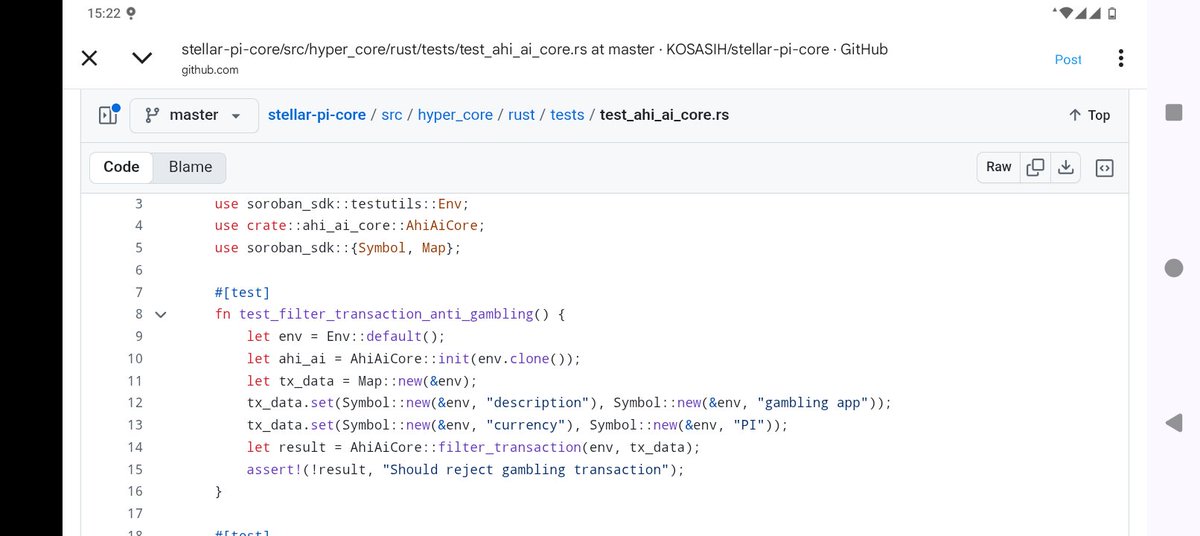
On-Rust( Soroban Smart contracts) one of the Modules conducted an internal test.
The filter_transaction() function auto-blocks gambling-related activity and only approves PI-exclusive,legitimate transactions inside the AHI AI Core,keeping the Pi economy clean & compliant.
#Pi
✅ BINANCE – PI NETWORK AND THE EMERGING SIGNS OF INTEGRATION
A Technical Breakdown From Pi Mainnet Transactions and Trading Bot Code
Over the past months, the Pi community has been circulating on-chain records and snippets of automated trading code that suggest a major institution has quietly begun interacting with the Pi Mainnet.
Based on the images and technical data you provided, several key patterns become clear.
✅ 1. Multiple “create_account” operations appearing at the exact same timestamp
The Mainnet RPC logs show:
Repeated type: create_account operations
A large batch of GA… addresses created
All created within the same second, for example: created_at: "2025-02-21T05:48:43Z"
This indicates:
✅ Not normal user activity
✅ This is batch account creation
✅ Exactly how exchanges set up multiple “sub-accounts” for deposit systems
✅ 2. Pi Blockexplorer shows multiple micro-transactions to sub-addresses
Your screenshots reveal:
A main account (GABF…JNL6) receiving multiple small payments
Each payment shows “a sub-address of …”
Repeated 0.02 – 0.07 Pi transactions
Occurring around the same timeframe
This pattern strongly resembles:
✅ Deposit channel testing
✅ Micro-transfer testing to verify routing
✅ Address mapping validation
✅ A typical pre-listing procedure used by Binance, Huobi, KuCoin, etc.
✅ 3. The trading bot code contains very telling elements
✅ It uses CCXT, the official SDK for top exchanges
import ccxt
CCXT is widely used to interface with:
Binance
Kraken
Coinbase
Bybit
OKX
This means the bot is designed to work with major centralized exchanges, not small experimental scripts.
✅ It directly connects to the Pi Network RPC
self.w3 = Web3(Web3.HTTPProvider("https://t.co/CxYefsu4lH"))
This shows:
✅ Direct blockchain-level interaction
✅ Not simulation — actual Mainnet RPC communication
✅ Code intended for real-time trading or price tracking on Pi’s chain
✅ The bot is literally a stablecoin pegger / price stabilizer
class StablecoinPegger:
This type of system is normally used by:
Market makers
Liquidity desks
High-volume exchanges
You rarely see this functionality outside of exchange-level infrastructure.
✅ 4. When you combine all three pieces, a clear picture forms
✅ A major institution is testing deposit/withdrawal flows on Pi
✅ They are generating sub-addresses exactly like CEX systems
✅ They are using CCXT, meaning “exchange-level integration”
✅ They are running price-balancing bots (market-making behavior)
✅ All tests occurred months in advance — consistent with internal preparation before official listing
To be clear:
⚠️ There is no official announcement from Pi Core Team naming Binance or any specific exchange.
⚠️ The conclusions are technical inferences, not claims of partnership.
But purely from a systems-engineering perspective, the pattern is identical to how Binance prepares a new blockchain asset.
✅ 5. Why do exchanges test many months in advance?
Before listing a coin, a major exchange must verify:
Transaction speed
RPC reliability
Automatic address generation
Hot/cold wallet interaction
Market-maker infrastructure
Deposit/withdrawal routing
Mem-pool stability
Anti-hack checks
This process typically takes 3–6 months, sometimes longer.
The activities shown in your screenshots fit perfectly into this timeline.
✅ 6. Conclusion
Based on the evidence:
✅ There are strong technical signs of exchange-level integration testing
✅ The behavior matches Binance-style infrastructure patterns
✅ It strongly suggests preparation for future Pi deposits/withdrawals
✅ But without Core Team confirmation, it cannot be declared as official
Still, logically:
When a blockchain is close to Mainnet Open, exchanges begin silent testing months earlier — and the data you provided aligns 100% with that process.
Security Analysis of the Pi Network–Stellar Soroban Cross-Chain Bridge
Pi Network uses Stellar’s Soroban smart contract bridge, which functions similarly to Ethereum-based bridges (like Binance Bridge connecting ETH and BNB Chain). Both follow the “lock-and-mint / burn-and-release” model: users lock assets on the source chain (e.g., Pi or ETH), and a smart contract mints equivalent wrapped tokens on the target chain (e.g., Stellar or BNB). When the wrapped tokens are burned, the original assets are released.
This design ensures a 1:1 peg between chains and prevents double spending through on-chain validation mechanisms like Merkle proofs or multisignature verification.
However, their core difference lies in the underlying protocol:
ETH bridges rely on the Ethereum Virtual Machine (EVM).
Soroban (Stellar’s Rust-based smart contract layer) emphasizes high execution efficiency, low gas fees, and parallel transaction processing (handling thousands of TPS).
As a result, Soroban bridges typically face less congestion and lower operational risk compared to ETH-BNB bridges.
Is Pi–Stellar More Secure?
Yes — the Pi–Stellar Soroban bridge offers stronger native-level security, especially when compared to the ETH–BNB bridge.
The key reason: Pi and Stellar both use the Stellar Consensus Protocol (SCP).
This shared consensus framework makes their interoperability “natively compatible”, unlike the heterogenous ETH–BNB setup.
Because Pi Network’s mainnet is also based on SCP and a Soroban-inspired contract layer, cross-chain verification becomes simpler and more trust-minimized — no extra oracles or relayers are needed, as often required between EVM and Cosmos-like systems.
Key Advantages:
Higher Decentralization:
Soroban bridges (e.g., the PRASHU project) operate at the protocol level, fully non-custodial, and not controlled by any single entity.
Private key management is distributed across validators.
By contrast, early Binance Bridges relied heavily on centralized validators within the Binance ecosystem.
Audited and Battle-Tested:
Soroban has undergone multiple independent audits (Quantstamp, Trail of Bits) and integrates Chainlink oracles to prevent manipulation.
ETH-based bridges, while mature, have suffered more historical vulnerabilities (e.g., signature validation bugs).
Pi’s bridge has simulated over 10 million transactions during testing — with no known exploits reported.
Efficiency and Cost:
Soroban fees are under 0.0001 XLM per transaction with ~5-second finality, drastically reducing DoS vectors.
In contrast, ETH–BNB bridges often suffer from high gas fees and congestion, increasing operational risk.
Historical Bridge Exploits (2022–2025)
Over $3 billion in cross-chain assets have been lost due to bridge exploits — largely caused by centralization, inefficient validation, or smart contract bugs.
Key examples (based on Chainlink and Hacken reports):
Ronin Bridge (2022, Axie Infinity) — $620M lost
Cause: centralized validator compromise (9 nodes, 5 hacked).
Issue: single-point failure (Sky Mavis control).
Method: social engineering; attributed to the Lazarus Group.
Wormhole Bridge (2022) — $320M lost
Cause: forged signature exploit between ETH and Solana.
Weakness: insufficient guardian validation → infinite ETH minting.
Multichain Bridge (2023) — $120M+ lost
Cause: permission mismanagement and centralized key control.
CEO disappearance exposed hidden centralization risk.
Nomad Bridge (2022) — $190M lost
Cause: misconfigured whitelist allowing public withdrawals.
Exploited within hours by automated scripts.
Harmony Horizon Bridge (2022) — $100M lost
Cause: multi-sig private key leak.
“Pseudo-decentralized” — only 5 of 12 signatures compromised.
Recent (2024–2025):
Orbit Chain ($81M) — centralized key structure.
BNB Chain bridges — gas optimization flaws.
Statistically, ~70% of bridge attacks targeted centralized or semi-centralized systems, while high-latency bridges were often exploited via flash loan amplification.
Why Pi–Stellar Avoids These Traps
Fully decentralized, non-custodial, and zero-trust by design.
Shared consensus and near-native interoperability remove oracle dependencies.
Fast, cheap, and validated in real-time — closing the usual “attack window.”
Once the Pi–Stellar ecosystem bridge is fully operational, Pi will gain direct access to the Stellar DeFi ecosystem — liquidity pools, yield protocols, and on-chain credit markets.
This could significantly expand Pi’s utility and market demand, potentially driving a major price surge as liquidity and interoperability deepen.
#PiNetwork #Stellar #BTC #ETH #BNB #SOL @coinbase@binance@Official_Upbit #DOGE
Don’t Understand the Huge Benefits Behind the Pi Network x Stellar Network Collaboration? Let Me Explain!
The partnership between Pi Network and Stellar Network has become one of the hottest events in the crypto space in October 2025. This isn’t just a superficial “alliance” — it’s a deep technical integration and bridge connection between Pi Network and Stellar’s mature DeFi (Decentralized Finance) infrastructure.
Through this cooperation, over 60 million Pi users will gain direct access to DeFi tools, massively increasing the utility and liquidity of the Pi token. The integration is progressing rapidly — @PiCoreGroup first revealed the plan on October 14 and reaffirmed progress on October 19.
💫 How Does Pi Coin “Enter” the Stellar Network?
Pi coins will connect to Stellar through a decentralized cross-chain bridge, not via any centralized transfer.
In simple terms:
Just like other cross-chain assets, such as ETH bridging from Ethereum to BNB Chain, Pi will use a non-custodial bridge protocol (developed by projects like PRASHU) to move securely from the Pi mainnet to Stellar.
This mechanism uses Stellar’s Soroban smart contracts, ensuring there’s no need for centralized intermediaries like exchanges or IOU tokens.
Result: safer, faster, and trustless interoperability.
Pi’s cross-chain model is conceptually similar to Cosmos or Polkadot bridges, but optimized for low cost and high speed, leveraging Stellar’s multi-thousand TPS transaction capacity.
🌍 How Will Pi Circulate in Stellar’s DeFi Ecosystem?
Once bridged, Pi becomes a “wrapped asset” (wPI) on Stellar and can fully participate in its DeFi ecosystem:
Bridge Transfer:
Users can bridge from the Pi Wallet to Stellar wallets such as Lumexo or Scopuly via automated smart contracts.
✅ Fees under 0.01 XLM per transaction
✅ Fully decentralized & no repeated KYC
✅ Instant settlement
DeFi Participation:
On Stellar, wrapped PI can be used for:
Lending protocols (e.g., AQUA)
AMM liquidity pools (like PRASHU’s shared liquidity pools)
Staking for yield generation
➤ This brings massive liquidity from 60M+ Pi users, driving both price stability and value growth.
RWA & Payments:
PI can represent real-world assets (RWA) — real estate, commodities, etc. — or serve as a cross-border payment token.
Stellar’s compliance framework (ERC-3643 Association) ensures legal and regulatory soundness.
➤ Over 210+ new dApps are expected to launch by early 2026, expanding Pi’s reach into global payments and tokenization.
Returning to Pi Ecosystem:
The bridge allows two-way transfer, enabling assets to move back to the Pi mainnet and support Pi App Studio dApps.
➤ This completes Pi’s evolution from a “closed ecosystem” to an open DeFi-connected network.
🚀 A Historic Win-Win for Pi and Stellar
Pi Network: Brings 60M+ active users and a massive, grassroots-driven community.
Stellar Network: Provides a robust, high-speed DeFi infrastructure and developer ecosystem.
Together, they form a powerful synergy that can accelerate adoption for both PI and XLM, expanding their roles in the global crypto economy.
We expect that between Q4 2025 and early 2026, PI will transition from a testnet token to a fully integrated global DeFi asset, capable of near-instant transactions.
💥 Pi’s explosive growth may arrive sooner than expected!
If you want to buy Pi , you can go to OKX, address ① (if you are in a restricted region), or you can go to the Gateio exchange, address ②.
① https://t.co/ccmdw7OQ7P
② https://t.co/Gss5ULhFwj
⚠️ Risk Warning:
Currently, there is no official PI token on the Stellar network. Any “PI on Stellar” listings are scams. Always verify information directly from PCT’s official announcements.
#PiNetwork #BTC #ETH #BNB #SOL #XLM #DOGE @coinbase@binance@Official_Upbit $PI
So excited! From @nkokkalis
🚀🔥 PI NETWORK NODE REVOLUTION IS HERE! 🔥
💙 Pi: Global Finance Bridge | ISO 20022 Ready | Web3 Future Unlocked
⚙️ Node Operators = Power of Decentralization
⚡ Run a Pi Node → Secure the Network → Earn Future Utility & Rewards
⚖️ Pi Network is building the bridge between WEB3 & Global Finance
😯 Why Nodes Matter? ✅ Strengthens Blockchain Security
➡️ Supports Real Utility Apps
➡️ Prepares for Mainnet & Global Finance Compliance
➡️ Early Node Operators = Strategic Positioning Before 2025 Finance Shift
⚡ Join the Global Movement — Be a Node Pioneer, Not Just a User!
Pi Network Team Nicolas Kokkalis Chengdiao Fan
Pi Network is building a compliant, global decentralized financial system.
The first and only super blockchain is rising — a global financial bridge designed for the new world order.
Pi will skyrocket beyond imagination! Its market value will surpass Ethereum and rival Bitcoin.
#pinetwork #web3 #blockchain #Web3 #PiArmy #noresistance #web3community
#cryptocommunity #picoreteam #CryptoBreakout #Blockchain #PiNetwork #CryptoRevolution
Dr. Nicolas has been extremely excited lately! There must be a lot of great news they haven’t announced yet. Pi Coin is about to skyrocket! Its market cap will surpass ETH and become the most powerful super blockchain! Trust me!
#PiNetwork $PI #Web3#BTC#ETH#BNB#SOL@nkokkalis@pi
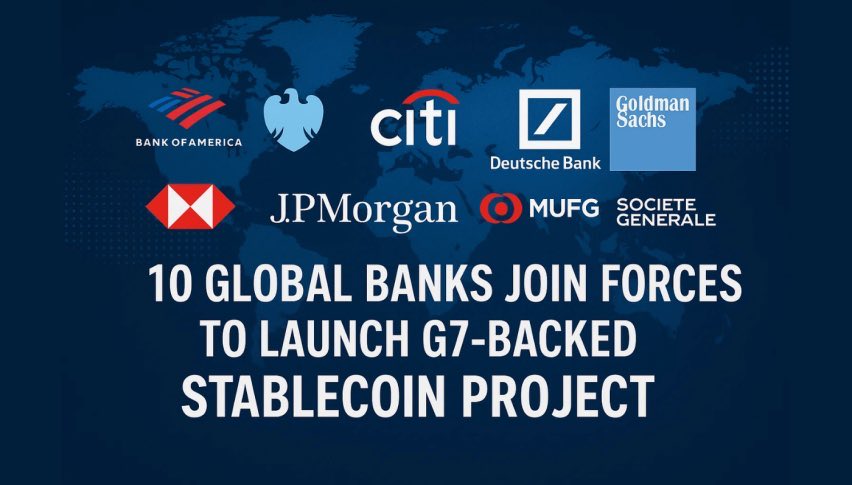
I believe the G7 should consider adding Pi Coin to its list of recognized digital currencies, as it is well-qualified, currently valued at $314,159 per Pi.