1/
Today on #NightThoughtsOfAHomerTranslator, I want to talk about the way in which #Homer utilizes his line.
Now the long, surf-like unspooling of each line of dactylic hexameter--six dactyls (LONG-short-short, sometimes LONG-LONG)--always has a break somewhere in the middle...
Out now! Kelly’s Homer: Iliad Book XXIII | An up-to-date commentary aimed at undergraduates and graduate students, focusing on language, meter, style, and literary interpretation.
Find out more: ☑️ https://t.co/bTXI8bRkVw
#classicstwitter
The Cambridge Companion to Pindar edited by Henry Spelman
The most comprehensive introduction yet published to Pindar, one of antiquity's most important poets.
https://t.co/4clK9ShE6t
#classicstwitter
I watched the extended preview multiple times yesterday @GettyMuseum with @joegoodkin@garethhinds and a bunch of experts on narrative.
I think Nolan's Odyssey is going to be good. Sorry haters
This assumption imagines that alienated heroes/characters reject their political organization by throwing down the scepter in many possible poems and that audiences would be able to understand Achilles and Telemachus in relation to many other scepter-throws
So, not only is this a joke about misunderstanding (somebody, nobody, and Odysseus' wit) it is also a pun that "signs" the trick as such and relates it to Odysseus' essential character
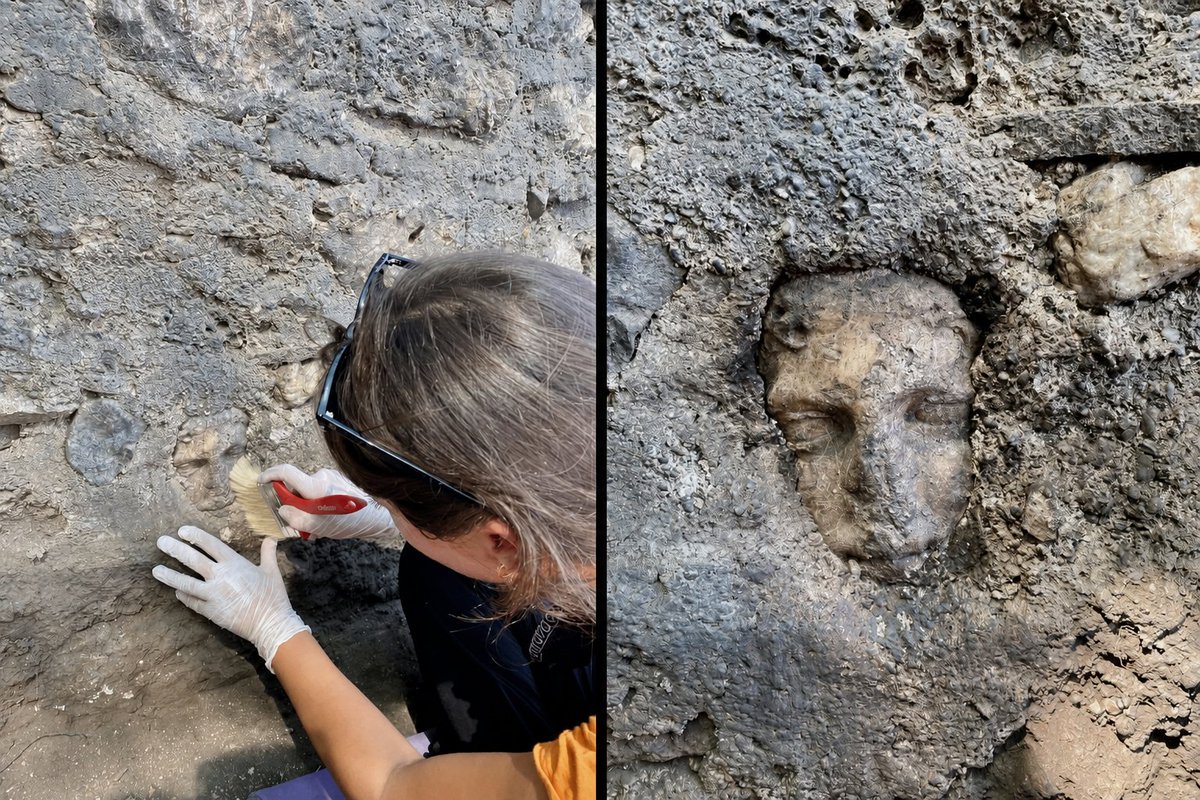
The moment of extraction of a 2nd-century A.D. marble head believed to depict Apollo from the inner wall of Fethiye Castle in Türkiye. This rare find is now on display at Fethiye Museum.
Out now! Woodman’s Sallust: Bellum Catilinae | A thorough modern edition of Sallust’s renowned Bellum Catilinae aimed primarily at students but also useful for professional scholars.
Find out more: ☑️ https://t.co/jAiTB2yKf5
#classicstwitter
Night thoughts on “polytropos,” 1:
The syntax of the Greek suggests that the relative clause (“who greatly wandered…”) that follows this adjective is intended as a gloss on it. Hence the translation of p should be a word(s) that describes his route as well as his personality.
Have you studied classical languages? It takes some explaining if you haven’t. Greeks in antiquity themselves found Thucydides a hard read and Pindar often barely intelligible.
One can more or less create a spoken language based on, say, Xenophon, but that won’t be sufficient for understanding Aeschylus’ lyrics only 50 years earlier.
To ‘know’ Greek is to know a changing language and literature across a thousand years or more and spread across the Aegean, Mediterranean, and Asia.
It’s not the same as learning a standard modern language unless, perhaps, you specify a circumscribed time and place, and the dialect in which it was spoken. And then there are disputable matters of idiom (the subject of philological scholarship) as well as meaning to contend with - even “just reading” a text requires that text to be accurately transmitted.
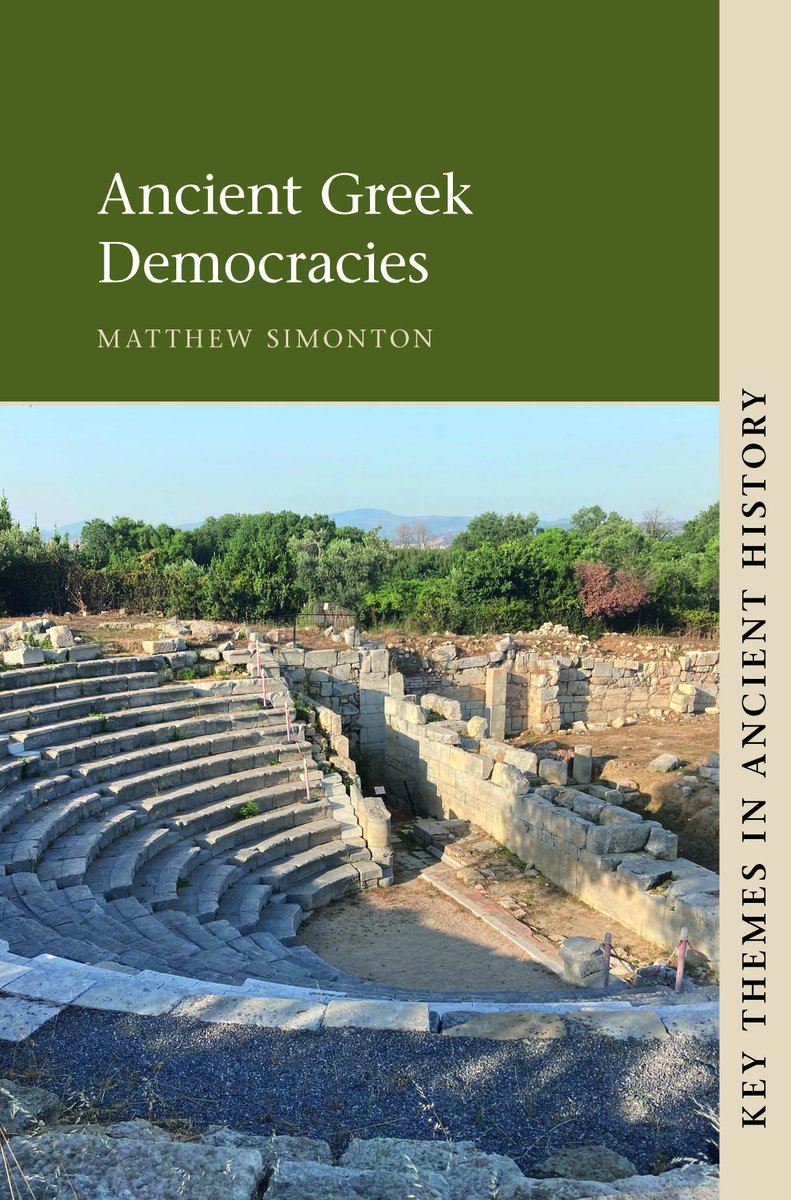
Ancient Greek Democracies by Matthew Simonton
Concise and up-to-date history of ancient Greek democracies – along with their characteristic ideas and institutions – across antiquity.
📘 https://t.co/1ddpOQe3wQ
#ancienthistory
time to get back to the basics. reading and writing and testing in a way that can't be AI hacked. sorry but basic skills are basic skills. then move to the AI assisted workflow.