The quick way to build wealth starts with buying great companies on red days!
1. $ONDS is a $60 stock trading at $7.41
2. $RKLB is a $149 stock trading at $83
3. $ASTS is a $200 stock trading at $74
4. $CIFR is a $100 stock trading at $20
5. $MU is a $1500 stock trading at $948
6. $SNDU is a $140 stock trading at $36
7. $AAOI is a $300 stock trading at $114
8. $IREN is a $80 stock trading at $38
9. $CRDO is a $320 stock trading at $241
10. $TE a $50 stock trading at $7.35
11. $NBIS is a $300 stock trading at $215
12. $AVGO is a $580 stock trading at $380
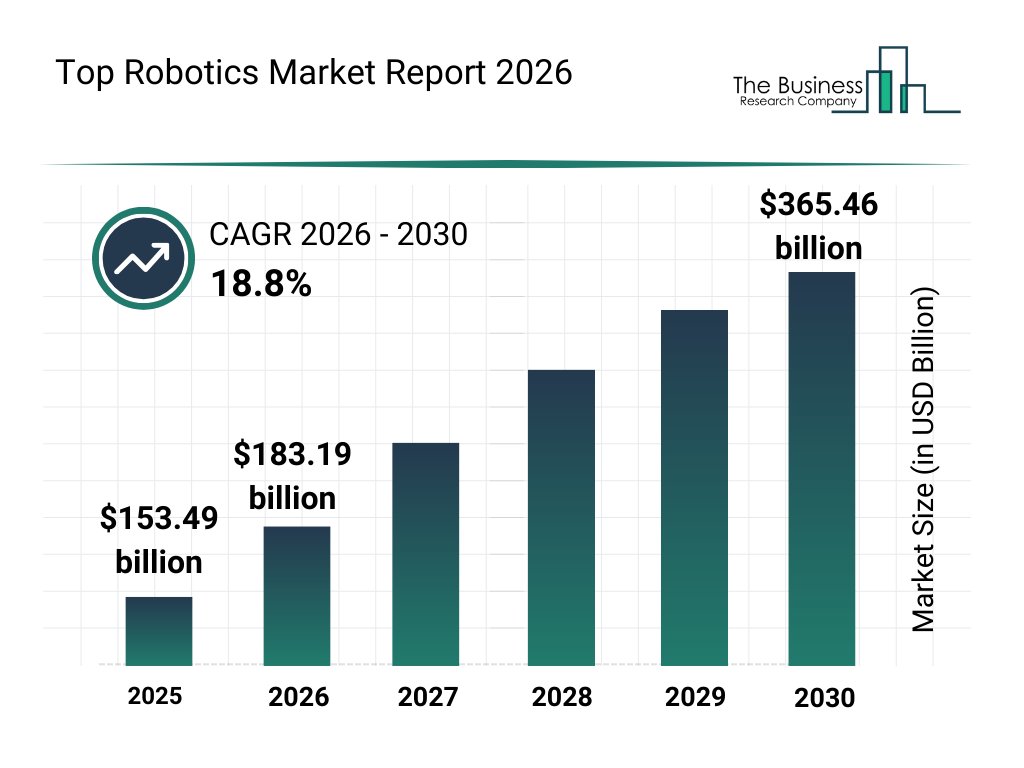
Robotics is the next 10x trade.
Liquidity is pouring into the robotics ecosystem, and I think we're about to see a massive shift from software to physical AI.
Here's how I'm constructing my portfolio for long-term gains in this sector (nfa):
I'm thinking in terms of "layers."
Layer 1: ETFs (lowest risk)
Start here if you don't want to pick winners.
Popular options:
→ $BOTZ: 68 companies across industrial robotics, automation, and AVs. Up ~30% over the past year.
→ $ROBO: 91 companies, most diversified pure-play robotics index on the market
→ $ARKQ: Cathie Wood's autonomy bet, heavy Tesla exposure. Only own it if you share her vision.
Layer 2: Large Cap Equities
Direct exposure to companies already generating real robotics revenue.
→ $TSLA: Musk says 80% of Tesla's future value comes from Optimus.
→ $AMZN: the most underrated robotics play in big tech. 1M+ robots deployed since 2012.
Layer 3: Pick and Shovels
During the gold rush, it wasn't the miners who got rich. It was the people selling the equipment, and the same logic applies here.
The sectors I'm watching: compute, vision, actuation, simulation, semiconductors (and more).
Layer 4: Pure-Play Robotics
Higher concentration, higher upside.
→ $OUST: the lidar play. Every robot that navigates the real world needs eyes. Ouster owns that layer.
→ $SYM: warehouse automation. Every major retailer still runs largely manual distribution centers.
Layer 5: High Risk Betas
This is where the most asymmetric opportunities live, precisely because nobody is looking here yet.
Think things like: robotics X crypto, private equity, and other high risk robotics beta plays.
I'm constructing my portfolio to capture all five of these "layers" through long-term, high-conviction bets.
As always, nfa. Just where my personal thoughts are sitting right now.
I also wrote a deep-dive article (pinned on my profile) that breaks down my entire robotics thesis.
Strategy has sold 3,588 $BTC for $216 million to fund dividends on our Digital Credit securities. As of 7/5/2026, we hodl ₿843,775 in our BTC Reserves and $2.55 billion in our USD Reserves. https://t.co/Cssgz29Psj
Arnold Schwarzenegger dijo algo que incomoda a mucha gente:
No basta con ser bueno.
Tampoco basta con trabajar duro.
Puedes tener más talento que todos los que te rodean.
Puedes crear algo mejor.
Puedes tener mejores ideas.
Pero si nadie sabe que existes, alguien peor que tú terminará llevándose la oportunidad.
La mayoría de las personas no fracasa porque le falte capacidad.
Fracasa porque espera que el mundo la descubra por accidente.
Y el mundo casi nunca funciona así.
if you're selling to broke people, sell them a way out. if you're selling to rich people, sell them safety. if you're selling to young people, sell them potential. if you're selling to old people, sell them the legacy they'll leave behind. if you're selling to employees, sell them freedom from their boss. if you're selling to bosses, sell them freedom from their employees.
Remember the 1984 film, The NeverEnding Story?
Most people think it was just a kids’ fantasy film. It wasn’t. It was actually an allegory, and a warning.
I'll explain...
The protagonist in the movie is a young man by the name of Atreyu who is fighting against a force in the universe called "The Nothing." The Nothing sucks meaning out of everything it touches.
Sound familiar?
The Nothing is the same spiritual war we’re living through right now: the slow decay of joy, creativity, wonder, amusement and critical thought.
Here's the important part...
The Nothing wins when you stop caring.
It only grows when we stop imagining.
It only grows when we lose our hopes.
It only grows when we forget our dreams.
Our joy is resistance.
Our creativity is rebellion.
Your amusement is your armor.
Your critical thinking is your sword.
The Nothing only wins if you let it.
On the same day Sony told a billion gamers to embrace digital forever, it quietly showed them the catch.
Two announcements, one blog, an hour apart.
First: from January 2028, no new PlayStation game will ship on a disc, digital only.
Second, buried below: Sony is closing the online stores for the PlayStation 3 and Vita, so you will no longer be able to buy games there at all.
Read together, they are not two stories. They are the whole argument about what you actually own.
A disc is the last thing in your home a Silicon Valley company cannot reach. A PlayStation game from 1994 still works today, and the law lets you resell it, lend it, keep it forever.
That is ownership. It is protected by something called the first-sale doctrine, and it applies to physical objects. It does not apply to digital purchases. That is not Sony being cruel. That is the quiet legal truth underneath the whole shift.
Sony's own spokesperson said it plainly today. With all digital content, you are not buying the game. You are buying a personal license for non-commercial use. Not the thing. Permission to use the thing, which depends on the company's servers and goodwill. They once pulled a game called Concord two weeks after launch. Buyers got refunds, but the game itself simply vanished.
This was never really about discs versus downloads. It is about moving the largest entertainment medium on Earth from a world where you own an object the law protects, to one where you hold access the law treats as rented.
Convenient, cheaper, and easier for almost everyone. Also revocable in a way a disc never was.
The click of a disc into a console was ownership. The download is permission. Sony just showed you, in a single morning, how differently the two age.
Do you agree with what Sony did??
In 1998, Warren Buffett gave a 1-hour masterclass on how to never lose money investing.
Here are the 22 most valuable lessons from his lecture:
1. You only have to get rich once. If you have $100 million and can make 10% unleveraged or 20% leveraged, the difference between $110 million and $120 million at year-end means nothing to your life, your family, or anything. But the downside, especially with other people's money, is disgrace, humiliation, and facing the friends whose money you lost. The equation never makes sense.
2. To make money they did not need, they risked money they did have and needed. That is just plain foolish, Buffett says, regardless of your IQ. If you hand him a gun with a million chambers and one bullet and offer him any sum to put it to his temple and pull once, he will not do it. There is nothing on the upside that justifies the downside. People do this financially all the time without thinking.
3. The smartest people in finance went broke, and that is the most fascinating story Buffett knows. Long-term Capital Management had 16 people with possibly the highest average IQ of any business in the country, 350 to 400 combined years of experience, and most of their own net worth in the firm. They still went bankrupt. Buffett says if he ever wrote a book, it would be called why smart people do dumb things.
4. Beta and sigmas tell you nothing about the real risk of going broke. The LTCM team relied heavily on mathematics and believed a six- or seven-sigma event could not touch them. They were wrong. History does not tell you the probabilities of future financial events. The real risk is not volatility. It is a permanent, irreversible blind spot in something crucial, often caused by knowing a great deal about something else.
5. Invest only in businesses you can understand. That one rule narrows the field by about 90%, and that is fine. Buffett can understand Coca-Cola. he cannot value an internet company, and he says if a student handed him a valuation of one on a final exam, he would flunk them. People thought Enron was incredible because it had a good track record, but almost nobody understood how it made money. That was the signal to avoid it.
6. You want a business that is a castle with a wide moat around it. Inside the castle, you want an honest, able, hard-working duke. The moat can be low cost, like Geico in auto insurance, or brand, or patents, or location. But a wonderful castle will always be attacked, so the job of every manager Buffett owns is one thing: widen the moat. Throw crocodiles and sharks into it to keep competitors out.
7. Moats change slowly and invisibly, but they change. Thirty years ago, Kodak's moat was as wide as Coca-Cola's. They had share of mind; the little yellow box meant best in everyone's head. Then they let Fuji into the Olympics and narrowed their own moat. Coca-Cola's moat, by contrast, is wider now than 30 years ago. Every time infrastructure gets built in a country that is not yet profitable, the moat widens a little. You cannot see it day by day, but in 10 years, the difference is enormous.
8. Share of mind beats share of market. When you say Disney, every person in the room has something in their head. Say Universal Pictures or 20th Century Fox, and you have nothing. A mother with two kids will pick the $17.95 Disney video over the $16.95 alternative because she knows it will be fine and does not want to preview ten videos to decide. That little bit of certainty in the customer's mind is worth a fortune.
9. The best businesses have pricing power and require little capital. see's candy sold 16 million pounds at $1.95 when Buffett bought it for $25 million. The entire thesis was whether the price could go to $2.25 without hurting sales. It could, because nobody wants to hand their valentine a box of candy and say, "This year I took the low bid." Today, See's makes $60 million on the same formulas and still takes almost no capital. Compare that to GM, which had to reinvest every dollar into better factories and whose stock barely moved over 50 years.
10. The best businesses earn a royalty on other people's capital. Coca-Cola sells a formula and collects a royalty on every drink. American Express takes a few percent of every dollar you spend. You put up the capital, they take a cut. Low capital intensity is one of the most underrated qualities in a business and one of the surest paths to durable wealth.
11. Define your circle of competence and stay inside it. The size of the circle does not matter. Staying inside, it does. If you know which 30 companies out of thousands you actually understand, you are fine. Buffett understood H.H. brown shoes and Frank Rooney, so he closed that deal in five minutes. If you do not know enough to understand a business instantly, you will not understand it in a month either.
12. Ignore the macro entirely. Buffett has never bought or skipped a business because of a feeling about interest rates, the economy, or any macro forecast. If Alan Greenspan and Bob Rubin both whispered exactly what they would do for the next 12 months, it would not change what he pays for anything. You want to focus on what is important and knowable. The macro is important but not knowable, so you ignore it.
13. Inactivity is the strategy, not a flaw. Wall Street makes money on activity. You make money on inactivity. A broker is like a doctor paid by how often he changes your pills. If everyone in a room trades their portfolio with everyone else every day, they all end up broke, and the intermediary keeps the money. Buffett looks for one good idea a year and rides it to its full potential. He measures Berkshire by how little turnover there is, like a church where the same people fill the seats every Sunday.
14. If you understand businesses, diversification is a mistake. For the 99% who will not evaluate businesses, Buffett recommends a low-cost index fund and extreme diversification. But if you bring real intensity to evaluating companies, owning more than six is a terrible idea. Very few people got rich on their seventh best idea. A lot of people got rich on their best one. Buffett keeps about half his money in what he likes best.
15. Buffett's biggest mistakes are mistakes of omission, not commission. The times he understood a business well enough to act and instead sat there sucking his thumb. He passed on healthcare stocks during the Clinton plan and on Fannie Mae in the mid-eighties, each a multi-billion-dollar miss. Accounting never captures these. The $2,000 he put into a Sinclair service station as a young man, money he lost, has an opportunity cost of about $6 billion today.
16. Focus on what will happen, not when. Coca-Cola went public in 1919 at $40 a share and dropped to $19 within a year. There was always a reason not to buy: the great depression, world war, sugar rationing, thermonuclear weapons. But one share bought then and reinvested would be worth about $5 million. If you are right about the business, you will make a lot of money. The timing is the tricky part, so do not focus on it.
17. When hiring, look for integrity, intelligence, and energy. But if the person lacks the first one, you actually want them dumb and lazy. Because a person with intelligence and energy but no integrity will destroy you. Buffett borrowed this from Pete Kiewit. The trait everyone screens for last is the one that matters most.
18. Here is a thought experiment Buffett gives students. Imagine you could own 10% of one classmate for the rest of their life. You would not pick the highest IQ or the best grades. You would pick the person you respond to best, the one who is generous, honest, gives credit to others, and has leadership qualities. Now imagine you also had to short one classmate. You would pick the egotistical, greedy, slightly dishonest one. The qualities that decide both are not talent. They are character.
19. Every quality on the admirable side is achievable, and every quality on the repellent side is removable. The things that make you want to own 10% of someone are not the ability to throw a football or run fast; they are behavior, temperament, and character, all of which anyone can choose. Buffett's point: you already own 100% of yourself, so you might as well become the person worth betting on.
20. The chains of habit are too light to be felt until they are too heavy to be broken. Buffett sees people in their forties and fifties trapped by self-destructive patterns they can no longer change. At a young age, you can choose any habits you want. Ben Franklin and Ben Graham both did exactly this, looking at people they admired and simply deciding to behave like them. There was nothing impossible about it.
21. Take a job you would take if you were already independently wealthy. Buffett told a 28-year-old at Harvard who wanted a consulting job "to look good on his resume" that it was like saving up sex for your old age. There comes a time to just start doing what you love. Buffett offered to work for Ben Graham for free, was told he was overpriced, and kept pestering him for years. Take the job you would jump out of bed for. You cannot miss.
22. You won the ovarian lottery, and that should shape how you think. Buffett imagines a genie 24 hours before your birth letting you design the world's rules, with one catch: you do not know which of 5.8 billion balls you will draw. Born here or in Afghanistan, with an IQ of 130 or 70, male or female, able-bodied or not. If you could put your ball back and draw one of 100 random others, most people would not, because they are already in the luckiest 1%. Buffett knows he is perfectly wired for a market economy that pays him like crazy, while an equally good citizen leading scout troops and teaching Sunday school is not, purely by luck.
If you're paying attention, Leopold Aschenbrenner is telling you exactly what to invest in. Power and compute are the bottleneck for AI.
10 stocks positioned for the AI buildout that he owns:
1. $TE - T1 Energy
Solar manufacturer operating a 5 GW module plant in Dallas with a second solar cell factory in Austin targeting late 2026 production. Produced 2.79 GW in 2025. Norway's Statnett assigned 50 MW of grid power to its Mo i Rana facility, positioning it as a potential AI data center hub powered by hydroelectric.
#URGENTE En este video se puede ver a una persona que baja las escaleras y el nivel de destrucción en la parte interna aumenta hasta llegar a planta baja.
New mass surveillance technology is being deployed in America, it will track Americans via Bluetooth connection from their devices
If “you thought Flock was bad, something even more terrifying is being installed all over America. It's made by a defense contractor called Leonardo, and here's what it does”
So the biggest problem with these LPRs, license plate readers like Flock, is that it needs to use a license plate to identify you
This company has found a way around that
They've made a device that can be installed next to any existing license plate reader that once it's installed, that next time they pull your license plate, it will pull all the unique Bluetooth identifiers from all the smart devices in your car.
But it doesn’t stop there, it gets worse
Once they have those devices, they link them to you via your license plate, and now they never need to scan your license plate again.
These new sensors can be installed anywhere, and they can even see who's traveling with you
It’s made by Leonardo DRS, they are a defense and technology company that works with U.S. military, law enforcement and intelligence agencies
These devices are reportedly being deployed or tested in various US cities alongside existing LPR networks
It’s called SignalTrace and it can be easily added onto any existing camera of their or Flock
It’s described as “An advanced intelligence system that upgrades standard license plate readers to track people by their smart devices they carry, rather than just by their vehicles
This is insane and should be federally banned. This is the surveillance state
A woman hiking in Canada nearly became a grizzly’s next meal and the video circulating right now is genuinely one of the most intense wildlife encounters you will ever watch - her dog is with her, a massive grizzly is right there, and somehow she kept her head together long enough for both of them to walk away breathing.
That is not a small thing. Most people talk tough until nature is standing ten feet in front of them and every instinct in your body is screaming to run, and running is exactly the worst thing you can do.
Grizzlies are built to chase, they top out over 700 pounds and can cover ground faster than any human alive. The people who survive these moments are the ones who override pure fear with pure discipline and this woman did exactly that.
If you hike, camp, or spend any real time in the wilderness - bear spray is not optional, it is the difference between a story you tell and one somebody else tells about you.
Could you have kept your cool?
Hats off to her.
🚨 “WOW!” Joe Rogan Was Absolutely Mind-Blown By This iPhone/iPad Addiction Hack 🔥
His guest, Chase Hughes, dropped the ultimate parental (and personal) life hack:
“I did it on my 2-year-old’s iPad… and nothing is addictive anymore. She won’t sit there and stare at it for more than 3 or 4 minutes anymore.”
Joe’s reaction? A shocked “Whoaa!”
The trick? A simple red color tint filter in your device’s Accessibility settings. It strips away the bright, colorful, dopamine-spiking visuals that keep us (and kids) glued to screens, while also cutting blue light for better sleep.
One quick change. Massive difference in screen time and focus.
Try it yourself:
1Settings → Accessibility → Display & Text Size → Color Filters
2Turn on Color Filters → Color Tint
3Slide Hue all the way to red + max Intensity
Works on iPhone and iPad. You can even set a triple-click shortcut to toggle it instantly.
“I’m not gonna lie to you, being black right now is completely embarrassing. You n*ggas are some of the most vile, inhumane species that have ever graced the earth.”
Stop what you’re doing and watch this 🔥👇🏼
Americans are waking up!!
🚨‼️ YOUR “HEALTHY” STORE SALAD IS LITERALLY BEING BATHED IN TOILET BOWL CHEMICALS! 🚨
They told you to “eat your greens.”
But what they DIDN’T tell you? Big Food is dousing your pre-washed supermarket salad with the EXACT same industrial chemicals used to scrub the inside of your toilet.
That’s right. Those shiny bags of “fresh” spinach, lettuce, and mixed greens? They’re getting hit with chlorine washes and sanitizers so toxic they’d strip the grime off a public restroom floor. And this isn’t some accident. It’s standard operating procedure across the industry.
While you’re paying premium prices for “organic” and “washed” labels, the same corporations that poison our skies, our water, and our medicine are turning your salad into a chemical cocktail designed for maximum shelf life and minimum cost.
Why?
Because real food grown in healthy soil doesn’t last months in plastic. Real food doesn’t need to be blasted with toilet-grade disinfectants to kill the bacteria THEY created through factory farming. This is profit over people on steroids.
Every aisle in your grocery store is a battlefield:
•Bread pumped full of softeners and preservatives
•Meat from animals fed GMO slop and antibiotics
•“Fresh” produce sprayed with pesticides banned in other countries
They’ve corrupted the entire food chain. The same elites pushing “climate agendas” and “you’ll own nothing” don’t want you growing your own garden or buying from local farmers. They want you dependent, sick, and coming back for more “medicine” when their frankenfood inevitably makes you ill.
Your body is under attack disguised as convenience.
Stop feeding the beast. Grow what you can. Buy local. Read the labels like your life depends on it. Because it does.
The truth is poison to their profits.
#ToxicSalad #FoodCorruption #BigFoodExposed
This recent market wide pullback has created many generational dip buying opportunities.
These are the best 8 names to buy now:
1. $IREN at $59
2. $NOW at $102
3. $ASTS at $82
4. $RKLB at $104
5. $NVDA at $205
6. $CIFR at $24
7. $NBIS at $230
8. $PLTR at $127
Don’t miss out on these setups before they’re long gone…
Google has a recording of every search you've ever made.
Every place you've ever been. Every YouTube video you've ever watched.
Go to https://t.co/CiUmLZIHCG right now.
You'll find searches from 2015. Voice recordings. GPS coordinates.
All stored. All linked to your name.
Here's how to see it and delete it: