The acetate is AC-1 from the Dart Flipcards retail set. It’s a clear animation cel insert, about 1 in 15 packs, released with the main 72-card set. Some listings call it a rookie, but it came out with the retail product, not ahead of it.
Dart’s planned ship date was May 16, 2001. The movie opened May 18, 2001.
The earliest cards are the promos. P-1 is the main one …the back says “Coming May 2001,” so it was advertising the set before release. P-2 is the other numbered promo from that campaign.
There’s also an unnumbered Toronto Sportscard Expo promo from May 4–6, 2001, before the set shipped. The SDCC promo came later, at Comic-Con July 19–22, 2001.
Imagine pulling THIS from a Carddass vending machine in 1996. ⚡️
Pikachu → Raichu → Gorochu
Raichu was originally supposed to evolve one more time before Gorochu was cut during development.
So imagine an alternate 1996 where it actually survived…
No.157 — GOROCHU.
One of the coolest “what ifs” in Pokémon history. 👀⚡️
Most people know Pikachu Illustrator is rare.
The part people miss is that it wasn’t really created as a normal “promo card.”
It was basically a credential.
Across 3 CoroCoro illustration contests in 1997 and 1998, selected winners received an Illustrator card recognizing them as an officially authorized Pokémon Card illustrator.
The top winners got something even crazier: 20 copies of a real Pokémon card featuring their own winning artwork.
Only 39 Illustrator cards were officially awarded.
Then years later, 2 additional undistributed copies surfaced from Yuichi Konno, one of the people involved in creating the original Pokémon TCG rules, bringing the known total to at least 41.
The card itself is completely unique:
“ILLUSTRATOR” instead of “TRAINER”
A one of a kind pen symbol
Double star rarity
Artwork by Atsuko Nishida, the original designer of Pikachu
And the text basically certifies the owner as an official Pokémon Card illustrator.
So this isn’t just a rare Pikachu.
It’s a contest trophy, an artist credential, and a surviving artifact from the earliest years of the Pokémon TCG all on one card.
The PSA 10 sold for $16.492M earlier this year.
Now this CGC 9 is sold at $2.8M+.
That context makes the price make a lot more sense. 👑⚡️
Most people know Pikachu Illustrator is rare.
The part people miss is that it wasn’t really created as a normal “promo card.”
It was basically a credential.
Across 3 CoroCoro illustration contests in 1997 and 1998, selected winners received an Illustrator card recognizing them as an officially authorized Pokémon Card illustrator.
The top winners got something even crazier: 20 copies of a real Pokémon card featuring their own winning artwork.
Only 39 Illustrator cards were officially awarded.
Then years later, 2 additional undistributed copies surfaced from Yuichi Konno, one of the people involved in creating the original Pokémon TCG rules, bringing the known total to at least 41.
The card itself is completely unique:
“ILLUSTRATOR” instead of “TRAINER”
A one of a kind pen symbol
Double star rarity
Artwork by Atsuko Nishida, the original designer of Pikachu
And the text basically certifies the owner as an official Pokémon Card illustrator.
So this isn’t just a rare Pikachu.
It’s a contest trophy, an artist credential, and a surviving artifact from the earliest years of the Pokémon TCG all on one card.
The PSA 10 sold for $16.492M earlier this year.
Now this CGC 9 is already at $2.8M+.
That context makes the price make a lot more sense. 👑⚡️
1999 Base Set 1st Edition Red Cheeks Pikachu is officially in Authentication & Grading. ⚡️
Current PSA population:
PSA 10: 260
PSA 9: 1,193
PSA 8: 820
PSA 7: 508
PSA 6: 435
PSA 9 is by far the most common high grade, while only 260 copies have reached Gem Mint 10.
Now it’s officially in the graders hands.
The next update is the one that matters. 👀⚡️
#PokemonTCG #Pikachu #PSA
This is why early SpongeBob cards are getting interesting. 👀
A complete 2001 Nabisco Kool Stuf SpongeBob promo set just sold for $2,125.
Five cards:
Squidward
Sandy
SpongeBob
Patrick
Mr. Krabs
These weren’t a traditional trading-card set. They were an early food-promo issue, distributed through Nabisco Kool Stuf products.
Then in 2003, Upper Deck took SpongeBob into a completely different category.
They launched the first full dedicated SpongeBob Trading Card Game, with the Deep Sea Duel starter product and the 101-card Aquatic Amigos booster set.
Real booster packs.
9 cards per pack.
Commons, Rares, Super Rares and Ultra Rares.
A full checklist built to collect and play.
That’s why I think the early SpongeBob timeline is starting to matter:
2001 Nabisco promos
↓
2003 Upper Deck Aquatic Amigos
↓
modern SpongeBob cards
And sitting right in that 2003 Upper Deck era is the strange clear-cello configuration I’ve been researching.
~14 cards.
No normal retail wrapper.
Apparent missing 1st Edition marking.
Apparent missing Upper Deck hologram.
Another similar example documented by a separate collector.
Upper Deck no longer has the records to identify it, and PSA couldn’t authenticate this specific example because of the cello tear.
The more valuable early SpongeBob cardboard gets, the more important figuring out exactly what these 2003 pieces are becomes.
We’re still building the timeline. 🧽👀
#SpongeBob #TradingCards
The slab says 1995.
PSA now says 1997.
And one tiny black line can turn a “grail” into a major red flag. 👀
This is the Topsun Blue Back NO NUMBER Charizard , one of early Pokémon’s strangest authentication rabbit holes.
Here’s the history most collectors miss. 🧵👇
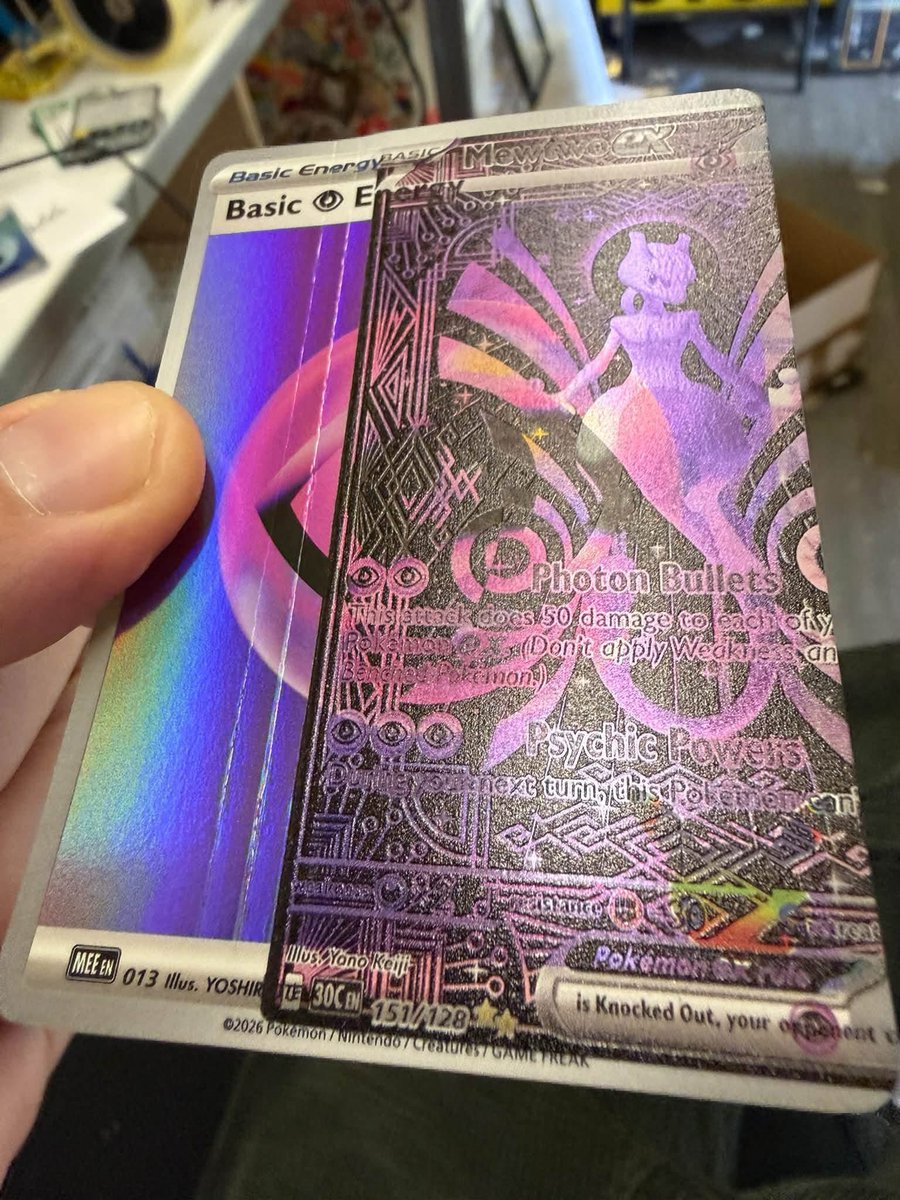
Two packs. 12 foil cards. 2 guaranteed Pikachu rares… and roughly a 1-in-1,600 shot at an RGB Mew. 👀
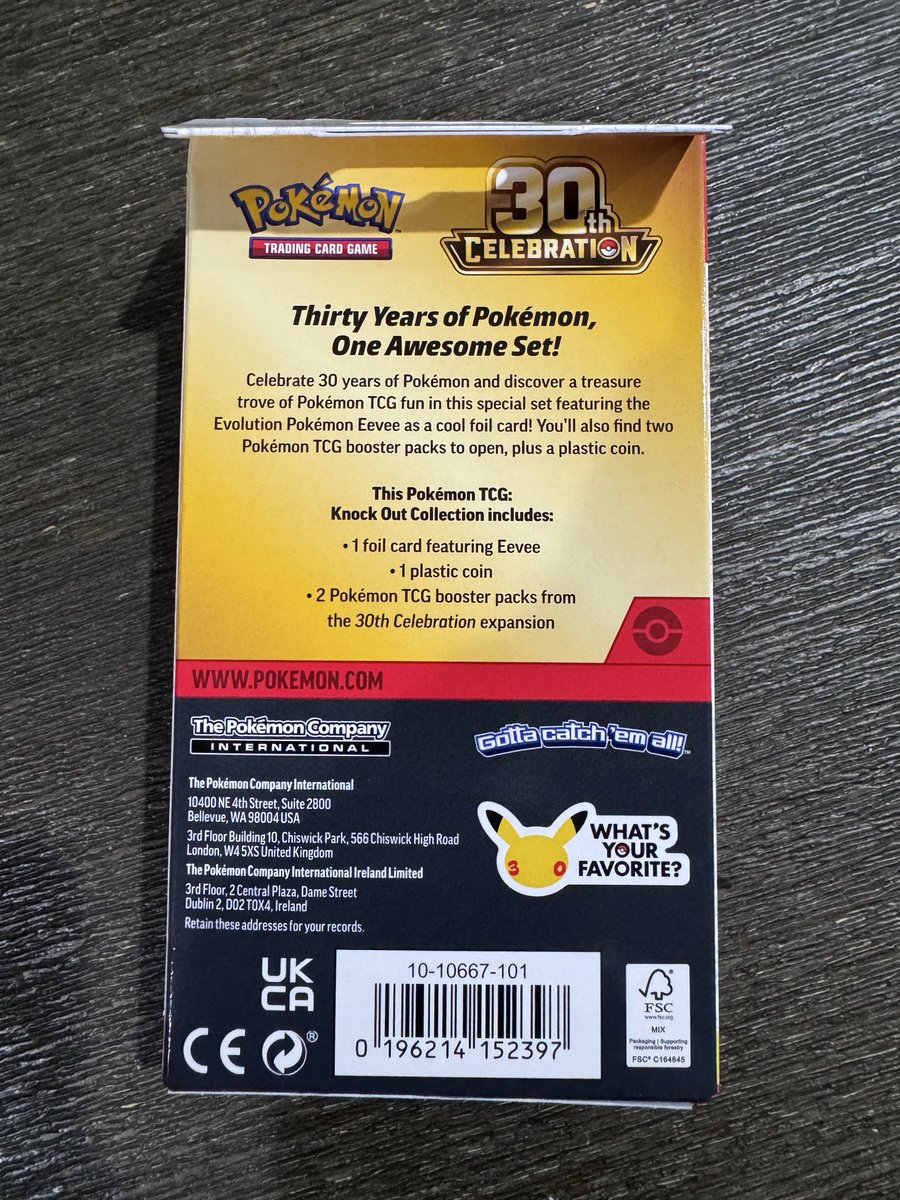
This little Eevee Knock Out Collection is way more interesting than it looks.
Each 30th Celebration pack contains 5 foil cards + 1 foil Basic Energy, with 1 of 30 different Pikachu rares guaranteed in every pack.
Then you get this special Holofoil Eevee #116/128 with the 30th-anniversary Pikachu mark on top of it.
I ran the numbers on what TWO packs can actually hit…
It gets ridiculous fast. ↓
Imagine pulling the Blue RGB Mew… with a perfectly straight red ink bleed across the entire top. 👀
That would basically create a factory-made hybrid of the blue and red variants in one card.
A clean horizontal overprint like that would be one of the wildest accidental Mew errors I’ve seen concepted yet.
If a real one ever surfaces, it could become an absolute monster.
Would you rather have the normal Blue RGB Mew or the red bleed error version?
#Pokemon #PokemonTCG #Mew #PokemonCards #CardErrors #TradingCards
Imagine pulling the Blue RGB Mew… with a perfectly straight red ink bleed across the entire top. 👀
That would basically create a factory-made hybrid of the blue and red variants in one card.
A clean horizontal overprint like that would be one of the wildest accidental Mew errors I’ve seen concepted yet.
If a real one ever surfaces, it could become an absolute monster.
Would you rather have the normal Blue RGB Mew or the red bleed error version?
#Pokemon #PokemonTCG #Mew #PokemonCards #CardErrors #TradingCards
Imagine pulling the Blue RGB Mew… with a perfectly straight red ink bleed across the entire top. 👀
That would basically create a factory-made hybrid of the blue and red variants in one card.
A clean horizontal overprint like that would be one of the wildest accidental Mew errors I’ve seen concepted yet.
If a real one ever surfaces, it could become an absolute monster.
Would you rather have the normal Blue RGB Mew or the red bleed error version?
#Pokemon #PokemonTCG #Mew #PokemonCards #CardErrors #TradingCards
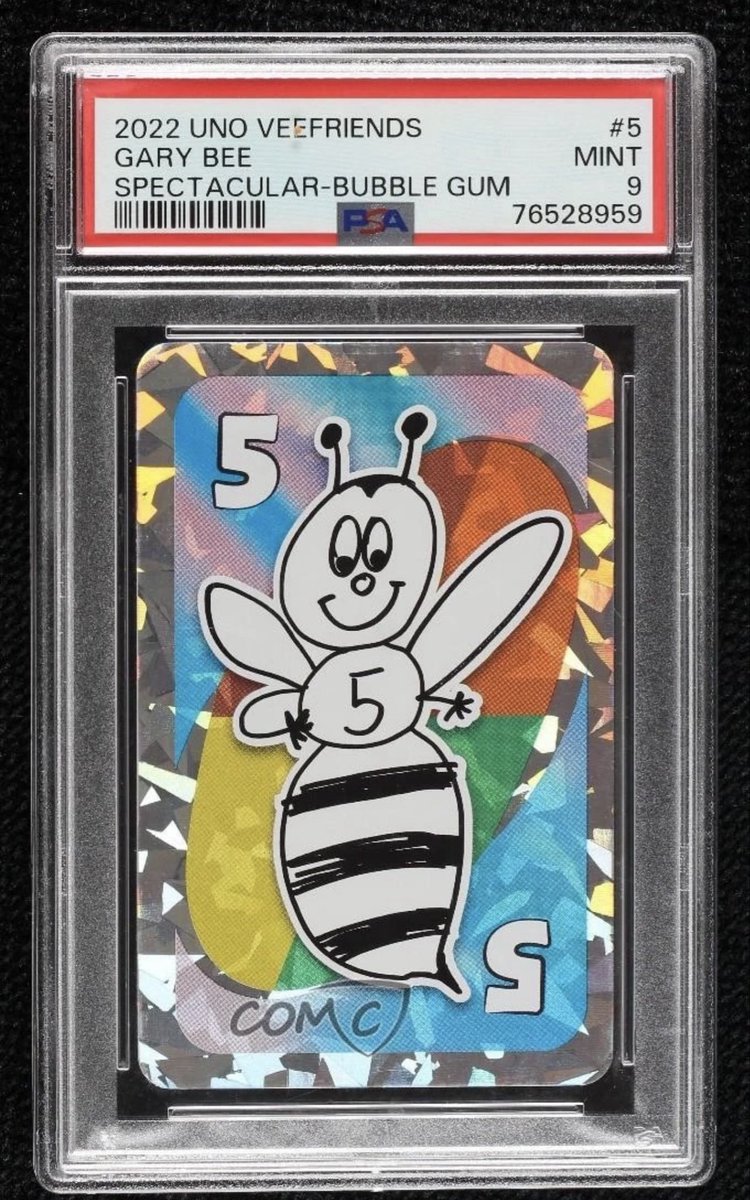
I think this might be one of the strangest early VeeFriends card mysteries out there. 🐝
VeeFriends x UNO was announced in December 2021 and delivered in early Q2 2022, which is why PSA catalogs the cards as 2022 UNO VeeFriends.
Each deck contained 1 random Spectacular foil, with 17 total Spectacular cards across:
Holo • Diamond • Bubble Gum • Lava • Gold
And VeeFriends’ own original release page specifically said:
“Keep a lookout for the rarest spectacular Holo Gary Bee!”
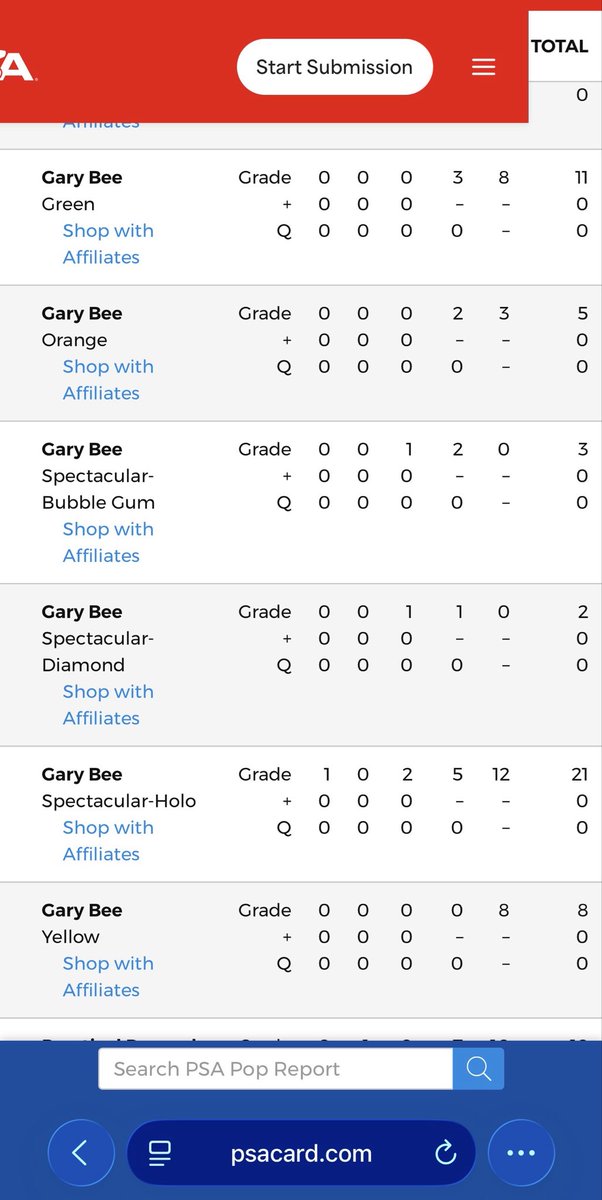
Now look at PSA’s population report:
Gary Bee Spectacular-Holo — POP 21
Gary Bee Spectacular-Bubble Gum — POP 3
Gary Bee Spectacular-Diamond — POP 2
This PSA 9 is labeled Spectacular-Bubble Gum.
But when you compare it to a PSA labeled Spectacular-Holo, they look extremely similar.
So what is actually going on here?
Is this a legitimately different Bubble Gum Gary Bee that was never clearly documented in the original release?
Is there a foil difference that’s difficult to see in scans?
Or did PSA miscategorize a handful of Gary Bee cards and split them across separate population entries?
I’m not saying only 3 Bubble Gum copies exist. I’m saying PSA currently has 3 graded under that exact designation, while the original VeeFriends material specifically identifies Gary Bee as Holo.
That’s what makes this interesting.
One of the earliest VeeFriends physical card releases.
Mattel x UNO.
The top Gary Bee chase.
And a PSA cataloging question that still doesn’t seem fully explained.
Anyone who opened these when they released, worked on the product, or knows the foil diagnostics — what am I missing?
@VeeFriendsCards@veefriends@PSAcard 👀
#VeeFriends
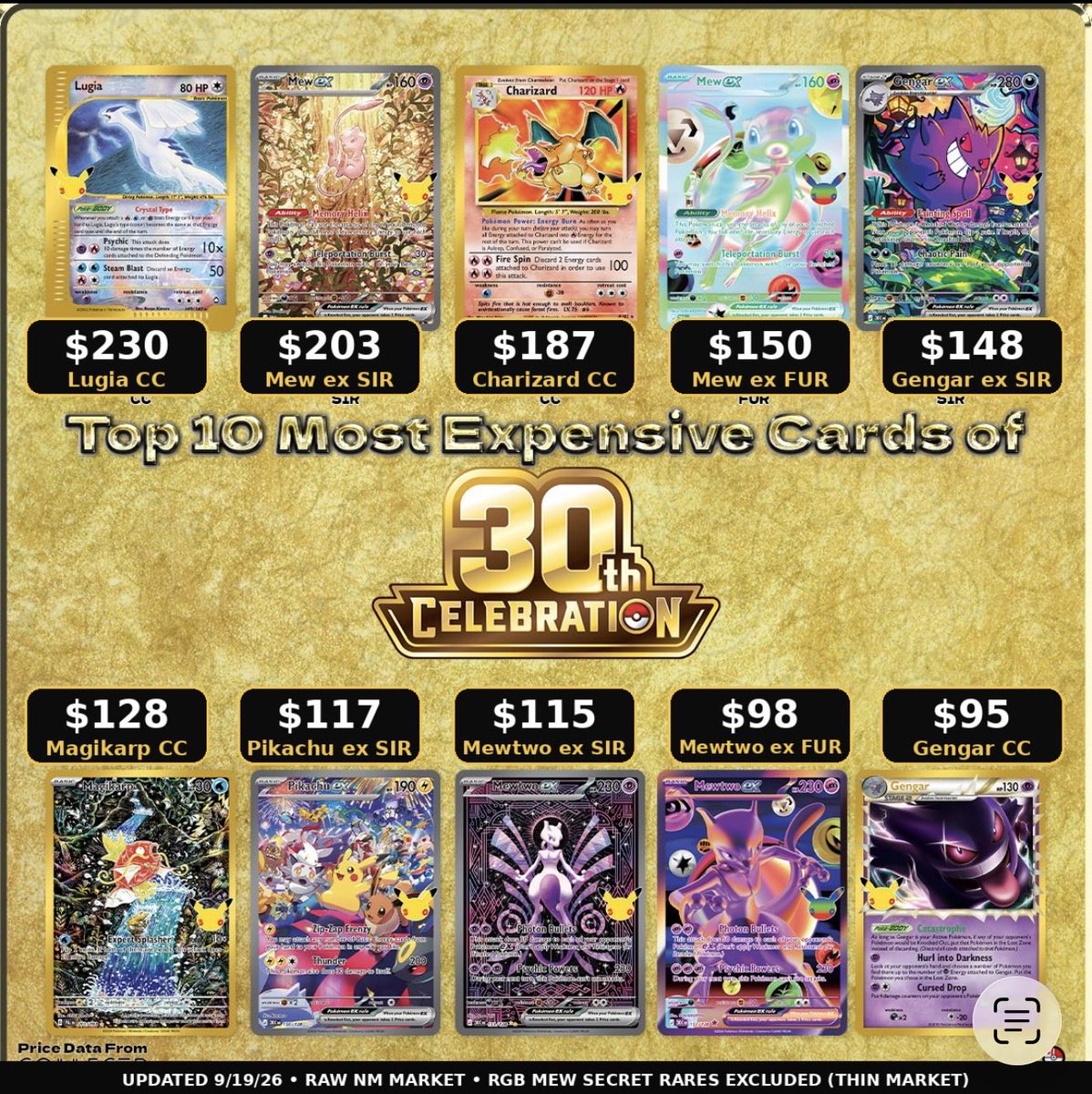
I left the secret RGB Mew cards off this ranking because the market is still way too thin to give them a meaningful raw market price.
At least one RGB Mew reportedly sold for $20,000 on launch day. 👀
Those could end up being a completely different category from the normal set chases.
30th Celebration has been out for 3 days and the market is already moving FAST. 👀
Current raw NM top 10:
Crystal Lugia CC — $230
Mew ex SIR — $203
Charizard CC — $187
Mew ex FUR — $150
Gengar ex SIR — $148
Magikarp CC — $128
Pikachu ex SIR — $117
Mewtwo ex SIR — $115
Mewtwo ex FUR — $98
Gengar Prime CC — $95
Crystal Lugia is still holding the top spot, but this market is nowhere close to settled yet.
The most interesting part might be watching which cards separate themselves once the initial supply flood settles.
What card from 30th Celebration are you buying while prices are still finding their floor?
#PokemonTCG #Pokemon30