@KhalidKson@SaruniBM @khalikson Saruni is in Binance not Bybit. Plus, employees can't respond to such concerns on social media. There is a Customer Service team on the site where u can raise a support ticket.
A U.S. judge has dismissed a lawsuit trying to hold @Binance and @cz_binance liable for crypto transactions allegedly tied to terrorist attacks worldwide. The ruling is a big win for #Binance
Still much more affordable than another one I used to have that would throttle speeds from 15th to 30th. Now, we don't even check the month date, or have to buy mobile bundles in the house. @Starlink for the win.
Serious riders know this: if the bike doesn’t move, life doesn’t move.
So they don’t rely on luck. They rely on routine. Brakes checked. Helmet secured. Mirrors set.
Because on busy roads, safety isn’t chaos control. It’s discipline practiced before danger appears.
#SafetywithBinanceKE
Do you have a @binance account yet?
There is actually a campaign where, once you sign up and trade at least $10 on spot, you can get a $3 voucher on the platform (New Users)
Use this link to sign up: https://t.co/hEHRpcBWAd
https://t.co/q6dJfDIdGh
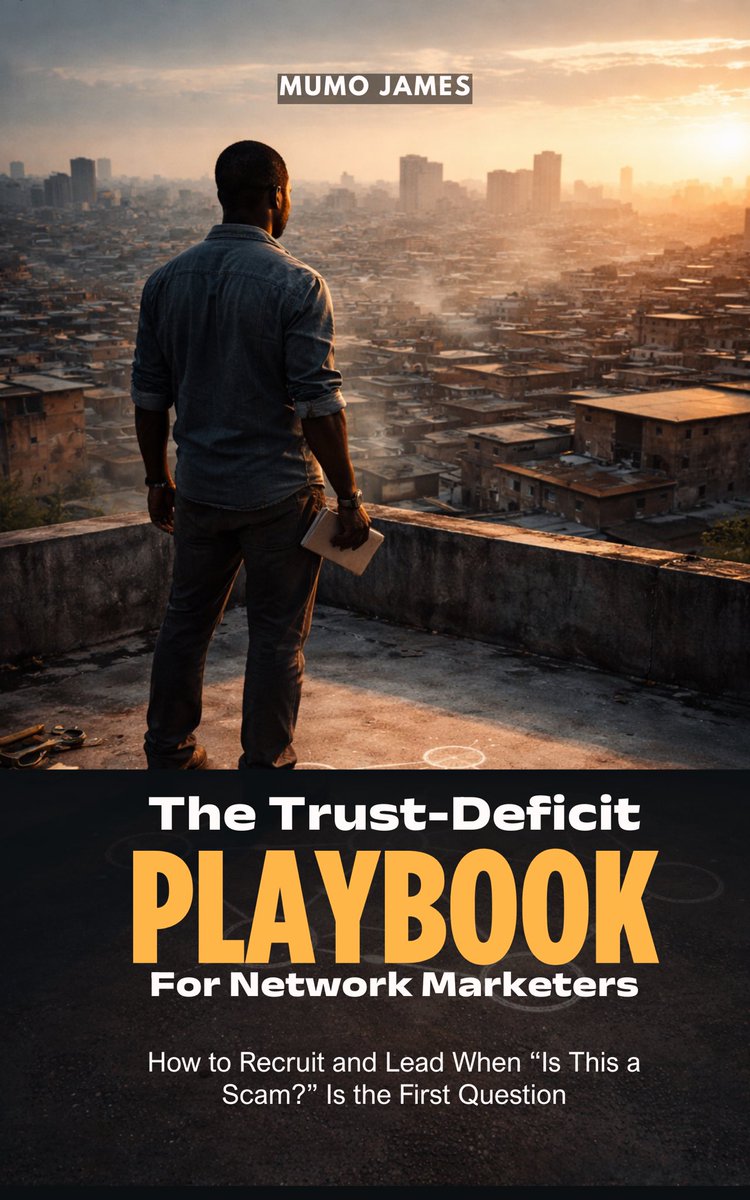
Good morning my people. I've been working on a book specifically as a manual for the network marketing professionals and a guide for those who are yet to get into the space and the e-book is now available.
Organisation: We are looking for the most qualified person for this position. We are hiring remote.
Me: Here is my resume.
Organisation: Amazing, we will schedule an interview.
(Interview done)
Organisation: We love everything you are doing, and we think you would be a great fit. Where are you based?
Me: I am based in Kenya.
(Silence)
Organisation: Unfortunately, we need someone in USA timezones.
Me: I can work at night.
Organization: We really need someone based on US.
🤯🤯🤯
The night shift in Nairobi has its own grammar.
After midnight, the city stops pretending. The roads empty. Streetlights flicker like tired eyes. The air grows honest.
I drive Uber from dusk to dawn. That is when you meet the real Nairobi. Men who smell of chang’aa and regret. Lovers whispering arguments they think the night will swallow. Nurses from Kenyatta Hospital with shoulders bent by other people’s pain. Everyone is going somewhere, but no one is really going home.
That night, the clock on my dashboard read 2:07 a.m.
The request came from a hospital. Not the private kind with soft music and glass walls. A real one. Fluorescent lights. Plastic chairs. The smell of disinfectant and waiting.
He climbed into the back seat without greeting me. A thin man, wrapped in a jacket that had seen better seasons. His eyes were fixed on the window, as if Nairobi itself had offended him.
We drove past Ngong Road in silence. Ten minutes. Maybe more. The city hummed faintly, like an old generator refusing to sleep.
Then I heard it.
A soft sound. Not loud enough to announce itself. A sniffle, followed by the stubborn breathing of a man trying not to fall apart.
I checked the mirror.
Tears were running freely down his face. Not the dramatic kind. The quiet ones. The kind that have given up asking for permission.
“Ni usiku mbaya?” I asked, keeping my voice low. A bad night?
He tried to speak. Failed. Swallowed. Then the words came out broken.
“Mke wangu,” he said. My wife.
“Cancer.”
He stopped.
“She is gone.”
The road ahead blurred for a moment. I felt it in my chest, like someone had pressed a thumb into my heart and held it there.
I reached down and switched off the meter.
“I’m not taking you home yet,” I said.
He leaned forward, confused. “Unamaanisha nini?” What do you mean?
“You can’t walk into an empty house at this hour,” I told him. “Not when the walls are still awake.”
I turned off the main road and drove toward a 24-hour café near Westlands. One of those places that survives on night guards, taxi drivers, and people who don’t want to face morning alone.
“Twende tukunywe kahawa,” I said. Let’s have some coffee. “Ni yangu.”
He hesitated. Pride wrestling with grief. Then he nodded.
We sat in a corner booth under a buzzing bulb. The waitress didn’t ask questions. She never does at that hour.
For three hours, he talked.
About how they met in Gikomba when he was selling shoes and she was buying tomatoes. About her laugh, loud and careless, the kind that embarrassed him in public. About how she hated kunde and would push them to the side of the plate like an insult.
I didn’t interrupt. In Kenya, we talk too much when we should listen. That night, I listened.
Outside, Nairobi slowly stretched. Matatus began to clear their throats. The sky softened from black to grey.
At 6 a.m., I drove him home.
The sun was rising behind the flats, lighting laundry lines and satellite dishes, reminding the city that life insists on continuing.
He stepped out, held my hand longer than necessary.
“Asante,” he said. Thank you. “Kwa kunizuia nisikae peke yangu gizani.” For stopping me from being alone in the dark.
I watched him walk inside.
I made no money that night. The app probably wondered what kind of driver I was.
But some journeys are not paid in shillings.
Some are paid in being human.
- Anonymous
What a way to start the morning. I started by bargaining my first month subscription with @Kimi_Moonshot to $4.99
Can you get to $0.99? Try and see.
https://t.co/Cg8vUpHJZN
@cz_binance speaking at #WEF People confuse speed with danger. In most systems, speed doesn’t create new risk, it reveals old ones sooner.
Slowing things down rarely fixes weaknesses; it mostly hides them and locks users out of their own money.
I’d frame it more narrowly: people notice attention, but they commit to value.
Interest opens the door.
Consistency, self-respect, and scarcity decide whether someone walks through or just enjoys the momentary validation and moves on.
Hot take: this isn’t only a government problem. Bad policy hurts, yes but the bigger issue is a system that keeps selling degrees without demand, guidance, or real pipelines.
A new government helps only if it fixes incentives, not just changes faces. Otherwise, six months quietly turns into two years.