Crazy about cuff links& pocket squares, foodie,love jazz,as much as ethno-techno,current affairs addict,author-Yes I'm Opinionated!Oh yeah,I’m a Senior Advocate
Thanks for the consistency @IndiGo6E - you’re late once again & have sure made delays core to your motto of “Indigo Standard Time” IST. You just have the sectors or else it’s become a nightmare to fly with you.
@IndiGo6E That’s not true or your announcements at airport and staff intimation was wrong - the congestion was later first, your onward flight came late - that’s not a passengers fault but yours alone!
You have mastered the art of “indigo flying time” of perpetually being late @IndiGo6E & what’s amazing is you blame it on factors outside your control. Why/how is a delayed arrival outside your control for the next departure! What a great fall from being the market leader!
Cardiologists hate this food of kings, yet it's a globally popular snack
Upmarket grocers like Whole Foods have created its new fans
This week's word of Indian origin commonly used in English + loved by millions is Samosa
What are its origins? What variations exist? Read on👇
The English word samosa comes from the Hindi/Hindustani word samosa. It is a deep fried pastry with a savoury filling, mostly vegetables, spiced potatoes, onions, and peas. Some versions can also have fish or minced meat. While the most well known shape is triangular, depending upon the region it can also be in the shape of a cone or crescent. While one can have them by themselves, samosas are often accompanied by chutney or some zesty sauce.
The Indian subcontinent version of the samosa is believed to be derived from the Middle East and Central Asia where in medieval times a baked pastry stuffed with nuts, dried fruits and minced meat was popular. The Persian historian Abul-Fazl Beyhaqi first mentioned the samosa in the 11th century, describing it as a dainty delicacy, served as a snack in the great courts of the Ghaznavid empire.
Overtime, as the armies of the Central Asian tribes and accompanying migrants crossed the Hindu Kush mountain ranges and into the fertile plains of North India, the samosa travelled with them. This high-calorie snack packed with energy made for a good travelling snack.
The samosa underwent a transformation in India. It was adapted to local tastes and ingredients on its way to becoming the world's first fast food. Rich in spices, India added its own flavours and condiments such as coriander, pepper, caraway seeds, ginger among others. The meat fillings gave way to potatoes. 16th century Portuguese traders brought across green chillies from the New World and these were also added to the potato and spice rich fillings.
While the concept is the same, different parts of India have their own regional samosa variations with differences in size, thickness of the pastry, fillings that range from paneer (cottage cheese) to vegetables, and a preference for eating with chutney or just as is. The samosa has also seen an evolution as it has since been "exported" to the West. While the modern world has started consuming baked versions of this snack, sold in semi-frozen packets at upmarket grocers like Whole Foods and Trader Joe's, the real deal is the pyramid shaped deep fried refined flour version stuffed with potatoes and spices. No wonder cardiologists 🫀 don't include this in their list of healthy foods!
So do you like your samosa baked or fried, stuffed with potatoes or meat, with or without chutney?
If you liked this post, you might also enjoy other words of Indian origin that are commonly used in English. You can find them on my timeline.
And if you fancy a curry, I've written about its origins too. Find it on my timeline. Thanks for reading.
How did a fabric worn by fishermen in India become a symbol of luxury and preppy fashion in America?
"Madras" checks is this week's word (and fabric) of Indian origin commonly used in English.
Does it have Scottish roots? Why does it bleed? How did it become popular? Read on👇
Madras plaid is lightweight cotton fabric with distinct checks with a minimum of a two-colour irregular pattern. It originated in the coastal city of Madras, now called Chennai, in South India.
Madras and India's southeastern region has a very hot and humid climate almost all year round. For centuries, local fishermen and farmers in this part of India wore a sarong-like garment made of cotton muslin fabric hand-woven in colourful checks that was suited to this climate.
Some claim that the fabric was inspired by Scottish tartans. However, it differs in several important ways - Madras features neither the black lines nor the two-by-two weave of tartan, and is made of cotton, not wool. Records show that even before the European presence in the region in the 1400s this brightly-coloured fabric was traded as far as Northern Africa and the Middle East. But it was the evolution of Madras into a port city under British influence and the British East India Company's trading ambitions that led to textiles from Madras being traded throughout the western world.
The handloom woven cloth and vegetable dyes make this cloth and pattern very unique. The natural dyes were made from laterites, indigo blue, turmeric and local sesame seed oil, all of which gave the cloth a distinctive scent. The dyes run colour which gave one of the biggest US clothing brands an unexpected corporate and public relations scandal.
Brooks Brothers started using these fabrics In the 1960s for all kinds of garments. But the hand dyed fabric wasn't designed to be cleaned using strong laundry detergents in high-powered washing machines. Customers found out the hard way that the fabric's colours would bleed into its own checks and also into other clothes washed along with them.
British advertising guru David Ogilvy was brought in to salvage the situation. He came up with the tagline "Guaranteed to bleed", turning the fabric's flaw into a selling point. Advertorials and a publicity drive promoted this miracle hand-woven fabric from India. Soon, other preppy brands caught on and made it a part of their summer collections giving the fabric a broader appeal. In the TV series Mad Men, advertising executives are shown wearing Madras check sports jackets and shirts.
But before this breakout popularity happened, the fabric had loyal fans in the 1930s among the Ivy League crowd who couldn't get enough of this pattern. It was fashioned into everything from shirts, pants, shorts, and blazers, to watchbands, ties, and other accessories. But its link to the Ivy League goes back a few centuries.
America's first taste of this fabric was in the 18th century. The man responsible for it was Elihu Yale, the primary benefactor to what is now Yale University. He was the colonial administrator of the English India Company's commercial outpost in Fort St George Madras. The Collegiate School in New Haven, Connecticut was in dire straits in 1718 when it reached out to him for financial help as the Governor of Madras. He made a substantial donation comprising money, books and bales of the Madras fabric. The school changed its name to Yale.
History books describe Yale as a nasty man who built his fortune on the slave and textile trades. The English, Dutch and French brought the fabric aboard slave ships to the West Indies. Over time, Madras became a staple of the locals in Africa and the Caribbean.
In the 1930s, thanks to Ivy League tourism and sports tournament visits across British controlled Caribbean islands like the Bahamas and Bermuda, the fabric became popular with these college visitors. As a result the fabric became associated with Ivy Leaguers, sun, vacations, the Caribbean and became a summer essential among the rarefied leisure class.
Over the years luxury fashion brands from Gucci to Prada and preppy brands such as Ralph Lauren have all used Madras checks in their collections.
More recently, there has been a disappearance of the original bleeding Madras fabric. Changes in trends, the switch from handlooms to power looms and colour-fast technology have all contributed to this. Madras checks lacked a denomination of origin or geographical indication that would have made it illegal to call fabric produced outside this region as "Madras". Mass production led to versions of this checked fabric everywhere.
So if you wear your favourite summer clothing with the Madras pattern this year, now you know where the name and the fabric comes from.
If you want to know more about other words of Indian origin commonly used in English you can find them on timeline. Coincidentally, last week we covered another summer clothing staple, seersucker, that also comes from India and the name has Indian roots.
Seersucker doesn't see or suck, but is worn across the world. It is today's word of Indian origin 🇮🇳 commonly used in English. But it took Ivy Leaguers to adopt it before it was considered "cool".
Where did it come from and why is it popular summer clothing? Read on👇
Seersucker fabric is woven from linen, cotton or silk on twin-beam looms that weave it at different speeds. This gives seersucker its typical stripes and wavy texture.
The fabric was originally imported from India by the East Indian Company in the 17th century. Traders in the Middle East gave this cloth a Persian name "shiroshakkar" for its striped pattern, which literally translates to "milk and sugar". This comes from Persian shir for milk and shakkar for sugar, which itself comes from the Sanskrit words ksiram for milk and sarkara for sugar. Milk and sugar is a reference to the smooth and wrinkled (rough) surfaces of the fabric. The name was anglicized to seersucker. During the colonial period the fabric made its way from Europe to the US where it gained the most popularity.
The uneven seersucker fabric doesn't stick to the skin and so facilitates heat dissipation and circulation of air. The breathability helps it dry quickly. The wrinkles are a part of the texture of the fabric and so ironing isn't necessary. So clearly a very practical fabric.
Initially, seersucker was a working-class fabric, used for its durability and breathability, especially in hot climates. In 1909, Joseph Haspel, a New Orleans clothier, reimagined seersucker as a lightweight summer suit, making it a symbol of Southern American style. But the American South was considered backward and its influence over style and fashion was limited. Around the 1920s and 1930s some Princeton students adopted colourful seersucking clothing and this spread to the other colleges, slowly becoming a part of preppy style. Over time it gained in popularity across the US. Even the US Senate has a tradition of "Seersucker Thursday" where members wear seersucker suits during the hot summer months in Washington DC.
So have you ever owned a piece of seersucker clothing? What do you like about it? Do you feel cool wearing it?
Speaking of like, if you like this post, you might also enjoy my other posts on my timeline on words of Indian origin that are commonly used in English. Some of the words I have written about are: musk, juggernaut, curry, dekko, shampoo, orange, candy, loot, thug, dungarees, pajama, cummerband, bandana, nirvana, avatar, cheetah, mongoose, catamaran, dinghy, Java, Singapore, guru, pandit, pepper, jungle, khaki, cashmere, shawl, catamaran and dinghy...I promise you'll be seen as cool if you know more about these words!
My article explains where India stands on protecting the personality & publicity rights of celebrities. Thanks @safiranand for reading. Do share so it reaches a broader reader base especially since your firm & Naik&Naik have spearheaded the jurisprudence
https://t.co/fbTVjgqKUi
Lots being said about what AI will do to "cushy" jobs?But where does "cushy" come from? It's this week's word of Indian origin 🇮🇳 commonly used in English.
Read on👇
Cushy is used to describe something easy or comfortable. It comes from the Hindi word khush, which means "pleasant, healthy, happy". It was then combined with the suffix - y, to become khushy, meaning happiness.
Cushy can describe something that is undemanding, easy, and requires little to no effort, but with ample rewards. It can also describe something soft and comfortable.
The earliest documented use of cushy is in 1887, in the writing of Rudyard Kipling (you remember him from The Jungle Book, don't you). It has also been used in military slang. The North American use for the word cushy describes something soft and spongy to the touch.
Here are some examples of usage:
- That's a cushy job
- With the adoption of AI working in IT services isn't going to be a cushy job any more
- The chair has a cushy foam material under the seat
If you want some cushy and easy reading, check out other Indian words commonly used in English: musk, juggernaut, curry, dekko, shampoo, orange, candy, loot, thug, dungarees, pajama, cummerband, bandana, nirvana, avatar, cheetah, mongoose, catamaran, dinghy, Java, Singapore, guru, pandit, pepper, jungle, khaki, cashmere, shawl, catamaran and dinghy...you can find them on my timeline.
This week's word of Indian origin 🇮🇳 commonly used in English is so posh that a Naked Chef used it on TV
Pukka...that's the one!
What are its origins? How have the English adapted as a metaphor? Which famous TV chef popularised it? How is it used as slang?
Read on 👇
The word "pukka" comes from the Hindi word pakkā, which means "solid" and comes from Punjabi. The Hindi word also means "cooked, ripe, mature". The meaning of the word as solid is also used in Hindi to connote "thorough, substantial, permanent". For example, homes made of bricks and cement are pukka.
During their time in India the English adopted the word to mean "genuine" or "first class". According to the Oxford English Dictionary the earliest known use of the word pukka is in the early 1600s. The English speakers who borrowed it applied the "sound and reliable" sense of "solid" and adopted it as a metaphor to mean "proper, real, trustworthy and top quality" among other similar meanings. The phrase, pukka sahib, was used in colonial times by the English and is translated as "true gentleman" or "sophisticated fellow".
TV chef Jamie Oliver popularised the usage of pukka on his TV shows starting in the early 2000s. These days pukka is also used as a British slang word meaning "excellent" or "cool".
Here are some examples of how pukka is used in English:
- To denote something is real: Nice Italian restaurant serving pukka pizzas
- To denote something of excellent quality: They serve pukka food there
- To denote formal and educated: Even the pukka types visit this restaurant often
If you found this interesting, please like and repost for your friends.
In previous weeks we have talked about other Indian words: musk, juggernaut, curry, dekko, shampoo, orange, candy, loot, thug, dungarees, pajama, cummerband, bandana, nirvana, avatar, cheetah, mongoose, catamaran, dinghy, Java, Singapore, guru, pandit, pepper, jungle, khaki, cashmere, shawl, catamaran and dinghy...you can find them on my timeline.
Our Constitution has served us well but they’re many unfulfilled promises & tasks to complete. Each of us has a role to play for that’s the way to serve our country. Jai Hind - Jai Samvidhan🇮🇳
Today's word of Indian origin commonly used in English is so wholesome that we aren't pairing it with any other word, although it does pair well with Naan!
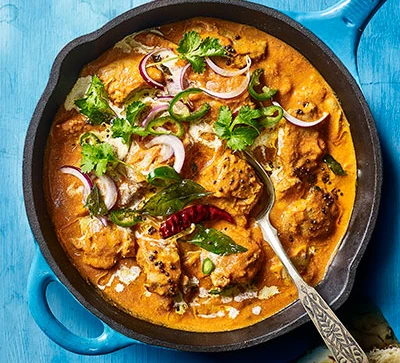
Yes, you guessed right...we are talking about Curry!
Where does the word come from? What does it mean?
Read on👇
The English word "curry" is derived indirectly from some combination of Dravidian words, meaning 'sauce' or 'relish for rice', such as the Tamil kaṟi 'black' or 'burned' and hence spiced food, Malayalam kari 'hot condiments; meat and vegetables' and other local languages. Many dishes that would be described as curries in English are found in the native cuisines of countries in South East Asia and East Asia.
But here's some first hand experience of this native cuisine......I can tell you that no one at "home" ever uses the term as the name of the dish that curry is used to describe. The dishes are known by the specific names of the meats or vegetables that are used to make them, rather than the generic term curry. This personal example hopefully is proof that this article isn't AI generated. AI has done a lot of things, and will do lots more, but the day it can digest a curry I think it will be a signal that we have achieved singularity.
But back to what is a curry....it is a dish with a sauce or gravy seasoned with spices, mainly derived from the interchange of Indian cuisine with European taste in food, starting with the Portuguese, followed by the Dutch and British, and then thoroughly internationalised.
Archaeological evidence from early civilisations on the Indian subcontinent have shown ingredients such as cumin, tamarind, mustard, fennel, garlic, ginger and turmeric among others. Black pepper is native to this part of the world and has been known to Indian cooking since 2000 BCE. Sauces in India pre-Columbus could contain black pepper or long pepper to provide a little heat, but not chilli. So they were not spicy hot by modern standards.
With the establishment of a Portuguese trading centre in Goa in 1510, chilli peppers, potatoes and tomatoes were introduced in India as a result of the exchange with the new world of the Americas. It has been suggested that the Portuguese adapted words from the local languages they encountered in India. This adoption eventually resulted in curry's modern meaning of a dish, often spiced, in a sauce or gravy.
Curry was introduced to English cuisine from Anglo-Indian cooking in the 17th century, as spicy sauces were added to plain boiled and cooked meats. Its first appearance in its anglicised form was in 1747 in a book named The Art of Cookery Made Plain and Easy. Curry was first served in coffee houses in Britain from 1809. In the 19th century, curry spread to the Caribbean and to Japan, and from there to Chinese people, starting in Singapore. Further migration and globalisation made curry a fully international dish with regional specialties across the world.
So what's your favourite curry? How do you like to eat it?
And if you enjoy curry with your friends, please will you share this post with them......I think they will find it tasty!
Photo credit: BBC
He’s Bollywood royalty who started an acting dynasty 📽️…
…but was most influential as a joker 🤡 and a tramp
Why did he mix eroticism with socialism...
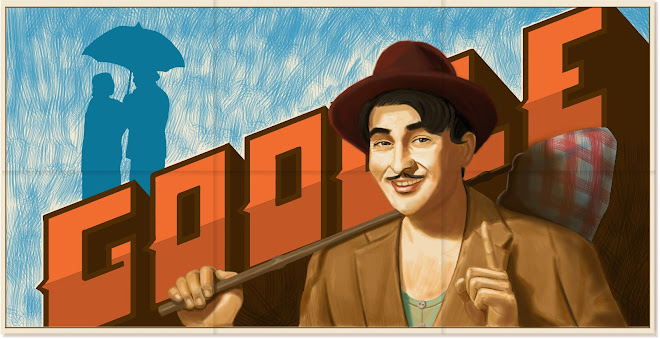
This week’s Famous Dead Indian 🇮🇳 is Raj Kapoor, our 10th in this series. Read on 👇
Wow! That’s dramatic….Bollywood royalty huh?
Indeed. Kapoor has been called “the great showman”. He produced some of the most watched films anywhere in the history of the medium.
He was born to a landed wealthy family in Peshawar, British India (now in Pakistan) on December 14, 1924. Kapoor’s career began as an actor, but he was drawn to directing and producing films. His first stage role was when he was 5. At age 23 he became the youngest film director of his time anywhere in the world and opened his own studio, RK Films. He went on to act, direct and produce about 70 films, in some of which he played all three roles. No pun intended, and proof that this isn’t written by AI!
He did have some advantages to build his career on. He came from a family deeply rooted in the arts. His father was an accomplished stage and film actor, and his grandfather was a famous theatrical personality as well.
Aha….so born with a silver spoon in his mouth….a nepo baby!
Far from it. If anything Kapoor was the one who made the mainstream Indian movie audience before the term Bollywood was ever thought of. He was influential in making Punjabi song and dance a staple for entertainment in India. Kapoor introduced Indian cinema to a global audience and laid the foundations for Bollywood.
He also laid the foundations for a dynasty. Both his brothers became actors, and married actresses. His 3 sons were actors, two of whom married actresses and were regularly given acting roles in his films. Among his 3 grandchildren 2 are Bollywood’s current top stars and both are also married to actors, and collectively continue to keep the family legacy alive. His successors, while talented, might be nepo babies, but he certainly wasn’t.
Ok, he’s royalty alright…but why would the great showman want to play a joker and tramp?
Kapoor created a very unique on-screen image inspired partly by Charlie Chaplin’s ‘Little Tramp’. His Chaplinesque style was also evident in Mera Naam Joker (My Name is Joker) where he played a clown. He typically portrayed a lovable but down-on-his-luck common man struggling against social injustice. His characters were often seen in a trademark look of a slightly shabby coat, a hat, and a naive expression.
This was ironic given his family’s historical wealth and his privileged upbringing.
It has been argued that his purpose was driven by the conditions and context of a young and recently Independent India that was not meeting its post-Independence promises to the masses.
The class analysis portrayed in his films focused on the spirit of the underprivileged, with the recurring theme that their faults and condition were due to the wrongs of the rich. The audience found it easy to relate to the messaging in his populist films.
But his political skepticism didn’t dilute his patriotism for a nation that was still finding its feet despite all the wobbles. One of his best known songs, Mera Joota Hai Japani, is a patriotic anthem where he as the on-screen actor asserts pride in being Indian despite all his clothes and accessories being from other countries.
Some of Kapoor’s best known films have deep meaning. Awara (meaning tramp or vagabond) was about mass unemployment and corruption in the criminal justice system. Shree 420 was about upper-class corruption and the challenge for the poor to behave ethically in a world rigged against them. The film name was derived from section 420 of the Indian Penal Code.
H.E.A.V.Y….you want me to believe that an unequal society and unmet promises were killer storylines?
I do! And here's why. Kapoor’s genius was in blending entertainment with socially relevant themes. He sugared his social concerns with sauciness, music and melodrama.
His films brought romance, sexuality, song and soul to Indian socialism in its heyday. His brand of escapism suggested that one could love one’s way towards equality and dignity, or love one’s way around the structural problems of society.
Kapoor’s cinematic formula of celebrating the underdog worked overseas too. He understood the power of music in his narratives. His clever integration of lyrics and dance into the scripts also landed well with an international audience as they touched the right emotions on universal themes of love, inequality and the desire to lift oneself into a better economic class.
It is estimated that in 1954 some 64 million people in Russia alone bought tickets to his movie Awara. Just imagine how many TikTok views he’d have gotten in today’s world! Kapoor was equally popular in Eastern Europe, North and East Africa, Middle East and China, where Chairman Mao was said to be a fan and once named Awara his favourite film. His movies’ songs became top hits in these countries and in Turkey some have even been converted into modern hip-hop tunes.
R.E.S.P.E.C.T….but what’s with his thing for eroticism in the middle of all this socialism?
Kapoor saw eroticism as central to Indian tradition right from the erotic sculptures on what all of ancient Indian temples like in Khajuraho to the practice of temple dances. He dated his own interest in it to bathing as a child with his beautiful mother.
He redefined the cinematic portrayal of love. His heroines weren’t passive love-objects and didn’t hold back from exhibiting their lust. Kapoor and a leading heroine of the day, Nargis, had legendary recurring pairings in his movies largely because of their sexual chemistry. She was also his muse.
His later works explored more complex subjects that were ahead of their times. Prem Rog (Sickness of Love) examined sexual assault through the lens of social conservatism, Satyam Shivam Sundaram (Truth, God, Beauty) focused on female desire, and Mera Naam Joker featured an adolescent’s sexual awakening. Many of his movies have explicit scenes focusing on the female form.
His last film is today mainly remembered for an iconic scene where the heroine’s transparent white saree is drenched under a waterfall, a scandalous moment in Indian cinema when it was released in 1985.
Kapoor wasn’t afraid of pushing the boundaries.
A pioneer indeed….someone should make a movie on his life.
Haha…I see what you did here! India Post made a stamp commemorating him in 2001. Google celebrated him with a doodle on what would have been his 90th birthday in 2014.
In 1971, he won one of India’s highest civilian awards, the Padma Bhushan, and in 1988 he won the highest award in Indian cinema, the Dadasaheb Phalke Award. Time Magazine named Awara as one of its Top 100 movies of all time.
He has been described as more than the primal star of Indian cinema. To most of the planet, he was India in all its vitality, humanity and poignancy. Kapoor deserves to be a Famous Dead Indian.
If you like this post please repost and share with your friends so they can also find their inner movie star. If you want to learn more on Kapoor’s life, I’d recommend eminent historian Sunil Khilnani’s profile on Kapoor, which I have also used as a source for the above.
Other Famous Dead Indians we have written about in the last few weeks are Freddie Mercury (rockstar), Mother Teresa (saint), Verghese Kurien (world's greatest milkman), PC Sorcar (magician), Aryabhata (invented zero), Rabindranath Tagore (Nobel winner, author of national anthems), Osho (controversial spiritual guru) Shakuntala Devi (human computer) and Dr Vikram Sarabhai (rocket scientist). You can find them on my timeline.
@PreetiBChopra Or one sees the glass half-full & lauds the young lad for his presence of mind to act swifty! Infrastructure is indeed an issue & it’s interesting that in this age of snap delivery there’s a business opportunity even for quick ambulances. But the scooter delivered this time🙂
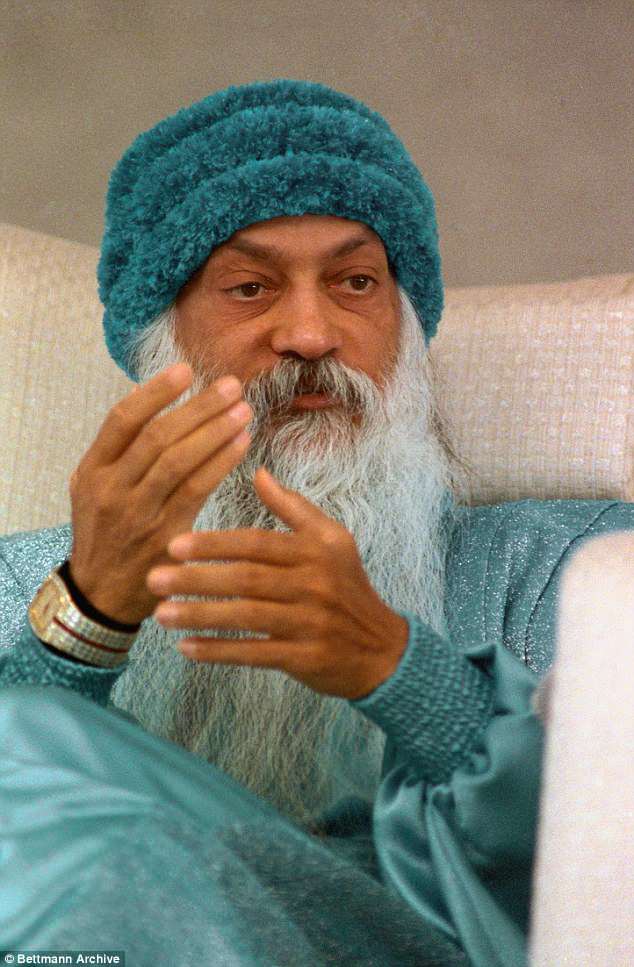
Was this guru a sex-obsessed cult leader or a spiritual genius?
How did he get 93 Rolls Royces 🚗?
Did he really poison an entire town☣️?
Why was he deported from the US 🇺🇸?
This week's Famous Dead Indian 🇮🇳 is Bhagwan Rajneesh, who later re-branded as Osho. Read on👇
Sex, fancy cars and poison??? Sounds like a cheap Bollywood movie plot! How did he become a guru?
Rajneesh was born as Chandra Mohan Jain on December 11, 1931, in the small town of Kuchwada, India. He changed his name to Rajneesh in the 1960s. He studied philosophy, earning a Masters degree and thereafter started his career as a philosophy lecturer at a university. He quickly gained a reputation for his exceptional intelligence and ability to articulate complex ideas.
His personal philosophy was that individual religious experience is central to spiritual life and cannot be confined to any single belief system. He was critical of dogmatic systems and believed in questioning authority.
In the early 1970s, Rajneesh established an ashram in Pune, India, which became the epicenter of his movement. His charismatic personality and innovative teachings attracted a growing number of followers, particularly from the West, and soon became a thriving community.
You make him out to be a weirdo, but he sounds normal so far.
His approach to spirituality was unconventional, advocating for a more open attitude towards human sexuality, which earned him the controversial moniker "the sex guru" in India during the late 1960s. Rajneesh's teachings emphasised meditation, mindfulness, love, celebration, courage, creativity, and humour. He viewed these qualities as being suppressed by adherence to static belief systems and societal norms.
He emphasised that meditation could lead to self-awareness, inner peace, and freedom from societal conditioning. One of his most famous contributions to meditation was the creation of "Dynamic Meditation", a high-energy technique that involves intense physical movement, breathing, and catharsis, followed by stillness. This method is designed to release pent-up emotions and energies.
He often spoke of the idea of "Zorba the Buddha," which represents the integration of both material and spiritual life. He urged his followers to embrace both the pleasures of life and the deep meditative states of spirituality, rejecting asceticism in favour of a balanced, joyful existence.
Oh...I now see why he’s a different type of guru. Tell me about his move to the US.
Rajneesh was a political and social critic, with unpopular views of India’s religious prudery and socialist policies in the 1970s. He and his followers were looking for a place to practice their beliefs without government or conservative interference. In the early 1980s, Rajneesh and his followers moved from India to a 64,000-acre ranch in Oregon, USA, where they felt they would have more freedom than in India. This period marked both the height of his influence and the beginning of his legal troubles.
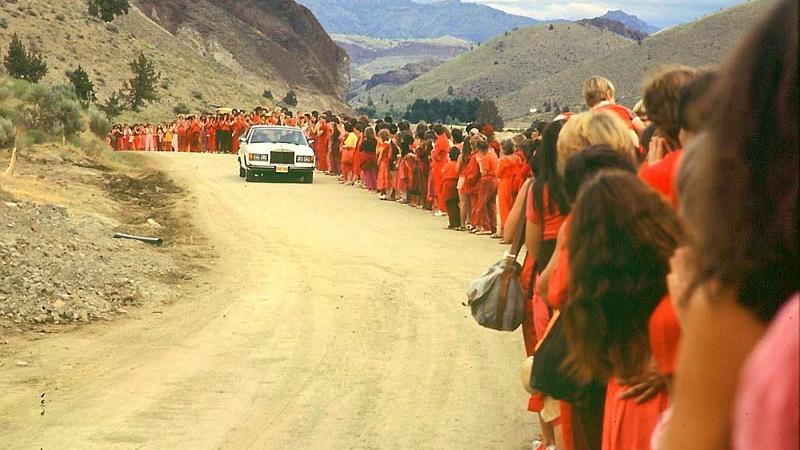
He built a commune he named Rajneeshpuram in Antelope, Oregon City. When the Rajneeshees arrived in 1981, the town of Antelope had a population of just 39 people, most of whom were retirees and Christians. His idea and execution of building a utopian city ultimately led to conflict with the local ranchers, residents and government authorities. Between 1981 through 1985, it is estimated that over $500 million (in today's money) poured into the commune completely transforming the rural ranch town.
At its peak, the commune had around 7,000 members, but the ranch was zoned for agricultural purposes with a maximum of just six residents allowed to live there. The sudden presence of hundreds of red-clad, long-haired un-Christian hippie people from all over the world with a strange guru and seeking to buy up local property made the residents extremely nervous and generated widespread fears of a “takeover”. This led to clashes with the locals.
Oooh…the plot thickens our spiritual hero is turning into a villain!
Well…the fears weren’t wholly unfounded. The commune faced numerous controversies, including allegations of criminal activities such as arson, attempted murder, immigration and voter fraud. Local state level politicians began to express their fears about the “cult” which was rumored to have engaged in disturbing transgressions, including “group sex involving sadomasochistic elements” and perhaps even “violence and loss of life”.
One of the most infamous episodes in Rajneesh’s life was his involvement in the 1984 bioterror attack in Oregon, the first of its kind in the US. Members of his commune deliberately poisoned salad bars with Salmonella bacteria. Their goal was to incapacitate voters to help the commune win seats in the local elections to continue to influence and shape the town without any interference of the local politicians.
In 1985, Rajneesh was arrested and charged with multiple crimes. He pleaded guilty to two immigration charges and was deported from the USA. Over 21 countries refused him entry. Rajneesh spent several years traveling the world before returning to his Pune ashram in 1987.
In 1989, he “rebranded” himself as Osho, which means self-taught monk or teacher. He died in 1990 at the age of 58.
Asking for a friend…what kind of spirituality leads to Rolls Royces?
Rajneesh had never made any secret of his procapitalist sentiments and his fondness for expensive objects of conspicuous consumption.
“All the religions have commanded and praised poverty, and I condemn all those religions. Because of their praise of poverty, poverty has persisted in the world. I don’t condemn wealth. Wealth is a perfect means which can enhance people in every way… So I am a materialist spiritualist.”
His first two Rolls-Royces were gifts from his followers. His expanding fleet of Rolls Royce cars would eventually number 93. The cars became part of an almost surreal form of “drive-by darshan” or viewing of the guru, in which Rajneesh would slowly drive down the city’s central avenue while thousands of red-clad followers waved, cheered, and played instruments in throes of joy.
“People are sad, jealous, and thinking that Rolls Royces don’t fit with spirituality. I don’t see that there is any contradiction… In fact, sitting in a bullock cart it is very difficult to be meditative; a Rolls Royce is the best for spiritual growth”.
That may be, but they also served as a vehicle for shielding tax. The pun here should prove that this article isn’t AI generated! Starting in 1982, they were “owned” by the tax-exempt Rajneesh Modern Car Collection Trust. The trust served as a conduit for donations from wealthy followers, who then leased the cars for a monthly fee. After he fled the US and his commune collapsed, 85 of his 93 Rolls were sold to a Texan car dealer. Rajneesh bought the other 8 cars for himself, no doubt to facilitate his spiritual growth.
Well…come to think of it I too would prefer meditating in a Rolls Royce over a bullock cart!
Maybe, and hope you find nirvana.
But you can see why Rajneesh remains a polarizing figure in the world of modern spirituality. To his followers, he was a visionary who showed a path to self-realization and inner freedom by challenging conventional notions of religion and spirituality. To his critics, he was a controversial guru whose teachings and actions often crossed ethical and legal boundaries and one who left a tarnished legacy.
Regardless, he was a master communicator. His ideas are preserved in numerous books and recordings. His books have been translated into 60 languages and published by over 200 publishing houses.
An example of his communication abilities is in the following recording of his “discourse” on the multiple uses of the word “f@ck”. I guarantee that you will laugh a lot during this 4 minute video. It is attached in the next message attached to this post.
If Rajneesh’s story interests you, Netflix did a 6-part series called Wild Wild Country which has received a 98% rating on Rotten Tomatoes.
If you like this post please repost and share with your friends so they can also achieve inner peace.
Other Famous Dead Indians we have written about in the last few weeks are Freddie Mercury (rockstar), Mother Teresa (saint), Verghese Kurien (world's greatest milkman), PC Sorcar (magician), Aryabhata (invented zero), Rabindranath Tagore (Nobel winner, author of national anthems), Shakuntala Devi (human computer) and Dr Vikram Sarabhai (rocket scientist). You can find them on my timeline.
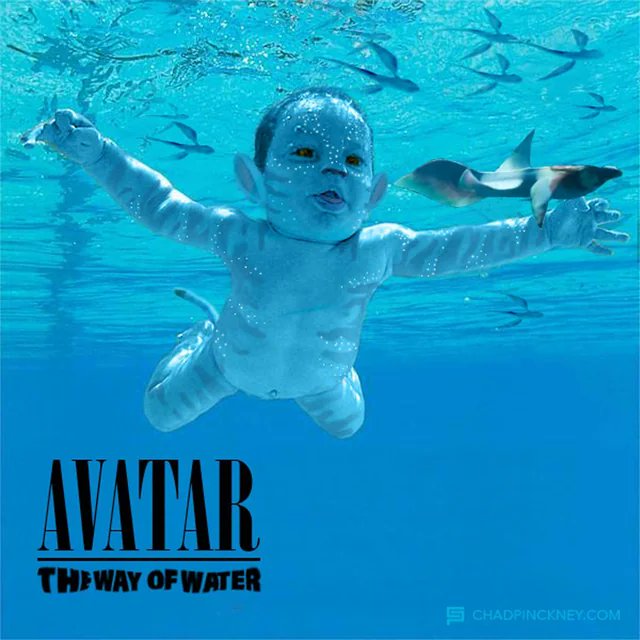
You've heard the legendary band...you've seen the record grossing movie. But do you know the origins of their names? Today's words of Indian origin 🇮🇳commonly used in English are Nirvana and Avatar.
Do you know what the difference is between the two words? Read on 👇
NIRVANA: The Sanskrit word nirvāṇa is derived from the verbal root vā, which means "to blow". When combined with the prefix nis, meaning "out", it forms nirvāṇa, which can be interpreted as "blown out" or "extinguished". This suggests a state of cessation, particularly in the context of desires and suffering.
In Buddhist teachings, nirvana represents the ultimate goal—freedom from suffering and the cycle of rebirth—often described as a state of perfect peace and happiness. The concept predates Buddhism (which originated from India), and has been used historically to describe various states of spiritual liberation across different Indian philosophies.
Nirvana's legendary album, Smells Like Teen Spirit, started a whole new genre of music 🎸 - did it help teen listeners across generations achieve liberation? What was your experience?
AVATAR: The Sanskrit word avatar comes from the Sanskrit noun avatāra, which translates to "descent". It is a compound of ava- meaning down or off and tṛ which means to traverse. Avatāra literally refers to "one who has descended". In Hindu tradition, an avatar signifies the incarnation of a deity who manifests in various forms to restore cosmic order and combat evil. The concept emphasizes the divine's ability to transcend and interact with the material world.
Today, the term has evolved to encompass not just divine forms but also metaphorical uses in modern contexts, such as digital representations in computing. In popular culture, particularly in video games and films, the term has been adapted to describe characters that represent users or embody certain traits.
Did James Cameron's record breaking movie 📽️ Avatar get the concept right?
In essence, while nirvana is about achieving a state of liberation from suffering and existence, an avatar represents a divine presence that actively engages with the world for its betterment.
Do you use these words at all? In what context? Please repost and share if you enjoyed this.
This is the 10th in our weekly series of words of Indian origin we have written about. In previous weeks we have talked about dungarees, pajama, shampoo, orange, candy, pepper, catamaran, dinghy, Java, Singapore, guru, pandit, musk, juggernaut, jungle, khaki, catamaran and dinghy...you can find them on my timeline.
What explains this divergence in the food delivery industry across the world....
Same day. Same sector. Different outlook.
Grubhub sold at massive loss. Swiggy IPO at massive valuation.
India is a tough market. When things work, they often work better than anywhere else.
What does one of the world's most popular programming languages have in common with one of the world's most successful city states?
This week's words of Indian origin 🇮🇳 are names of places.
Read how Java ☕️and Singapore 🇸🇬got their names...both are derived from Sanskrit👇👇👇
JAVA: Yes...the programming language named for a drink named for an island is a word of Indian origin. The island name is shortened from the Sanskrit word Yavadvipa which translates to "Island of Barley", from yava "barley" + dvipa "island". Yavadvipa is mentioned in India's earliest epic, the Ramayana. Barley is a plant for which the island was famous. But you probably know it as the name of a coffee.
Java was the centre of powerful Hindu-Buddhist empires, the Islamic sultanates, and the core of the colonial Dutch East Indies. The Dutch first planted coffee trees in the late 1600s, and by the start of the 18th century coffee plantations on the island were among the most successful in the world. Over the last century, the place name 'Java' has become synonymous with coffee and in communicating coffee quality.
SINGAPORE: "Really, it's an Indian name?...I thought it was a British colony"....yes it was, but Singapore is the anglicised version that comes from Malay Singapura. This is ultimately from Sanskrit Simhapura, which translates to the "Lion City", from simha "lion" + pura "city". In Hindu–Buddhist culture, lions were associated with power and protection, which may explain the attraction of such a name.
In Javanese inscriptions and Chinese records dating to the end of the 14th century, the more-common name of the island is Tumasik, or Temasek, from the Javanese word tasek “sea”. The name Singapura supplanted Temasek sometime before the 15th century.
You're probably wondering how these places have Sanskrit names. I did too.
It is because during the period between 250 BCE and 1200 CE, India exercised enormous soft power across much of Asia. Sanskrit became the common language between speakers whose native languages were different.
Please repost if you learned something new about these words. Other words of Indian origin we have written about in the last few weeks are: Guru, Pandit, Loot, Thug, Musk, Juggernaut, Orange, Candy, Khaki, Shampoo, Jungle and Pepper. You can find all of these on my timeline.