Eco-Art Festival in Aktau Brings Together Volunteers, Activists, and Environmentalists
In Aktau, volunteers and activists organized a cleanup of the Caspian Sea shoreline. On the sand, they created a massive inscription - "SOS CASPIAN" a symbolic cry for help from the sea itself.
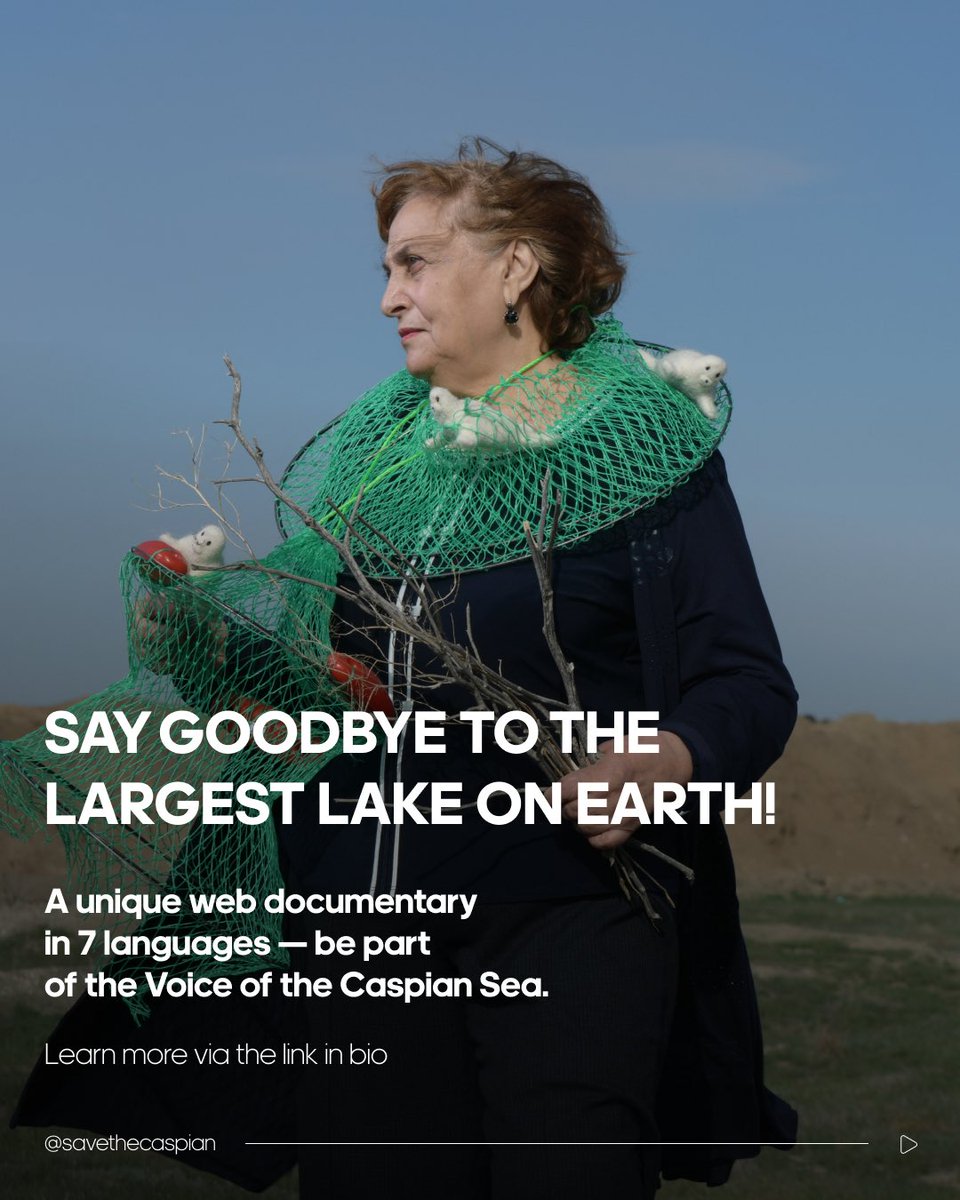
At https://t.co/dP3PLW0Y3R, the international movement Save the Caspian Sea has published a web-documentary highlighting the critical challenges facing the Caspian. The site also hosts a petition to the governments of the five Caspian states, calling on them to protect our shared sea.
This flash mob marked the conclusion of High Caspian Week - a series of forums, conferences, photo exhibitions, and film screenings.
#highcaspianweek #savethecaspiansea #soscaspian
We are concluding High Caspian Week!
Every year, the level of the Caspian Sea drops by 20-25 cm, exposing up to 70 cm of its seabed. This is an environmental catastrophe affecting not only Kazakhstan, but all Caspian littoral states.
With our flash mob, we aim to draw the attention of the public, policymakers in Caspian countries, and journalists - to unite efforts in saving the Caspian Sea.
"SOS Caspian" is an interactive longread available in all six UN official languages (English, Arabic, Spanish, Russian, Chinese, French) as well as Kazakh. It tells the story of an ecological disaster unfolding in the heart of Eurasia: falling sea levels, the mass extinction of endemic species, water pollution, and the looming displacement of millions of people. All data is supported by scientific research and official reports from international environmental organizations.
#soscaspian #savethecaspiansea #highcaspianweek
Watch and Act: Three Films About Vanishing Seas
⠀
Astana hosted the special film festival "The Disappearing Sea" - part of High Caspian Week, dedicated to saving the Caspian Sea. Three powerful films, three different perspectives on how our planet is changing and what we can do to save it.
⠀
🎥 The Spot - a documentary investigation into how shrinking water levels, oil extraction, and illegal discharges are destroying the Caspian.
🎥 I Can’t Stay Silent - the personal story of activist Azamat Sarsenbayev, who grew up on the shores of the Caspian and continues to fight for it.
⠀
❗️Both films are now available to watch on the Save the Caspian Sea
YouTube channel.
⠀
🎥 The third film in the program was Sea Tomorrow - a feature-length work about the fate of the Aral Sea, notable as the first film about Kazakhstan to be released on Netflix.
⠀
These films are more than environmental stories on screen. They are stories that make you think and, more importantly, act. Let the power of cinema unite us in the effort to preserve our unique seas and ensure the tragedy of the Aral is never repeated in the Caspian.
⠀
#savethecaspiansea #highcaspianweek
Astana Showcases "The Last Shore" - With the Author and Powerful Emotions
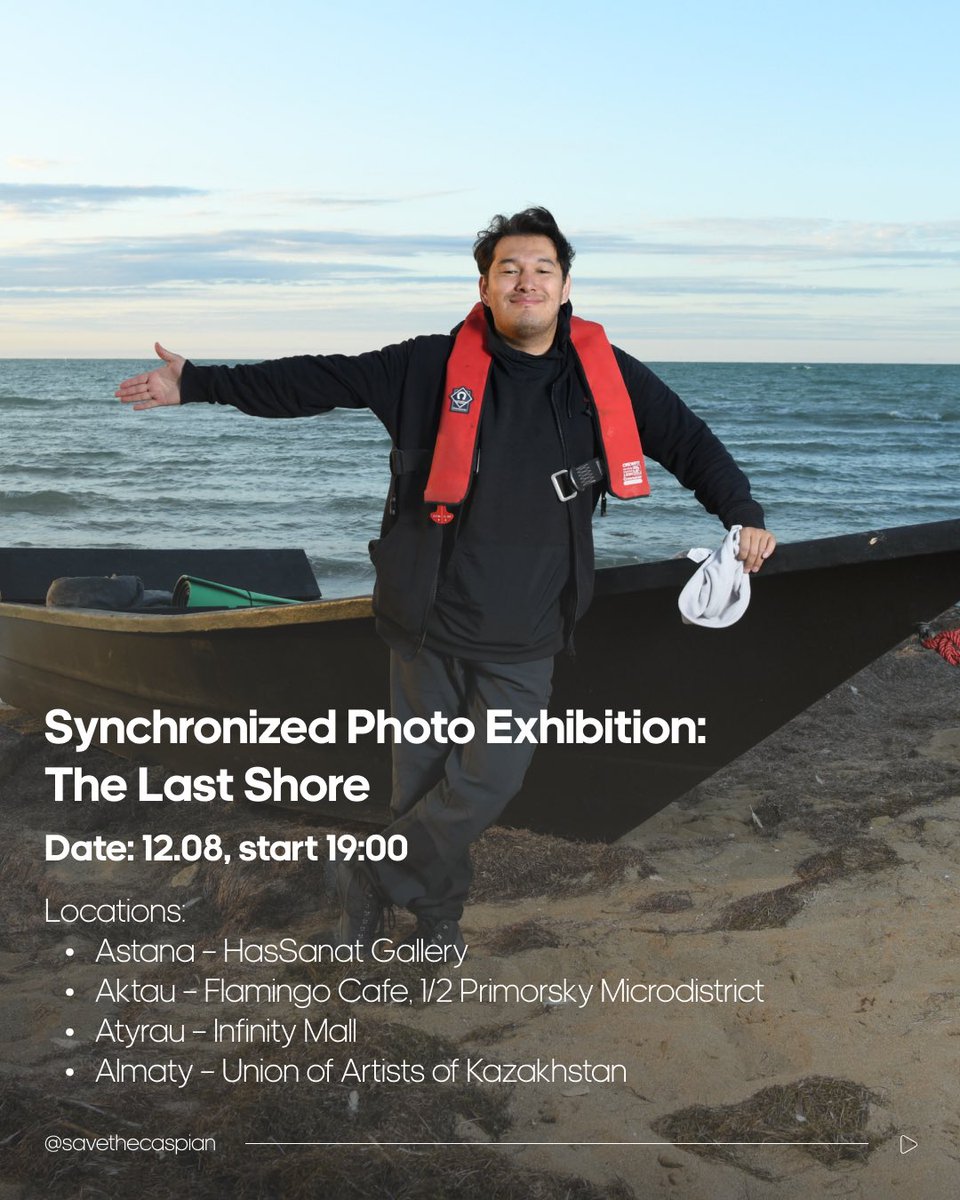
On August 12, the HasSanat Gallery became a gathering place for all who care about the Caspian Sea. It hosted the synchronized photo exhibition "The Last Shore" - photographer Ospan Ali’s project capturing both the beauty and the pain of a dying sea.
The author personally presented his works, sharing stories from his expeditions to the Caspian and the inspiration behind each frame.
Among the guests was Aibek Smadiyarov, the official representative of Kazakhstan’s Ministry of Foreign Affairs, who emphasized that saving the sea is not only Kazakhstan’s concern, but a global one.
Striking visuals, heartfelt emotions, and complete immersion in the atmosphere - that’s how the evening unfolded as part of High Caspian Week.
#savethecaspiansea #highcaspianweek
Aktau: "The Last Shore" and Dreams of the Sea’s Return
On August 12, Flamingo Café in Aktau became the venue for the synchronized photo exhibition "The Last Shore", dedicated to the dying Caspian Sea. The exhibition featured works by photographer Ospan Ali, captured during his expeditions to the Caspian.
Adding to the evening’s atmosphere were the voices of local residents, whose words carried sincerity and hope that the sea would stop receding and its waters would once again reach the shore. These heartfelt testimonies, paired with the photographs, left a deep impression on every guest.
The exhibition was part of High Caspian Week - an international series of environmental, cultural, and media events marking Caspian Sea Day.
#savethecaspiansea #highcaspianweek
This is how the "Last Shore" photo exhibition unfolded in Atyrau
On August 12, the Yemaa Center for Contemporary Art in Atyrau hosted the synchronized photo exhibition "The Last Shore", dedicated to the dying Caspian Sea.
The exhibition’s author, photographer Ospan Ali, captured the beauty and fragility of the Caspian through his lens, as well as the devastating impact of ongoing environmental changes. His work resonated deeply with viewers, serving as a powerful reminder of the value - and the urgent need to preserve - this unique ecosystem.
The exhibition was part of High Caspian Week, a series of environmental, cultural, and media events held to mark International Caspian Sea Day.
Legislation Overlooks the Role of Independent Experts
Adilbek Kozybakov, Chairman of ECOJER, has proposed amendments to the Entrepreneurial Code, noting that in practice the Prosecutor’s Office treats it as having greater authority than the Environmental Code.
According to him, Article 154, Clause 1, Subclause 5 should be amended to include a provision on "independent experts" within the framework of inspections carried out by government officials in relation to business entities.
"Sakhalin Watch" - The Project That Saved the Salmon
Andrey Balagurov spoke about the Sakhalin Watch project, where volunteers monitored coastal waters via satellites, documented breaches, and passed the information to the border service. As a result, the number of incidents dropped by 90%.
According to Balagurov, one key question remains - why do ships turn off their transponders? He believes that if a vessel deliberately disables this system, it is most likely to evade the rules.
"A dream - to track every ship"
Andrey Balagurov, coordinator of the Transparent World on the Caspian project, admitted that his team has a long-standing dream - to gain access to AIS data.
According to him, due to limited funding, the project has so far been unable to purchase the complete Automatic Identification System (AIS) database for the past three years. These records would make it possible to identify every vessel that has discharged ballast water into the Caspian Sea.
#savethecaspiansea #highcaspianweek
Oil Spill in the Caspian Sea
⠀
Andrey Balagurov, coordinator of the Transparent World on the Caspian project, spoke about satellite monitoring technology that makes it possible to detect oil slicks on the sea’s surface.
⠀
"The reflective surface of oil slicks is not the shadow of clouds, as some officials claim. These are verified facts that require further investigation", he said.
⠀
However, according to the expert, detection alone is not enough - violators must be held accountable. Statistics from the project show that out of 90,000 slicks recorded over the entire monitoring period, only 0.5% have led to actual penalties.
⠀
#savethecaspiansea #highcaspianweek
The Caspian Sea was once the true "goose that laid the golden eggs"
⠀
Galina Chernova, co-founder of the international movement Save the Caspian Sea, noted that nearly 90% of all black caviar in Kazakhstan came from the Caspian. However, human activity has deprived sturgeon of their spawning grounds, forcing them to retreat more than 20 kilometers offshore.
⠀
Beyond its fisheries, the Caspian has also given the region another source of wealth - the Kashagan oil field, ranked sixth in the world for crude oil reserves.
⠀
#savethecaspiansea #highcaspianweek
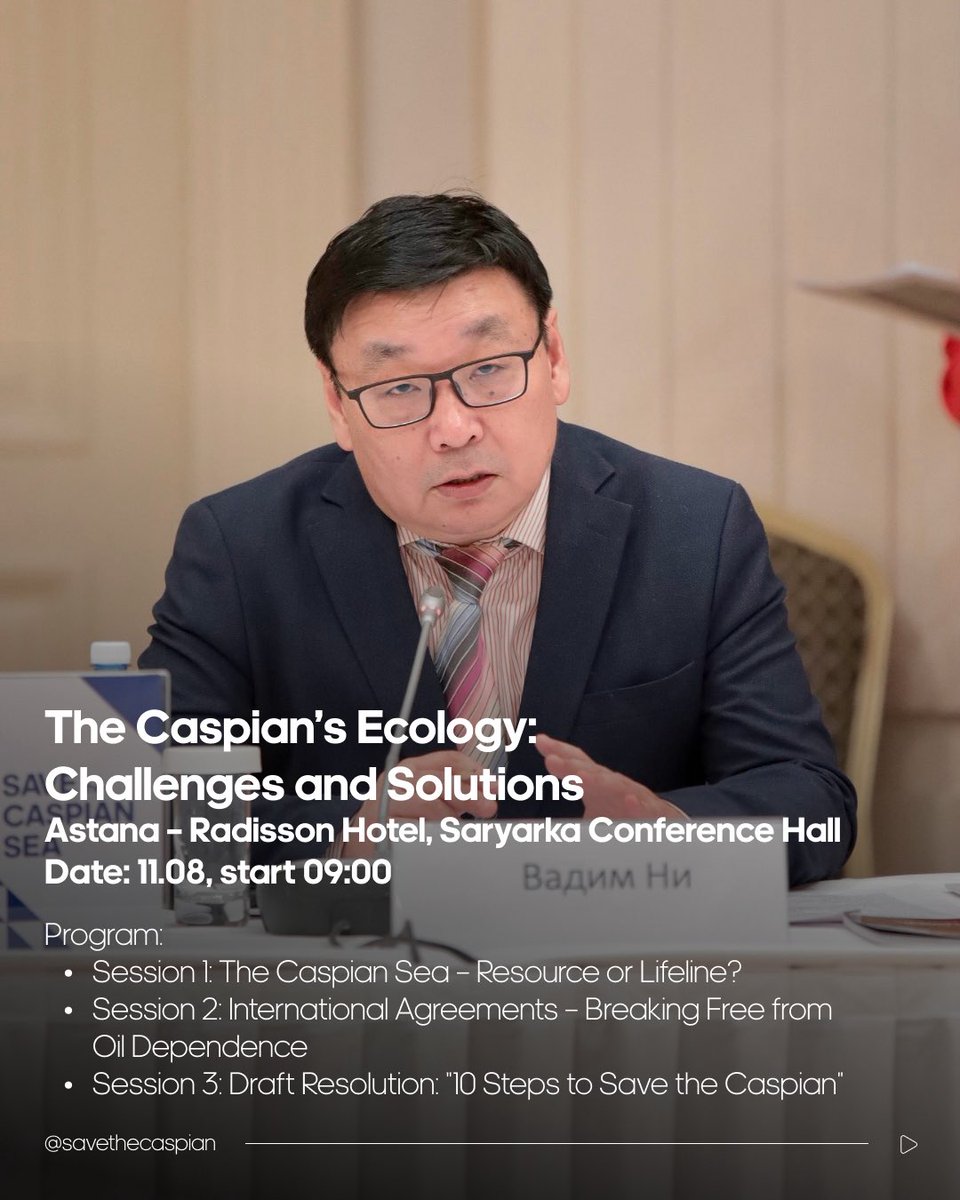
Today, Astana is hosting the "Caspian Ecology: Challenges and Solutions" conference, bringing together experts, environmentalists, lawyers, and civic activists to discuss how to balance ecological and economic interests in the Caspian region.
⠀
"To achieve results, we need concrete actions", said Vadim Ni, founder of the Save the Caspian Sea movement.
⠀
He announced that the movement has prepared the first draft of its "10 Steps to Save the Caspian Sea" - a document outlining specific measures that all parties must take to restore the sea’s ecosystem.
⠀
The project will be officially presented on August 15 in Astana as part of the media forum.
⠀
#savethecaspiansea #highcaspianweek
10 Steps to Save the Caspian Discussed in Atyrau
⠀
On August 6, a key meeting took place in Atyrau to discuss proposals for the President and Government of Kazakhstan aimed at preserving the Caspian Sea. The gathering brought together regional representatives, environmental experts, and civil society activists.
⠀
The participants agreed on 10 concrete steps to safeguard the Caspian and outlined a framework for submitting these proposals to the Head of State and the Cabinet of Ministers. The core priorities include:
1) Strengthening oversight of environmental data under production sharing agreements;
2) Establishing a transparent environmental monitoring system;
3) Advancing international cooperation in water diplomacy;
4) Reinforcing the institutional framework for the Caspian agenda.
⠀
This meeting served as a prelude to High Caspian Week - a series of events to be held in Astana, Almaty, Atyrau, and Aktau from August 11 to 16. All with one shared goal: to save the world’s only enclosed sea.
⠀
#HighCaspianWeek #SaveTheCaspian
Galina Chernova (co-founder of the Save the Caspian Sea movement, ecologist):
Today, the Tengiz field emits up to 700 environmental incidents per year, yet everyone pretends it has nothing to do with the sea. How could it not? The wind carries the emissions, and they settle over the Caspian and in Atyrau. At Kashagan, sulfur is being stockpiled by the ton under the pretense that it’s a "product, not waste". A product that is poisoning us. Gas is being injected underground - no one is monitoring it. This is not development, it’s environmental roulette.
And when it comes to building new canals, we risk losing the natural saddle that keeps water in the northern Caspian. If the saddle goes, the sea goes. Meanwhile, at public hearings, people are asking for jobs and salaries. But what will we drink when everything is gone? We have to step in. Not in name only-truly.
Not just by saying "we’re against it", but by getting involved in every decision, every project, every attempt to destroy what’s left of the Caspian biosphere.
#HighCaspianWeek #SaveTheCaspian
Asel Nurgaziyeva (civic activist):
August 12 is officially Caspian Day - but there’s nothing left to celebrate. It’s time for a requiem for a dying sea. We live in a country where a nature reserve can be split up by a bureaucrat’s decision and where an oil base is built right in the middle of it.We tried to fight back in court and we lost. Why? Because our NGOs are handpicked, dependent on local authorities, and the public lacks basic legal literacy.
Without real civil society, there can be no sustainable development. We don’t know who is spending the environmental budget or what the actual results of all this so-called "ecological work" are. If we want to save the Caspian, we need a real movement - not formal, but alive. With monitoring, with a voice, with real action. We need to pull people out of apathy and get them involved - otherwise, we’ll be left complaining from a desert where the sea once was.
#HighCaspianWeek #SaveTheCaspian
Kirill Osin (eco-activist, Mangystau region):
We’re losing the Caspian every year. And for us in Mangystau, this isn’t some distant threat - it’s our daily reality: the sea is retreating, water is scarce, the heat is rising, and drinking water production is falling. No water - no life. The port was dredged five years ago - now they’re doing it again. What happens five years from now? We’re building residential blocks with no plumbing - and no future.
The system is broken: the Caspian Institute exists on paper, but in practice there’s no budget, no specialists, and no clarity on who’s in charge. The Ministry of Ecology and Natural Resources (MENR) and the Ministry of Water Resources and Irrigation (MWRI) can’t decide who’s responsible. The President gave a clear directive - but on the ground, there’s silence. We must take control of environmental monitoring, push for transparency in PSA (Production Sharing Agreements), and engage in water diplomacy. The Caspian isn’t just ours. If even Iran is sounding the alarm, we have no right to stay silent.
#HighCaspianWeek #SaveTheCaspian
How to Save the Caspian - High Caspian Week
⠀
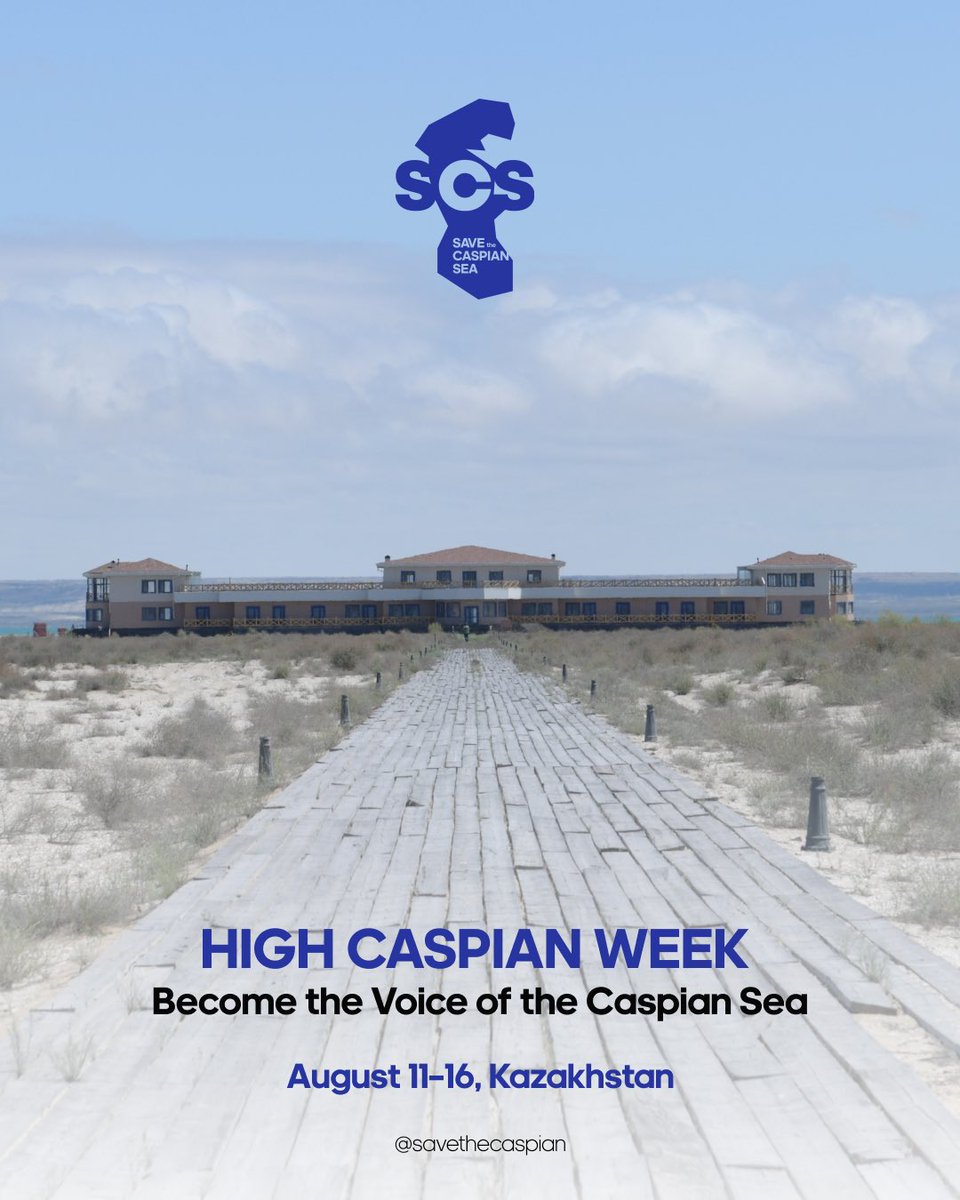
From August 11 to 16, six events will take place across four cities of Kazakhstan - all dedicated to one cause: the future of the Caspian Sea.
⠀
Our goal is to draw attention to the critical state of this unique ecosystem. We invite you to join the voice that speaks on behalf of a sea that is vanishing before our eyes.
⠀
Photo exhibitions, forums, conferences, and public gatherings will be held in Astana, Almaty, Atyrau, and Aktau - united by one mission: to preserve the world’s only enclosed sea.
⠀
Support the movement. The more voices we raise, the greater the chance of saving the Caspian.
⠀
Be the Voice of the Caspian Sea.
#SaveTheCaspianSea #HighCaspianWeek
Our unique Caspian Sea is dying before our eyes.
⠀
But it can still be saved - if we speak out loudly and together.
⠀
From August 11 to 16, four cities in Kazakhstan will host High Caspian Week:
6 days of conferences, meetings, photo exhibitions, and discussions to draw attention to the region’s most urgent environmental crisis.
⠀
Silence is complicity.
We have a chance to protect the Caspian and bring it back to life.
⠀
Follow us and be part of the voice that must be heard. #SaveTheCaspianSea #HighCaspianWeek