"Save the Cerrado" is an action group to raise awareness about the Brazilian savannah, a unique ecosystem and carbon sink #VivaCerrado#CerradoVivo#Savannah
A study by Brazilian researchers published this week in the journal Global Change Biology concluded that the loss of vegetation in the biome has resulted in average warming of up to 3.5 C over the last 15 years 1/3
https://t.co/oYW4oYvM2X
@mtracey Imo, the prosecution is succeeding in portraying LC as a self-absorbed, perfectionist and controlling person, obsessed with her self-image as the perfect mother, who showed little or no concern for her deceased children but a great deal of concern for her own well-being.
@mtracey Not sure. She was exercising with a yellow exercise band in Spaulding days after strangling one of her children with a yellow exercise band. The jury is being flooded with such details. She was clearly perfecctionist, control freak and obsessed w/ her "perfect mother" self-image.
But the measures are widely expected to affect exports from commodity-producing countries. In late July, Brazil and 13 other exporting countries sent a letter to the European Commission, warning that the proposed restrictions could violate international trade treaties. 5/5
The Brazilian Foreign Ministry met with criticism the new bill, passed by the EU Parliament requiring importing companies to verify whether the products they sell within the EU market are produced in deforested areas, including the Amazon and other biomes like the Cerrado. 1/5
Now the new bill needs approval from the Council of the EU and the national parliaments of the 27 nations in the bloc. Nevertheless, its passage through the EU Parliament — with 453 votes in favour, 57 against, and 123 abstentions — is already considered a historic step. 4/5
In the Brazilian state of Minas Gerais, which also contains vast Cerrado areas, soybean plantations exploded from 14 thousand hectares in 1985 to 2.4 million last year. 3/3
According to a new survey from Mapbiomas, little more than half (53.1%) of the total native area of the Cerrado is still covered by natural vegetation. Since 1985, the loss of native vegetation in the biome was almost 28 million hectares. 1/3
https://t.co/mQD4nULMEr
Most of it was converted into soybeans monoculture. More recently, this production has intensified in the so-called MATOPIBA (an acronym for the states of Maranhão, Tocantins, Piauí and Bahia): together, they account for 80% of the direct deforestation between 2011 and 2021. 2/3
@IPAM_Amazonia launched yesterday the new Cerrado Deforestation Alert System. The new tool will monthly monitor deforestation in the biome based on satellite images, providing deforestation alerts for areas larger than 1 hectare in all types of native vegetation in the #Cerrado.
BREAKING: the area occupied by soybean crops in the #Cerrado grew by 1,443% from 1985-2021, and now covers almost 20 million hectares, 10% of the biome's territory. If cattle and other crops are included, the agricultural area reaches 25 million hectares‼️
https://t.co/BTNfZhMYWX
Deforestation occurred mainly because of agricultural expansion in the region. With 73 million hectares, the Matopiba accounts for approximately 10% of the grain production in Brazil, especially soy, corn and cotton.
According to data from Brazil´s Ministry of Agriculture, the Matopiba region - the acronym for the #Cerrado area in the Brazilian states of Maranhão, Tocantins, Piauí & Bahia - has become the area with the highest rate of deforestation in the country. 1/3 https://t.co/gJ155W00vZ
According to the Annual Report on Deforestation in Brazil, from MapBiomas Brasil, almost a quarter (23.6%) of deforestation in Brazil in 2021 occurred in the Matopiba: 391 thousand hectares were deforested. The number is 14% higher compared to 2020. 2/3
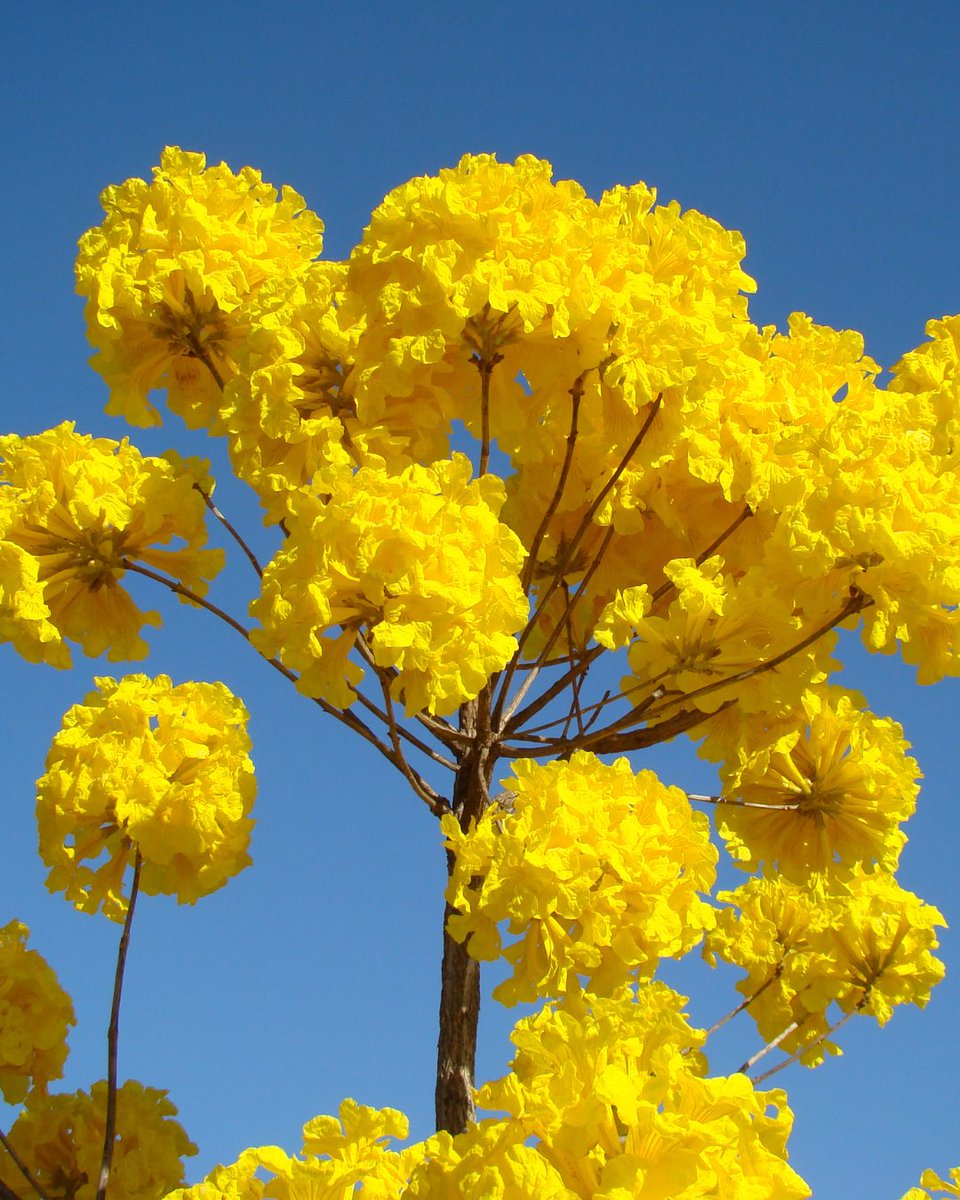
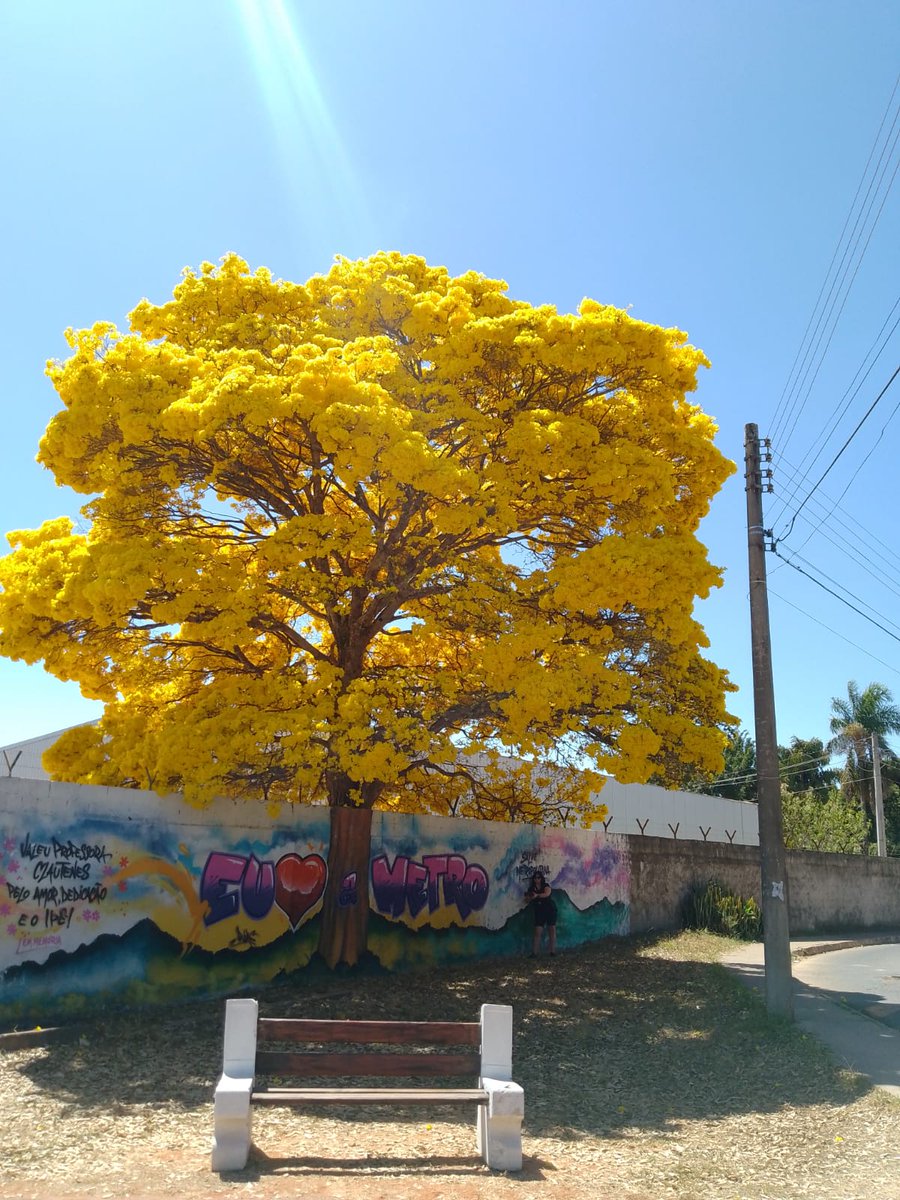
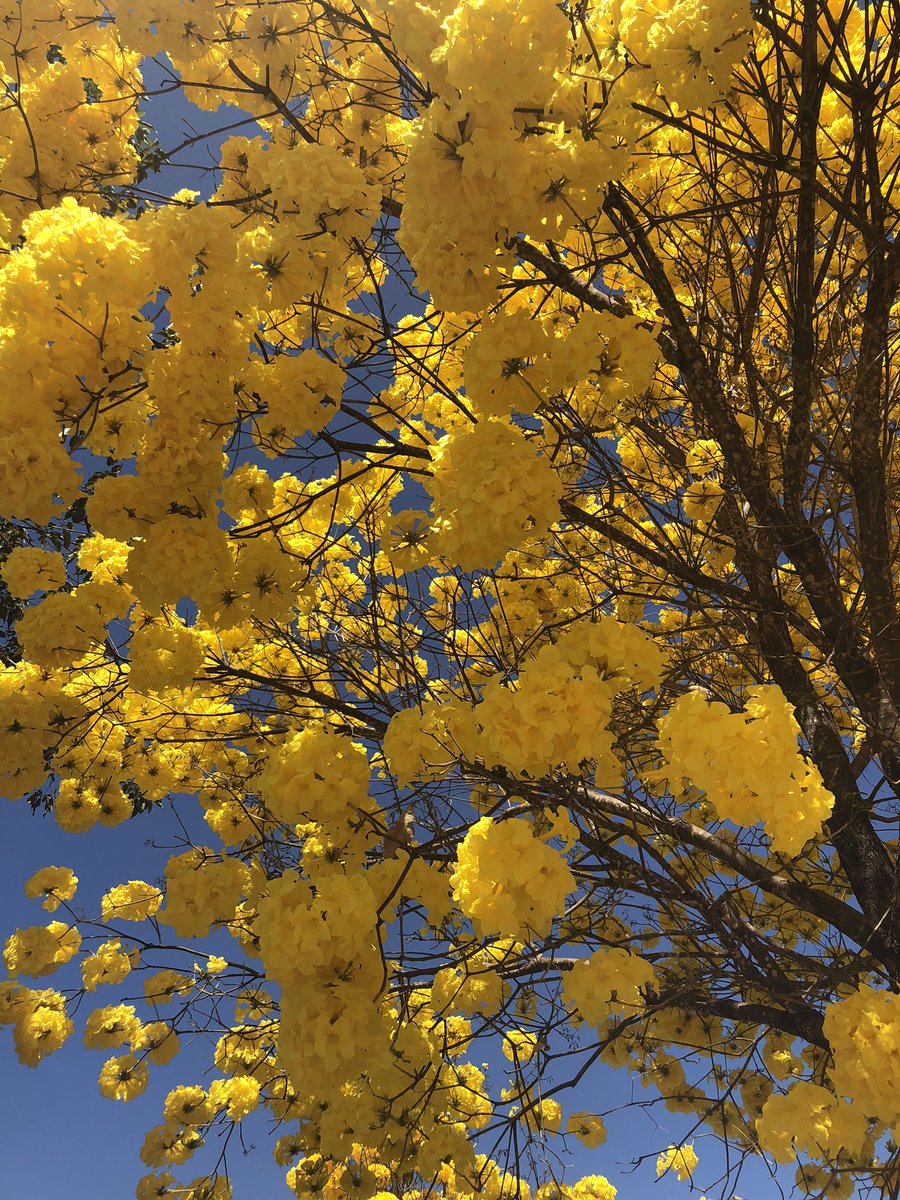
The yellow Ipê is the flagship tree of Brazil. It's a typical species from the Cerrado and it blossoms in September, at the end of the dry season! Happy Ipê season to all our followers!
Deforestation itself was responsible for the worst results in terms of warming and drop in precipitation: in the forest areas converted into crops and pasture, there was an average 3.5 C increase in temperature and a 40% loss in evapotranspiration 🍃🌎💧🌵
A study by Brazilian researchers published this week in the journal Global Change Biology concluded that the loss of vegetation in the biome has resulted in average warming of up to 3.5 C over the last 15 years 1/3
https://t.co/oYW4oYvM2X
The study also shows that the Cerrado has also become drier, as the reduction in green area is creating a water deficit, with less rain falling in the region. About 46% of the original Cerrado cover has already been lost, between areas of vegetation, savannahs, and grasslands 2/3