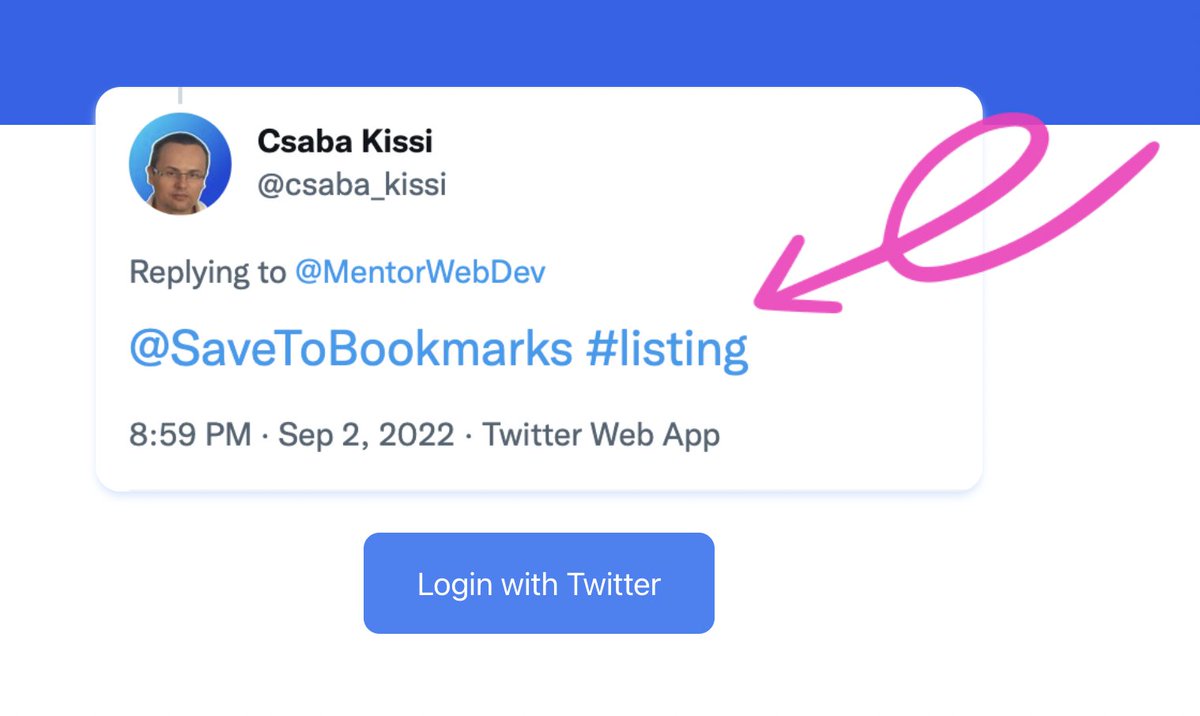
If you don't know how to use the SaveToBookmarks bot please take a look at the picture below.
Just reply with @SaveToBookmarks.
You can even use tags.👇👇
API Rate Limiting Explained 🚦⚙️
Rate limiting protects your API from excessive traffic, abuse, and unexpected spikes.
Here's how it works 👇
🛡️ 1. Protect the API - Allow requests within defined limits and reject excessive traffic.
🔑 2. Choose a Limit Key - Apply limits per API key, user, or IP address.
⏱️ 3. Fixed Window - Count requests within fixed time intervals. Simple, but allows bursts at boundaries.
📊 4. Sliding Window Log - Track request timestamps over a moving window for more accurate limits.
🪣 5. Token Bucket - Tokens refill over time, allowing controlled bursts.
💧 6. Leaky Bucket - Queue requests and process them at a steady rate.
🔄 7. Distributed Limiting - Share rate-limit state across servers to maintain consistent quotas.
⚠️ 8. Respond & Retry - Return HTTP 429 when limits are exceeded, optionally including Retry-After.
Why rate limiting matters:
✅ Prevents API abuse
✅ Protects backend resources
✅ Handles traffic spikes
✅ Ensures fair usage
✅ Improves reliability
💡 Good rate limiting isn't just about blocking requests. It's about keeping your API responsive, predictable, and available under pressure. 🚀
Microservices vs Monolith
Two popular approaches to software architecture, but very different ways to build, deploy, and scale applications.
Here's how they compare 👇
🔵 1. Architecture
Microservices → Split an application into independent services.
Monolith → Keep all modules within a single application.
🚀 2. Deployment
Microservices → Deploy individual services without releasing the entire system.
Monolith → Changes typically require deploying the whole application.
📈 3. Scalability
Microservices → Scale busy services independently based on demand.
Monolith → Scale the entire application, including modules that may not need extra resources.
🗄️ 4. Data Management
Microservices → Each service owns its data and communicates through APIs or events.
Monolith → Modules commonly share a database and access data within the same application.
⚙️ 5. Complexity
Microservices → More flexibility, but added networking, monitoring, and distributed systems complexity.
Monolith → Simpler development and operations, but coordination can become harder as the application grows.
💡 The key takeaway:
Microservices offer independent deployment and scaling.
Monoliths offer simplicity and easier coordination.
Neither is automatically better. A well-structured monolith can outperform a poorly designed microservices architecture.
Start with clear boundaries. Add complexity only when your system actually needs it. 🚀
We spent 20 years building software for humans to click.
Now we're entering an era of building software for AI agents.
APIs are becoming the new user interface.
MCP servers are becoming the new integrations.
And the dashboard might become optional.
System Design: WebSockets vs SSE vs Polling ⚡🌐
All three allow applications to receive updates, but they work very differently.
Here's how they compare 👇
🔵 WebSockets
↔️ Persistent, two-way communication.
⚡ Very low latency with real-time updates.
💬 Perfect for chats, multiplayer games, and collaborative apps.
⚠️ More complex to manage and scale.
🟡 Server-Sent Events (SSE)
➡️ One-way streaming from server to client.
🔔 Great for notifications, live feeds, and progress updates.
🔄 Supports automatic reconnection in browsers.
✅ Simpler than WebSockets for server-driven updates.
⚫ Polling
🔁 Client repeatedly requests updates at fixed intervals.
📊 Great for dashboards and basic status checks.
✅ Simple to implement and widely supported.
⚠️ More HTTP overhead and potentially delayed updates.
The main differences:
WebSockets → Real-time, two-way communication.
SSE → Lightweight, server-to-client streaming.
Polling → Simple, periodic updates.
💡 Choose based on how interactive your app needs to be, how frequently data changes, and how much complexity you want to manage. 🚀
My friend Peter from Sevalla created something special for Kubernetes users.
Lumovi is an open-source Kubernetes dashboard with a built-in MCP server.
https://t.co/znFM5ugzZr
Claude Code or any MCP client acts on your behalf, and by default, each change awaits your approval.
One command.
It reads the logs Claude Code and Codex already keep on your disk and adds them up.
Built mostly with Claude Code, which explains my number.