When Shohei Ohtani was a high school freshman, he created a detailed "dream sheet" with one central goal: to be the #1 draft pick for 8 NPB (Nippon Professional Baseball) teams.
It was a 64-cell roadmap based on a framework called the Harada Method.
Here's exactly what Shohei did 👇
1. First, some history.... The Harada Method was created by Takashi Harada, a Japanese junior high track coach. He took a team ranked last out of 380 schools and, using his system, turned them into the #1 team in the region within 3 years. They held that top spot for the next 6 years.
2. You start by placing your main goal in the center of an 8x8 grid. For Ohtani, this was "be the #1 draft pick."
3. Next, you identify 8 critical supporting pillars needed to achieve that goal. These surround the main goal.
Ohtani's 8 pillars were:
• Body
• Control
• Sharpness
• Speed
• Pitch Variance
• Personality
• Karma/Luck
• Mental Toughness
4. You then break down each of those 8 pillars into 8 smaller, actionable tasks or daily routines.
This fills out the entire 64-cell grid, turning a massive dream into a concrete, daily action plan.
To improve his karma, he listed tangible actions like:
• Showing Respect to Umpires
• Picking up trash
• Being positive
• Being someone people want to support
5. The method goes far deeper than just technical skills. It forces you to analyze your weaknesses and build confidence. It also has a highlight on service to others, emphasizing that humility and contributing to your community are essential for personal success.
6. The key to the system is daily execution and accountability. Once the 64-cell chart is complete, you turn the tasks and habits into a daily diary and a "Routine Check Sheet." It’s designed to transform abstract intentions into a measurable, daily practice.
@amritwt Interviewed someone in the past, from a unicorn company working as a staff engineer and their chart looked very similar. However when I looked at the commits, then found out that they had a cron job which will add couple of lines of text in a text file few times a day.
@aerobiquecat@GergelyOrosz Yeah but you know that’s not just the case with HF. We are still positive overall and have a very strong EBTIDA with much better gross margins than before so I can assure you that you don’t need to imagine your life without HF 🤣
"You���ve got to start with the customer experience and work back to the technology — not the other way around. I’ve probably made this mistake more than anybody, and I’ve got the scar tissue to prove it."
-Steve Jobs
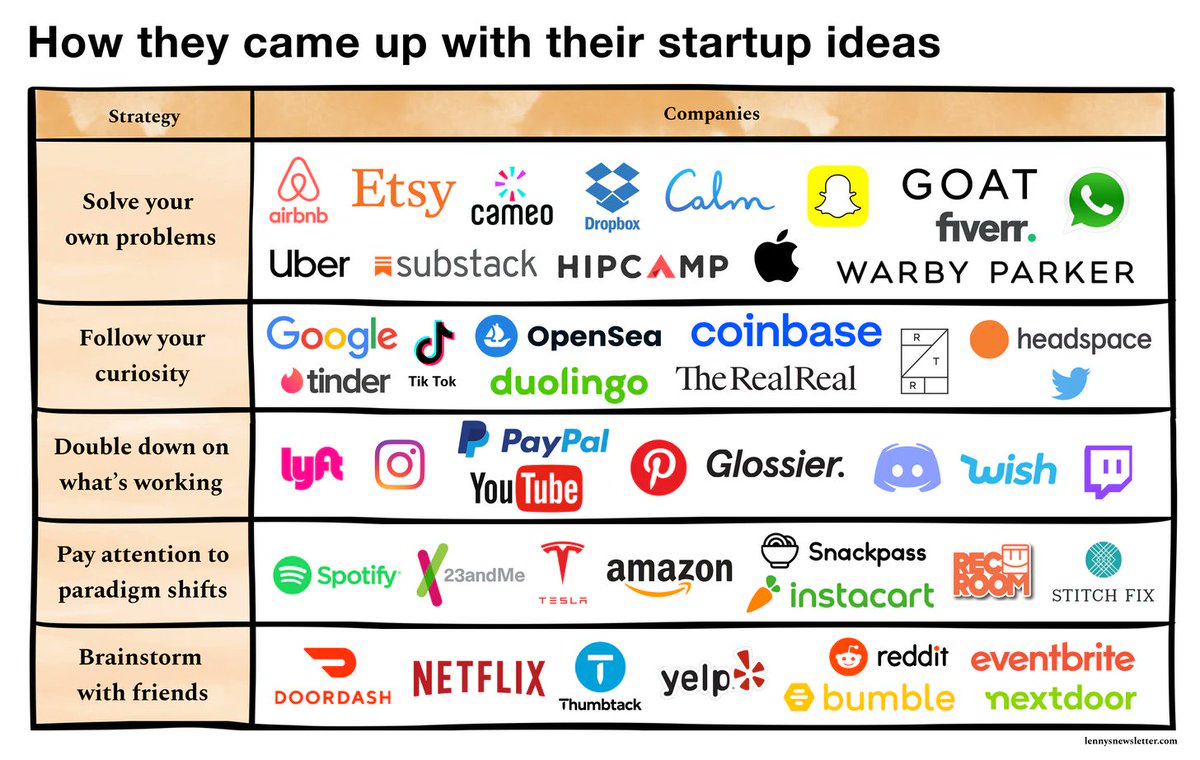
My biggest surprises from researching how 50 of today's biggest consumer companies came up with their startup idea:
1. Only 1 company came up with their idea by talking to customers (@DoorDash)
2. Only ~30% of ideas came from founders trying to solve their own problem
More 👇
Microfrontends require balancing user experience (UX) with developer experience (DX).
Here’s why: Microfrontends improve DX by enabling team autonomy. Pick your tech. Deploy independently. 👍
But, excessive autonomy leads to UI inconsistency and code bloat, which hurts UX. 👎
Today I explained OKRs and KPIs twice and why you should never mistake KRs for KPIs. My fave example from the two showed how you can apply this framework in your every day life..
One of the LARGEST Crypto Venture Capital firms:
Three Arrows Capital.
They're becoming insolvent.
With potentially $18b under management, this could be catastrophic for Crypto.
Here's a timeline of what's going on and the possible consequences:
↓↓↓