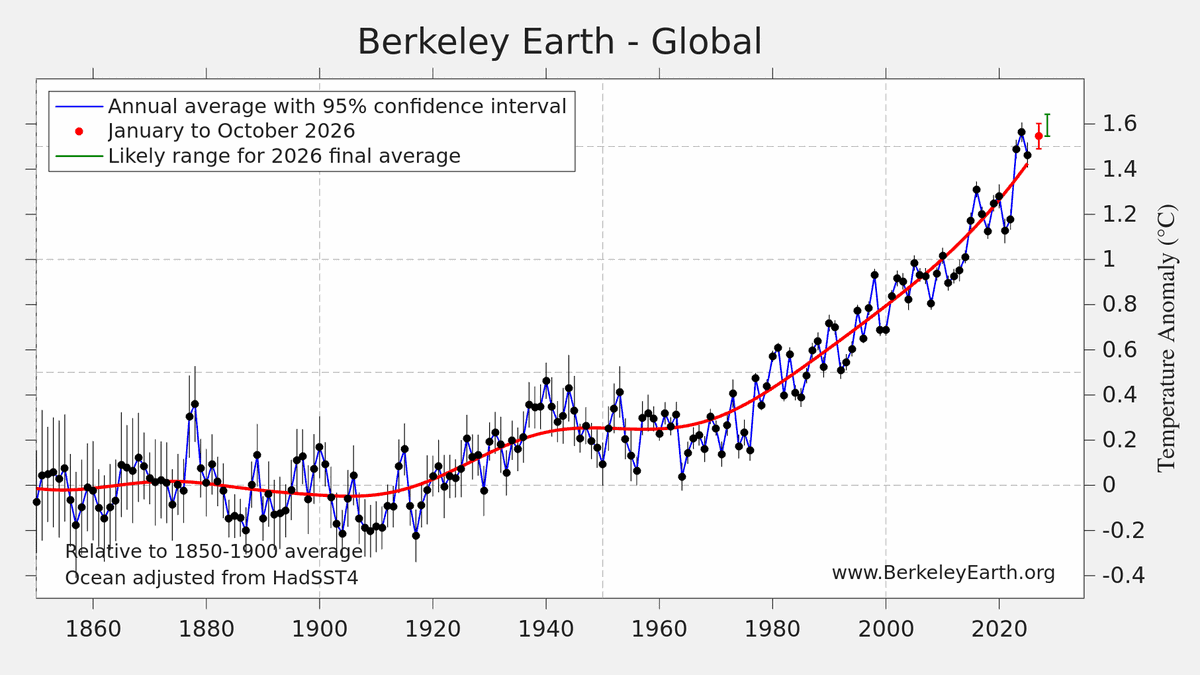
With 10 months completed and a record-breaking El Niño ongoing, we are anticipating that 2026 will very likely inch past 2024 and claim a new nominal record for the warmest year since instrumental measurements began.
The UAE is projected to become the world's leading generator of solar photovoltaic electricity per capita by 2031, with output forecast to exceed 4,000 kWh per person, according to the International Energy Agency (IEA). The outlook is supported by expanding solar capacity and investment in energy storage infrastructure.
Read the full article: https://t.co/E88ZpCYJkZ
At ADIPEC, explore how renewable energy expansion, investment in storage technologies and infrastructure development can strengthen energy security, support reliable electricity supply and advance more resilient and diversified energy systems.
Connect with the global energy community at ADIPEC 2027. Register as a visitor: https://t.co/nze9h0tftw
#ADIPEC #EnergyInvestment #EnergySecurity #EnergyInfrastructure #FutureOfEnergy
Adding PIDEC to a nuclear reactor would allow it to convert gamma ray radiation directly into electricity, providing a passive solid-state energy source if it is shut down or damage; possibly an additional safety layer to keep pumps running.
https://t.co/En2LS0RXaF
When we hold useful energy constant the cut in primary energy is around 40%. Ours is 48%. Key explanation:
Globally, coal power share is still quite high. The UK has closed its coal plants and imports most of its fuels, so less waste heat from power generation is left to remove.
@ADIPECOfficial Good interview. With $150 billion in active investment and 18 integrated companies, ADNOC offers an industrial customer of sufficient scale to take AI applications beyond pilot stage and measure them against commercial outcomes. #ADIPEC
@Rainmaker1973 Cherenkov radiation: electrons from the flux move faster than light propagates in water, hence the blue spectrum. Nothing to do with supersonic sound. Barakah's units look the same at start-up.
🟢 Live now: Join us on Day 6 of the COP31 Climate Hub in Antalya, Türkiye!
Tune in for sessions and interviews exploring solutions that turn commitments into climate action.
Sign up for more on @WeDontHaveTime https://t.co/bqQdYCwmS4
@fredstaffordcs The 58% cancellation rate is the key figure here. When awards get rebid at higher prices, I read the procurement mechanism as signaling cost rather than delivering capacity.
@geoengineering1 I'd add one condition to this: NDC carbon removal targets need strict MRV attached. Land-sink accounting already obscures too much, so durable removals with verified geological storage deserve separate reporting lines. #COP31
@sydney_ev Sub-30k AUD EVs in Australia were unthinkable three years ago. BYD and Chery changed that, now Hyundai is following the price down. Great news for adoption rates, the life jacket crowd should take note. #EVs
@ADIPECOfficial Maritime logistics will carry more of the energy system by 2050. My research on green hydrogen imports shows shipping costs decide feasibility from Chile and Morocco to Europe. #PtXeconomy
Highly relevant research. Copper and lithium markets already show it: supply capacity adjusts slowly while demand scales fast. Climate-policy credibility is now a direct cost variable for the #EnergyTransition . #CriticalMinerals
Highly relevant!
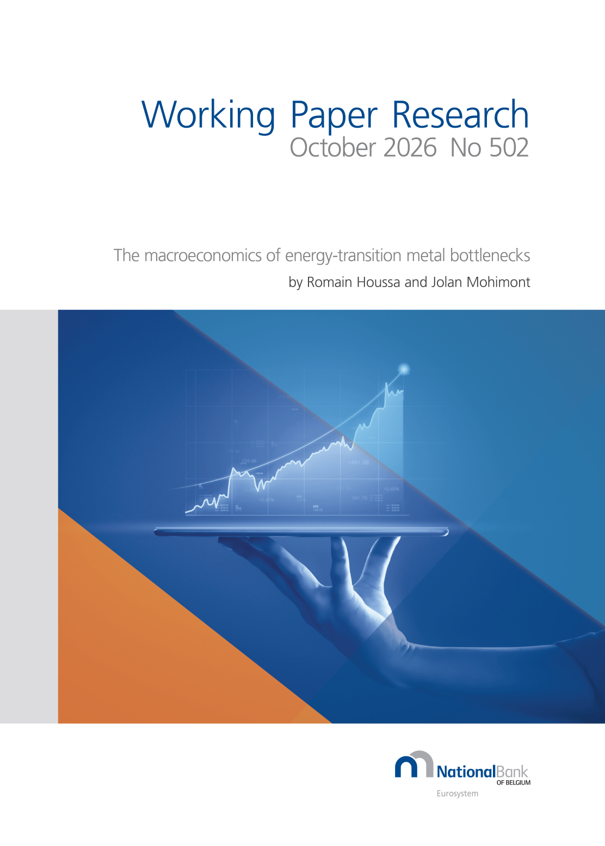
"The macroeconomics of energy-transition metal bottlenecks" by Romain Houssa and Jolan Mohimont.
"This paper develops a dynamic general equilibrium model in which energy-transition metals are essential inputs into both production and capital accumulation, while their supply capacity adjusts endogenously and gradually. The green transition shifts investment toward metal-intensive green technologies, generating bottlenecks that depress investment and potential output. Nominal rigidities amplify short-run losses while monetary-policy stabilization faces a trade-off: supporting economic activity raises demand for scarce transition inputs, increasing their relative prices and the cost of investment. Climate-policy continuation risk further increases transition costs by weakening investment in green capital and ETM production capacity, making bottlenecks more persistent and raising long-run output losses. We compare taxes and subsidies targeting sectoral output with those targeting metal use. Targeting metal use can reduce transition costs relative to output-based policies when metals enter production and demand is sufficiently elastic. When metals enter capital accumulation and demand is inelastic, however, taxing brown-sector metal use slows the transition and increases its macroeconomic costs because the policy raises investment costs while releasing few metals for green investment. Our findings show how endogenous metal-supply adjustment, policy credibility, and the choice of tax and subsidy bases jointly shape the macroeconomic consequences of the green transition."
https://t.co/hMCiao3t1Z
----------------------------
In our activities, we place special emphasis on the topic of "Critical Minerals, Climate Change, and Geoeconomics." High-quality research and policy papers, podcasts, and other relevant content are featured across our channels. In addition to our own selections, we encourage you to submit your contributions via this form:
https://t.co/AMTk0y5d2L
@sizov_andre No, Germany phased out nuclear as well. I would point to the arithmetic: over 20 GW of firm, zero-carbon capacity retired since 2011. The dunkelflaute exposure follows directly from that.
@RigScopeEnergy1 I agree. I track funded work programmes and sustained production over approvals. The reported 600,000 bpd uplift from NNPC now needs verification against actual monthly output data before conclusions are drawn.
@JamalibnAmin Unverified tourist footage, no operator statement, no official confirmation. Claims like this surface during every escalation phase. I'll wait for corroboration before drawing any conclusion.
@janrosenow Agreed. Efficiency matters, electrification is key. The 61% cut in rejected energy is exactly why the 80% fossil share of primary energy misleads when assessing transition feasibility.
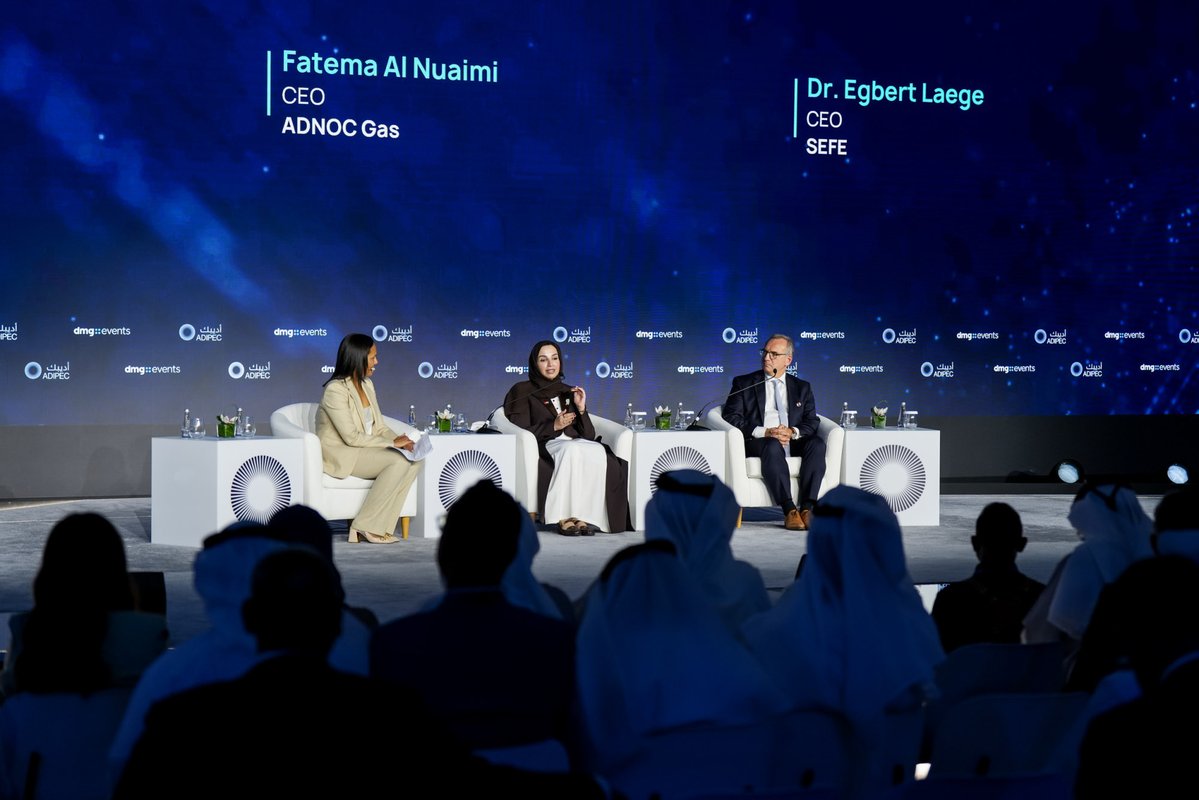
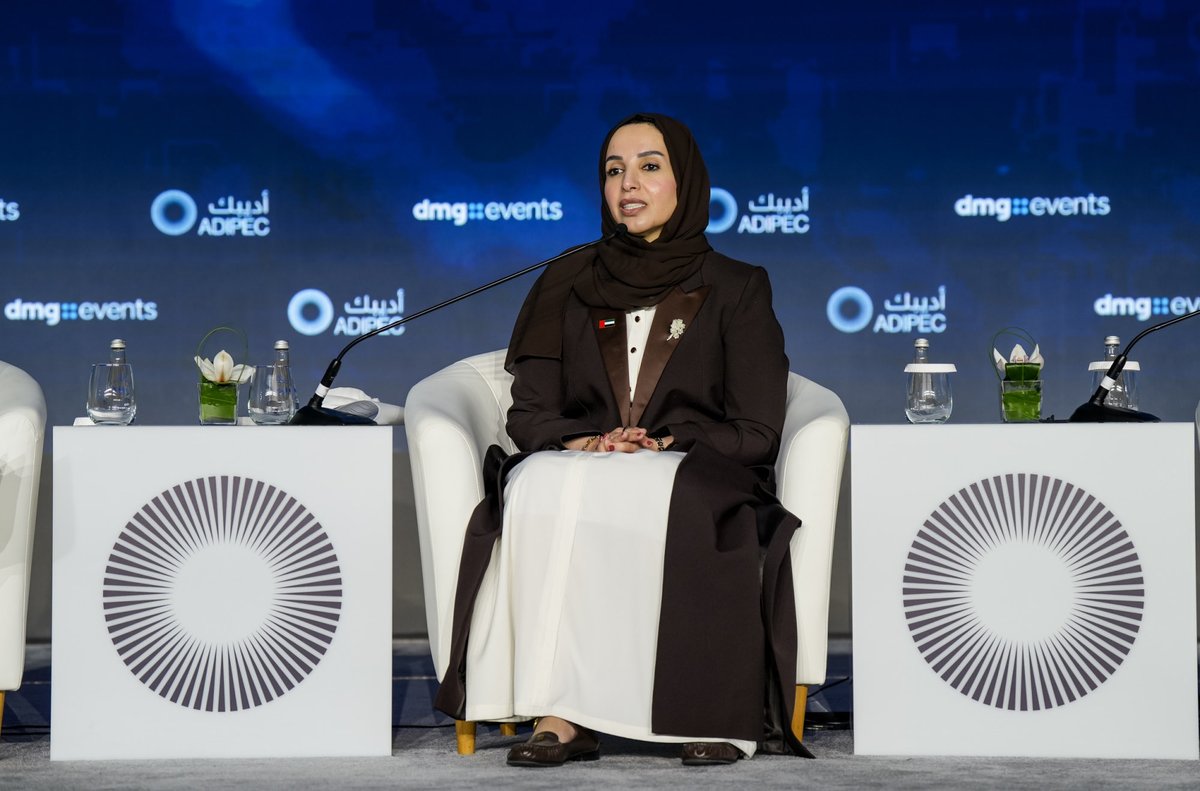
Enduring relationships were central to Fatema Mohamed Al Nuaimi’s perspective on gas and LNG at ADIPEC.
“I think the name of the game is partnerships. Partnerships are built through good times and difficult times.”
The CEO of ADNOC Gas shared this view during ‘Energy partnerships 2.0: securing gas and LNG in a more competitive global system’ at the Strategic Conference. Her remarks highlighted the importance of partnerships that continue through changing market conditions.
Register your interest for the ADIPEC 2027 Conferences: https://t.co/cfp0eBr4kr
#ADIPEC #ADNOC #GlobalEnergy #EnergyLeadership
Emissions down 47% since 1990, GDP up over the same period, green sector productivity 50% above average. If this were pure rent-seeking, the cost per kWh would not keep falling.