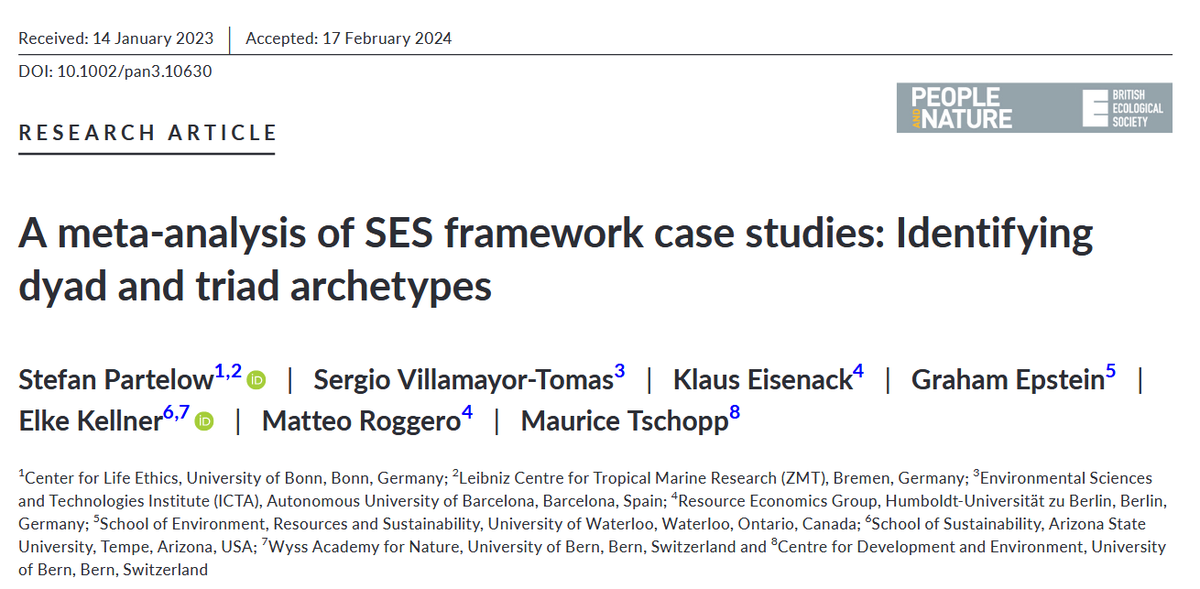
Our new paper in @PaN_BES offers a meta-analysis of SES framework models from diverse case studies.
Can we move SES theorizing beyond single variable-outcome relationships?
Archetype analysis offers a clear pathway. 1/6🧵
https://t.co/RePxnJoJmV
Are you thinking about submitting to People and Nature? Read our new Editorial, 'Navigating the editorial and publishing process at People and Nature: Advice for (and requests to) authors and reviewers', online now:
https://t.co/Tmdbji2adA
Open postdoc position @LeibnizZMT
Project STEPS (Sustainable Tourism Evolving Paradigms) analyzes sustainable tourism in tropical islands. Interdisciplinary mixed methods to examine pathways for a paradigm shift to sustainability.
Deadline April 14
https://t.co/atmuDc8u0b
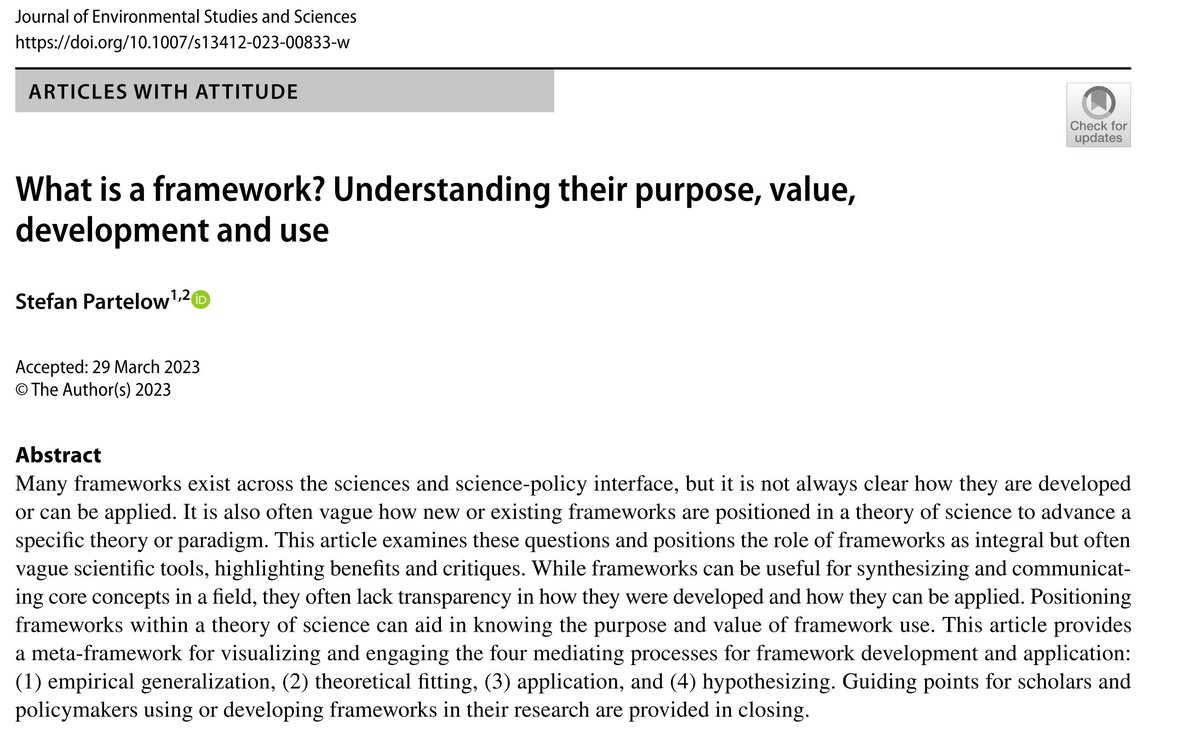
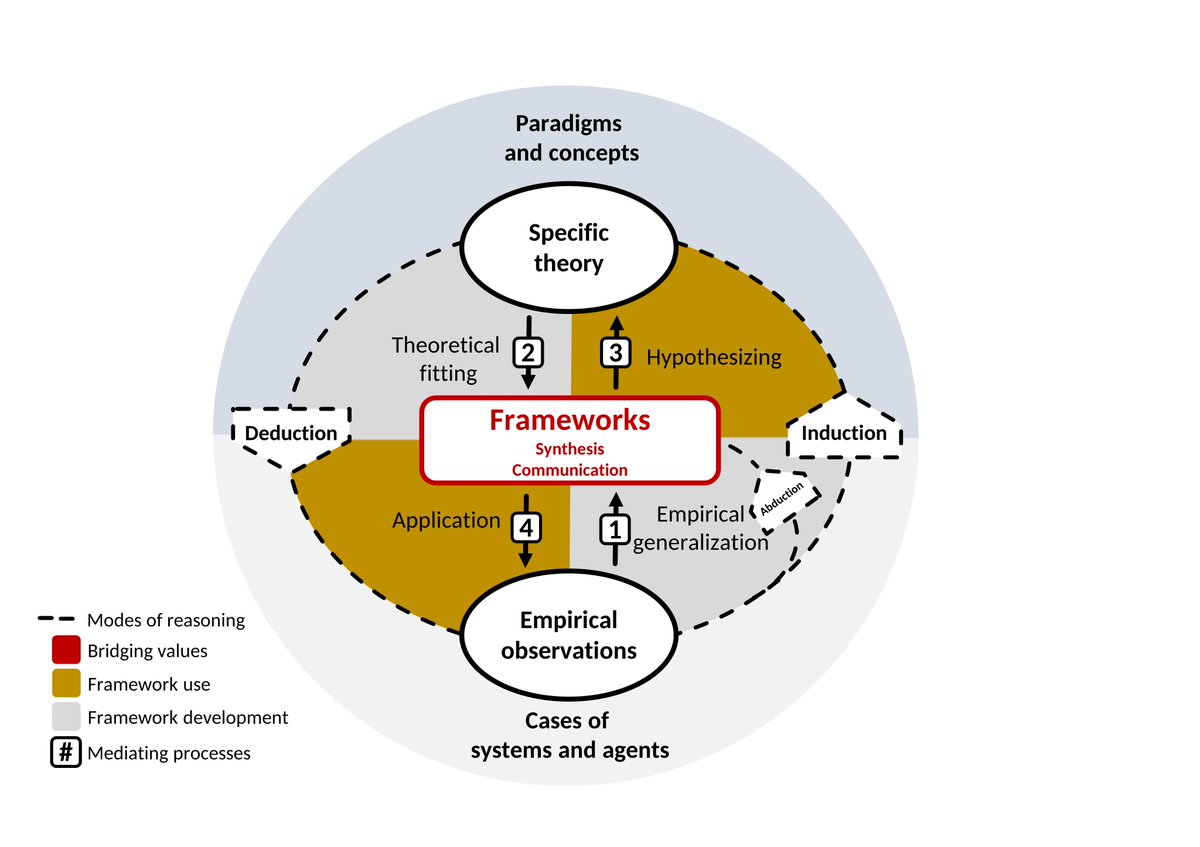
Are you applying or developing a #framework in your research?
How can we do this transparently and rigorously?
In a recent article I review key challenges, definitions, and approaches for engaging with frameworks!
https://t.co/CwFFFwWAnR
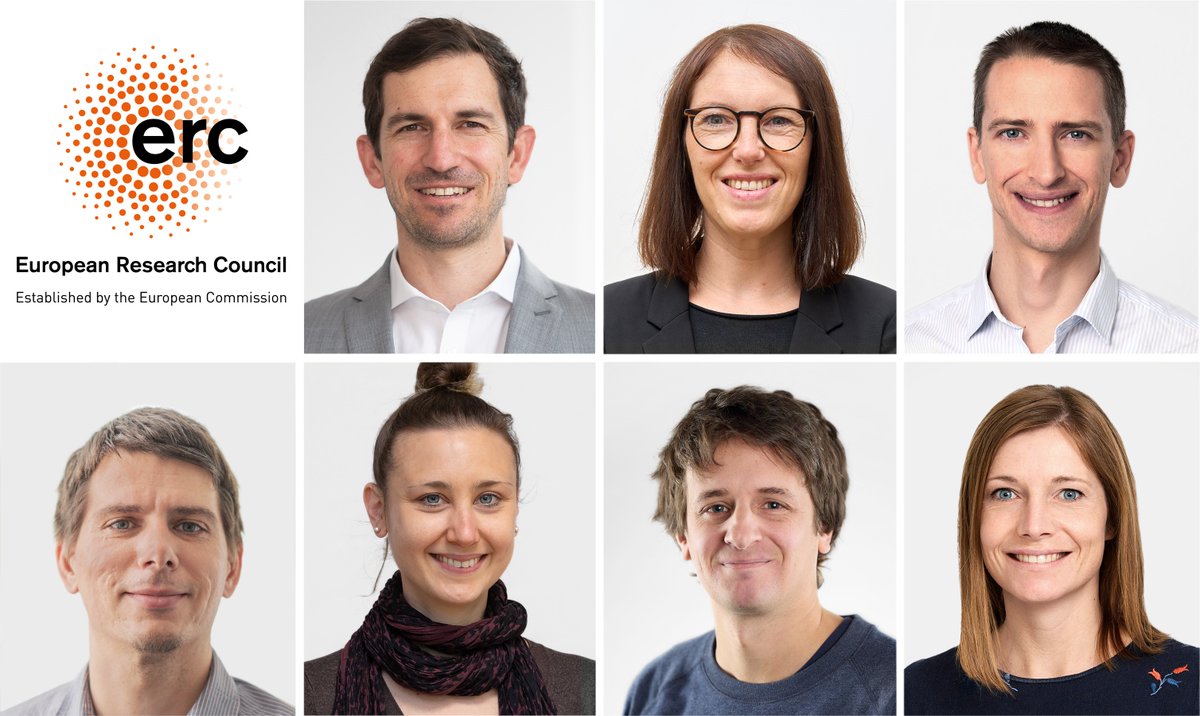
📣 The latest ERC Starting Grant competition results are out! 📣
494 bright minds awarded €780 million to fund research ideas at the frontiers of science.
Find out who, where & why 👉 https://t.co/L6PimhW50v
🇪🇺 #EUfunded#FrontierResearch#ERCStG@HorizonEU@EUScienceInnov
Humbled to share that my @ERC_Research Starting Grant 'SharedSeas' has been funded:
Amplifying ocean commons: pathways for scaling transformative governance
Huge thanks to my wonderful colleagues & mentors for support!!
How can we more effectively scale success??
Seven ERC Starting Grants for @UniBonn - more than ever before! Congratulations to Sarah Auster, Florian Bernard, Melanie Braun, Markus Hausmann, @JagelkaTomas, Andrina Nicola and @SBPartelow! #ERCStG@ERC_Research https://t.co/9eNXGioCRV
Interested in environmental justice?
Listen to my conversation with @bcoolsaet who gives critical reflections on the state of the field, current frameworks and topics. Find @InCommonPod on any podcast player.
@iasc_commons
https://t.co/QNoYRylBoV
Attending the @PECS_Project meeting in Montreal this week?
Chat with Lead Editor @SBPartelow about People and Nature, and come along to the Journal Panel on Thursday to learn more about interdisciplinary publishing📝
🔥I am hiring 4 new postdocs at EqualSea Lab @cretus. The positions are focused on oceans and 1) Indigenous peoples, 2) Tipping points, 3) Ownership of global fisheries, 4) Virtual reality and future oceans. Details here next week! @PECS_Project@DrRashidSumaila@sthlmresilience
I will be recruiting two new PhD students to start in Feb 2025, to join a lively social-ecological research team working on protected areas. This is a competitive opportunity that involves applying for internal scholarships; I will support two or three applicants. If interested./
📢Commissioning Editor wanted📢
We are looking for someone with a grounding in interdisciplinary ecological research to solicit direction-setting articles for the journal.
Apply by 24 July: https://t.co/8KUQs1hxaH
Register for the upcoming seminar on "Towards a more inclusive conservation science" here: https://t.co/OFy2nLLzPp.
This is the last seminar in the "Beyond Inclusive Conservation" series co-hosted by @WWFscience & @IUCN_CEESP
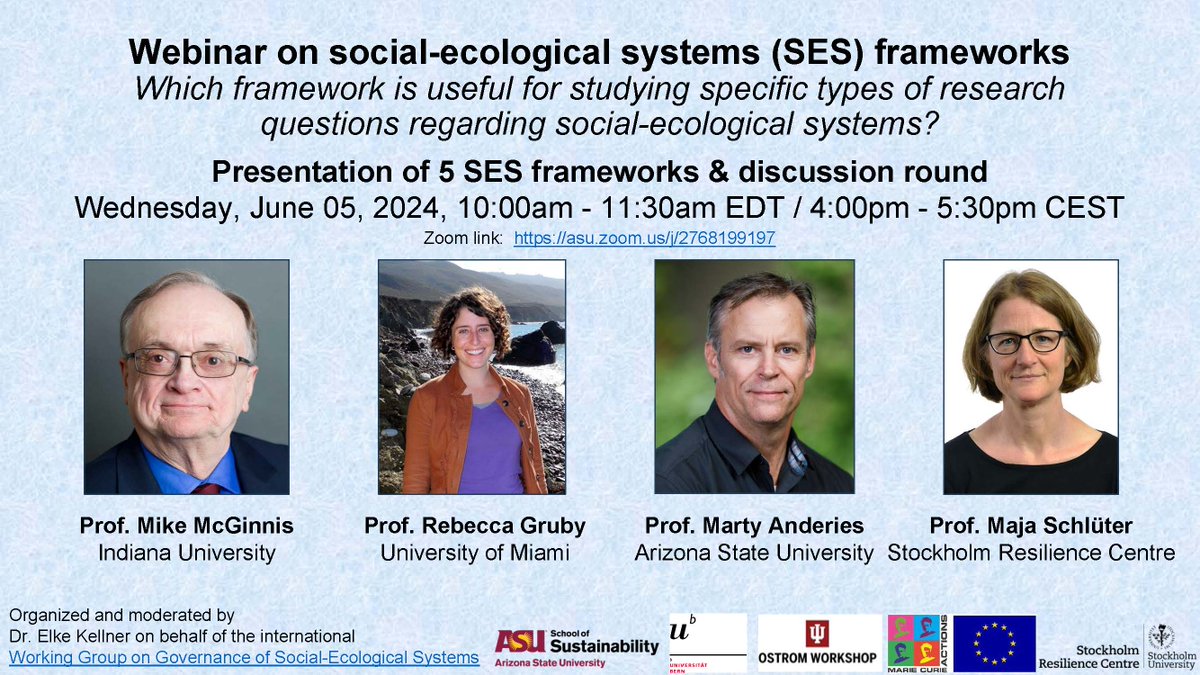
Interested in socio-ecological systems frameworks? Check out this webinar organized by @Elke__Kellner!
Zoom link: https://t.co/ymVyKv7Q52
Learn more about the Working Group on Governance of Social-Ecological Systems: https://t.co/KR2kKu9EbY
Update! I have joined @PaN_BES as a Lead Editor. It is an absolute pleasure to work with @KevinJGaston@KaiChanUBC@AndreaRawluk @PlieningerLab & Rob Fish, and to support the science community with innovative and impactful social-ecological research!
https://t.co/qjBGAfFPjV
Our new paper in @PaN_BES offers a meta-analysis of SES framework models from diverse case studies.
Can we move SES theorizing beyond single variable-outcome relationships?
Archetype analysis offers a clear pathway. 1/6🧵
https://t.co/RePxnJoJmV
Four case study Boxes are presented with empirical support from the original studies on specific dyad and triad links to outcomes.
Dyads and triads can be the building blocks for more complex real world models, as the recurring sub-units of of SES theory.