Dr.Jong-Il Kim @genomicmed from @SNU_GMI shared the latest progress of the SCAID project including Myocarditis, CTD-ILD, and Palmoplantar Pustulosis at #HCA2025GM@humancellatlas
We cordially invite you to our 2024 SNU-GMI International Symposium on Oct 30th (Wed) commencing at 9:00am KST. For those wishing to attend, we kindly request pre-registration by either scanning the QR code or visiting https://t.co/WRB0kZhxZx. We anticipate a robust attendance!!
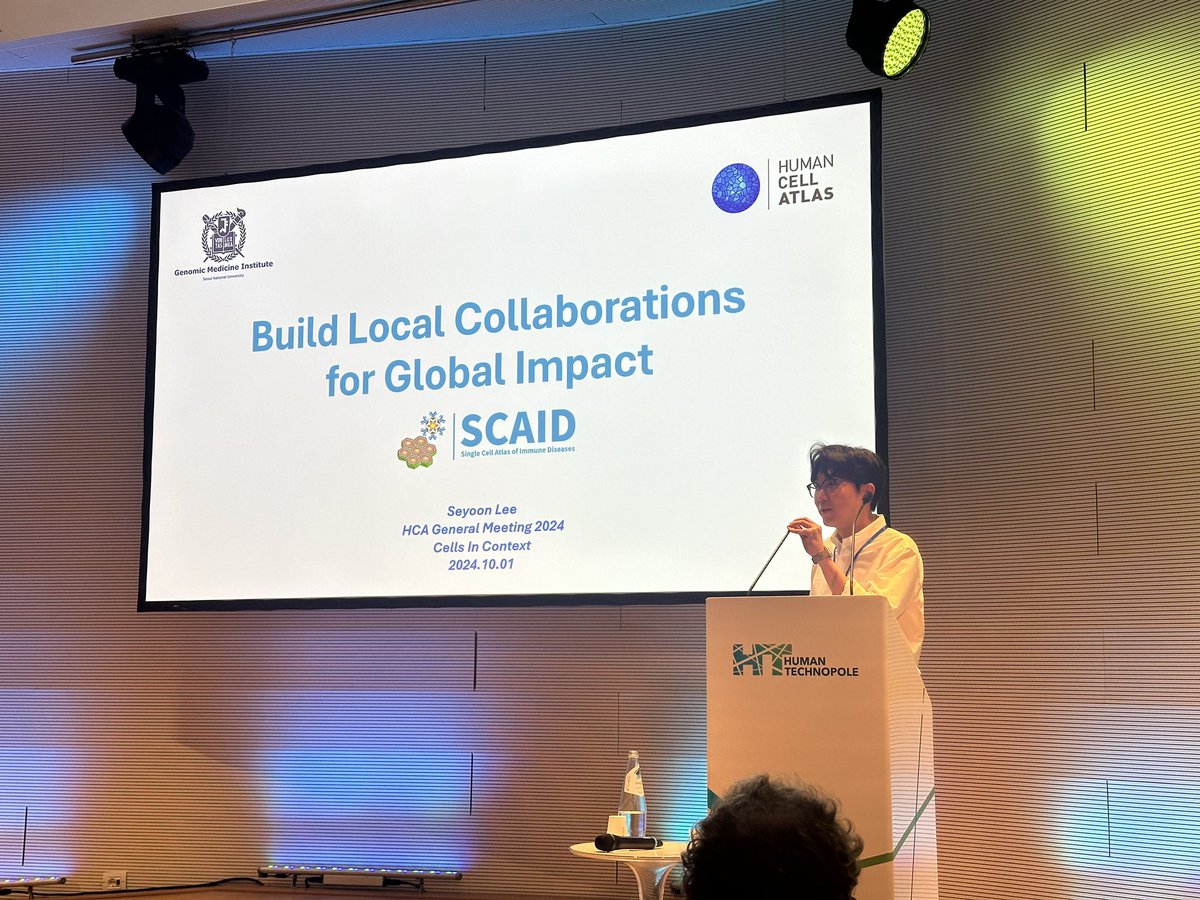
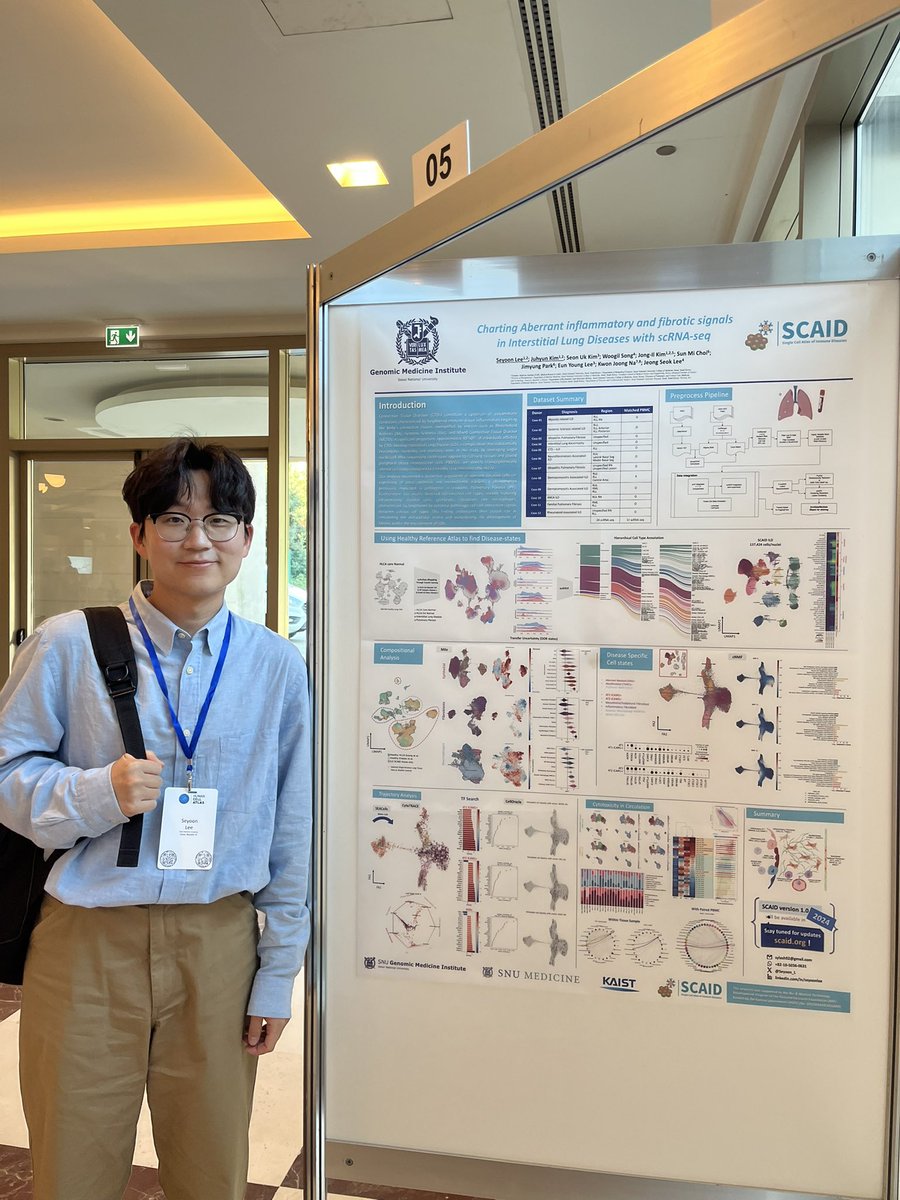
Had a great time in #HCA2024GM Milan. I was very fortunate to be able to present my poster and also go on the podium for the first time to represent @SCAID__
SCAID is featured in #Nature! Our team is grateful for the opportunity share our experience on starting our project in South Korea with all.
Our local research project put us on the global stage — here’s how you can do it, too https://t.co/GFL03P1K0e
#Nature comment article is out today. Introducing the @SCAID__ project, a single-cell consortium in South Korea led by our own Prof. Jong-Il Kim @genomicmed.
Our local research project put us on the global stage — here’s how you can do it, too https://t.co/8kRVUkbp0X
Great to see the #Nature comment article featuring our efforts on starting the @SCAID__ project. SCAID (Single Cell Atlas of Immune Diseases) is a regional single-cell consortium based in South Korea, targeting over 16 immune diseases.
https://t.co/zsX4d1L83d
Grateful for the opportunity to present my research at the 2024 KOGO Winter symposium. #KOGO It was my first ever talk. Felt like it flew by. This work still has a long way to go but I thank all the collaborators in SCAID ILD team.
We invite you to our 2nd Convergent Medical Scientist Workshop on 8/19 (Sat) at 11am-3pm KST. This single-cell omics hands-on workshop encompasses various topics including data QC, normalization & clustering, cell type annotation technique, data visualization, and etc. Join us!!!
Thrilled to share my first paper on GWAS! 📚🧬We utilized imputed genotypes through a new Asian population panel we established, and integrated GWAS with snATAC data to uncover causal cell types! 🧬🧪 Published in Science Advances today! 🎉🥳🥳
https://t.co/BqEzjvn3MQ
We are delighted to announce our spatial cell atlas of the human heart is now on bioRxiv 🫀: https://t.co/CBEOHFi39j
This work adds new regions, modalities (spRNAseq, snATACseq) and cell types to the heart cell atlas, including the cells of the cardiac conduction system ⚡️
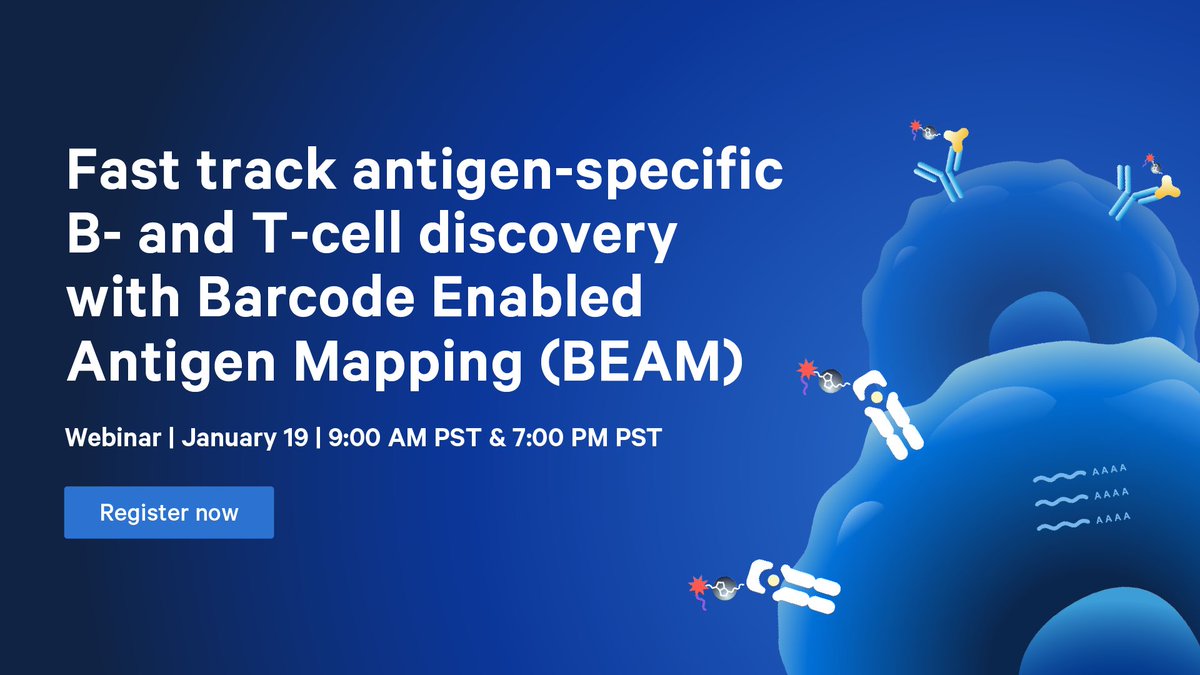
If the next big discovery in immunology is lurking in our blood, we need to generate antigen-specific hits faster. Barcode Enabled Antigen Mapping (BEAM) does just that. Learn how BEAM can help you make the next immunotherapeutic breakthrough: https://t.co/fNzijmeGmH
How can we compare disease dynamics in heterogeneous, typically short high-dimensional time series? Led by Amit Frishberg and Shai @shenorr, we developed TimeAx, which enables discovery of shared dynamics across patients via multiple trajectory alignment. https://t.co/4kPbSrJMtx