Scality solves data storage challenges: security, performance, and cost. Get unbreakable ransomware protection and help to execute AI data-driven ideas quicker.
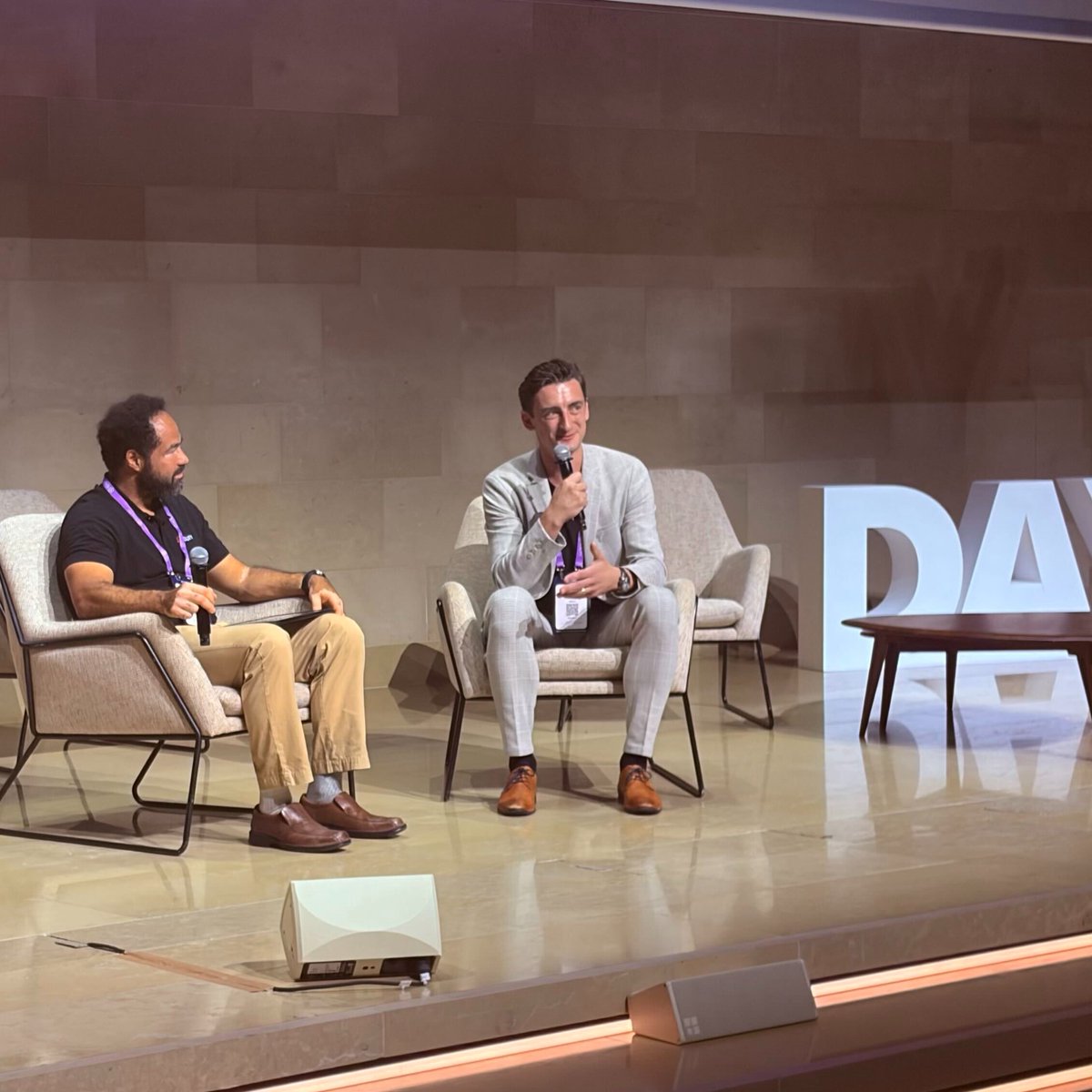
Yesterday we hosted our 11th annual #ScalityDay in Paris, our biggest turnout yet. 🎉 Data, infrastructure and AI in production, cyber resilience, and regulation & sovereignty, capped off by the legendary Scality Rocks after-party. 🎸 Thank you to everyone who joined us!
One day to go until CymruSec! 🙌
Join Centerprise and @scality tomorrow at Cardiff City Stadium to talk data protection, immutable storage and ransomware recovery.
Bring your questions, meet the teams and you could head home with a LEGO set! 🎁
#CymruSec#CyberResilience
Everyone's bragging about blazing-fast storage numbers. How real are they? Giorgio Regni and Paul Speciale on why benchmark claims fall apart in production, the hidden cost of accelerator nodes, and why restore speed matters as much as write speed: https://t.co/I1QogC0VBq
SEC, FINRA, SOX, FFIEC: your storage has to answer to all of them. When regulators look closer, will it hold up? A cyber-resilience checklist mapping storage controls to the regulations financial services IT teams get examined on: https://t.co/rKlHqQzCGR
NAND flash prices expected to surge up to 200%, with supply constraints stretching into 2027. "All-flash everything" is getting hard to justify. Giorgio Regni and Paul Speciale on matching workloads to flash, HDD, and tape, plus a TCO calculator demo: https://t.co/ncWxFgmlC7
.@scality has introduced AI Inference Factory, an on-premises platform designed to help enterprises run AI inference on their own infrastructure rather than relying exclusively on cloud services.
See the on-premises AI inference approach 👇
#DataStorage
https://t.co/WzfzSTe7X0
"Can object storage do files?" According to Scality CTO Giorgio Regni, that's the wrong question. A decade of lessons on file gateways, where they break, why POSIX and object semantics differ, and what storage architects should ask first: https://t.co/LpXy7cpQmF
Backup is not recovery. Most organizations believe they can recover from ransomware; few have tested it. Our readiness checklist covers the gaps in data, access and dependencies, and how to test restores under real attack conditions: https://t.co/qlDFAOl9ED
GPUs have staggering compute. The real bottleneck is memory. Giorgio Regni and Paul Speciale explain how KV cache works, why paged attention matters, and how cached blocks tier from HBM to RAM to flash to object storage. Calculator included: https://t.co/7CW14RT8jT
GPUs are only as fast as the storage feeding them. Paul Speciale, CMO at @Scality, told me inference needs data back in microseconds, and that power per rack matters more than raw capacity these days. He also covered storage that can't be altered, which is a strong defense against ransomware.
https://t.co/C81bd8MsYF
@weka Thank you for being part of #ScalityDay26! It was great having the @weka team in Paris and sharing the stage on what it takes to build the AI-ready enterprise. 🙌
Yesterday we hosted our 11th annual #ScalityDay in Paris, our biggest turnout yet. 🎉 Data, infrastructure and AI in production, cyber resilience, and regulation & sovereignty, capped off by the legendary Scality Rocks after-party. 🎸 Thank you to everyone who joined us!
En ce moment, au 3 mazarium, à Paris 🇫🇷 pour une journée autour d'une question simple : comment faire passer l'IA de la vision à la production, sans sacrifier la sécurité ni la souveraineté de vos données ?
#ScalityDay#ScalityDay26
Scality AI Inference Factory enables organizations to deploy and manage AI inference on their own infrastructure with a supported stack. https://t.co/4wiqYJST7J
#Scality#AIInferenceFactory#Infrastructure
Scality has launched a software stack for running open-weight AI models on servers you own. It went on sale on October 8.
The main idea is where the KV cache lives. That cache is the model's working memory for a conversation, and it usually sits in GPU memory. Scality moves it onto its own object storage. One pool of GPUs reads the prompt and writes the cache to storage. A second pool reads it back and writes the answer, so any free GPU can pick up any old session.
Scality's own tests say a 14K-token context restored from storage reached the first token in 166 ms, 83 ms behind serving it from GPU memory. Reading the cache back was 14 times faster than working it out again, and up to 72 times faster on a 439K-token context. The cache held more than 80 times the memory of one GPU, which Scality says keeps up to 1,000 sessions ready to resume.
These are Scality's lab numbers. The stack runs open models such as Mistral, Gemma, Qwen, Kimi, GLM and DeepSeek on standard Dell, HPE, Lenovo and Supermicro servers. You can buy it as a license or as a managed service.
My read: the payoff grows with the length of the session. The context went from 14K to 439K tokens, about 31 times longer (439 / 14 = 31.4). The speedup went from 14x to 72x, about 5 times bigger (72 / 14 = 5.1). Long agent sessions that keep coming back to a huge history are where this pays most.
https://t.co/y54rhoi9Tm
L’IA promet l’avenir, mais sans données résilientes, pas d’IA de confiance. Au Scality Day Paris, Edwin Weijdema (@Viperian) l’a rappelé lors de notre session DEFEND: Cyber Resilience & Backup. Merci à @Scality et à tous les participants !
🇫🇷 Great conversations at #ScalityDay26!
Our team shared perspectives on AI-ready infrastructure, connected with customers and partners, and explored what’s next for #AIInfrastructure.
🙌 Thanks to @scality and everyone who connected with us!
October is Cybersecurity Awareness Month. A good time to revisit why ransomware rewrote the rules of backup, and how object lock, checksumming, and layered security make restores faster and safer. Giorgio Regni and Paul Speciale explain: https://t.co/71yA9AH6Ty