Our InSuDoc 2025 Event Highlights video is now available! Enjoy these memorable moments from our annual international summer school! See you at InSuDoc 2026!
YouTube: https://t.co/f3pRkh8bjO
News Highlights: https://t.co/fKd5iWVN2R
#ECE#EdUHK#InSuDOc2025
Module 7 of the NCII Math Course was a fun module to create! It's all about fractions and how to help students understand the length, area, and set models of fractions. This course is FREE and asynchronous. https://t.co/WskeLqZlc0
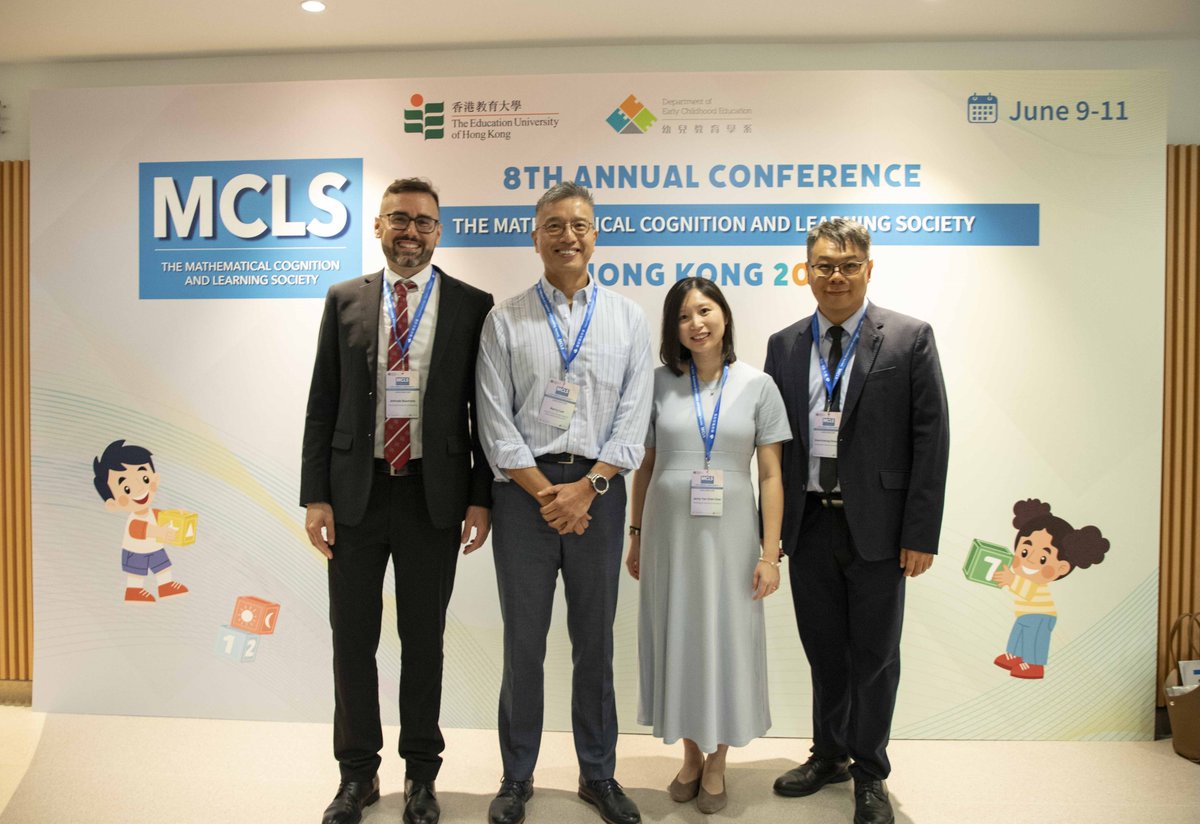
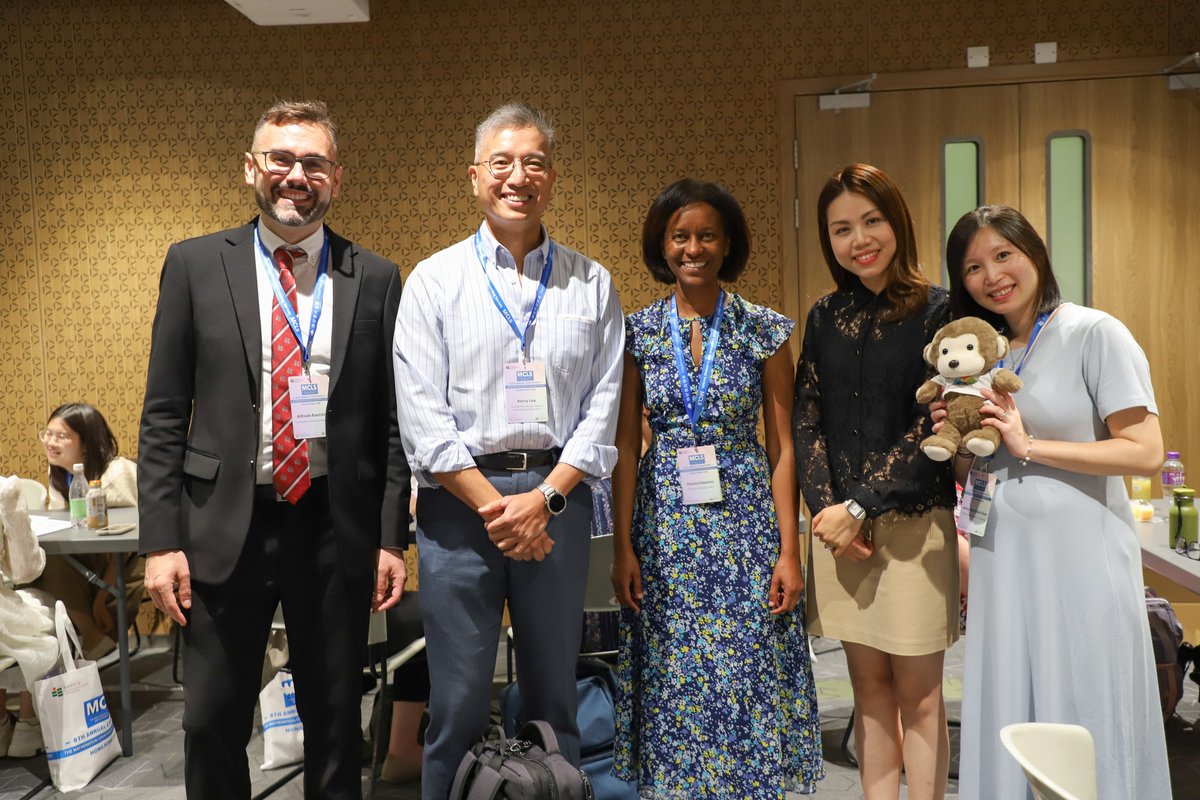
✨ Relive the magic of #MCLS2025 Hong Kong 🇭🇰 hosted by our ECE Department at EdUHK!✨Watch our Event Highlights video and relive:
✅ 26 symposia
✅ 50 lightning talks
✅ 90 posters
Next stop: Padua, Italy for #MCLS2026! 🇮🇹
👉 Watch: https://t.co/tr3s1YabZd #ECE#EdUHK
Completed a poster presentation on developing a rating scale to identify maths learning difficulties @ECE_EdUHK on the first day of #mcls2025. Thanks for all the audiences' interests and comments!
Seeking your views on behavioural signs that are commonly observed in primary school students who struggle in learning maths
To participate, please scan the QR Code below or access https://t.co/hpoGkGZSnc
*Please feel free to share with others who may be interested*
It was a pleasure hosting The Honourable @JasonClareMP, Minister for Education, to discuss how we can best set Australian students up for future success. Our conversation focused on the need for early maths screening to identify students at risk of falling behind and to ensure they receive the support they need to thrive in school.
School maths failure can improve with better instruction methods
Australian students are struggling with maths proficiency, and lagging behind other countries, while efforts to improve Australian maths education have had limited success.
A new CIS paper argues that this lack of success is largely due to there not being enough focus on teacher effectiveness.
In The Science of Mathematics and How to Apply It, Dr Siobhan Merlo outlines why we need to ensure that the best teachers are teaching in the most effective ways. This includes using the science of maths.
“The science of maths, based on the science of learning framework, offers evidence on the best instructional methods for improving student outcomes,” Merlo says. “It helps educators evaluate different teaching approaches in maths.”
“Understanding students' cognitive limits is crucial. Learning suffers when students are distracted, anxious, overwhelmed, not responsive, lack practice, find the material too unfamiliar, or don't get timely and specific feedback.”
She says there are two types of knowledge: Biologically Primary Knowledge (BPK), which is naturally acquired, and Biologically Secondary Knowledge (BSK), which is learned through instruction, like maths. “For example, having a basic sense of 'more' or 'less', known as number sense, is BPK, while learning to count is BSK and requires explicit teaching.”
Myths exist about these types of knowledge, Merlo says.
“BPK, like critical thinking skills, develops relatively naturally. The acquisition of BSK, on the other hand, needs clear teaching, effort, and persistence. For ill-equipped students, attempts to make BSK engaging with rich real-world tasks can overload memories, increase anxiety, reduce learning, and lower engagement.”
“Teaching methods should match the learner's skill level. Explicit-direct instruction is best for learning new skills and building fluency, while less guided approaches work better for generalising and adapting skills.
“Effective instructional formats and methods should include scaffolding with feedback followed by a sufficient number of conventional problems to build fluency.
“Teaching formats should be well-organized and integrated, targeted and signalled to indicate conceptual relationships, and use complementary modalities,” Merlo says.
If you're ready to upskill in early reading instruction, assessment, and intervention, go to this link for more info on course costs, entry reqs, & how to apply: https://t.co/CXVuu3gzmr 🧵3/3
@kelly_sc_ I am doing a PhD under Prof Rebecca Bull Macquarie Uni, we try to explore developing a teacher rating scale and short screener for yr 1-2 students specific for the Australian context. MLD has a strong heterogeneity, so it isn't easy. Happy to be in touch to share more!🙂
Congratulations to Oakleigh PS! @BenCarrollMP 's announcement affirms the school's decision of adopting systematic synthetic phonics approach years ago, while withstanding all criticism!
Our ambition is to ensure every child from any background can read fluently.
Studies show children learning by the phonics method are two years ahead of their peers.
We’ll put high quality phonics at heart of teaching children to read.
#EducationState
https://t.co/rWVLAgraei
Our ambition is to ensure every child from any background can read fluently.
Studies show children learning by the phonics method are two years ahead of their peers.
We’ll put high quality phonics at heart of teaching children to read.
#EducationState
https://t.co/rWVLAgraei
@BenCarrollMP Teaching based on high quality research evidence should be a no-brainer. I'm very pleased to see your determination! Please make sure the policy can be effectively transferred into practice and benefits our students! Writing and numeracy are waiting for you to address too!