Financial Services leader with 20+ years of experience across the software, mutual fund, & insurance industries, ranging from Fortune 500 to start-up companies.
It's published!
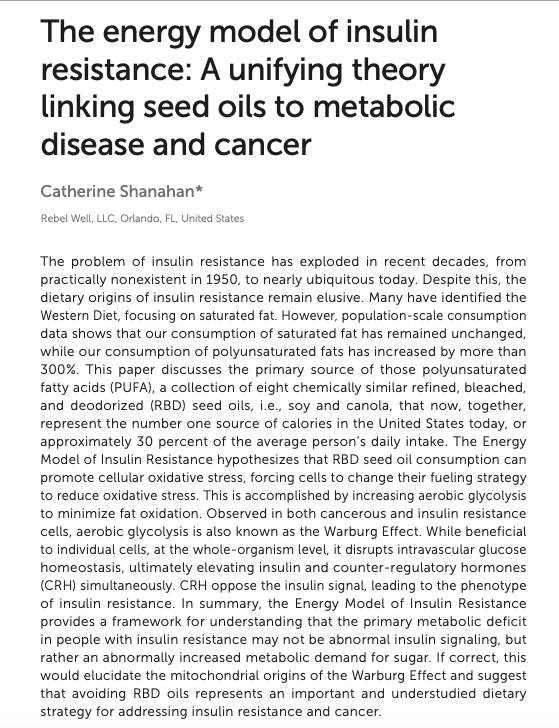
The energy model of insulin resistance: A unifying theory linking seed oils to metabolic disease and cancer
Here’s the link to the full text.
Let’s make this the most downloaded paper on their website!!
Here’s my summary:
The paper proposes that seed oils, by causing oxidative stress, force cells to change their fueling strategy. The result of that is metabolic disease and cancer.
It works like this:
Oxidative stress suffocates cells. It puts them into a kind of survival mode, and activates genes for bringing sugar into the cell. That's called aerobic glycolysis, which is now understood to be the main mechanism driving cancer!
At the whole-person level, many cells stealing sugar from the bloodstream all at once lower our blood sugar. That causes hypoglycemia, and then you get a flood of stress hormones.
This is immediately practical.
Wonder why you feel hangry? That's why. And yes it means you have insulin resistance. Cancer and insulin resistance share the same root cause. So if you get hangry, you are at higher risk of cancer.
This paper explains why insulin resistance and cancer are rampant among youth. They were tragically born and raised on more processed foods than any previous generation. Seed oils are the worst ingredient in processed foods.
I tried to make the theory airtight. But I appreciate anyone who wants to poke holes.
Writing this paper consumed many hours over the past few months. Keeping me away from terribly important things, like posting on X.
Read the full text here:
https://t.co/LS3dEjdGLN
Driving over 2,000 miles from Michigan to Los Angeles, the U-M Solar Car Team is putting their latest innovations to the test ahead of the 2027 World Solar Challenge, and you can follow their entire cross-country route in real time right here: https://t.co/5oUGfxSurI
Robert Kennedy Jr. wants to do the most basic thing science can do - compare the health outcomes of vaccinated children to unvaccinated children using the largest medical database in America.
That's it. That's the study. That's the scientific method.
And the American Academy of Pediatrics is suing him to stop it.
Think about what that means. Not content with blocking changes to the vaccine schedule, they are now going to court to prevent an investigation into whether the schedule is actually producing healthy children. The one question the entire program should have been answering for fifty years, and the people who run that program are fighting in federal court to make sure it never gets asked.
This is an industry protecting itself from its own data.
I am not accusing anyone in medicine of malice. I am saying that the long-term health investigation has never been done with the seriousness it deserves, and now that someone is finally trying to do it, there is a worldwide effort to shut it down before it starts.
We have to do this study. We have databases right now, like the Henry Ford Health database, that could give us real answers. Every database in this country should be opened to this investigation. The scientific method demands it. The health of our children demands it.
The only people who have something to fear from the truth are the ones fighting this hard to hide from it.
https://t.co/W04GZu2OZB
.@NIHDirector_Jay: "This is not covid, and we don't want to treat it like covid... We want to treat it with the Hantavirus protocols that were successful in containing outbreaks in the past... we shouldn't be panicking when the evidence doesn't warrant it."
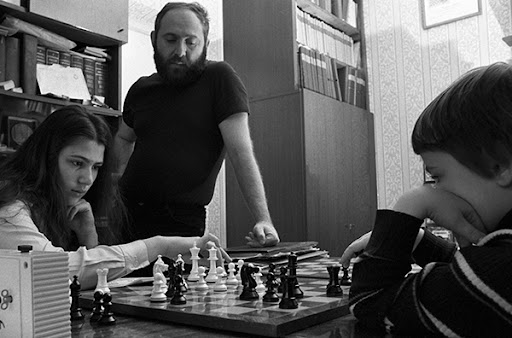
A Hungarian psychologist raised three daughters to prove that any child could become a chess grandmaster through early specialization. He succeeded. Two of them became grandmasters. One became the greatest female chess player who ever lived.
Then a sports scientist looked at the data and found something nobody wanted to hear.
His name is David Epstein. The book is called "Range."
The Polgar experiment is one of the most famous case studies in the history of deliberate practice. Laszlo Polgar wrote a book before his daughters were even born arguing that geniuses are made, not born. He homeschooled all three girls in chess from age four. By their teens, Susan, Sofia, and Judit were dominating tournaments against grown men. Judit became the youngest grandmaster in history at the time, breaking Bobby Fischer's record. The story became the gospel of early specialization. Pick a domain young, drill it hard, and you can manufacture excellence.
Epstein opens his book by telling that story honestly and then quietly demolishing the conclusion most people drew from it.
Chess works that way. Most things do not.
Here is the distinction that took him four years of research to articulate, and that almost nobody who quotes the 10,000 hour rule has ever read.
There are two kinds of environments in which humans develop expertise. Psychologists call them kind and wicked. A kind environment has clear rules, immediate feedback, and patterns that repeat reliably. Chess is the cleanest example. Every game ends with a winner and a loser. Every move is recorded. The board never changes shape. The pieces never invent new ways to move. A child who plays ten thousand games will see most of the patterns that exist in the game, and pattern recognition is exactly what chess mastery is built on.
A wicked environment is the opposite. Feedback is delayed or misleading. Rules shift. The patterns that worked yesterday may be exactly the wrong patterns to apply tomorrow. Most of the real world looks like this. Medicine is wicked. Investing is wicked. Building a company is wicked. Scientific research is wicked. Almost every job that involves a complex changing system with humans in it is wicked.
The Polgar sisters trained in the kindest environment any human can train in. Their success was real and the method was correct. The mistake was generalizing the method to fields where the underlying structure of the environment is completely different.
Epstein's research is what made the implication impossible to ignore.
He looked at the careers of elite athletes outside of chess and golf and found that the pattern was almost the inverse of what people assumed. The athletes who reached the very top of their sports were overwhelmingly people who had played multiple sports as children, specialized late, and often switched disciplines well into their teens. Roger Federer played squash, badminton, basketball, handball, tennis, table tennis, and soccer before tennis became his focus. The kids who specialized in tennis at age six and trained year-round for a decade mostly burned out, got injured, or topped out at lower levels of the sport.
The same pattern showed up everywhere he looked outside of kind environments. Inventors with the most patents had worked in multiple unrelated fields before their breakthrough work. Comic book creators with the longest careers had drawn for the most different genres before settling. Scientists who won Nobel Prizes were dramatically more likely than their peers to be serious amateur musicians, painters, sculptors, or writers.
The skill that mattered in wicked environments was not depth in one pattern. It was the ability to recognize when a pattern from one domain applied unexpectedly in another. That kind of thinking cannot be built by drilling a single subject. It can only be built by accumulating mental models from many subjects and learning to move between them.
The deeper finding is the one that should change how you think about your own career.
Specialists in wicked environments often get worse with experience, not better. Epstein cites studies of doctors, financial analysts, intelligence officers, and forecasters showing that years of experience in a narrow domain frequently produce more confident judgments without producing more accurate ones. The expert builds elaborate mental models that feel comprehensive and turn out to be increasingly disconnected from the actual structure of the problem. They stop noticing what does not fit their framework. They mistake fluency for understanding.
Generalists do better in wicked domains for a reason that sounds almost mystical until you understand the mechanism. They have less invested in any single mental model, so they abandon broken models faster. They are used to being a beginner, so they are not threatened by the discomfort of not knowing. They have seen enough different domains that they can usually find an analogy from one field that unlocks a problem in another. The technical name for this is analogical thinking, and the research on it is one of the most underrated bodies of work in cognitive science.
The single most useful sentence in the entire book is the one Epstein puts almost as a throwaway.
Match quality matters more than head start.
A person who tries six different fields in their twenties and finds the one that genuinely fits them will outperform a person who picked one field at fourteen and stuck to it on willpower alone. The lost years were not lost. They were the search process that produced the match. Every field they walked away from taught them something they later imported into the field they finally chose.
The reason this is so hard to accept is cultural, not empirical. We tell children to pick a path early. We reward the prodigy who knew at six. We treat the late bloomer as someone who failed to launch on time, when the data suggests they were running an entirely different and often more effective optimization process underneath.
The Polgar sisters were not wrong. The conclusion the world drew from them was.
If your environment is genuinely kind, specialize early and drill hard. If it is wicked, and almost every interesting human problem is, then the people who win are the ones who refused to specialize until they had seen enough to know what was actually worth specializing in.
You are not behind. You were running the right experiment all along.
Stanford scientists may have just killed the $65B knee and hip replacement industry.
They made a breakthrough that could regrow aging cartilage and reverse arthritis.
Here's the breakdown:
🚨Orthopedics is the most corrupt medical specialty — oncology ranks a close 2nd, according to investigative journalist Gardiner Harris.
Surgeons choose implants & devices based on kickbacks, royalties & speaking fees rather than what’s best for the patient.
Medical errors are now the 3rd leading cause of death in the U.S. — claiming roughly 440,000 lives every year (about 1,200 people per day).
Your best protection? Never leave a loved one alone in the hospital. Have a trusted family member or advocate present 24/7, especially at night when visiting hours end.
The system is built around “sick care” profits, not healing. Arrange overlapping shifts so the patient is never without protection.
Have you or someone you know experienced implant failure, unnecessary surgery, or hospital negligence? Share your story below — the more we expose, the safer we become.
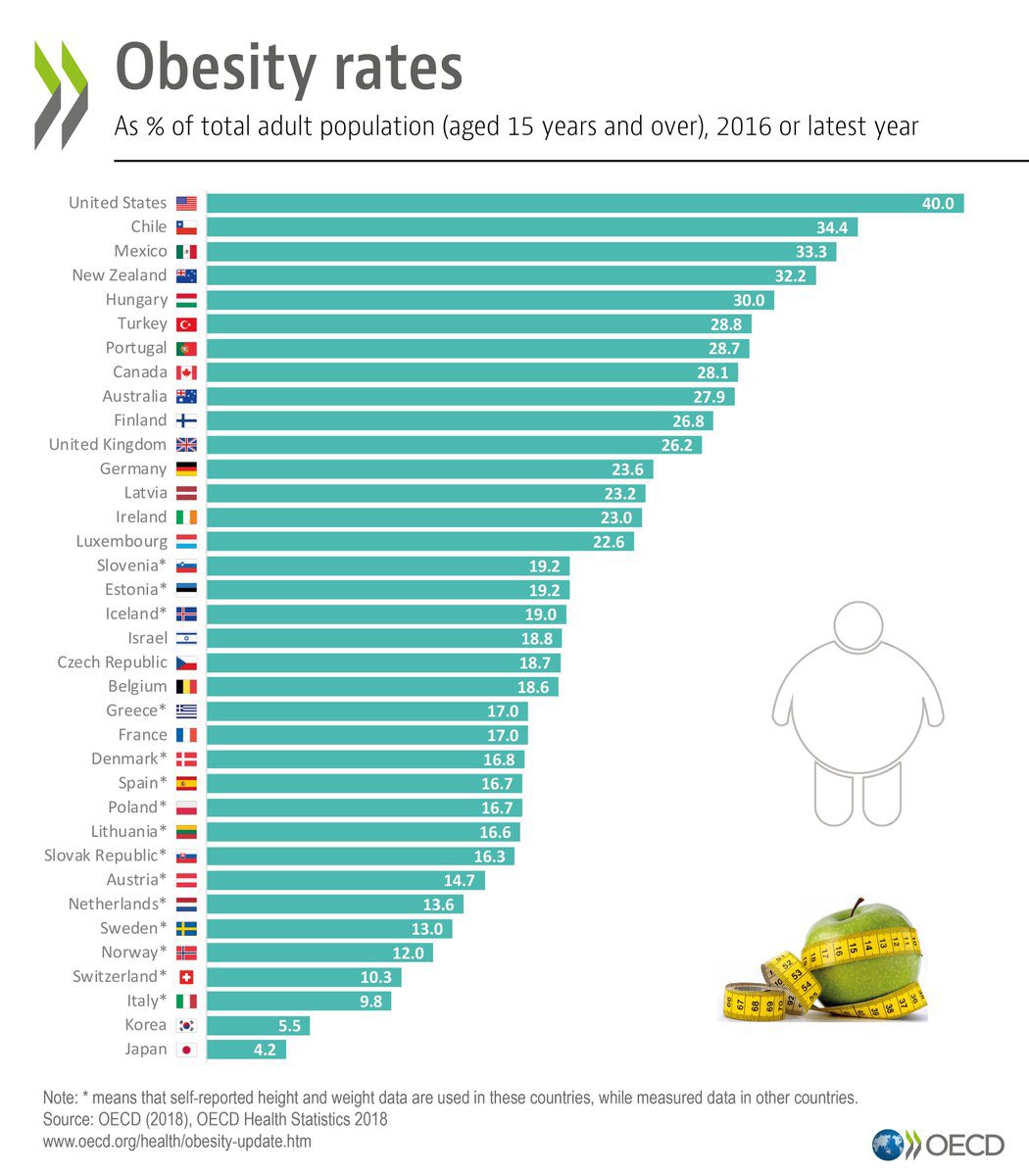
The Trump admin is declaring war on obesity.
The trends below are costing America trillions of dollars and hundreds of thousands of shortened lives per year.
.@SECPaulSAtkins on digital assets: "We are out to harmonize the rules between the SEC and the CFTC, giving clarity and certainty to the innovators and to investors...so that people can develop their products in the United States rather than feel that they have to go offshore."
Thank you to @SenLummis for your continued efforts in the Senate to advance critical market structure legislation for digital assets.
As I said during my testimony, it is vital that the CLARITY Act is signed into law.
The digital asset revolution is here, and I am confident that with leadership from both sides of the aisle we can get this across the finish line.
By passing this one act, the GOP will save the republic AND rescue the GOP. If they fail, we all fail. 80% off all Americans want this - you need ID for everything except voting. There is only one reason not to pass this and we all know what it is. GOP save the republic, save the Republican Party from itself. PASS THE SAVE ACT.