@GrainStats Agreed. That's why we've created resources that explain how to track export demand. We do it for clients on a weekly and monthly basis, but it's better when they also know how to do it rather than just relying on media.
China says President Xi Jinping will travel to the US to meet President Donald Trump, a visit that comes with a one-year trade truce winding down https://t.co/Rz0p8bDTG2
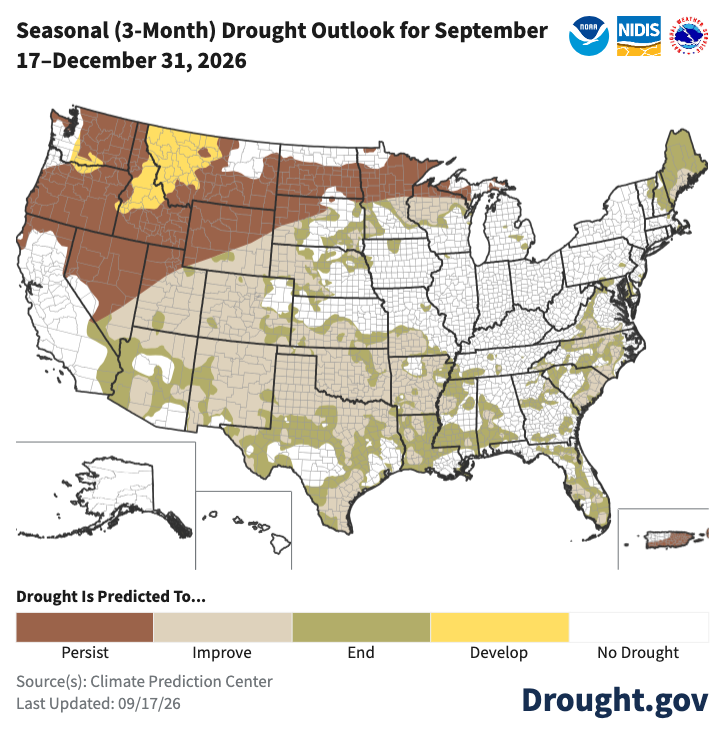
New Seasonal Drought Outlook by @NOAA's @NWSCPC
Expected drought development: Northwest and N. Rockies
Improvement: Southwest, C. Rockies, Plains (except part of N. Plains), Midwest (except part of the Upper Midwest), East
Otherwise, drought persists. https://t.co/Y3NeatDpDl
Black Sea trade disruptions remain a focus for the global grain markets. How is this year different from 2022? I had a great discussion with @sizov_andre w/ @sovecon this week to get his insights into what it means for global trade.
Watch the full video: https://t.co/grcaHyUa8J
Had a great discussion with Dawson Schmitt about the disruption to Black Sea #grain export flows and what it means for the global market.
Link in the comments.
#wheat#corn#oatt#blacksea
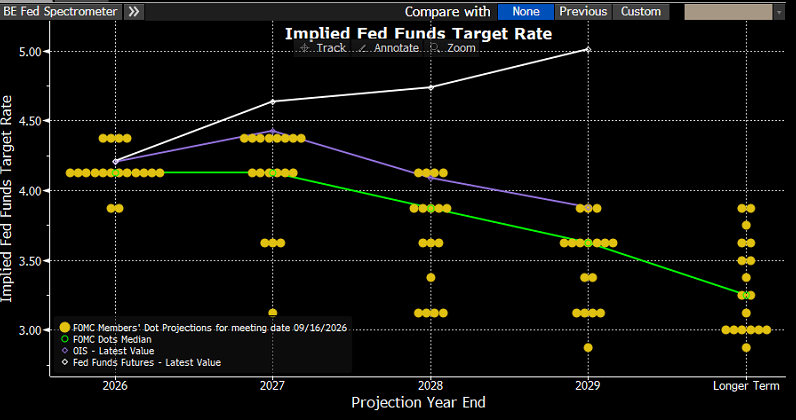
Dot plot following today's Fed Meeting.
The Fed Funds Rate was raised by 25 basis points, the first increase since 2023. The dot plot calls for at least 1 more increase in 2026.
The USDA reported that the U.S. imported 2,453 feeder #cattle from Mexico during the first week that the border reopened to livestock crossings. That compares to 228,194 head that had crossed by this time last year.
The yield debate continues ahead of the USDA’s September WASDE report on Friday. What are the market expectations? Plus, how could Super El Niño influence Brazil’s soybean production? Dawson and Nick break it down in this week’s Commodity Chat: https://t.co/88duAesedn
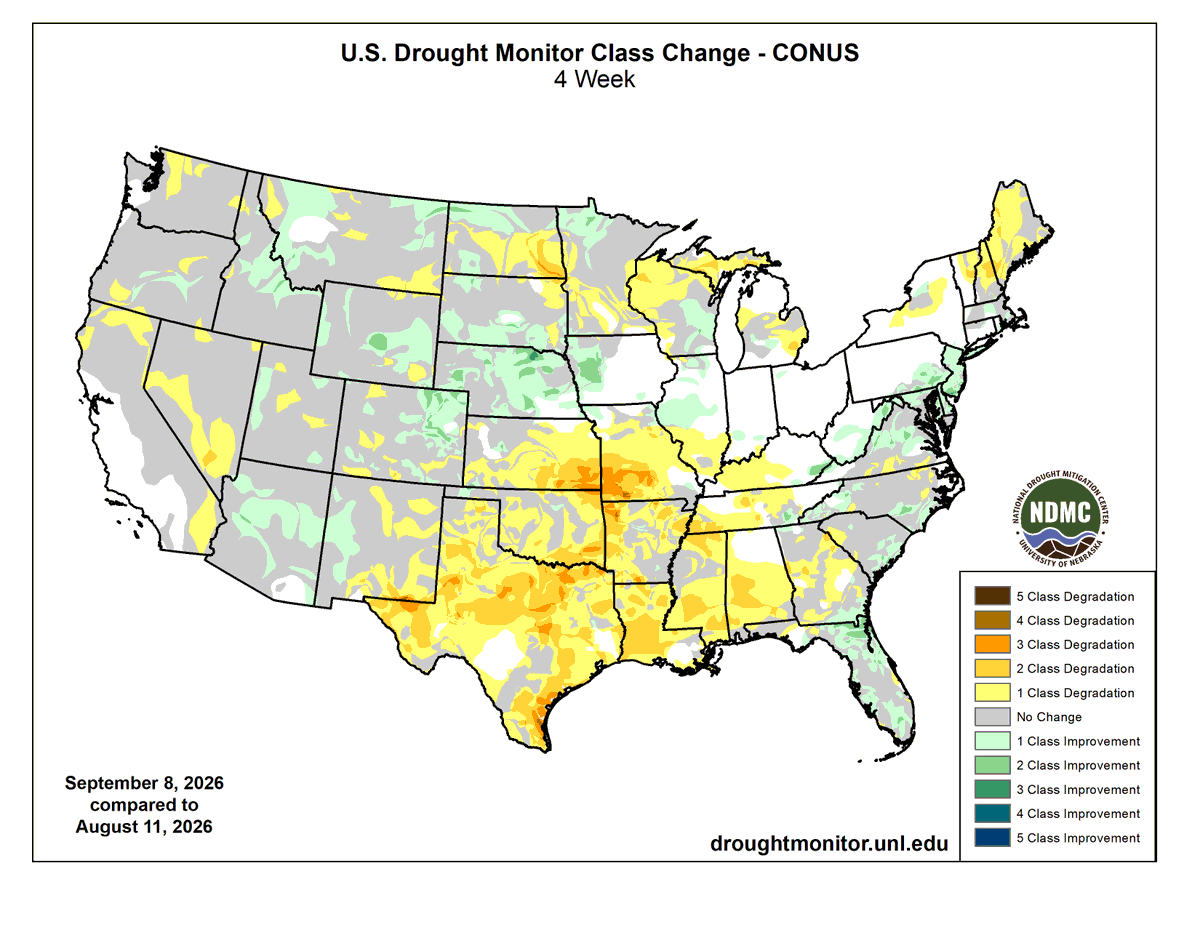
Large drought expansion observed across the southern tier of the U.S. over the past month. Notably, cotton areas under drought rose to 63% this past week, up 4% from the previous week and 31% higher than a year ago.
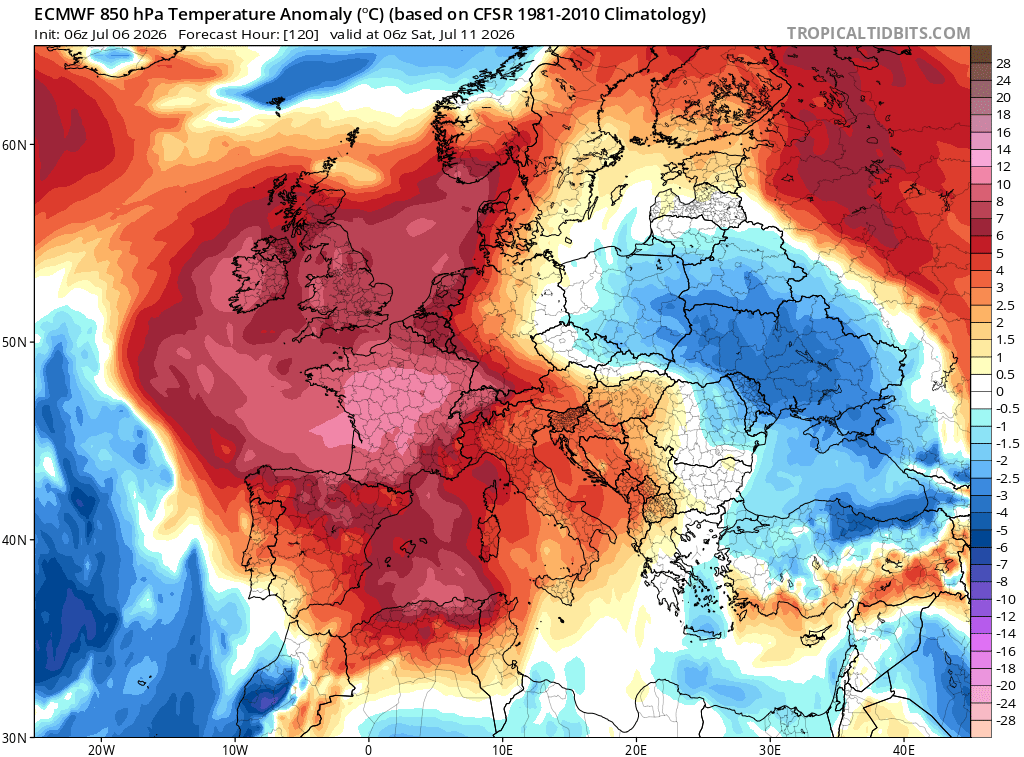
French #corn conditions plunged a week ago due to extreme heat and dry spells. Ratings deteriorated to a 13-year low, according to the country's agriculture ministry. Above-normal temperatures are expected to continue this week.
Private exporters reported the following sales activities for MY 2026/2027: 132,000 MT of soybeans for delivery to China, 285,775 MT of corn for delivery to Mexico, and 120,000 MT of soybeans for delivery to unknown destinations. https://t.co/kxQkMd2SrH
@drbrock37 I keep wondering why USDA hasn't reduced its 2025/26 target. Not only is efficiency increased substantially, but we are also using more sorghum for ethanol.
As expected, @USDA_APHIS confirmed the detection of a New World Screwworm (NWS) fly in a 3 week old bovine in Zavala County, Texas.
@USDA and Texas Animal Health @TAHC officials are taking immediate action to contain and eradicate NWS from the area.
For more information visit https://t.co/iMtgImPOIG
More info ⬇️
https://t.co/ET5jLjn2hK
Just wrapped up a virtual meeting with ~50 of our outstanding Texas cattle ranchers and @TAHC. I also have been in contact with @GregAbbott_TX, @LtGovTX, and the @Burrows4TX team.
Our food supply is 100% safe. This potential New World Screworm detection is being fully contained and is not a harm to the American food supply or consumer safety. The NWS specimen has arrived at the airport in Ames, IA and is being transferred to National Veterinary Services Laboratories (NVSL). We will update as soon as we have confirmed test results.
Unfortunately, the open-border policies of the last administration and the resulting illicit cattle movement throughout Mexico have caused NWS to potentially reach our side of the border. BUT, there is no one better than Texas and our live stock producers to have in this fight.
All models showed NWS coming to the U.S. last summer/early fall — so a big thank you to our partners across the industry and local, state and the entire Trump administration for unprecedented action that gave us almost an extra year to prepare for this moment.
Together with so many partners, including the Texas Animal Health Commission, Texas A&M AgriLife, Texas Farm Bureau, Texas Cattle Feeders and Texas & Southwestern Cattle Raisers Association, we will effectively combat, contain and eventually eradicate this pest.
Additional @USDA personnel have arrived in South Texas to support our partners on the ground. The National Veterinary Stockpile is ready to deploy and on its way. I now call on our producers to be vigilant and watchful. The most effective thing to do right now is to put eyes on all live stock. If you see anything suspicious, contact your state animal health official (linked on the https://t.co/PWVCae53Jw website).
Texas cattle and live stock producers are the backbone of our state and our nation. We will meet this challenge head-on.
Go to https://t.co/iMtgImPOIG for daily updates.
Soybean oil used for biomass diesel production was a RECORD in March. Total usage was 1.283 billion pounds, up 54% from March 2025.
Soybean oil was heavily favored over other feedstocks, as the share of soybean oil used in biomass diesel production rebounded during Q1 2026.
Precipitation rankings for May. Drier in northern Midwest states and variable further south. It will be interesting to see how June shapes up for precipitation, as the next week could be drier yet for some of the same areas.
US wheat will be turning over to the next marketing year next week. How are export sales performing for the upcoming season?
Outstanding new crop sales for the 2026/27 marketing year are running about 37% below this time a year ago and are about 12% below the five-year average.
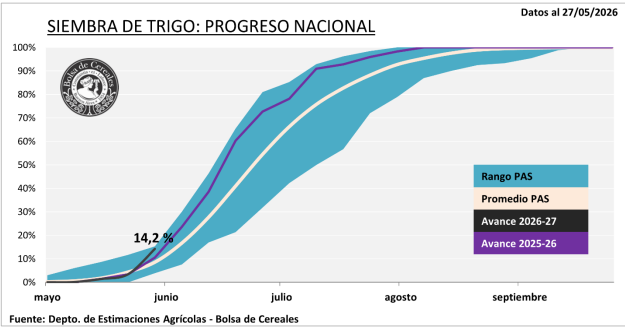
Argentina's wheat planting is off to a strong start. The Buenos Aires Grain Exchange said 14.2% of the crop was planted, the fastest on record.
The exchange said sowing area should reach 16 million acres, down 3% year-over-year but still about 5% above the 10-year average.
NOPA Soybean Crushings hit 211.9M bushels in April, up 11% year-over-year.
Spot soybean crush margins hit a record this week, driven by strong meal prices and sharply lower soybeans.