Spatial + resource ecology is challenging to quantify in wild animals, especially marine fish. Our new @JAppliedEcology paper combines telemetry and isotopes to generate a resource isoscape to help inform habitat + fisheries management in Florida Keys https://t.co/zbcu4Oli8F
@Top100Rick Although I’m obviously nowhere near as good, my yardages are super similar to Si Woo’s, throughout the whole bag. PW 135, driver 297. I don’t know exactly why, but I don’t really try to swing my high irons very hard. They’re accuracy clubs. I don’t need them to go far.
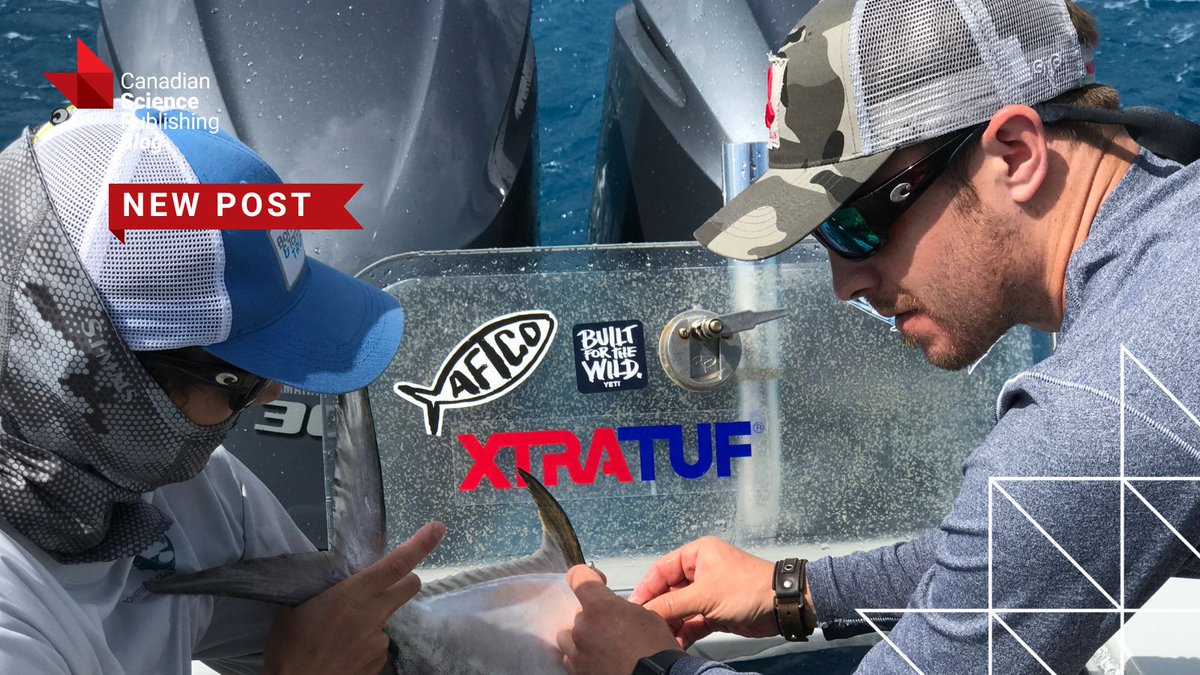
Beyond the hook: do angler-fish interactions in a catch-and-release recreational fishery modify fish space use and catchability?
👥 @lucaspgriffin et al.
📚 University of South Florida, @KeepFishWet and other partners
➡️ https://t.co/cbsbwORen9
@thecavedaddy Because with our economic systems, the rich get exceedingly wealthy, sucking too much money out of the system, driving inflation, reducing capacity to support societal goals
What are the effects of tagging on fishes?
Our review + meta-analysis explores intracoelomic tagging effects in fishes. We summarize the existing literature and examine the 2% rule using evidence from a broad representation of all published studies.
Preprint link below 🧵
Dr. Jake Brownscombe, 2025 Stevenson Lectureship Award winner, is tackling aquatic ecology’s biggest challenges. Learn how his research is shaping conservation decisions in a new #CSPBlog post ▶️ https://t.co/5VXCwy7kQ2
@sci_angler@FishOceansCAN
From shaping marine protected areas to leading environmental assessments, Dr. Jake Brownscombe is making an impact in aquatic science. Read about the 2025 Stevenson Lectureship Award winner’s groundbreaking work ▶️ https://t.co/4SeZIV4viq
@sci_angler@FishOceansCAN@scas_scsa
Performance of an @Innovasea acoustic receiver at detecting fish over a year in Stoney Lake, Ontario. We're using this approach to refine fish position estimates and build fish habitat models @FishOceansCAN. Will share more @scas_scsa Stevenson Lecture @cdnsciencepub@cjfas
Tracking fish movements is just the start—could telemetry help protect fish habitats too? Dr. Jake Brownscombe, Stevenson Lectureship Award winner, discusses fish tracking and habitat management. Read more here ▶️ https://t.co/KJk10hQ6K1
📸 cjfas-2021-0101 @sci_angler@scas_scsa
From shaping marine protected areas to leading environmental assessments, Dr. Jacob Brownscombe is making an impact in aquatic science. Read about the 2025 Stevenson Lectureship Award winner’s groundbreaking work ▶️ https://t.co/nBFjYk40yl
@sci_angler@FishOceansCAN
Dr. Jacob Brownscombe, 2025 Stevenson Lectureship Award winner, is tackling ecology’s biggest challenges. Learn how his research is shaping conservation decisions in a new #CSPBlog post ▶️ https://t.co/nBFjYk40yl
@sci_angler@FishOceansCAN
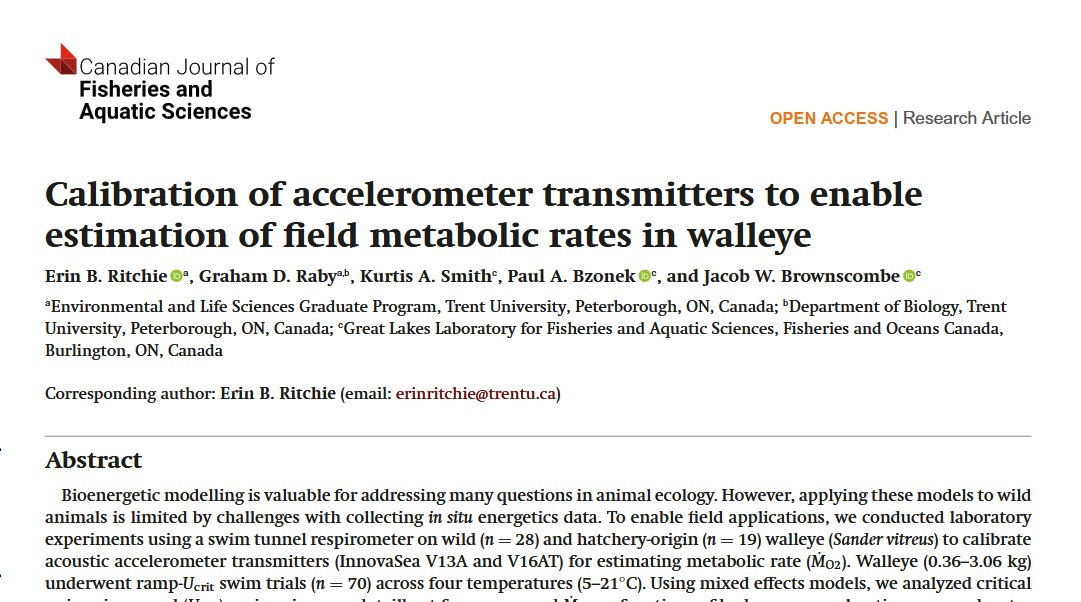
Now published open access in @cjfas. This one is for you nerds who like swim tunnel respirometry and accelerometer tags.
Led by @TrentUResearch MSc student @ErinRitchiee, work done at CCIW with @sci_angler from 2021-23.
Thanks to @LampreyControl for funding.
⭐ Researcher Highlight ⭐
Dr. Jacob Brownscombe (@sci_angler), Research Scientist at @FishOceansCAN, is shaping the future of freshwater science in the Great Lakes region. 🌊🐟
His research uses a unique blend of telemetry, accelerometry, and machine learning to model habitats for species like walleye, largemouth bass, and at-risk silver shiner. He recently received the 2025 Stevenson Lectureship Award for his creative early-career endeavors. Keep up the fantastic work! 🎉
#FishTracking #GreatLakes #EcosystemScience