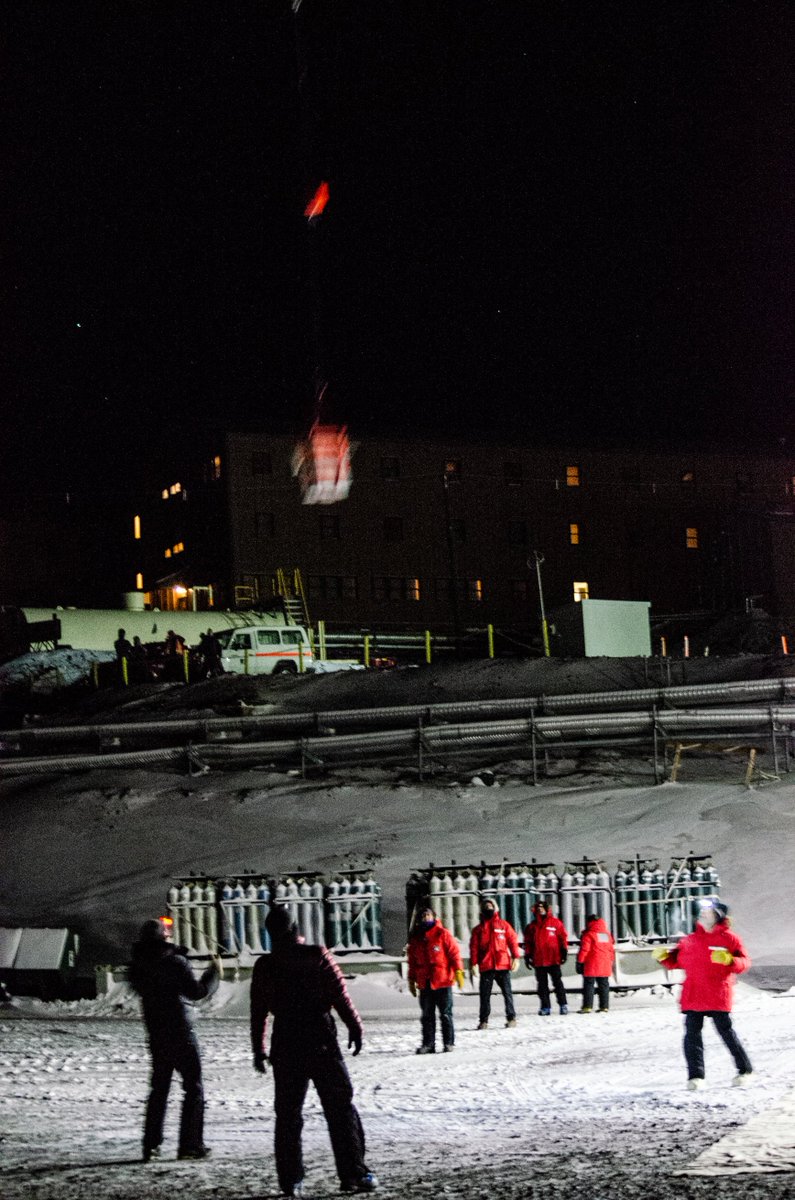
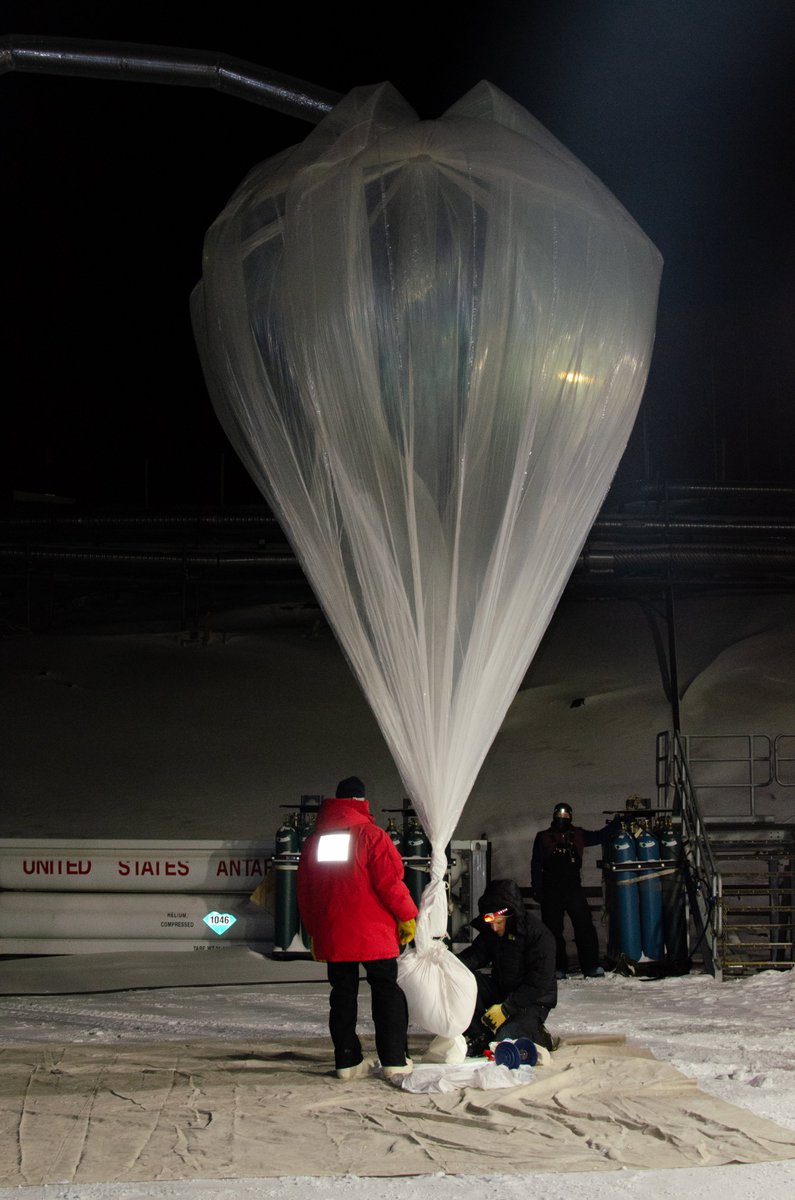
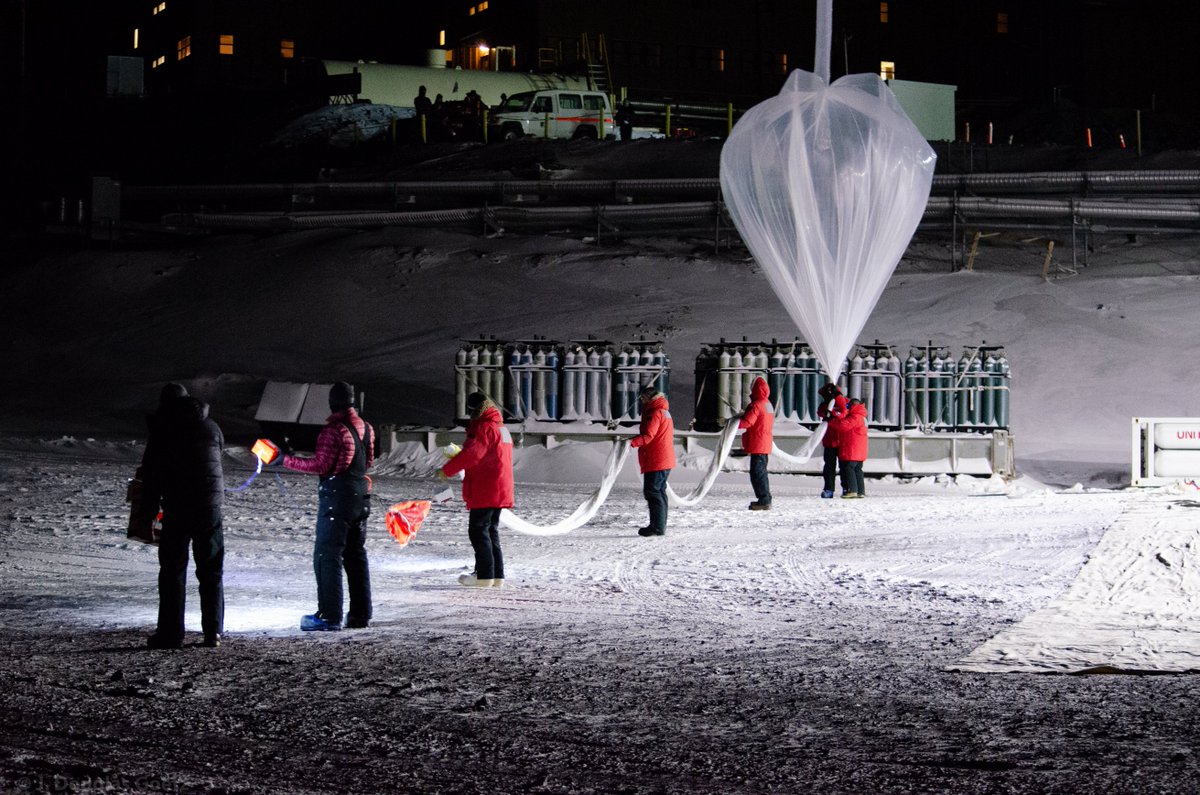
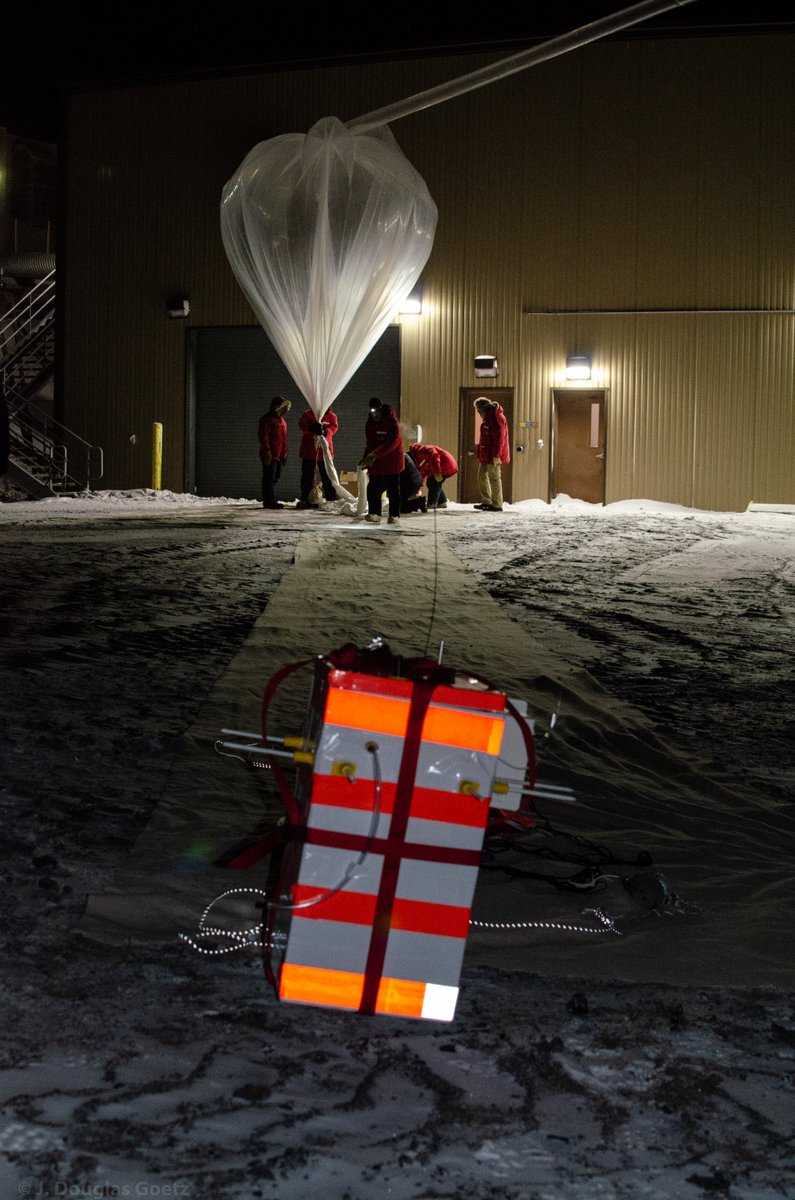
Follow a NSF funded high altitude ballooning project investigating stratospheric aerosols and taking place at McMurdo Station during the Antarctic winter ❄️
50 RACHuTS profiles and counting! These are first of its kind profiles of temperature #TSEN, aerosol #ROPC, and water vapor #FLASHB 2 km through the #TTL. Lots of great data ratcheting in. Even early evidence of sub-visible cirrus clouds.
Circumnavigation in 56 days and 19 hours. For the win! Although it has had its ups and downs the TTL3 gondola has had very successful @strateole_2 flight. RACHuTS has completed 42 profiles of temp, water vapor, and aerosol in the #tropicaltropopauselayer@NSF@CNES@LASPatCU
Although the ASPEN team is back from the ice the ballooning continues with observations of the Raikoke eruption in the Stratosphere.
https://t.co/0mYTxpEB0X
Why are balloon flight termination devices needed, don't the balloons just pop?
As can be seen in this video (128x speed) from our flight last week in Wyoming, larger polyethylene balloons sometimes spring a leak instead, requiring the payload to be cut so it doesn't float away.
Although we deal with physical science here at ASPEN, wildlife and resource conservation is always an underlying part of Antarctic science missions. Here's a great article by @SethSykoraBodie on some of the policy struggles in the Southern Ocean.
https://t.co/cyV1r662ls
Tomorrow is looking promising for our next launch! In our down time the ASPEN team got an eye opening tour of the McMurdo wastewater treatment facility by our friend Bill. Always amazing to see the effort the station makes to reduce its environmental impact. 💩
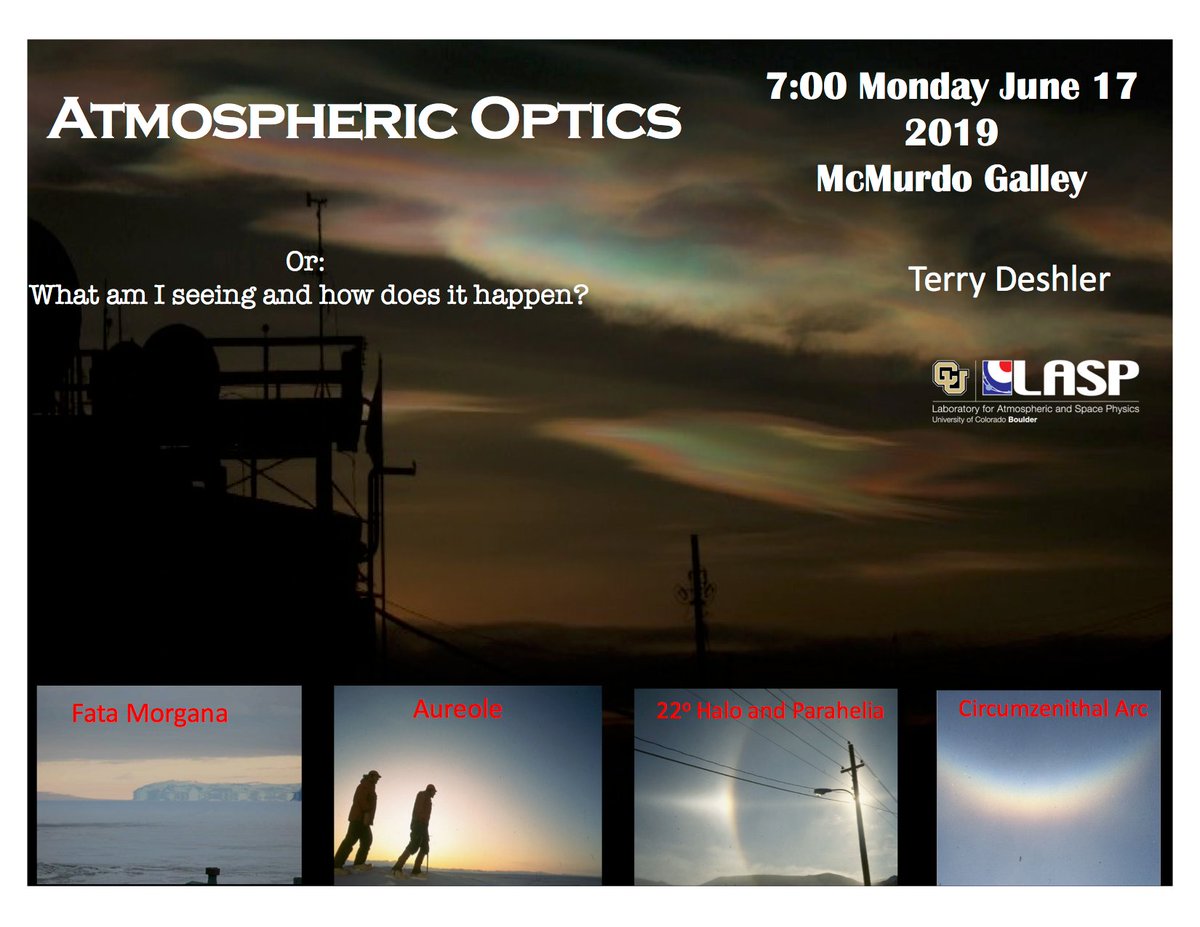
Less than 10 days with 3 flights to go! Strong winds aloft and a shifting #polarvortex has given us some time to work on other things. Dr. Deshler just gave an exciting seminar on atmospheric optics to an engaged and well informed McMurdo Station audience.
Accomplished a heated inlet/CN flight and an OPC flight all in one day over the weekend. Only three more to go! Photo cred to our checklist wizard Sallie Anderson
After almost a week of poor weather it looks like tomorrow is a strong contender for the next flight or possibly two flights. Stay tuned................
Most balloons become over pressurized at altitude and pop like in this #GoPro video from a Laramie WY flight. Not the case in our last flight, so we got to test the "sink" function of our flight termination system designed and built at @LASPatCU by @AlexThe6ixth. Nice work Alex!
Two launches less than 6 hours apart in the dark and possible observations of #PolarStratosphericCloud development. Here at ASPEN we call that a home run. Video cred to Bob "The Weatherman" Michael.
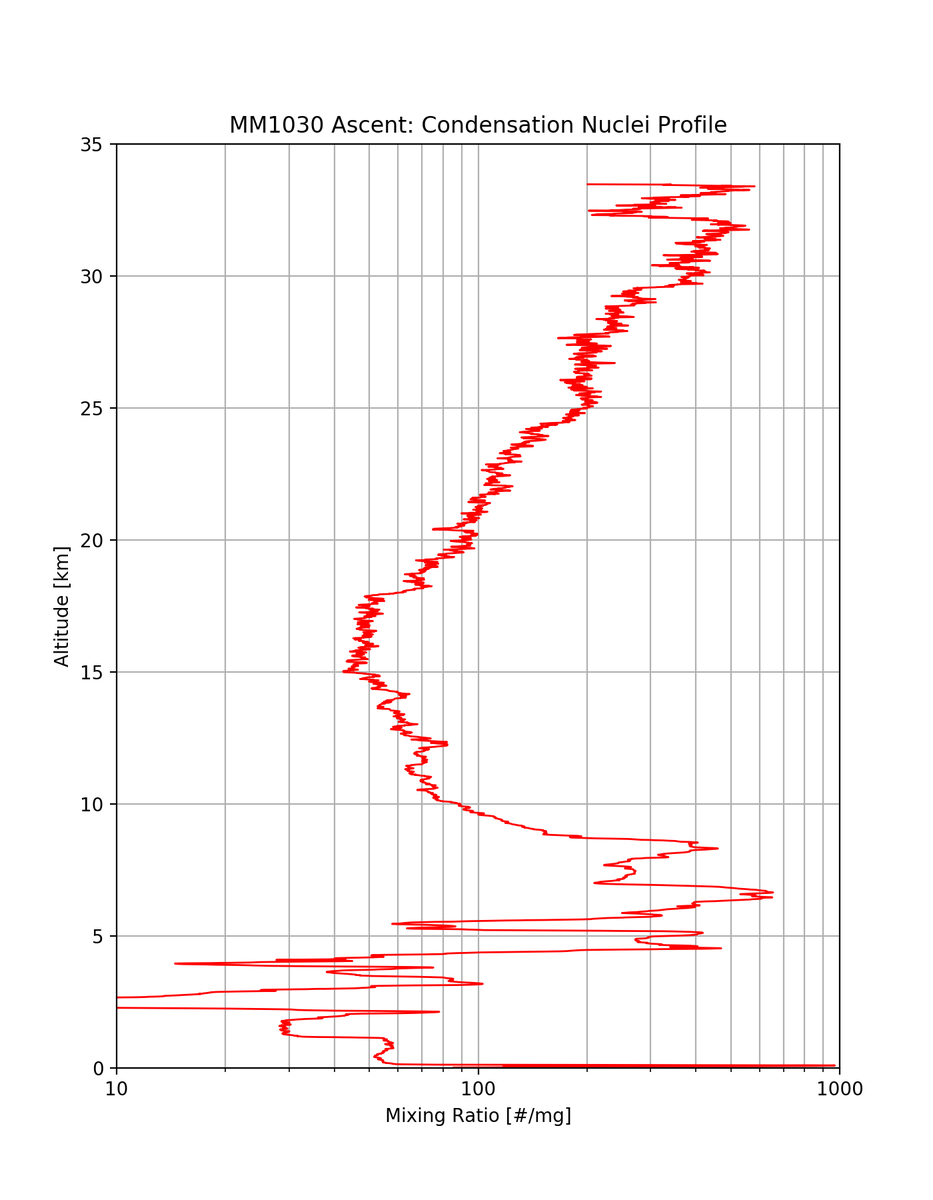
Little teaser from yesterdays flight: Increasing condensation nuclei mixing ratios ( in #/mg of air) with altitude in the Stratosphere. We'll be flying a heated inlet on one of the next flights to probe the contribution of #MeteoricSmoke ☄️🎇🎈
Speaking of the #polarvortex...We use chemistry and aerosol forecasts from the climate model WACCM @CESM_WACCM to predict favorable flight conditions in the stratosphere. Special thanks to @Simone58429962 for including products that help us find #PolarStratosphericClouds
"Hurry up and wait" should be the motto of all good field missions. And ASPEN is one of the good ones. Windy weather and a shifting polar vortex has curbed us these last couple of weeks. But Sunday is looking promising for flight #4!