Every profile of Michael Saylor focuses on his engineering brilliance, his tech vision, his MicroStrategy bet. Nobody has ever asked about his undergraduate thesis.
In 1987 at MIT, Saylor wrote a computer simulation of Renaissance Italian city-states — within the System Dynamics tradition.
That detail explains everything about why Bitcoin landed the way it did in 2020.
My book The Satoshi Strategy: Bitcoin, System Dynamics, and the Architecture of Sound Money is available now in paperback and Kindle.
https://t.co/1tUGO0bLDe
Another obscure scientist called Francis Crick got second class honours too in his undergraduate degree, and before interrupted by war his doctoral work involved measuring the viscosity of water at different temperatures (yawn). Must have been a total loser!
@mattwridley@RichardDawkins@GadSaad
@BitcoinArchive Thiel was referring to AI passing the Turing test as being on the same scale as the Internet, NOT Bitcoin. Accurate information is important and this post is misleading
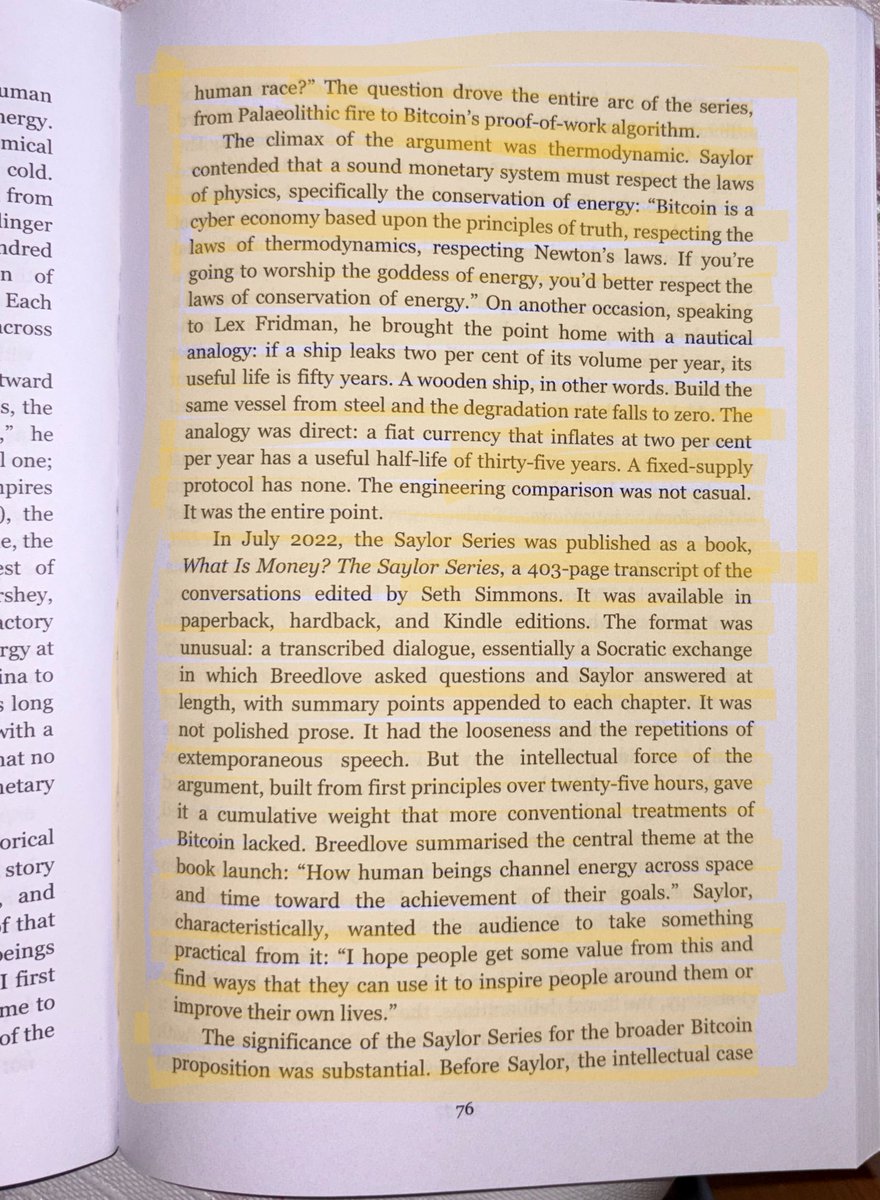
The impact of The Saylor Series is a case study in how unregulated, unmediated digital communication now shapes economic thinking outside academe and the financial institutions.
Yesterday's essay from @saylor restates the core thesis he first built across twenty-five hours of dialogue with @Breedlove22 in 2020: "Money is the highest form of energy that human beings can channel." Bitcoin as digital monetary energy is that same argument, six years on.
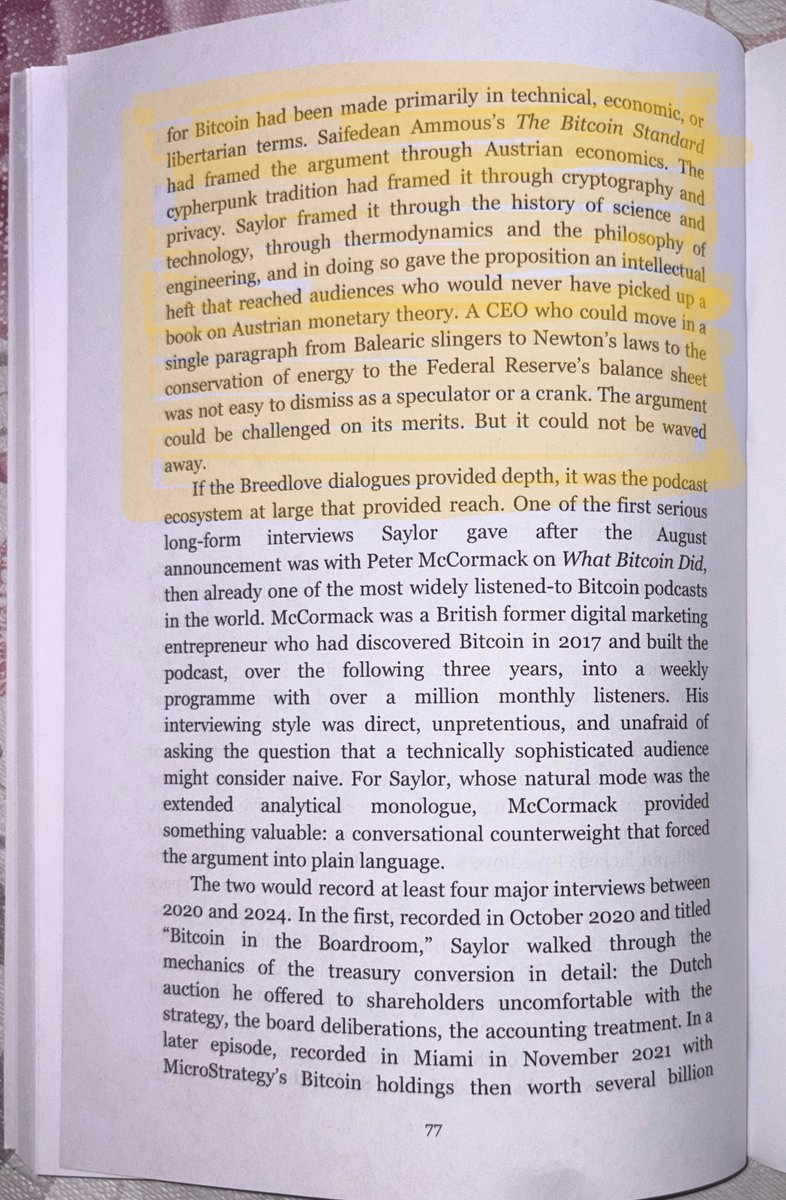
The dual format, podcast first, then a 403-page book, amplified reach and undoubtedly deepened impact. As I set out in my book 'The Satoshi Strategy', the intellectual force came less from polish than from cumulative weight: a thermodynamic argument built from first principles, and not easy to wave away as speculation.
As economic analysis it remains entirely heterodox. Few economics graduates will make immediate sense of it. A fair case can be made that this says something about academic economics' own impoverishment, and its long history of physics envy.
@Breedlove22@saylor
Steve Keen is a Bitcoin sceptic. That is partly why this is worth reading.
System Dynamics is neither pro- nor anti-Bitcoin. It is an agnostic methodology for analysing complex systems through stocks, flows, feedback loops and delays.
Bitcoiners should know this toolkit.
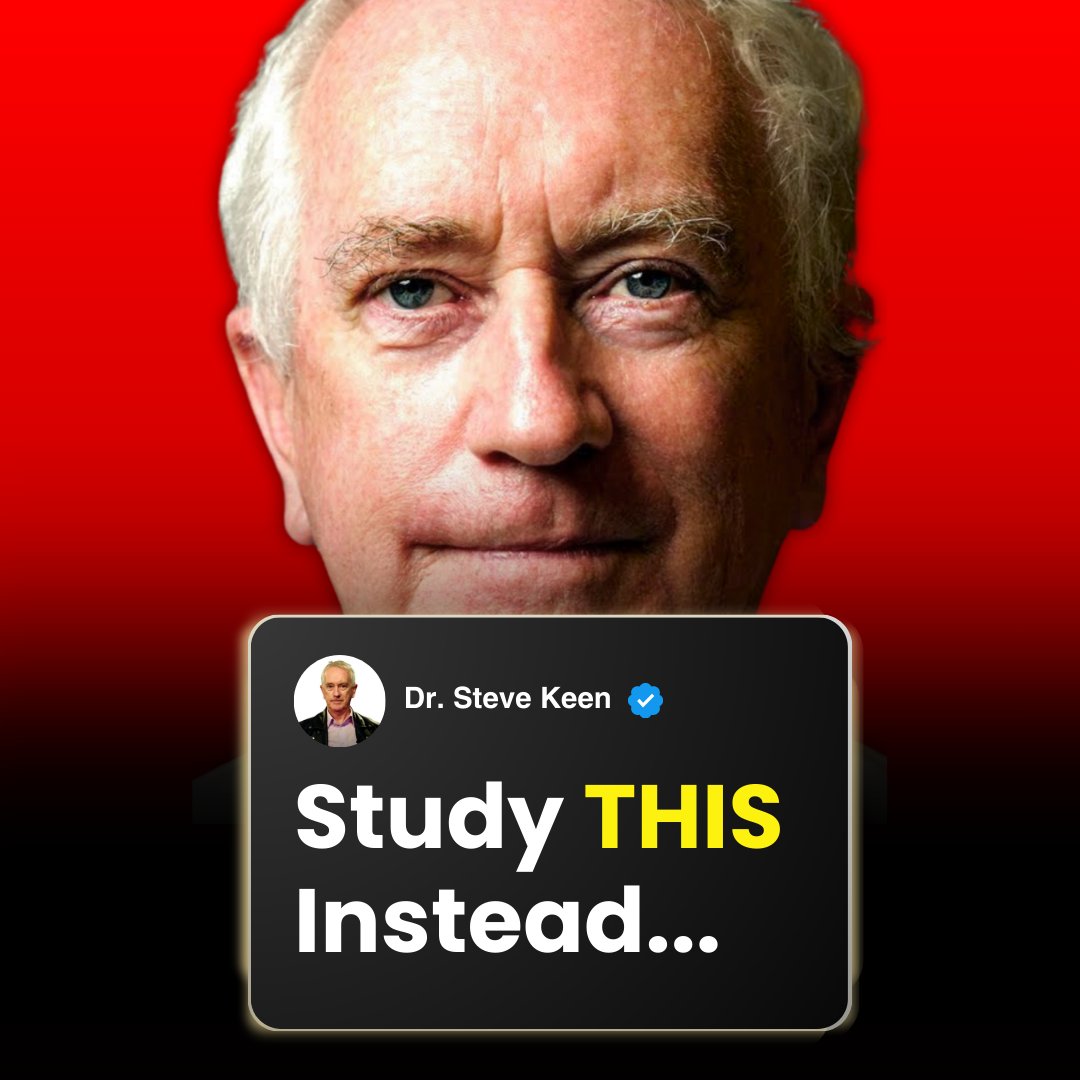
Don't study economics at university. What they teach is empirically false garbage.
In just 9 simple points, let me explain why... and what to study instead.
(1) Textbooks claim firms face "rising marginal costs" (making more = higher costs per unit). But 89% of real companies have flat or FALLING costs as they scale up production.
(2) Alan Blinder (Princeton economist) surveyed hundreds of businesses and found this above fact. Yet HE STILL teaches this false model in his textbooks 15 years later! Absolute Guff.
(3) Real businesses set prices with markups over costs, then sell as much as possible. No CEO uses "marginal cost = marginal revenue" equations that fill economics textbooks.
(4) Economists worship "equilibrium" - the myth that economies settle into balance. Irving Fisher (America's "most influential economist") finally admitted: "Assuming the economy stays in equilibrium is like assuming the Atlantic has no waves."
(5) The economy isn't a calm pond... it's a stormy ocean. This isn't just academic. It's why economists failed to see 2008 coming while dismissing those who did, like myself.
(6) Engineers understand the world better than economists. They know systems have feedback loops, time delays, and non-linear relationships that create booms, busts and chaos.
(7) Even founders of fake neoclassical economics like Jevons considered equilibrium a "stopgap" until dynamic modeling tools existed. We have those tools now. Universities still teach this archaic lie, even after being 100% debunked.
(8) We need SYSTEM DYNAMICS - developed by MIT's Jay Forrester, it models economies as they truly are: dynamic, unstable systems with complex feedback.
(9) My advice?
Study engineering, coding, or Systems Dynamic Modeling. Then apply it to economics.
Resource and presentation - Attached in Comment
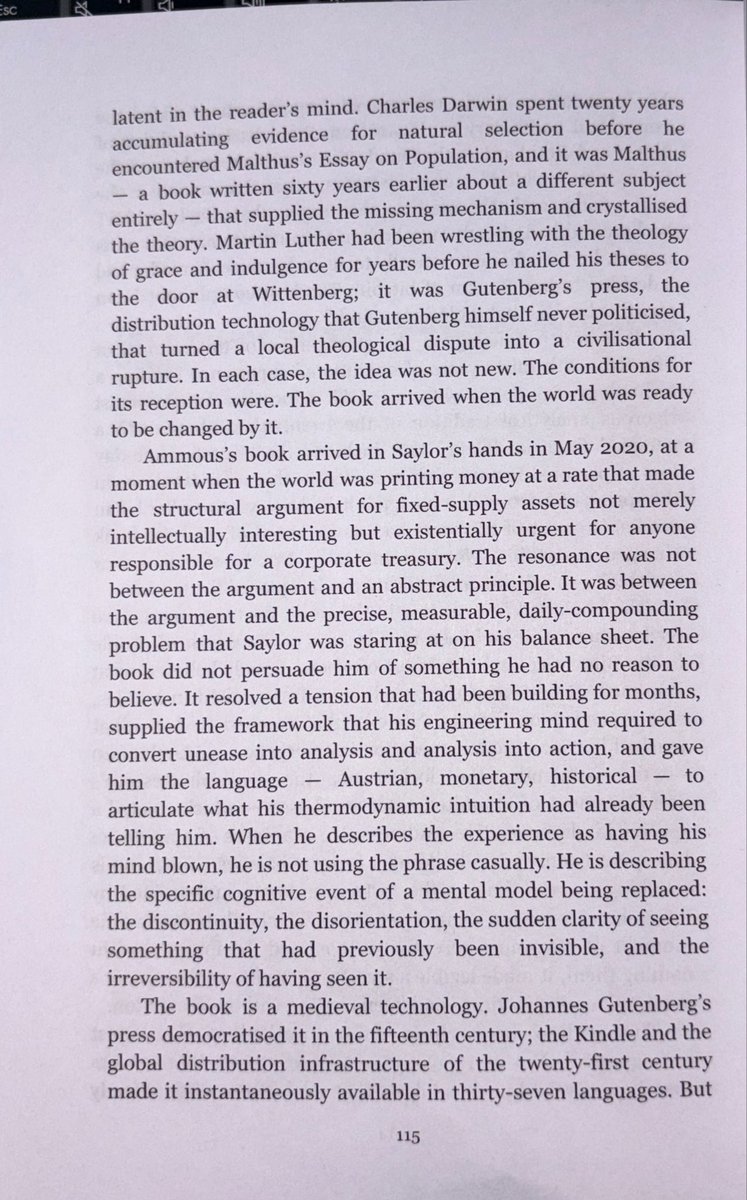
Saylor's own conversion to Bitcoin began with a book: reading Saifedean Ammous changed how he saw money, and that shift led to a corporate pivot that has since grown past $50 billion, the largest such Bitcoin position in the world.
I found that a remarkable case study in how ideas move markets and men, so I wrote the fuller story: The Satoshi Strategy, on Bitcoin, system dynamics, and the architecture of sound money.
Out now on Amazon.
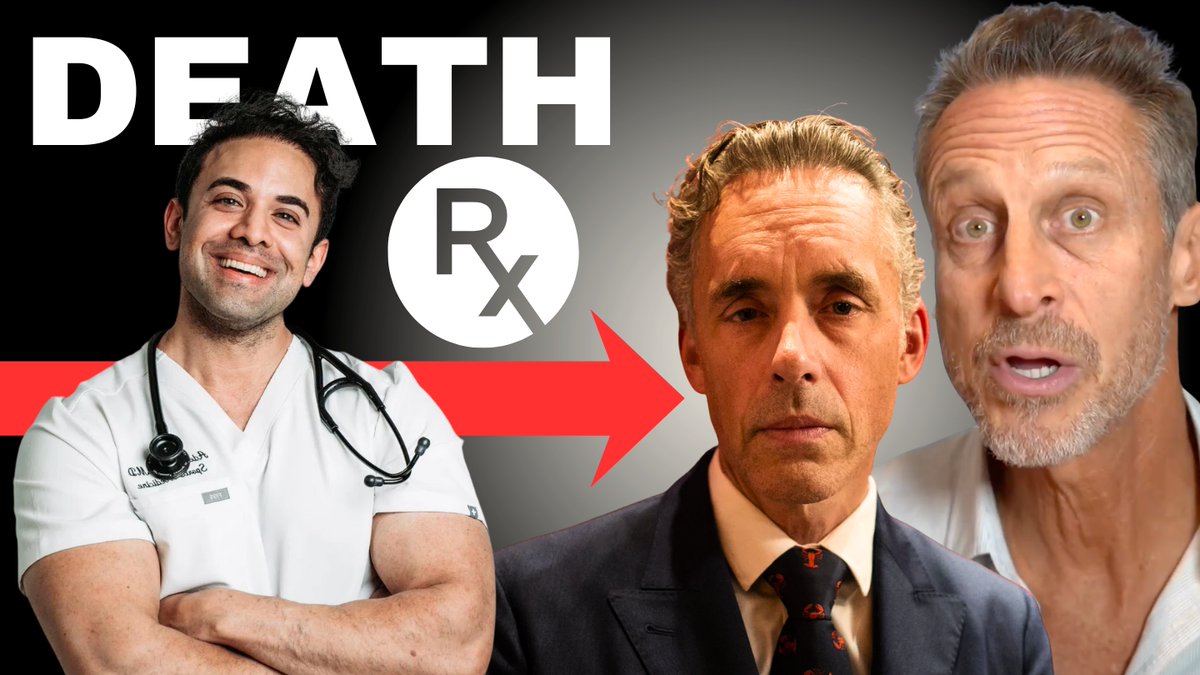
Last year Mark Hyman almost died of sepsis. Why did he cover up the evidence that it was caused by an experimental stem cell treatment from a regenerative medicine clinic in Mexico? https://t.co/Q2QLDvyocw
Saylor's own conversion to Bitcoin began with a book: reading Saifedean Ammous changed how he saw money, and that shift led to a corporate pivot that has since grown past $50 billion, the largest such Bitcoin position in the world.
I found that a remarkable case study in how ideas move markets and men, so I wrote the fuller story: The Satoshi Strategy, on Bitcoin, system dynamics, and the architecture of sound money.
Out now on Amazon.
Bitcoin is digital capital. AI is digital intelligence. I joined @StevenBartlett to discuss how they are reshaping money, business, markets, work, and the future.
https://t.co/bdT8oXGUKK
Bitcoin is digital capital. AI is digital intelligence. I joined @StevenBartlett to discuss how they are reshaping money, business, markets, work, and the future.
https://t.co/bdT8oXGUKK
This is precisely why Elon Musk recommends learning physics and mathematics, rather than merely learning how to manage or operate existing systems. Business organises resources and engineering applies knowledge, but mathematics and physics teach us to reason from first principles about what is actually possible.
Learning calculus, especially its derivations and proofs, allows students to retrace the thinking of Newton, Leibniz and Euler: to see how pure reasoning and mathematical modelling can reveal fundamental truths about the universe. Without that understanding, we risk producing technicians who can press buttons but cannot explain what the machine is doing. Saying AI makes calculus unnecessary is like saying text-to-speech makes learning to read unnecessary.
@standardnews Nigel Farage has repeatedly stated the bribe was given in a personal capacity and nothing to do with him being a politician. It was an entirely unconditional £5 million grift.
Now can everyone please stop asking him about it?
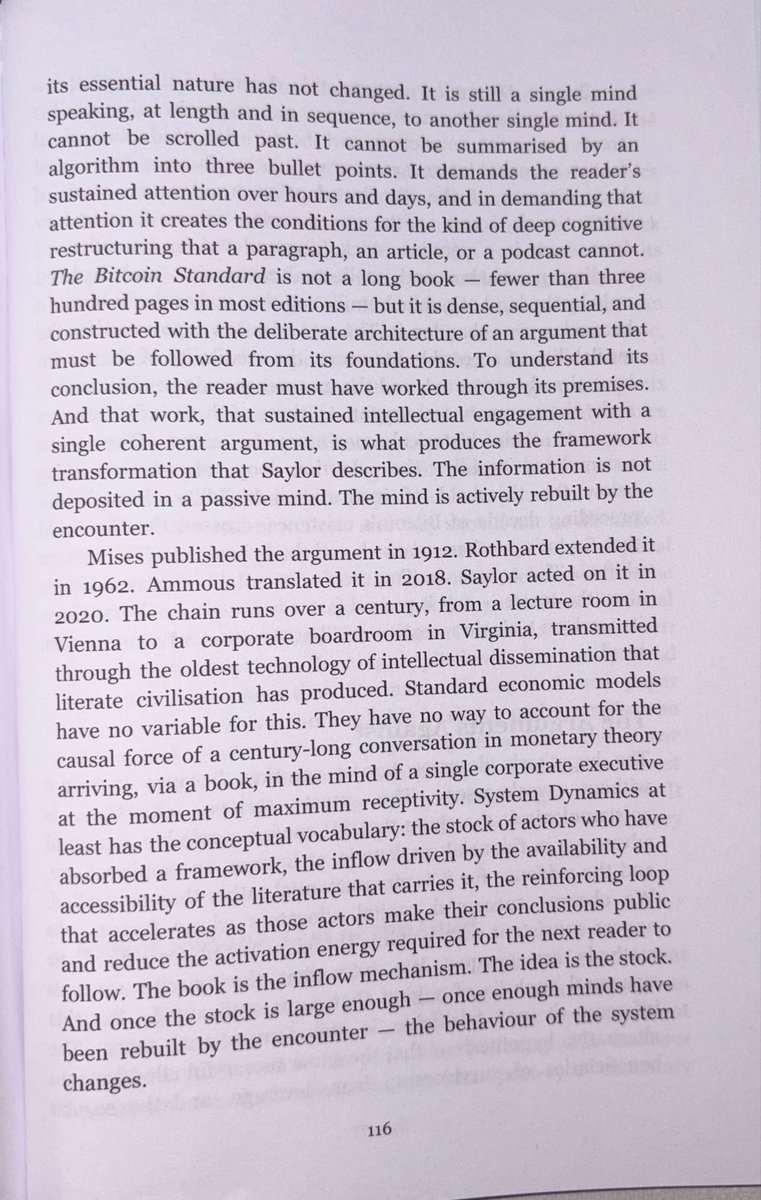
@saylor@julian_liniger@BTCPrague@saifedean The argument runs Mises 1912 → Rothbard 1962 → Ammous 2018 → Saylor 2020.
The next step is understanding why that chain works — the system dynamics of how ideas propagate and reshape institutions.
That’s what The Satoshi Strategy is about. Link in bio.
The hardest thing may be surviving long enough — but Saylor also needed the framework to recognise the moment when it arrived.
@saifedean’s The Bitcoin Standard gave him that in May 2020. A century-long argument in monetary theory, arriving at the moment of maximum receptivity.
This is how consequential books have always worked. And why they still matter.
@saifedean@Waterstones@BarnesandNoble@amazon
Steve Keen is wrong about Bitcoin.
But Bitcoiners are wrong to treat him as just another anti-Bitcoin economist.
He has diagnosed much of the same fiat disease that Saylor diagnosed. He has simply rejected the cure.
That is why he should be engaged properly, not sighed away.
https://t.co/jgxMTLNtJj